The American Basketball Association Collection — Royal Retros ABA Fan Shop
Authentic 1967–1976 Throwbacks. Custom Names & Numbers. Sizes S–5XL. Every Original Franchise.
Royal Retros carries the most comprehensive officially licensed ABA throwback collection on the web — authentic 1967–1976 jerseys, hats, T-shirts, hoodies, and apparel for every franchise that ever played in the American Basketball Association. From the Julius Erving New York ABA sweater to the Kentucky Colonels championship gear, from the red-white-and-blue ABA basketball to the Spirits of St. Louis throwback that nobody else carries — every team is represented. Custom name and number available on most jerseys. Period-correct construction in sizes Small through 5XL. If you've spent years searching for ABA gear, this is the shop.
What You Can Shop in the ABA Collection
ABA Jerseys — The crown jewel of the collection. Authentic 1967–1976 replica and custom jerseys for every ABA franchise, in twill, mesh, and modern reproduction fabrics. Period-correct color palettes, lettering style, and logo detail throughout. Custom name and number available on most styles — make a 1976 Julius Erving Nets throwback your own.
ABA Hats — Snapback, fitted, flex, and unstructured hat styles featuring ABA team logos, period-appropriate colors, and authentic crest detail.
ABA T-Shirts — Soft, premium cotton tees representing the great teams, championship years, and iconic players of the league's nine seasons. Pre-shrunk, tagless, sized for comfort.
ABA Hoodies, Sweatshirts, and Crewnecks — Year-round ABA team apparel for the dedicated throwback fan. Heavyweight cotton blends, period-correct embroidery and screen printing.
ABA Collectibles & Memorabilia — Replica red-white-and-blue ABA basketballs, mini-helmets, posters, and remembrance pieces honoring the ABA's place in basketball history.
Customization — Most ABA jerseys can be personalized with your name and number. Free customization on eligible items — look for the "Custom" option on each product listing. Custom items are final sale.
Sizes — All ABA apparel ranges from Small through 5XL on virtually every product. No big & tall upcharge.
Shop by Marquee ABA Team
Indiana ABA — The defining franchise of the league. Three ABA Championships (1970, 1972, 1973) behind Mel Daniels, Roger Brown, and George McGinnis. Authentic Indiana ABA jerseys (custom and replica), team-color snapbacks, T-shirts, hoodies, and apparel honoring the only ABA-merger franchise that has never relocated. Shop the Indiana ABA collection.
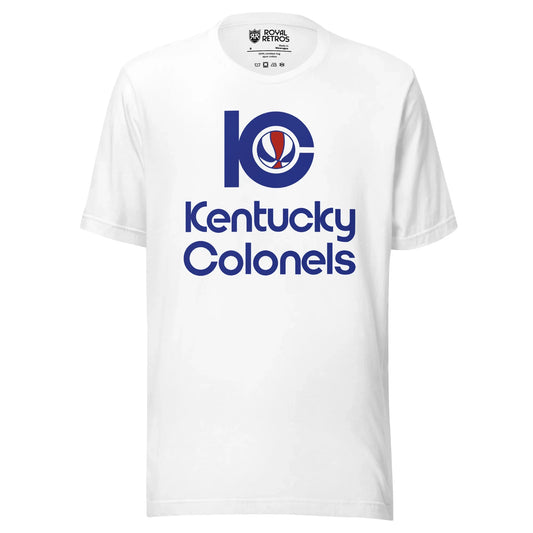
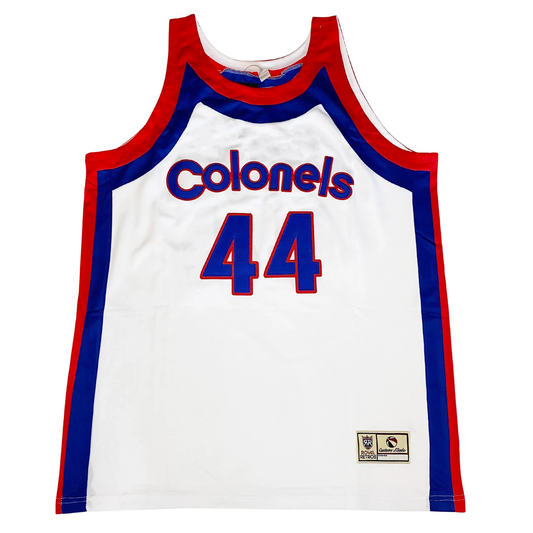
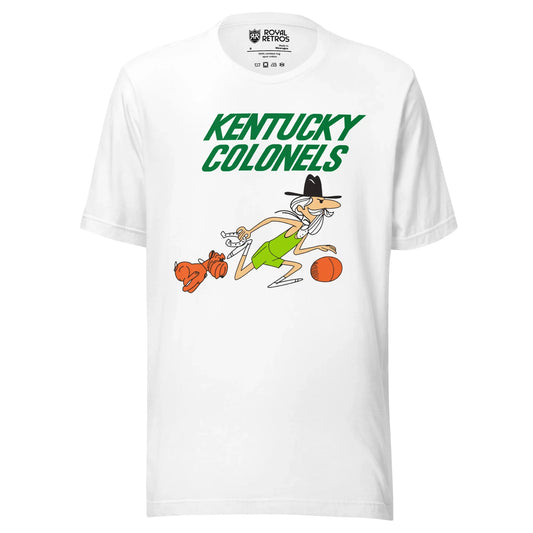
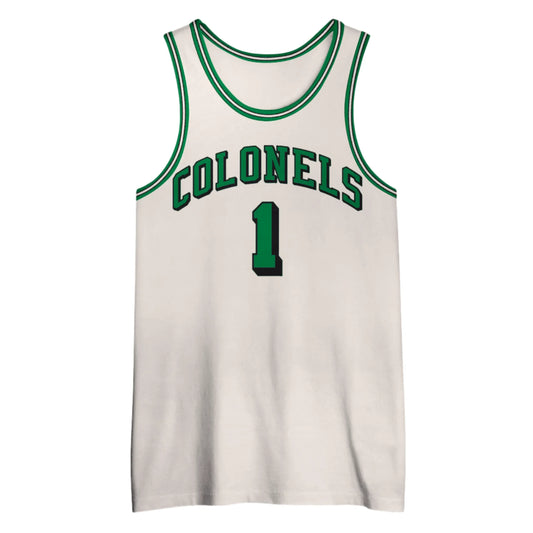
Kentucky Colonels — The greatest team that never made the NBA. The Colonels won the 1975 ABA Championship behind Hall of Famers Artis Gilmore and Dan Issel and coach Hubie Brown. Authentic Kentucky Colonels jerseys, hats, T-shirts, and apparel — the most heartbreaking franchise in ABA history. Shop the Kentucky Colonels collection.
New York ABA / New Jersey ABA — The Julius Erving franchise. Two ABA Championships (1974, 1976) with Erving leading the Nets after his 1973 trade from Virginia. His 1976 Slam Dunk Contest performance changed basketball forever. Authentic New York ABA / New Jersey ABA throwback gear. Shop the New York ABA collection.
Denver ABA — Denver Rockets (1967–74) and Denver Nuggets (1974–76). Spencer Haywood debuted in 1969 and won Rookie of the Year and league MVP in the same season. David Thompson reached the 1976 Slam Dunk Contest finals against Erving. Shop the Denver ABA collection.
San Antonio ABA / Dallas Chaparrals — The franchise launched in 1967 as the Dallas Chaparrals and was sold to a San Antonio ownership group in 1973. George Gervin became the franchise's offensive cornerstone. Authentic Dallas Chaparrals and San Antonio ABA throwback gear. Shop the San Antonio ABA / Dallas Chaparrals collection.
Plus rare-team coverage: Spirits of St. Louis / Carolina Cougars / Houston Mavericks, Pittsburgh Pipers / Condors, Virginia Squires / Oakland Oaks / Washington Caps, Utah Stars / Los Angeles Stars / Anaheim Amigos, Memphis Sounds / Pros / Tams, Miami Floridians / Minnesota Muskies, San Diego Sails / Conquistadors, Baltimore Hustlers / Claws (the never-played franchise), Houston Mavericks, New Jersey Americans, New Orleans Buccaneers, and the Minnesota Pipers. If a team played in the ABA, we carry their gear.
Why Royal Retros Is the Home of ABA Throwback Gear
Royal Retros built its reputation on going deeper than any other retailer into the leagues that mainstream sports stores have forgotten — and the ABA is one of the most important of those leagues. Here's what sets our ABA collection apart at retail:
-
Every ABA franchise represented. Indiana, Kentucky, New York, San Antonio, Dallas, Denver, Virginia, Oakland, Washington, Pittsburgh, Minnesota, Miami, Florida, Carolina, St. Louis, Houston, Memphis, New Orleans, Anaheim, Los Angeles, Utah, San Diego, Baltimore, New Jersey — every team and every relocation has a place in the collection.
-
Authentic ABA-era design. Period-correct colors, lettering, and logo detail. We don't modernize the look.
-
Officially licensed throwback gear. Every product is produced under proper licensing for the ABA era.
-
Free customization on most jerseys. Add your name and number at no extra cost on eligible items.
-
Sizes Small through 5XL. No big & tall upcharge.
-
Rare-team coverage. Some ABA franchises played a season or two. Some folded mid-year. The Baltimore Claws never played a single game. We carry gear for all of them.
Quick Buying Questions
What sizes do ABA jerseys come in?
Small through 5XL on virtually every jersey style. Hats are typically one-size-fits-most (snapback / flex) or fitted in standard cap sizes.
Can I add my name and number to an ABA jersey?
Yes — most styles offer free customization. Look for the "Custom" option on the product listing. Custom items are final sale and made to order, so allow 7–10 business days for production.
What materials are ABA jerseys made from?
Heavyweight twill on most replica jerseys, sublimated polyester on custom and remix styles, and authentic period-correct construction on select pieces. T-shirts are premium pre-shrunk cotton.
Are these officially licensed?
Yes — every product in the ABA collection is produced under proper ABA-era licensing.
How fast does it ship and what's the return policy?
Standard products ship within 3–5 business days. Custom items are made to order and ship within 7–10 business days. Custom items are final sale. Standard items follow our return policy at /pages/returns.
What Was the American Basketball Association?
The American Basketball Association (ABA) was a major professional basketball league that operated in the United States from October 1967 through May 1976. It was founded by Dennis Murphy and Gary Davidson, with NBA legend George Mikan as its first commissioner. The ABA introduced the three-point line, invented the Slam Dunk Contest, played with a red-white-and-blue ball, and pioneered the fast-paced, above-the-rim offensive style that the NBA later absorbed wholesale. The league played nine full seasons, crowned eight different champions, and merged with the NBA in 1976.
The History of the ABA — A Complete Overview
The Founding (1966–1967). Dennis Murphy and Gary Davidson assembled the ABA in early 1967, securing eleven charter franchises and bringing in NBA legend George Mikan as the league's first commissioner. The ABA's signature rules were in place from day one: a three-point arc, a 30-second shot clock, a red-white-and-blue basketball, and a deliberate emphasis on style and entertainment.
The 1967–68 Inaugural Season. Eleven teams: Anaheim Amigos, Dallas Chaparrals, Denver Rockets, Houston Mavericks, Indiana Pacers, Kentucky Colonels, Minnesota Muskies, New Jersey Americans, New Orleans Buccaneers, Oakland Oaks, and Pittsburgh Pipers. The Pittsburgh Pipers — led by Connie Hawkins, who had been blackballed from the NBA — won the inaugural ABA Championship. Hawkins won league MVP and Finals MVP.
The 1968–69 Season. The Oakland Oaks, led by Rick Barry — the NBA's reigning scoring champion who had jumped to the ABA — won the championship. Spencer Haywood debuted with the Denver Rockets and won both Rookie of the Year and league MVP, the only player ever to do so in either basketball league.
The 1969–70 Season — The Pacers Begin. The Indiana Pacers, led by Mel Daniels, Roger Brown, and Bob Netolicky, won their first ABA Championship.
The 1970–71 Season. The Utah Stars (relocated from Los Angeles) won the championship behind Zelmo Beaty.
The 1971–72 Season. The Indiana Pacers won their second championship behind Mel Daniels (now a two-time MVP).
The 1972–73 Season. The Pacers won again — their third championship in four seasons.
The 1973–74 Season — The Erving Era Begins. Julius Erving was traded from the Virginia Squires to the New York Nets in August 1973. Erving immediately won league MVP. The Nets won the 1974 ABA Championship.
The 1974–75 Season — Kentucky's Year. The Kentucky Colonels — anchored by Hall of Famers Artis Gilmore and Dan Issel, with Louie Dampier in the backcourt and Hubie Brown coaching — won the 1975 ABA Championship. Moses Malone debuted with the Utah Stars at age 19, signed straight out of high school.
The 1975–76 Final Season. The 1976 ABA All-Star Game in Denver hosted the first Slam Dunk Contest, won by Julius Erving with his iconic free-throw-line takeoff. The New York Nets, led by Erving, won the final ABA Championship by defeating the Denver Nuggets in the final.
The Merger and Aftermath (1976). On June 17, 1976, the NBA voted to absorb four ABA franchises: the New York Nets, the Indiana Pacers, the San Antonio Spurs (the former Dallas Chaparrals), and the Denver Nuggets (the former Denver Rockets). Each franchise paid a $3.2 million entry fee. The Kentucky Colonels and Spirits of St. Louis folded as part of the merger.
The Greatest Teams of the ABA — A Closer Look
Indiana Pacers. Three ABA Championships (1970, 1972, 1973). Mel Daniels — two-time ABA MVP — anchored the front line. Roger Brown was the silky-smooth scoring forward. George McGinnis arrived in 1971 from Indiana University. Bob Netolicky and Freddie Lewis filled out the rotation. The only ABA-merger franchise that has never relocated.
Kentucky Colonels. The greatest team that never made the NBA. Won the 1975 ABA Championship behind Hall of Famers Artis Gilmore and Dan Issel, plus longtime Colonel Louie Dampier (the only player to spend all nine ABA seasons with the same team) and coach Hubie Brown.
New York Nets. The Julius Erving franchise. Two ABA Championships (1974, 1976) with Erving leading the way. Larry Kenon, John Williamson, Brian Taylor, and head coach Kevin Loughery formed the supporting core. Forced to sell Erving's contract to Philadelphia at the merger to pay the entry fees.
Denver Nuggets / Denver Rockets. Launched 1967 as the Denver Rockets, rebranded to Denver Nuggets in 1974. Spencer Haywood debuted in 1969 — winning Rookie of the Year and league MVP. The Nuggets reached the 1976 ABA Finals and lost to the New York Nets.
San Antonio Spurs / Dallas Chaparrals. Dallas Chaparrals 1967, briefly Texas Chaparrals 1970, sold to San Antonio 1973. George Gervin became the franchise's offensive cornerstone after a 1974 trade.
The Rest of the ABA — Eleven Cities, Nine Seasons
-
Spirits of St. Louis / Carolina Cougars / Houston Mavericks. The Spirits never won a championship but produced some of the most memorable basketball of the ABA's final years — Marvin Barnes was an All-Star, Moses Malone played his second pro season there. The Silna brothers' famous TV-revenue deal traces to this franchise.
-
Pittsburgh Pipers / Pittsburgh Condors. The Pipers won the inaugural 1968 ABA Championship behind Connie Hawkins.
-
Virginia Squires / Oakland Oaks / Washington Caps. One franchise, three identities. Won the 1969 championship as the Oakland Oaks. Drafted Julius Erving in 1971. Also drafted George Gervin and Charlie Scott.
-
Utah Stars / Los Angeles Stars / Anaheim Amigos. Won the 1971 ABA Championship behind Zelmo Beaty. Moses Malone signed with Utah in 1974 straight out of high school.
-
Memphis Sounds / Pros / Tams. Started as New Orleans Buccaneers (1967–70), cycled through three Memphis names.
-
Miami Floridians / Minnesota Muskies. Started as Minnesota Muskies (1967–68), relocated to Miami.
-
San Diego Sails / Conquistadors. Folded eleven games into the 1975–76 season.
-
Baltimore Hustlers / Claws. The shortest-lived franchise in ABA history. Folded before playing a single regular-season game.
-
Houston Mavericks. The original Texas franchise, played 1967–69.
-
New Jersey Americans. The original 1967–68 New Jersey franchise that became the New York Nets in 1968.
-
New Orleans Buccaneers. Played 1967–70 before relocating to Memphis. Reached the 1968 ABA Finals.
-
Minnesota Pipers / Muskies. Two distinct Minnesota franchises in the ABA's first three years.
The Legends of the ABA — Players Who Defined the League
Julius Erving (Dr. J). The most important player in ABA history. Five seasons in the ABA (Virginia Squires 1971–73, New York Nets 1973–76), three MVP awards, two championships. His 1976 Slam Dunk Contest performance with the foul-line takeoff is one of the most replayed moments in basketball history. Hall of Fame 1993.
George Gervin (The Iceman). Drafted by Virginia 1972, traded to San Antonio 1974. Smooth finger-roll defined the Spurs' transition from ABA to NBA. Four NBA scoring titles in the 1980s. Hall of Fame 1996.
Connie Hawkins (The Hawk). Blackballed from the NBA over an unproven point-shaving allegation. Won the inaugural 1968 ABA MVP with the Pittsburgh Pipers. Finally rejoined the NBA in 1969 after legal action. Hall of Fame 1992.
Rick Barry. Reigning NBA scoring champion when he jumped to the Oakland Oaks in 1968. Led the Oaks to the 1969 ABA Championship. Hall of Fame 1987.
Spencer Haywood. Debuted with the Denver Rockets in 1969 at age 20. Won Rookie of the Year, MVP, scoring champion, and rebounding champion in the same season. Haywood v. NBA opened the door for high schoolers to enter pro basketball. Hall of Fame 2015.
Moses Malone. Signed by the Utah Stars in 1974 directly out of high school — the first player in modern major-league basketball history to make that jump. Three-time NBA MVP. Hall of Fame 2001.
Artis Gilmore. Kentucky Colonels' Hall of Fame center. The most dominant interior player in ABA history not named Wilt Chamberlain. 1972 ABA Rookie of the Year. Hall of Fame 2011.
Dan Issel. Kentucky Colonels' offensive cornerstone. 1971 ABA Rookie of the Year. Hall of Fame 1993.
Mel Daniels. Indiana Pacers' two-time ABA MVP (1969, 1971). All-time leading rebounder in ABA history. Hall of Fame 2012.
David Thompson. Denver Nuggets' high-flying guard. Reached the 1976 Slam Dunk Contest finals against Erving. Hall of Fame 1996.
Larry Brown and Hubie Brown. Two of the most influential coaches in basketball history both got their starts in the ABA.
The ABA's NBA Legacy
When the ABA merged with the NBA in June 1976, four franchises crossed over: the New York Nets, the Indiana Pacers, the San Antonio Spurs, and the Denver Nuggets. The merger terms were financially brutal, but all four immediately became NBA fixtures. The San Antonio Spurs went on to win five NBA Championships between 1999 and 2014. The Denver Nuggets won the 2023 NBA Championship. The Indiana Pacers reached the 2000 NBA Finals.
Beyond the surviving franchises, the ABA's structural influence on the NBA was permanent. The three-point line was adopted by the NBA in 1979. The Slam Dunk Contest was added to NBA All-Star Weekend in 1984. The fast-paced, freelance, individually expressive style of play that the ABA pioneered became the dominant offensive philosophy of NBA basketball.
The Cultural Legacy of the ABA
The American Basketball Association deserves a place in the conversation alongside the NBA when basketball historians talk about the founding of the modern game. It introduced the three-point line. It invented the Slam Dunk Contest. It opened the door for high schoolers to enter pro basketball. It produced the player pool — Erving, Gervin, Hawkins, Gilmore, Issel, Daniels, Thompson, Haywood, Malone — that defined NBA basketball through the 1980s.
Wearing ABA throwback gear is an act of honoring that history. The ABA was real, it mattered, and Royal Retros is here to make sure no fan who wants to celebrate it has to settle for a generic throwback shirt. Authentic. Period-correct. Every team. That's the ABA collection.
More Frequently Asked Questions About the ABA
When did the ABA operate?
The ABA played nine regular seasons from 1967–68 through 1975–76. The final ABA Championship was awarded in May 1976, one month before the merger with the NBA was finalized.
Who won the ABA Championships?
Eight different champions across the league's nine seasons: Pittsburgh Pipers (1968), Oakland Oaks (1969), Indiana Pacers (1970, 1972, 1973), Utah Stars (1971), New York Nets (1974, 1976), and Kentucky Colonels (1975). The Indiana Pacers are the only franchise to win three ABA Championships.
Which ABA teams joined the NBA?
Four ABA franchises joined the NBA as part of the 1976 merger: the New York Nets (now the Brooklyn Nets), the Indiana Pacers, the San Antonio Spurs (the former Dallas Chaparrals), and the Denver Nuggets (the former Denver Rockets).
What was the red, white, and blue basketball?
The ABA played with a red, white, and blue ball — its single most recognizable visual signature. Commissioner George Mikan introduced it for the league's first season in 1967. The NBA returned to a standard orange ball after the 1976 merger, but the ABA ball remains one of the most iconic objects in basketball history.
What was the Spirits of St. Louis TV deal?
The Spirits of St. Louis — owned by brothers Daniel and Ozzie Silna — were one of the two ABA franchises that did not join the NBA. As part of the merger negotiations, the Silnas accepted a perpetual share of the four merging franchises' future television revenue. The deal paid them and their heirs hundreds of millions of dollars over the following four decades. The deal was bought out by the NBA in 2014 for an estimated $500 million.
Shop by Team — The Complete ABA Collection
- Anaheim Amigos / Los Angeles Stars / Utah Stars (1967–1976)
- Baltimore Hustlers / Baltimore Claws (1975, never played a game)
- Carolina Cougars / Houston Mavericks / Spirits of St. Louis (1967–1976)
- Dallas Chaparrals / Texas Chaparrals / San Antonio ABA (1967–1976)
- Denver ABA (Denver Rockets 1967–74; Denver Nuggets 1974–76)
- Indiana ABA (Indiana Pacers, 1967–1976)
- Kentucky Colonels (1967–1976)
- Memphis Pros / Tams / Sounds / New Orleans Buccaneers (1967–1975)
- Miami Floridians / The Floridians / Minnesota Muskies (1967–1972)
- Minnesota Pipers (1968–69)
- New Jersey Americans / New York ABA (1967–1976)
- Oakland Oaks / Washington Caps / Virginia Squires (1967–1976)
- Pittsburgh Pipers / Pittsburgh Condors (1967–1972)
- San Diego Conquistadors / San Diego Sails (1972–1976)
The American Basketball Association at Royal Retros — Authentic 1967–1976 Throwbacks. Custom Names & Numbers. Sizes S–5XL. Every Original Franchise.