




-
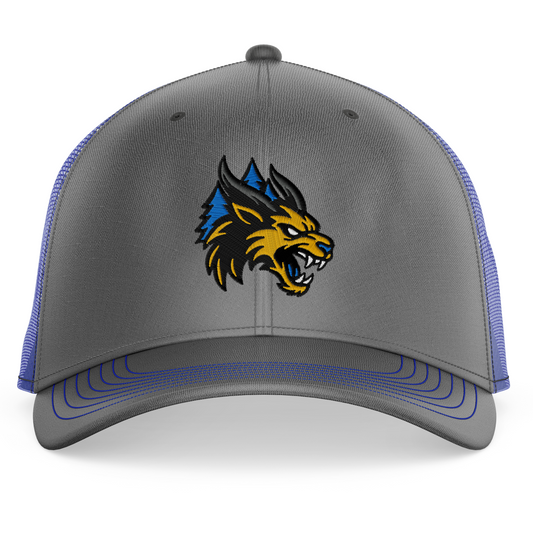
Washington Wolfpack Playoffs Trucker Hat
Regular price $29.99 USDRegular priceUnit price per -
-
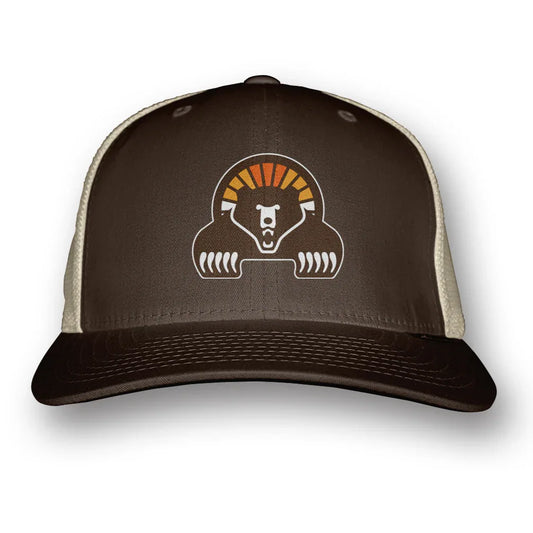
Kentucky Barrels Playoffs Trucker Hat
Regular price $29.99 USDRegular priceUnit price per -
-
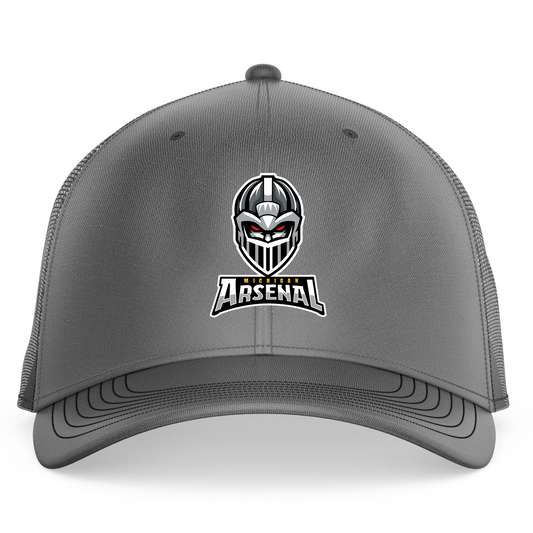
Michigan Arsenal Playoffs Trucker Hat
Regular price $29.99 USDRegular priceUnit price per -
-
Nashville Kats Playoffs Trucker Hat
Regular price $29.99 USDRegular priceUnit price per -
-
Minnesota Monsters Playoffs Trucker Hat
Regular price $29.99 USDRegular priceUnit price per -
-
Albany Firebirds Playoffs Trucker Hat
Regular price $29.99 USDRegular priceUnit price per -
-
Michigan Arsenal Trucker Hat
Regular price $32.99 USDRegular priceUnit price per -
-
Kentucky Barrels Trucker Hat
Regular price $32.99 USDRegular priceUnit price per -
-
Beaumont Renegades Trucker Hat
Regular price $32.99 USDRegular priceUnit price per -
-
Minnesota Monsters Trucker Hat
Regular price $32.99 USDRegular priceUnit price per -
-
Memphis Grizzlies Trucker Hat
Regular price $32.99 USDRegular priceUnit price per -
-
Philadelphia Bell Trucker Hat
Regular price $32.99 USDRegular priceUnit price per -
-
Southern California Sun Trucker Hat
Regular price $32.99 USDRegular priceUnit price per -
-
The Hawaiians Trucker Hat
Regular price $32.99 USDRegular priceUnit price per -
-
Florida Block Busters Foam Trucker Hat
Regular price $29.99 USDRegular priceUnit price per -
-
Las Vegas Thunder Foam Trucker Hat
Regular price $29.99 USDRegular priceUnit price per -
-
Detroit Vipers Foam Trucker Hat
Regular price $29.99 USDRegular priceUnit price per -
-
Pittsburgh Phantoms Foam Trucker Hat
Regular price $29.99 USDRegular priceUnit price per -












Recently Viewed
Trucker Hats — Vintage Throwback Foam-Front & Mesh-Back Caps
26 Active Styles Across Arena Football, the World Football League, Spring Football and Three Eras of Defunct Pro Hockey. One-Size Adjustable Snap. $29.99–$32.99.
Royal Retros carries 26 active trucker hat styles out of a 48-design catalog — the foam-front, mesh-back cap built for warm-weather wear, one of several hat constructions in our full hat catalog. The active lineup runs almost entirely through leagues most retailers skip entirely: Arena Football One's current roster, the 1970s World Football League, today's UFL and USFL, and three different eras of defunct pro hockey — the International Hockey League, Roller Hockey International, and one franchise identity that was fully designed and never actually took the ice. Every style here runs $29.99–$32.99, one-size-fits-most with an adjustable plastic snap closure at the back. Want the softest, most broken-in look instead? Our unstructured dad hats are the better call. Want a stiff, upright six-panel crown? Our snapback hats are built that way. This page is specifically the trucker construction — foam front, mesh back, taller crown than either of those — and it's the full active lineup, not a curated sample. Shop by sport, shop by league, check the fit guide, or skip straight to what actually makes a trucker hat a trucker hat and not just another baseball cap.
What Is a Trucker Hat, Exactly?
A trucker hat is a baseball cap built from two different materials instead of one. The front panel — the part carrying the logo — is a block of foam, usually laminated between an outer fabric layer and a fabric backing, rather than the all-cloth front of a snapback or a dad hat. The rest of the crown, from roughly the temple back, is plastic mesh instead of fabric, which is the detail that actually defines the style: a solid, graphic-ready front panel stitched directly to a see-through mesh back.
That combination is entirely functional, not a style choice. The foam block gives the front panel enough body to stand upright and hold a bold, high-contrast logo without the internal buckram a structured snapback needs — foam does that structural job on its own, no extra stiffening layer required. The mesh back does the opposite job: instead of holding shape, it moves air, which is why a trucker hat is the coolest-running construction in our entire hat catalog for actual warm-weather wear. Put those two panels together and you get the style's other defining trait — it sits taller on the head than any other cap we carry, because a stiff foam block stands up straighter than buckram-backed fabric or an unstiffened dad-hat crown ever will.
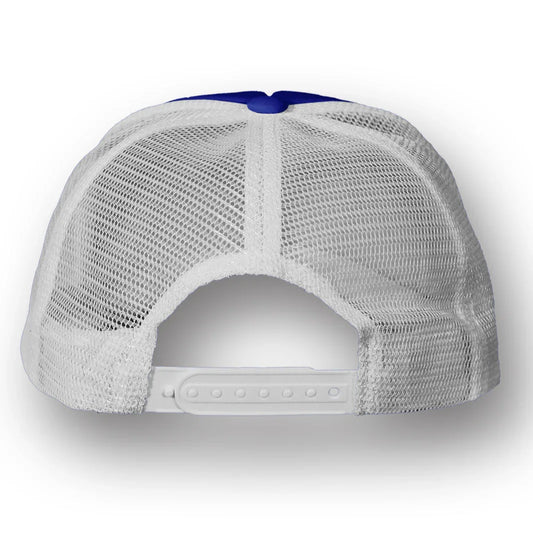
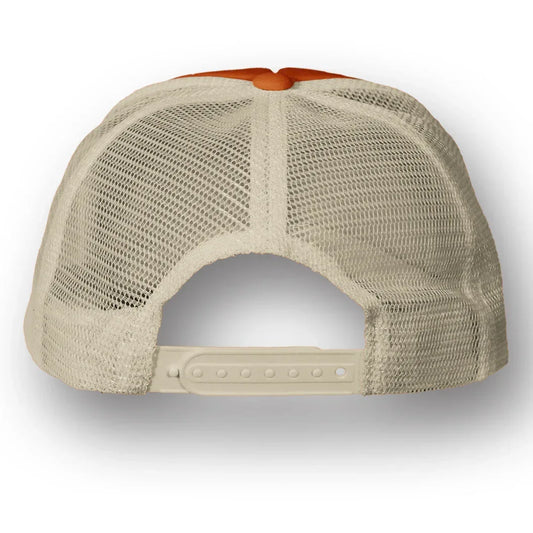
Closure-wise, every trucker hat in this collection uses an adjustable plastic snap at the back — the same mechanism as our snapback hats, a row of notches that lets one hat fit a wide range of adult heads. What's different is everything in front of that closure: no buckram, no soft unstiffened fabric, just foam and mesh built specifically to be worn outdoors in the heat. Where that specific combination came from, and why it was built that way in the first place, is covered in detail further down this page.
It's also worth knowing what a trucker hat is not. It isn't a mesh-back cap with a soft fabric front — that's a different, less common construction sometimes confused with the trucker style. And it isn't the same as a half-mesh or trucker-adjacent cap with a curved, unstiffened front panel; the defining trait here specifically is the rigid foam block up front, not just the presence of mesh somewhere on the hat. If a product page describes a "foam front" and a "mesh back" together, that's the real trucker construction — the two features arrive as a pair or not at all.
Shop Trucker Hats by Sport
The active trucker catalog splits across two sports right now, with football carrying the bulk of the active lineup.
Football — 20 active styles, split across three eras of the game: Arena Football One's current roster (14 styles), the 1970s World Football League (4 styles), and today's UFL and USFL spring-football lineup (2 styles). Three genuinely different eras of pro football, all built in the identical foam-front, mesh-back construction. Shop Legacy Football, Arena Football HQ, or Spring Football HQ for the wider football catalog beyond hats.
Hockey — 6 active styles pulled from defunct and never-played pro hockey: the International Hockey League, Roller Hockey International, and one franchise identity that was fully designed for an early-1990s expansion and never played a single game under that name. It's a smaller slice of this construction than football, but it covers three distinct corners of hockey history that most retailers don't touch in any hat style, let alone this one. Shop Legacy Hockey for the wider hockey catalog beyond hats.
Shop Trucker Hats by League
Six leagues — five that played real games, one that never did — make up the active trucker lineup. Counts below reflect what's purchasable right now, not the full 48-design catalog including everything still in draft or retired.
AF1 — Arena Football One — 14 active trucker hats across eight clubs: Nashville Kats, Albany Firebirds, Kentucky Barrels, Michigan Arsenal, Minnesota Monsters, Washington Wolfpack, Oceanside Bombers and Beaumont Renegades. Six of those eight clubs are stocked in two separate trucker designs at once — a standard trucker at $32.99 and a lower-priced AF1 Playoffs trucker at $29.99 — while Beaumont Renegades and Oceanside Bombers are currently available in the standard design only. This is the deepest single league in the trucker construction by a wide margin, and the only football league here stocked in two distinct design lines rather than one. Shop AF1.
WFL — World Football League — 4 active trucker hats from the 1970s league that folded after two seasons trying to compete with the NFL: Memphis Southmen, Philadelphia Bell, Southern California Sun and The Hawaiians. This is the oldest football era represented in this construction, and one of the few places on the site where the full run of an entire short-lived league shows up in a single hat style. Shop World Football League.
UFL / USFL — Spring Football — 2 active trucker hats from today's spring-football landscape: Arlington Renegades and Birmingham Stallions. The smallest football league count in this construction right now, but the most current — both clubs are active franchises playing today. Shop UFL or Shop USFL.
IHL — International Hockey League — 3 active trucker hats for Las Vegas Thunder, Detroit Vipers and San Francisco Spiders — the top minor-pro hockey league that ran largely independent of the NHL's affiliate system for most of the 20th century before folding in 2001. San Francisco Spiders played a single, memorable 1995–96 season before the club folded, which is exactly the kind of short-run franchise this catalog specializes in covering. Shop IHL.
RHI — Roller Hockey International — 2 active trucker hats for Pittsburgh Phantoms and Vancouver Voodoo, drawn from the outdoor inline hockey league that ran during the NHL offseason through the 1990s — a genuinely different sport from ice hockey, played on inline skates on concrete rather than ice. Shop Roller Hockey International.
Proposed / Concept Teams — 1 active trucker hat for the Florida Block Busters, a franchise identity designed in full — name, colors, logo — for an early-1990s hockey expansion team that never played a game under that name before the market it was headed for went a different direction. It's one of the more unusual pieces in this entire catalog for exactly that reason: real design work for a team that never actually existed on the ice. Shop Proposed Teams.
Building a Trucker Hat Collection Across Leagues
Because the active trucker catalog spans four different eras of football and three different eras of hockey in one construction, this collection is built as well for a collector chasing breadth as it is for a fan buying one hat for one team. A practical starting point: AF1 is the deepest single league here, with six of its eight active clubs stocked in two separate trucker designs — that alone supports a meaningful shelf before you'd need to branch into World Football League, spring football or the hockey side. From there, the hockey trio — IHL, RHI and the one never-played concept team — is worth a second pass specifically if foam-and-mesh construction is the style you're building around rather than any one sport, since those three clubs cover three genuinely different corners of hockey history in the identical build. Everything on this page is verified live and linked by league above, and alphabetically in the related collections list at the bottom, if you'd rather browse the full set at once instead of following a suggested order.
Fit and Sizing
Every trucker hat in this collection is one-size-fits-most, adjustable through a plastic snap closure at the back — there's no S–5XL apparel range here and no separate hat sizes to choose between at checkout. If you've ordered a jersey or tee from us before, set that sizing chart aside completely; hats size differently than apparel, and a trucker hat specifically doesn't use anything resembling the apparel scale.
The snap closure works the same way it does on our snapback hats — a row of notches along an adjustable plastic strap, typically six to eight fixed positions, built to fit the large majority of adult heads without needing an exact measurement in advance. It's a firmer, more precise adjustment than a fabric strapback, since the snap locks into a fixed notch rather than sliding freely.
Crown height is the one place a trucker hat is genuinely different from every other construction in our hat catalog. Because the front panel is a block of foam rather than buckram-backed fabric or unstiffened cloth, a trucker hat sits taller than an unstructured dad hat and taller than a standard snapback — the foam simply stands up straighter than either of those alternatives. That taller crown isn't a fit issue; it's a direct, visible result of the construction described above, and it's part of what makes a trucker hat identifiable from a distance even before you can read the logo on the front panel.
How to measure your head, if you want a reference point: wrap a soft tape measure around your head about an inch above your ears, at the widest point, snug but not tight. For an adjustable snap closure like every style in this collection, that measurement is a sanity check rather than a requirement — the notch range is generous enough that most buyers order without measuring first, which is also part of why a trucker hat makes a low-risk gift when you don't know the recipient's exact size.
Why Royal Retros
- The deepest foam-front, mesh-back catalog we can build. 26 active styles spanning arena football, 1970s spring football, today's spring football, and three different eras of defunct pro hockey.
- Honest counts, not catalog inflation. This collection has listed 48 designs over time; only 26 are purchasable today, and that's the number used throughout this page.
- Real construction, not a reskinned snapback. Every trucker hat here is genuinely built with a foam front and a mesh back — not a standard cap relabeled with a different name.
- No overreach on sizing. We tell you exactly how the snap closure works instead of pasting an apparel size chart onto a hat category that doesn't use one.
- Cross-shop by construction or by team. Prefer a softer crown or a stiffer one? Unstructured and snapback versions exist for many of the same clubs.
- Multiple designs per club where the catalog supports it. Six of AF1's eight active clubs are stocked in both a standard trucker and a Playoffs design at once.
- A catalog built for collectors chasing a specific silhouette. If foam-and-mesh is the construction you're after, this page is the full active lineup across every league we carry it in, not a scattered handful.
Buying FAQ
What size trucker hat should I order?
There's nothing to choose — every trucker hat here is one-size-fits-most, adjustable through the plastic snap closure at the back, so the same product fits the large majority of adult heads without a size selector at checkout.
How does the snap closure work?
A row of notches runs along an adjustable plastic strap at the back of the crown; press the strap's opposite end into whichever notch gives the fit you want. It clicks into a fixed position rather than sliding freely, the same mechanism used on our snapback hats, so once it's set, it stays set until you deliberately change it.
What are trucker hats made from?
A foam-and-fabric front panel and a plastic mesh back, with a fabric or performance-blend sweatband lining the inside of the crown where it touches your forehead. Material specifics for a given design are listed on each individual product page.
Is the brim flat or curved?
It varies by design in this collection rather than following one universal rule — check the product photo for the exact brim shape on any individual style before ordering if that detail matters to you.
How do I care for a trucker hat?
Spot-clean with a damp cloth and mild soap rather than machine washing or soaking. The foam front panel can lose its shape or delaminate from the fabric if it's fully saturated and then dried with heat, so air-dry away from direct heat and skip the washing machine and dryer entirely — this construction is less forgiving of a hot dryer than either our unstructured or snapback styles.
Can I get a custom name or number on a trucker hat?
No — customization is a jersey feature on this site, not a hat feature. Every trucker hat ships exactly as photographed.
How fast does it ship, and what's the return policy?
Standard stock items ship within a few business days. Standard items follow our return policy at /pages/returns.
Are these officially licensed?
Not as a blanket claim across this collection. This page spans licensed product from some leagues alongside heritage tribute reproductions from leagues where Royal Retros holds no license. Check the individual product or league collection page for that league's specific licensing status.
Is a trucker hat better for warm weather than a snapback or dad hat?
Generally, yes. The mesh back moves air in a way neither an all-fabric snapback nor an all-fabric dad hat crown can, which is the entire functional reason the trucker construction exists in the first place — more on that history further down this page.
Gift Ideas
- For the AF1 season-ticket holder — the standard trucker in their club's colors, or the lower-priced Playoffs design if you're buying more than one at once.
- For a hot-weather tailgate — any trucker hat in this catalog, since the mesh back is genuinely the coolest-running construction we carry.
- For the spring-football fan — Arlington Renegades or Birmingham Stallions, both active franchises playing today.
- For the 1970s football collector — Memphis Southmen, Philadelphia Bell, Southern California Sun or The Hawaiians round out a World Football League shelf most retailers can't touch.
- For the hockey completist — the IHL and RHI trio, plus the never-played Florida Block Busters concept, covers three different eras of hockey history in one construction.
- For someone whose exact head size you don't know — any style here, since the adjustable snap covers a wide range of adult heads without an exact measurement.
Where Did the Trucker Hat Come From?
The trucker hat began in the 1960s and 1970s as a free promotional item — feed and farm-supply companies handed them out to farmers and other rural workers as a marketing expense, which is where both the "trucker hat" and "gimme cap" nicknames come from. A company that wanted its name in front of rural customers didn't need to sell a hat; it just needed to give one away, and a cheap, easy-to-print, one-size cap was the lowest-cost way to do that at scale. The foam front panel was ideal for exactly that purpose — a wide, flat, unbroken surface perfect for a company name or a simple logo, produced in bulk. The mesh back wasn't an afterthought either: rural and agricultural work meant long hours outdoors in direct sun, and a breathable back panel made the cap genuinely more comfortable to wear all day than an all-fabric cap would have been. Agricultural supply companies were among the earliest and most prolific adopters of the format, which is a large part of why the style carries such a specifically rural, working-class association even decades later, long after it stopped being handed out for free.
Why Is It Called a "Trucker Hat" Specifically?
Because long-haul truckers were among the style's earliest and most visible wearers, alongside farmers and other rural outdoor workers who received the same caps as promotional giveaways from feed and supply companies. The alternate nickname, "gimme cap," points at the same origin from a different angle — it describes how people got the hat in the first place, by asking for one or simply being handed one at a supply counter, rather than describing who wore it. Both names stuck because they were accurate: this was genuinely working-class headwear, worn by people who spent long hours outdoors or on the road, long before any fashion cycle turned the same silhouette into a deliberate style statement. That original, unglamorous association is exactly what later made the style appealing to a completely different audience decades on, covered next.
Why Does a Trucker Hat Have a Foam Front and a Mesh Back?
Because the two materials solve two different problems at once — the foam gives the front panel enough structure to stand up and carry a bold logo without any internal stiffening layer, and the mesh gives the back enough airflow to make the cap wearable for hours in direct heat. A snapback solves the structure problem with buckram, a stiff woven material sewn behind an all-fabric front panel. A trucker hat solves the identical problem a completely different way — foam is inherently rigid enough to hold its shape without an extra layer behind it, which is also why a foam front panel tends to stand up taller and stiffer than a buckram-backed one. The mesh half of the equation has no real equivalent anywhere else in our hat catalog: an unstructured dad hat and a snapback are both built from solid fabric all the way around the crown, trading airflow for a cleaner, more uniform look. A trucker hat gives up some of that uniform look in exchange for genuinely moving air through the back of the crown, which is exactly the trade a farm-supply company handing out free caps to people working outdoors in the heat would have wanted to make.
Why Did Trucker Hats Become a Fashion Trend in the Early 2000s?
Because suburban youth culture picked up the trucker hat specifically for its unglamorous, blue-collar, rural association, wearing a cap originally designed as a free feed-store giveaway as a deliberate, ironic style statement instead of functional headwear. That's a very different path into fashion than either the snapback or the dad hat took — both of those styles moved from sports merchandise into streetwear more or less directly. The trucker hat instead spent decades as purely practical, low-status headwear before a specific cultural moment turned that low status into the entire appeal: wearing a cap associated with farm work and long-haul trucking became a way of signaling a kind of self-aware, anti-fashion fashion sense, popular across skater, pop-punk and hip-hop scenes at roughly the same time. Bold front-panel graphics were especially common during this stretch, since a wide foam panel photographs well and reads clearly even at a distance — an advantage the style had carried since its feed-store origins, just applied to a completely different kind of logo.
Why Did the Trucker Hat Trend Fade?
Because a fashion trend built specifically on irony and novelty has a shorter shelf life than one built on genuine utility, and by the mid-2000s the trucker hat had become common enough, and mocked enough, that the specific cultural cachet driving its early-2000s popularity largely burned off. The style didn't disappear from shelves the way it faded from the cultural spotlight — mass-market retailers kept producing cheap, printed-logo trucker hats well after the trend peaked, which flooded the market with low-quality versions and made the format feel disposable rather than deliberate. That's a common pattern across the hat styles covered throughout our catalog: a style built on irony or scarcity tends to fade fastest once it stops being scarce, while a style with a genuine functional reason to exist — in the trucker hat's case, actual warm-weather breathability — tends to come back once the fashion cycle moves past the backlash. That's exactly what happened here, covered next.
Why Did Trucker Hats Come Back as Sports Merchandise?
Because once the early-2000s fashion cycle passed, the trucker hat's underlying construction — genuine warm-weather breathability, a bold logo-ready front panel, one-size adjustability — turned out to be exactly what team and league merchandise needed, independent of whatever fashion trend had used the style a decade earlier. A sports team doesn't care whether a hat style is currently trendy in streetwear; it cares whether the hat is comfortable to wear at an outdoor game, whether the logo reads clearly, and whether it fits a wide range of fans without stocking exact sizes. The trucker hat had already solved all three of those problems for farm-supply companies in the 1970s, and those same advantages translate directly to a summer sporting event. That's the version of the trucker hat this collection is built around: not the ironic, novelty-logo version of the early 2000s, but the same foam-and-mesh construction applied to real team and league branding across arena football, spring football, the 1970s World Football League, and three eras of defunct pro hockey.
Are Trucker Hats Still Given Away for Free Today?
Rarely as pure giveaways in the original feed-store sense, but the promotional-cap format the trucker hat pioneered — cheap to produce, one size fits all, a wide logo-ready front panel — is still exactly how companies think about branded headwear today, just usually sold rather than handed out. The original trucker hat succeeded as a promotional item for a specific set of reasons: it was inexpensive to manufacture, required no size run, and put a company's name on a wide, flat, easy-to-print surface that people would wear voluntarily for hours at a time. Every one of those advantages still applies to branded merchandise generally, which is part of why the format never actually disappeared even as its role shifted from a free giveaway to a purchased piece of fan gear. A team-branded trucker hat today is doing the same practical job a feed company's giveaway cap did in the 1970s — putting a recognizable mark in front of people who'll wear it in public, repeatedly, for free advertising — the difference is simply that the fan is paying for the privilege instead of a company giving it away.
What's the Difference Between a Trucker Hat and a Snapback or Dad Hat?
Construction, top to bottom. A snapback's front panel is stiffened with buckram behind an all-fabric shell; a dad hat's front panel has no stiffening at all; a trucker hat's front panel is a block of foam, and its back panel switches from fabric to mesh entirely. Those differences aren't cosmetic — they change how each hat sits, breathes and ages. A snapback holds a crisp, uniform shape from the first wear because the buckram is doing the work. A dad hat looks broken-in immediately because nothing is holding its shape at all. A trucker hat does something neither of those does: it stands up taller than both, because foam is stiffer than buckram, and it's the only one of the three that actually moves air through the back of the crown rather than trapping heat against your head. If airflow matters more than anything else — a summer game, a hot climate, a long day outdoors — a trucker hat is the one built for that specifically. Our unstructured dad hats and snapback hats cover the other two constructions if a different crown height or closure feel is what you're after.
Why Do Trucker Hats Run Taller Than Other Caps?
Because the foam block in the front panel is inherently stiffer and thicker than the buckram used in a structured snapback, so it stands up straighter and adds more physical height to the crown before the cap ever touches your head. Lined up against every construction in our hat catalog, from lowest to tallest profile, the order runs roughly: unstructured dad hat, standard six-panel snapback, flex-fit cap, then trucker hat at the tallest. That height isn't adjustable or a fit variable — it's a fixed result of the materials, the same way a snapback's crisp shape is a fixed result of its buckram. For some buyers that taller profile is exactly the point, since it makes a trucker hat easy to spot from a distance and gives the front panel maximum surface area for a logo. For others who prefer the lowest possible profile, an unstructured dad hat is the better pick — same catalog, a completely different silhouette.
How Can You Date a Trucker Hat by Its Construction?
Foam density, mesh gauge and hardware are the tells — a thin, flimsy foam front and a loose, wide-holed mesh back point toward a cheaper, more recent mass-market version, while a firmer foam block, a tighter mesh weave and solid, metal-backed snap hardware point toward the sturdier construction standard the original 1970s promotional caps and better modern reproductions both use. The trucker hat's basic format hasn't changed much since its feed-store origins — foam front, mesh back, snap closure — so construction quality, rather than silhouette, is the more reliable way to judge one. A cap with a genuinely rigid foam panel holds its shape under light pressure rather than crumpling; a cap with a tightly woven mesh back resists sagging and holds its structure through repeated wear and washing better than a loose, wide-gauge mesh will. None of this is an exact science on a reproduction — a modern throwback can deliberately use premium materials on an old silhouette, and that's exactly the goal of a well-made throwback trucker hat, covered in more detail directly below.
How to Identify a Quality Trucker Hat
A handful of construction details separate a well-made trucker hat from a cheap one, and because the style's basic format hasn't changed much since its feed-store origins, these are the same details that separate an original 1970s promotional cap from a well-made modern reproduction:
- Foam density. A quality front panel holds its shape firmly under light pressure rather than crumpling or feeling hollow — thin, flimsy foam is one of the fastest tells of a corner-cut trucker hat.
- Mesh gauge. A tighter, finer mesh weave on the back panel resists sagging and holds its structure through repeated wear and washing better than a loose, wide-holed mesh, which stretches out and looks worn far faster.
- Snap count and hardware. The plastic snap closure should click firmly into each notch and hold there, with solid, metal-backed hardware rather than brittle all-plastic pieces that crack under repeated adjustment — this is the piece that takes the most physical stress over the life of the hat.
- Embroidered logos over printed or patch ones. Embroidery holds its shape and color through wear and washing far longer than a heat-printed graphic, and it's the standard on a well-made cap; a stitched-on patch logo is a middle option, more durable than a print but less integrated than direct embroidery.
- Clean stitching where foam meets mesh. The seam joining the front panel to the back is a stress point on every trucker hat — even, dense stitching there is a real quality tell, since that seam is exactly where a cheaply built cap starts to separate first.
- Accurate, period-correct color and proportion on a throwback design. On a reproduction specifically, the details that matter most are correct-era colors and logo proportions rather than a modern reinterpretation of an old mark.
Extended FAQ
Do all trucker hats run true to size?
The adjustable snap closure is built with enough range that "true to size" doesn't really apply — it's designed to fit a wide span of adult head sizes by default rather than to one exact measurement.
Do you carry youth sizing?
Not as a dedicated option in this collection. The adjustable snap will fit many older kids and teens given how far the notches extend, but there's no separate youth-cut product here.
Can I return a trucker hat if it doesn't fit?
Standard, non-customized hats follow our normal return policy at /pages/returns. Because the snap adjusts across several notches rather than to one exact size, fit issues are rare with this construction.
Do these trucker hats match the jerseys and tees for the same team?
In most cases, yes — if a team has an active trucker hat here, check that team's own collection page for matching jerseys and tees built around the same colors and branding.
Are these hats unisex?
Yes — every style in this collection is built to a single adult fit rather than gendered sizing.
Why do some leagues have more trucker hats than others?
Catalog depth tracks how much a league has been built out in this specific construction, not demand. AF1 currently has the deepest active lineup in the trucker style; leagues with two or three active styles, like RHI or the IHL, are just as real a part of the catalog but haven't had the same volume added to this construction yet.
Can I get the same team in a different hat style instead?
Often, yes. Check the team's own collection page — several of the clubs on this page are also available as an unstructured dad hat or a snapback.
Why is the AF1 Playoffs trucker hat priced lower than the standard trucker?
Pricing in this collection tracks the specific design line rather than a hidden quality tier — the $29.99 AF1 Playoffs trucker hats and the $32.99 standard trucker hats share the identical foam-front, mesh-back construction and snap closure. The price difference reflects the design itself, not a difference in materials or build quality.
Does a trucker hat run hotter or cooler than a snapback in summer?
Cooler, by design. The mesh back panel moves air in a way an all-fabric snapback crown simply can't, which is the entire functional reason the trucker construction exists in the first place — covered in more detail earlier on this page.
Will the mesh back stretch or sag over time?
A tightly woven, quality mesh holds its shape well through normal wear; a loose, wide-gauge mesh is more prone to sagging or stretching with repeated use. That's one of the construction details worth checking on any trucker hat, covered in the quality section above.
What's the difference between a snap closure and a hook-and-loop closure?
Every trucker hat in this collection uses the plastic snap closure described above — a row of notches that clicks into a fixed position. Hook-and-loop is a different adjustable mechanism used on some trucker hats industry-wide, but it isn't the closure used on any active style in this specific collection.
Do trucker hat colors match what's shown in the product photos?
Product photography is shot to represent each colorway as accurately as possible, but monitor calibration can shift color slightly on any screen. If exact color matching matters — for a gift or to match a jersey — the colorway name in the product description is the more reliable reference than the photo alone.
Why does a trucker hat feel heavier at the front than a dad hat?
Because it genuinely is — a foam-and-fabric front panel weighs more than the single layer of unstiffened cloth on a dad hat's front. That extra weight is concentrated specifically at the front panel rather than distributed evenly, which is part of why a trucker hat's crown holds its upright shape so consistently even without buckram anywhere in the construction.
Do you add new trucker hat designs to this collection regularly?
The catalog grows over time as new teams and leagues get built out in this construction. This page reflects the current active lineup as of this write-up; check back periodically if a specific team you're after isn't listed yet.
Shop Related Collections
AF1 · All Hats · Arena Football HQ · Flex-Fit Hats · Hats (General) · IHL · Legacy Football · Legacy Hockey · Proposed Teams · Roller Hockey International · Snapback Hats · Spring Football HQ · UFL · Unstructured Hats · USFL · World Football League
Royal Retros — 26 Active Trucker Hats. Foam Front, Mesh Back, One-Size Adjustable Snap. $29.99–$32.99.