



-
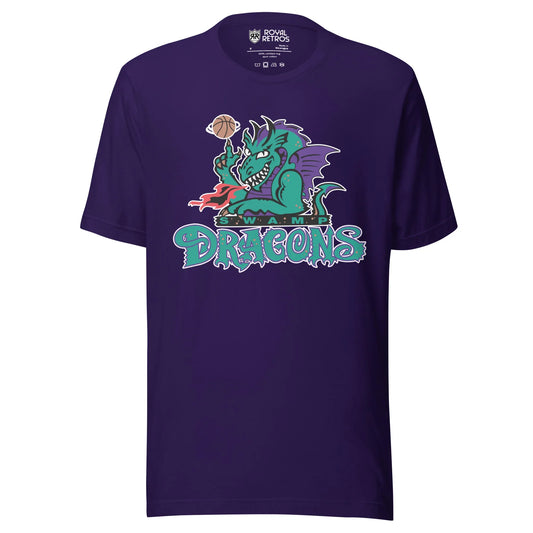
New Jersey Swamp Dragons T-Shirt
Regular price $29.99 USDRegular priceUnit price per -
-
New Jersey Swamp Dragons Hoodie
Regular price $59.99 USDRegular priceUnit price per -
-
-
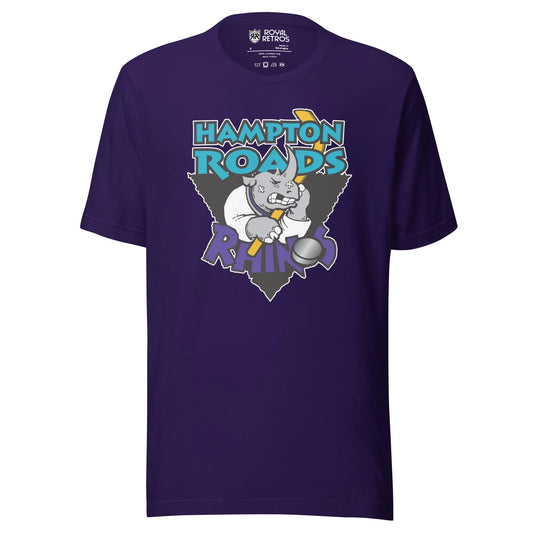
Hampton Roads Rhinos T-Shirt
Regular price $29.99 USDRegular priceUnit price per -
-
-
Atlantic Schooners T-Shirt
Regular price $29.99 USDRegular priceUnit price per -
-
CUSTOM
Hampton Roads Rhinos Jersey
Regular price Starting at From $89.99 USDRegular priceUnit price per -
-
CUSTOM
New Jersey Swamp Dragons Custom Jersey
Regular price Starting at $84.99 USDRegular priceUnit price per -
-
-
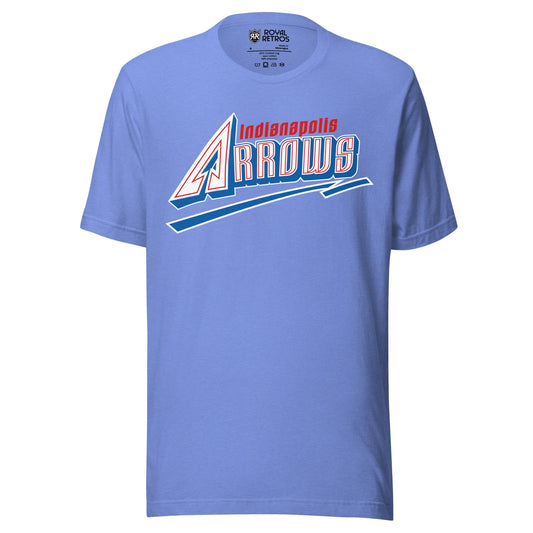
Indianapolis Arrows T-Shirt
Regular price $29.99 USDRegular priceUnit price per -
-
Washington Ambassadors T-Shirt
Regular price $29.99 USDRegular priceUnit price per -
-
-
St Louis Stallions T-Shirt
Regular price $29.99 USDRegular priceUnit price per -
-
Baltimore Bombers T-Shirt
Regular price $29.99 USDRegular priceUnit price per -
-
Florida Block Busters Foam Trucker Hat
Regular price $29.99 USDRegular priceUnit price per -
-
Florida Block Busters T-Shirt
Regular price $29.99 USDRegular priceUnit price per -
-
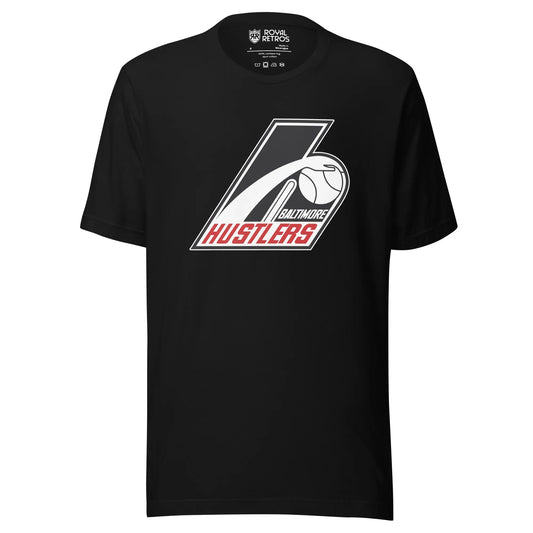
Baltimore Hustlers T-Shirt
Regular price $29.99 USDRegular priceUnit price per -
-
Toronto Northmen T-Shirt
Regular price $29.99 USDRegular priceUnit price per -











Recently Viewed
The Proposed Teams Collection — Royal Retros Never-Played Franchise Shop
Teams That Were Named, Designed, Announced — And Never Played a Single Game. 32 Products. Jerseys From $84.99, Tees $29.99. Sizes S–5XL.
Every team in this collection has one thing in common: not one of them ever played a game. The Baltimore Bombers lost an NFL expansion vote. The St. Louis Stallions had a domed stadium under construction before the league said no. The Atlantic Schooners had a logo, a fan base and a city and never made it to kickoff. The New Jersey Swamp Dragons were approved by every team in the league except the one being renamed. Royal Retros carries 32 active products across 19 never-was identities in five sports — 9 jerseys ($84.99 for football, baseball and basketball; $89.99–$119.99 for the two-tier hockey builds), 16 T-shirts at $29.99, 5 mini helmets at $54.99, and 2 hats at $29.99. Free custom name and number on most jerseys, sizes Small through 5XL, no big & tall upcharge. Most of these identities are not sold by anyone else at all — because there is no team store for a team that never existed.
What You Can Shop in the Proposed Teams Collection
Proposed Team Jerseys — 9 jerseys covering the franchises whose uniforms were designed but never worn in a real game. Football and baseball builds are $84.99 flat: the Baltimore Bombers Jersey, St Louis Stallions Jersey, Atlantic Schooners Jersey, Indianapolis Arrows Jersey, Washington Padres Jersey, and the New Jersey Swamp Dragons Jersey. The hockey builds — Hampton Roads Rhinos, Florida Block Busters, and the Nordiques Proposed Jersey — come in two constructions, $89.99 for the replica and $119.99 for the pro-stitched. Free custom name and number on most styles.
Proposed Team T-Shirts — 16 tees at $29.99, the widest never-played coverage in the collection. 4.2 oz combed and ring-spun cotton, unisex classic fit, pre-shrunk and side-seamed, printed graphics, S–5XL. Every marquee identity has one: Baltimore Bombers, St Louis Stallions, Seattle Kings, Toronto Northmen, Washington Ambassadors, Atlantic Schooners, Miami Manatees, Spirit of Miami, Hampton Roads Rhinos, Florida Block Busters, New Jersey Swamp Dragons, Baltimore Hustlers, Baltimore Claws, Indianapolis Arrows, and Bay Area Invaders.
Proposed Team Mini Helmets — 5 collector mini helmets at $54.99, fulfilled by 417 Helmets, in the classic Schutt shell or the modern Riddell style: Baltimore Bombers, St Louis Stallions, Memphis Hound Dogs, Seattle Kings, and Miami Manatees. Four of the five are teams that finished as finalists in an expansion process and lost.
Proposed Team Hats — 2 hats at $29.99: the Florida Block Busters Foam Trucker Hat, one of hockey's great rejected names on a properly loud early-90s silhouette, and the Atlantic Schooners Unstructured Hat, a low-profile build for the Halifax franchise Atlantic Canada has waited forty years for.
Customization — Free custom name and number on most jerseys. On a never-played team you get a freedom no other collection offers: there is no correct roster, so the name on the back is entirely yours. Custom items are made to order and final sale.
Sizes — Small through 5XL on virtually every product. No big & tall upcharge. Hats are one-size-fits-most.
Eight Teams That Never Played — And Exactly How Each One Died
- Baltimore Bombers — One of five finalists in the early-1990s NFL expansion process, bidding to bring football back to a city that lost the Colts in 1984. The league picked Carolina and Jacksonville instead. Shop the Baltimore Bombers Jersey ($84.99), tee ($29.99) or mini helmet ($54.99).
- St. Louis Stallions — The other 1993 near-miss. St. Louis was so certain of winning that construction started on a downtown domed stadium before the vote. The dome sat empty until the Rams arrived in 1995 — keeping their own name. Shop the jersey ($84.99), tee ($29.99), mini helmet ($54.99) or the whole St. Louis Stallions collection.
- Atlantic Schooners — Canadian football's most beloved phantom franchise. Halifax was awarded a team in 1984 and lost it when stadium financing collapsed; Maritime groups have revived the bid repeatedly since without ever producing a game. Shop the Atlantic Schooners Jersey ($84.99), tee ($29.99) or unstructured hat ($29.99).
- New Jersey Swamp Dragons — The 1994 rebrand that reached a league vote and passed. Every franchise approved it except New Jersey itself, which changed its mind and voted against its own new name. Shop the Swamp Dragons Jersey ($84.99) or the tee ($29.99).
- Florida Block Busters — In 1992 the owner of the new Miami hockey club also owned Blockbuster and proposed naming the team after it. The league refused to sanction a corporate-branded name. Shop the Block Busters Jersey ($89.99 replica / $119.99 pro-stitched), tee ($29.99) or foam trucker hat ($29.99).
- Hampton Roads Rhinos — A formal 1996 expansion application for Norfolk, Virginia, with a $142 million arena plan and a blue, purple and teal identity unlike anything in the sport. Rejected in February 1997. Shop the Rhinos Jersey ($89.99 replica / $119.99 pro-stitched) or the tee ($29.99).
- Toronto Northmen — A 1974 challenger-league charter franchise whose owner signed three of the biggest stars in pro football. Canada moved to legislate the team out of existence; it relocated to Memphis before a single snap. Shop the Toronto Northmen T-Shirt ($29.99).
- Seattle Kings — A 1972 NFL bid named for a Kingdome that had not been built yet. The money ran out; Seattle's actual franchise arrived in 1976 under a different name and played three decades in that same dome. Shop the Seattle Kings T-Shirt ($29.99) or mini helmet ($54.99).
Why Royal Retros Is the Home of Never-Played Team Gear
- Nobody else sells these teams. At all. A defunct franchise at least had a team store once; a franchise that never played never had one. There is no vintage supply chain, no old stock and no competitor catalog for the Baltimore Bombers or the Hampton Roads Rhinos — which is exactly why this collection exists.
- 19 never-was identities across five sports. Football, Canadian football, hockey, basketball and baseball, all in one place. No other retailer treats "teams that never played" as a category at all, let alone stocks it 32 products deep.
- Every design is reconstructed, not guessed. These identities survive in press kits, concept renderings, helmet mockups and unveiling photos. Each product is built from the documented reference material for that specific proposal — the Rhinos' blue-purple-teal, the Block Busters' rental-chain yellow, the Schooners' Maritime palette.
- Multiple formats per team where the story deserves it. The Bombers and Stallions each have a jersey, a tee and a mini helmet; the Block Busters and Schooners each have a jersey, a tee and a hat. You can build a whole never-played display around a single franchise.
- Honest pricing. $29.99 tees, $84.99 jerseys on football, baseball and basketball, $89.99–$119.99 on the two-tier hockey builds, $54.99 mini helmets, $29.99 hats. No collector-scarcity markup.
- Free customization on most jerseys. No official roster ever existed, so there is no wrong answer. Your name, your number, your alternate history.
- Sizes Small through 5XL. No big & tall upcharge on any item in the collection.
- Heritage and tribute framing throughout. Every piece is a vintage-inspired reproduction honoring a proposal that never became a franchise, and nothing here is affiliated with, endorsed by or sponsored by any team, league or organization.
Quick Buying Questions
What sizes do proposed-team jerseys and tees come in?
Small through 5XL on virtually every product in the collection. Hats are one-size-fits-most — the foam trucker is a snapback closure and the Schooners hat is an unstructured adjustable. We do not upcharge for big & tall sizes.
Can I add my own name and number?
Yes, free on most jerseys. This is the one collection where customization is not a compromise: no proposed team ever had a roster, so there is no "correct" name for the back. Custom items are made to order and final sale.
What is the difference between the pro-stitched and replica hockey jerseys?
Pro-stitched ($119.99) uses authentic stitched numbers and lettering — heavier, more durable, the classic on-ice look. Replica ($89.99) uses printed graphics on lightweight breathable fabric, better for everyday wear. Both are 100% polyester and both take free personalization. The Rhinos, Block Busters and Nordiques proposed jerseys all offer both tiers.
What are the T-shirts made from?
100% cotton (52% cotton / 48% polyester on heather colors), 4.2 oz combed and ring-spun, unisex classic fit, pre-shrunk and side-seamed, with printed graphics. They are the soft lightweight build, not a heavyweight boxy tee.
What exactly is a mini helmet?
A 15 oz collector display helmet in the classic Schutt shell or the modern Riddell style, fulfilled by 417 Helmets — small enough for a shelf, recognizable enough to start a conversation.
How fast do these ship and what is the return policy?
Tees and hats ship in 3–5 business days, and mini helmets typically ship in 3–5 business days from 417 Helmets. Custom jerseys are made to order on the lead time shown in the customization screen. Customized items are final sale — no returns or exchanges. Standard items follow our normal return policy.
Are these officially connected to any team or league?
No. Every item is a vintage-inspired tribute reproduction of a proposal that never became an operating franchise. Nothing here is affiliated with, endorsed by or sponsored by any team, league or organization; names and imagery are used for historical and artistic purposes.
Which team should I start with?
For the story everyone knows, the Swamp Dragons. For the story nobody knows, the Hampton Roads Rhinos. Buying for a city? The Bombers for Baltimore, the Stallions for St. Louis and the Schooners for Atlantic Canada are the three locals recognize on sight.
The Complete History of Every Team in This Collection
What follows is the full record of every identity in this collection — who proposed it, which league it was aimed at, how far it got, and precisely what killed it. These stories do not exist in one place anywhere else; they are scattered across expansion-committee minutes, decades-old microfilm, uniform-concept archives and the memories of the cities that almost got a team.
Football: The Expansion Bids That Lost
Baltimore Bombers — The 1993 NFL Expansion Finalist
When the Colts left Baltimore for Indianapolis in the middle of a March night in 1984, the city assumed the absence would be temporary. It was not. Baltimore spent nearly a decade lobbying to get back in, and the early-1990s NFL expansion process was supposed to be the payoff. The league narrowed its list to five finalists: Charlotte, Jacksonville, Memphis, St. Louis and Baltimore.
The bid was fronted by an ownership group led by Malcolm Glazer, planning to play at a renovated Memorial Stadium — the ballpark the Colts had called home. The nickname chosen was the Bombers, a name with local resonance: Baltimore's aviation industry had built bombers during the war, and it carried the blue-collar identity the city wanted to project. Helmets and identity work were produced.
The league gave the two 1995 franchises to Charlotte and Jacksonville. The reaction in Baltimore was closer to grief than disappointment, and the Bombers never existed for a single day. The postscript is why the story still stings: in 1996, barely a year later, Baltimore got its team the same way it had lost one, when the Cleveland Browns relocated to Maryland and were rebranded the Ravens. The Bombers identity was left behind entirely. Shop the Bombers jersey, tee and mini helmet, or browse everything in Maryland.
St. Louis Stallions — The Team That Built the Stadium First
St. Louis lost the football Cardinals to Phoenix in 1988 and entered the expansion process as a wounded market determined to get back in. Unlike Baltimore, it decided to prove its seriousness with concrete: construction began on a new downtown domed stadium ahead of the league's decision, a facility that would open as the Trans World Dome and later become part of America's Center.
The proposed franchise was named the Stallions. The identity was developed, the ownership group assembled, and the stadium rose out of the ground as a physical argument that St. Louis deserved a team. Charlotte and Jacksonville got the 1995 franchises anyway, leaving St. Louis with a half-built dome and no tenant.
The near-misses kept coming. During the same window the New England Patriots — then under different ownership and openly exploring relocation — considered moving into the St. Louis stadium and taking the Stallions name for 1994, before Robert Kraft bought the franchise and kept it in Foxborough. In 1995 the dome finally got a tenant when the Los Angeles Rams relocated to Missouri, but they brought their own century-old name with them. The Stallions identity was never used by anybody, ever. Shop the Stallions jersey, tee and mini helmet, the dedicated St. Louis Stallions collection, and the wider St Louis and Missouri collections.
Memphis Hound Dogs — The Elvis Franchise
Memphis was the third city to lose the early-1990s expansion race, and its bid produced the best name of the five. The proposed franchise was to be called the Hound Dogs — a nod to the fact that Elvis Presley Enterprises was among the investors backing the effort. It is one of very few times in American professional sport that a franchise name has been driven by a specific musician's estate.
Memphis had a real case — the city had supported pro football in the World Football League and drew well at the Liberty Bowl — but the committee went with Charlotte and Jacksonville. Memphis football did not stop there: one of the investors took the effort north instead, and the city ended up with a Canadian Football League franchise during that league's brief American expansion, the Memphis Mad Dogs, an unmistakable echo of the Hound Dogs bid. That team played one season. The Hound Dogs never did. Shop the Memphis Hound Dogs Mini Helmet.
Seattle Kings — The 1972 Bid and the Burning Football
Two decades before the Baltimore and St. Louis heartbreaks, Seattle ran its own failed campaign. In 1972 an ownership group fronted by Hall of Fame running back Hugh McElhenny set out to bring the NFL to the Pacific Northwest, proposing a team called the Kings — named for the domed stadium the city was planning to build.
The group did the things a serious bid does and then a few things a serious bid does not. Helmets were designed, a booster club organized, and a downtown office opened with a giant football mounted on the roof. The story that has followed the bid ever since is that the rooftop football caught fire — an image so on the nose for a doomed franchise that it has outlived every other detail of the campaign. What definitely happened is that the money ran out. Seattle's actual franchise arrived in 1976 under entirely different ownership and an entirely different name, and spent its first three decades in the Kingdome — the stadium that gave the Kings their name and then gave it to nobody. Shop the Seattle Kings T-Shirt or mini helmet, and see the rest of the Washington collection.
Football: Charter Franchises That Were Moved Before Kickoff
Toronto Northmen — Legislated Out of Existence
The 1974 World Football League was the most aggressive challenger American football had seen since the AFL, and its boldest move was putting a charter franchise in Toronto. Owner John Bassett did not merely announce a team; he signed three of the biggest stars in professional football away from the reigning champions — a fullback, a receiver and a halfback whose combined departure was front-page news in two countries.
That was exactly the problem. A well-funded American league placing a star-laden team in Toronto was an existential threat to the Canadian Football League's flagship market. The federal government moved to block the franchise through legislation, with the health and welfare minister leading a bill designed to keep American professional football out of Canada. Bassett did not wait to see whether it would pass; he relocated to Memphis before the season, where the team played as the Southmen — a direct inversion of the name Toronto never got to use. The Northmen hold a genuinely unique distinction: a football team killed not by money, not by a stadium and not by a vote, but by an act of national legislation. Shop the Toronto Northmen T-Shirt, the World Football League collection, and Ontario.
Washington Ambassadors — Announced in DC, Played in Florida
The same 1974 league announced a charter franchise for the nation's capital called the Washington Ambassadors, with RFK Stadium as the planned home — an obvious target market with one professional football team and a long-established appetite for the sport.
The Ambassadors never got out of the announcement stage. Before the inaugural season the franchise was relocated to central Florida and rebranded as the Florida Blazers, and the relocated version turned out to be one of the league's best teams, reaching the championship game in its only full season. Washington got the press release; Florida got the football. The Ambassadors are the cleanest example of a category that recurs throughout the WFL's short history: franchises real enough to have names, colors and stationery, and never real enough to have a game. Shop the Washington Ambassadors T-Shirt, the World Football League collection, and Washington DC.
Spirit of Miami — Approved, Then Never Funded
The original United States Football League expanded aggressively for 1984, and among the franchises approved in that push was a South Florida entry called the Spirit of Miami, slated for the Orange Bowl. The name was unusual — a "Spirit of" construction rather than a conventional nickname — fitting a league self-consciously trying to be different. The Spirit never took the field. The franchise could not secure stable funding ahead of the 1984 season and suspended operations before it had played a down. It is the most obscure entry in this collection and, for exactly that reason, one of the most rewarding — almost nobody recognizes the name on sight, which makes the tee a conversation starter with a built-in punchline. Shop the Spirit of Miami T-Shirt, and see the full USFL and Florida collections.
A Note on the Bay Area Invaders
One item here does not belong to the never-played category, and we would rather say so than pretend otherwise. The Bay Area Invaders T-Shirt honors a real, playing team: the Oakland Invaders rebranded as the Bay Area Invaders for 1985, went 13–4–1, absorbed another franchise's roster and reached the championship game. What links it to this collection is the rebrand itself — a regional identity adopted at the very end of a league's life, worn for one season, then erased when the league stopped operating. For everything else in that league, see the USFL collection.
Canadian Football: The Phantom Franchises
Atlantic Schooners — Forty Years of Almost
No franchise in North American sport has been almost-born as many times as the Atlantic Schooners. The Canadian Football League awarded Halifax an expansion franchise in 1984, intending to give Atlantic Canada — the one region of the country without a team — a place in the national league. The name was chosen and the identity developed.
Then stadium financing collapsed, the franchise was suspended before its inaugural season, and the award lapsed. That should have been the end of it. Instead the Schooners became the most persistent unrealized franchise in Canadian sports: Halifax-area groups have revived the name repeatedly across the decades since, each attempt getting far enough to generate renderings, merchandise interest and genuine regional excitement, and each running aground on the same problem — nobody can get a stadium built. The result is a team with a real fan base, real merchandise demand, a recognizable identity and no games. Royal Retros carries the Atlantic Schooners Jersey, the tee and the unstructured hat. See also Historic Canadian Football, CFLPA and Canada.
Miami Manatees — The American Experiment That Ended First
In the mid-1990s the Canadian Football League ran a short, strange and now largely forgotten experiment: expanding into the United States, playing Canadian rules on Canadian-dimension fields in stadiums built for a different game. Miami was awarded a franchise in that push, to be called the Manatees and to play at the stadium then known as Joe Robbie Stadium alongside the NFL's Dolphins.
The Manatees never played. Ownership problems, weak advance ticket sales and the obvious question of whether South Florida wanted a second professional football team got the franchise canceled before the season. The league's American expansion collapsed shortly afterward. The Manatees are a double rarity — a team that never played, in a league experiment that itself barely happened. Shop the Miami Manatees T-Shirt or the Miami Manatees Mini Helmet, and browse Historic Canadian Football and Central Florida.
Hockey: The Identities That Never Hit the Ice
Hampton Roads Rhinos — The Bid That Was Rejected on Paper
On November 1, 1996, George Shinn — already the owner of a professional basketball franchise in Charlotte — filed a formal application for one of four available expansion slots in top-tier professional hockey. The proposal centered on Norfolk, Virginia, with a new arena budgeted at $142 million. The team would be the Rhinos, in a blue, purple and teal scheme unlike anything else in the sport.
The league rejected the bid on February 19, 1997, on structural grounds: a small market, a region lacking political unity behind the project, a crowded East Coast slot, and Washington already holding a franchise close enough to matter. What survives is the identity — the name and that unmistakable palette, developed for a team that never had a roster, a rink or a game. It is the purest phantom franchise in this collection. Shop the Hampton Roads Rhinos Jersey or the tee, and see Virginia and Legacy Hockey.
Florida Block Busters — When a Video Chain Almost Named a Hockey Team
In 1992 a new hockey franchise was being established in South Florida. Its owner, Wayne Huizenga, also controlled Blockbuster — then one of the most recognizable retail brands in America, with a store in nearly every strip mall in the country. Huizenga proposed naming the team the Florida Block Busters, in a blue-and-yellow scheme lifted directly from the chain's branding, and a full uniform concept was designed.
The league said no. Corporate-branded franchise names were a line the sport would not cross, and the club launched as the Florida Panthers instead. Had it been approved it would have been one of the earliest and most brazen examples of naming-rights logic applied to a franchise identity rather than a building. The rejected concept is a perfect fossil of the early 1990s — a moment when a video chain was culturally large enough to plausibly name a major-league team. Shop the Florida Block Busters Jersey, the tee or the foam trucker hat. See also Historic Hockey and Florida.
The Nordiques Proposed Jersey — A Design That Was Never Worn
This one is a different species, and it is worth being precise about why it is here. The Quebec Nordiques were a real and beloved franchise — a charter World Hockey Association club in 1972, Avco Cup champions in 1977, and a fixture of top-tier hockey from the 1979 merger until the club relocated to Denver in 1995. What never happened is this sweater: a design developed for the club and never adopted, a road not taken in one of hockey's most distinctive visual identities. Quebec's actual uniform, with its fleur-de-lis and unmistakable blue, is among the most recognizable in the sport, which makes the alternate that was passed over genuinely interesting to look at. It sits here under the same logic as the Block Busters and the Swamp Dragons: an identity drawn, considered and left on the table. Shop the Nordiques Proposed Jersey, the full Quebec Nordiques collection, and the World Hockey Association collection.
Basketball: The Rebrands That Died in the Boardroom
New Jersey Swamp Dragons — Approved by Everyone Except Themselves
In 1994 the New Jersey Nets were a struggling franchise looking for a reset, and they found one in a rebrand. The proposed identity was the Swamp Dragons — a reference to the Meadowlands wetlands surrounding the team's arena — with Fire Dragons floated as an alternative. Uniform concepts were produced, and the rebrand was serious enough to require a league vote.
The vote passed. Every franchise approved the change except New Jersey itself, which reversed course at the last minute and voted against its own rebrand. The Nets remained the Nets. It is the most famous never-was rename in professional basketball and one of very few identity changes in any sport approved by a league and then killed by the team requesting it. The Swamp Dragons have since become a cult object — a name now more beloved than most real ones, precisely because it never had to survive a bad season. Shop the New Jersey Swamp Dragons Jersey or the tee. See also New Jersey and New York Basketball, Legacy Basketball and New Jersey.
Baltimore Hustlers — The Shortest Nickname in Pro Basketball
The 1975 offseason found a long-traveled American Basketball Association franchise moving from Memphis to Baltimore. The relocated club was renamed the Hustlers, a name meant to evoke effort. It was widely reported at the time that the league office and others found the connotations less flattering than intended, and the nickname was changed to the Claws before the team played a single game. The Hustlers therefore existed as an official franchise identity for a matter of weeks, on paper only — almost certainly the shortest-lived nickname in the history of professional basketball, and a genuinely rare tee. Shop the Baltimore Hustlers T-Shirt, and see the ABA collection.
Baltimore Claws — Three Preseason Games and Out
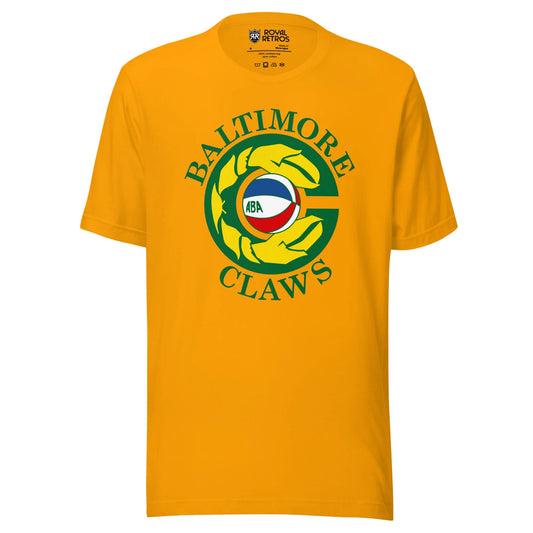
The renamed Baltimore Claws barely outlived the name they replaced. They were the final chapter of a lineage that began as the 1967 New Orleans Buccaneers and passed through Memphis under several identities before landing in Baltimore. The club made a genuine attempt to be competitive, acquiring a marquee big man in a trade — but never paid the $500,000 the relocation deal required, and the player never joined the team. The Claws played three preseason games, ran out of money and folded before the regular season began, ending a nine-year lineage without the Baltimore version ever appearing in a game that counted. They are the collection's edge case in the best way: a team that suited up, took the floor, and still never played a real game. Shop the Baltimore Claws T-Shirt, the ABA collection and Maryland.
Baseball: The Moves That Fell Through
Washington Padres — The Relocation That Was Undone at the Last Minute
In 1974 the San Diego Padres were being sold and moved to Washington, DC. This was not a rumor — it went far enough that new uniforms were designed and baseball card manufacturers actually printed cards listing players under "Washington National League," because the relocated club had not yet settled on a nickname. Nationals was reportedly the leading candidate, with Stars, Senators and briefly Pandas also considered.
The move died when Ray Kroc bought the franchise and kept it in San Diego. Washington, which had already lost two Senators franchises, went without baseball for another three decades. The relocation jersey is one of the strangest artifacts in this collection because it commemorates a team with a documented uniform, printed baseball cards and no games — a franchise that existed in the supply chain before it existed anywhere else. Shop the Washington Padres Jersey, and see Majors and Washington DC.
Indianapolis Arrows — Baseball for a Football Dome
The Hoosier Dome opened in Indianapolis in 1985 and gave the city a problem worth having: a brand-new domed stadium and an appetite for more major-league sport than one football team could supply. Among the ideas floated was a bid to bring major-league baseball to the dome under a proposed franchise name of the Indianapolis Arrows. It never advanced past the concept stage — a stadium built for football is a poor host for baseball, and the market was not large enough to compete with the cities actually in contention. This is the deepest cut in the collection and the one we hold most loosely: the Arrows story is sparsely documented, and we present it as the concept it was rather than as a formal expansion application. Shop the Indianapolis Arrows Jersey or the tee, and browse Indiana and Majors.
The Five Ways a Franchise Dies Before It Plays
Read those stories in sequence and a pattern emerges. Teams do not fail to exist randomly; they fail in a small number of recognizable ways, and every identity in this collection fits one of them.
- The expansion vote. A city assembles a credible ownership group, produces an identity, and loses a committee decision. Baltimore, St. Louis, Memphis, Seattle and Hampton Roads all died this way — the most common cause and the cruelest, because the team is fully built before the vote and worthless the moment after it.
- The stadium. The award is granted, the identity exists, and the building never gets financed. The Atlantic Schooners have died this way repeatedly across four decades — the only franchise here killed by the same cause more than once.
- The money running out. The league says yes, the ownership cannot fund it, and the franchise is suspended before the first season. The Spirit of Miami, the Miami Manatees and the Baltimore Claws all failed at this stage — the Claws so late that they had already played preseason games.
- Politics and law. The rarest cause and the most dramatic. The Toronto Northmen were pushed out by federal legislation written to protect a domestic league. No amount of money or stadium capacity could have saved them.
- Someone changes their mind. The identity is approved and then abandoned by the people who proposed it. The Swamp Dragons were voted through by an entire league and voted down by their own franchise; the Hustlers were renamed within weeks; the Block Busters were vetoed on principle; the Washington move was undone by an unexpected buyer.
What all five share is that the identity survives the franchise. The vote fails, the money runs out, the law intervenes — and the name, the colors and the logo are already finished. They exist; they just have nowhere to go. That is what this collection is.
More Frequently Asked Questions About Proposed Teams
What is a "proposed team"?
A franchise identity that was formally developed — named, designed, announced or approved — and then never played a competitive game. That covers failed expansion bids, awarded franchises canceled before their first season, relocations that fell through, and rebrands adopted and then abandoned.
How many teams are in this collection?
19 distinct identities across 32 active products, covering football, Canadian football, hockey, basketball and baseball. Seventeen of the nineteen never played a competitive game under the identity shown.
Which proposed team came closest to actually existing?
The Baltimore Claws. They completed a relocation, signed players, and played three preseason games before folding ahead of the regular season. The New Jersey Swamp Dragons are a close second — the rebrand was formally approved by a league vote and then rejected by the team itself.
Did any of these teams ever wear these uniforms?
No — that is the point. The identities survive in concept renderings, unveiling photographs, helmet mockups and press materials, but none were worn in a competitive game. Our designs are reconstructions built from the documented reference material for each proposal.
Which of these cities eventually got a team?
Baltimore (1996, via relocation), Seattle (1976, different ownership and name), St. Louis (1995, via relocation, Rams keeping their own name), Washington DC (baseball returned in 2005), and South Florida (hockey launched in 1993 under a different name). Halifax, Hampton Roads, Memphis, Toronto and Indianapolis are all still waiting.
Are these teams real enough to have fan bases?
Some genuinely are. The Atlantic Schooners have an active multi-generational following in Atlantic Canada, the Swamp Dragons are a cult favorite well beyond New Jersey, and the Bombers and Stallions are remembered vividly in the cities that lost them. Others — the Spirit of Miami, the Indianapolis Arrows, the Baltimore Hustlers — are pure deep cuts.
What makes a good gift from this collection?
Buy for the city, not the sport. A Bombers tee for Baltimore, a Stallions tee for St. Louis, a Schooners hat for the Maritimes, a Rhinos tee for Hampton Roads. These identities carry a specific local grievance that generic team gear cannot touch — and for the sports-history obsessive who already owns everything, a team that never existed is the one gap in the collection.
Where else on the site should I look?
The natural neighbors are Other Football for defunct and relocated gridiron franchises, the World Football League and USFL for the challenger leagues that produced several of these phantom teams, Historic Canadian Football for the Schooners and Manatees context, ABA for the Baltimore basketball lineage, and Legacy Hockey and Historic Hockey for the never-was sweaters.
Shop Related League and Team Collections
- ABA — The red-white-and-blue league of the Hustlers and Claws. 81 products.
- Historic Canadian Football — Schooners and Manatees territory. 72 products.
- CFLPA — Canadian professional football. 53 products.
- Legacy Hockey — Top-tier hockey heritage. 73 products.
- Historic Hockey — The wider defunct and forgotten hockey catalog. 96 products.
- Legacy Basketball — Defunct and heritage basketball identities. 41 products.
- Other Football — Defunct, relocated and pre-war gridiron franchises. 78 products.
- Quebec Nordiques — Including the WHA-era jerseys. 8 products.
- St. Louis Stallions — The 1993 expansion bid, all three products in one place. 3 products.
- UFL — The current spring league. 82 products.
- USFL — 1980s spring football. 125 products.
- World Hockey Association — The 1972–79 challenger league. 77 products.
- World Football League — The 1974–75 challenger. 61 products.
- XFL — Spring football jerseys and apparel. 63 products.
- Majors — Defunct and relocated major-league baseball. 85 products.
- New Jersey and New York Basketball — The Swamp Dragons and Americans lineage. 5 products.
Shop by Product Type
- Custom Jerseys — Every customizable jersey on the site. 936 products.
- Custom Football Jerseys — 207 products.
- Custom Hockey Jerseys — 194 products.
- Custom Baseball Jerseys — 272 products.
- Custom Basketball Jerseys — 93 products.
- Vintage Sports T-Shirts — Every tee on the site. 701 products.
- Football T-Shirts — 362 products.
- Hockey T-Shirts — 145 products.
- Baseball T-Shirts — 93 products.
- Basketball T-Shirts — 46 products.
- Hats — Snapbacks, fitted and unstructured. 37 products.
- Trucker Hats — Including the Block Busters foam build. 48 products.
- Hoodies — 98 products.
- Sweatshirts — 110 products.
- New Arrivals — The most recent additions. 48 products.
Shop by City and State
- Maryland — Bombers, Hustlers and Claws territory. 46 products.
- St Louis — 57 products.
- Missouri — 55 products.
- Washington — Home of the 1972 Kings bid. 87 products.
- Washington DC — Ambassadors territory. 65 products.
- Florida — Block Busters, Manatees and the Spirit. 102 products.
- Central Florida — 49 products.
- Virginia — Hampton Roads Rhinos country. 20 products.
- New Jersey — Swamp Dragons territory. 40 products.
- Indiana — 11 products.
- Ontario — Where the Northmen never played. 34 products.
- Canada — Schooners, Northmen and the full Canadian catalog. 144 products.
- Bay Area — 128 products.
Proposed Teams at Royal Retros — 19 Franchises That Were Named, Designed and Never Played. Jerseys From $84.99, Tees $29.99, Sizes S–5XL.