AF1 League Gear — The Royal Retros Arena Football One Fan Shop
The Official Store of Arena Football One. League & Team Gear. Tees, Trucker Hats, Hoodies & Satin Jackets. Sizes S–5XL. Home of the 2026 Arena Crown Champions Tee.
Royal Retros' AF1 League Gear collection is the official store of Arena Football One — the indoor league that kicked off its inaugural season in 2025 and just crowned the Nashville Kats 2026 Arena Crown champions. 30 products live right now, split between league-wide AF1 branding and team-specific postseason gear for six of the nine franchises that started the 2026 season. Tees run $24.99–$34.99. Playoff trucker hats are $29.99 flat. Hoodies are $64.99 and $79.99, the quarter-zip is $59.99, the performance polo is $54.99, and the made-to-order satin jacket runs $219.99–$249.99. Sizes Small through 5XL on the apparel, with a youth tee at $24.99 for the kids who watched the Kats close out Albany. Whether you follow one team or the whole league, this is where AF1 lives on Royal Retros.
What You Can Shop in the AF1 League Gear Collection
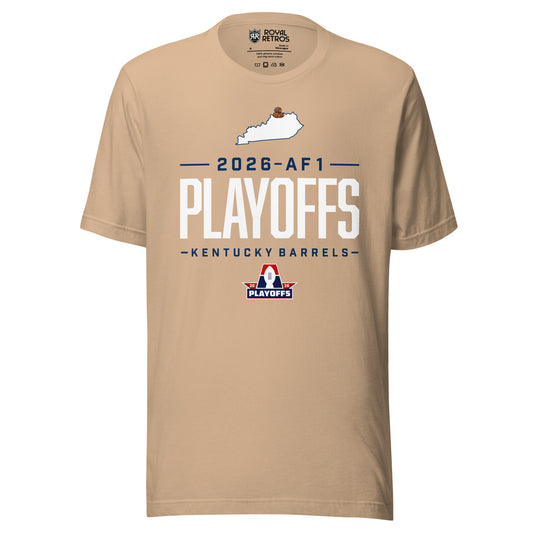
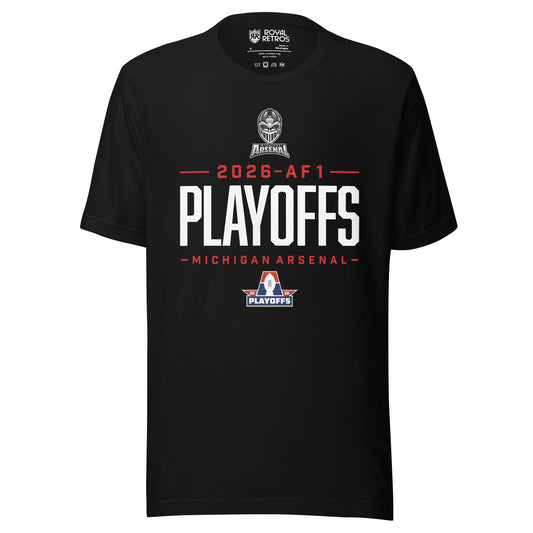
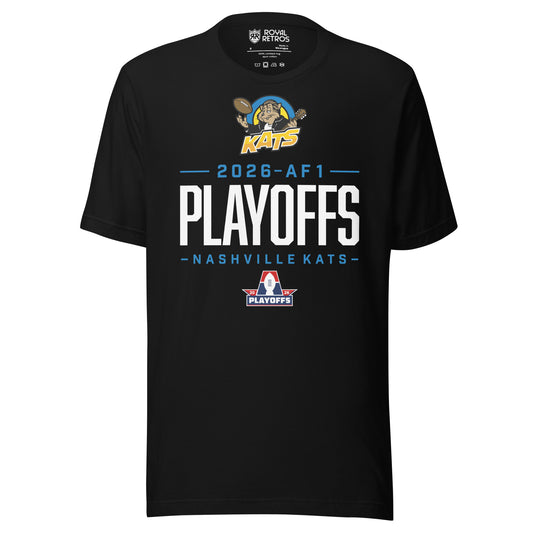
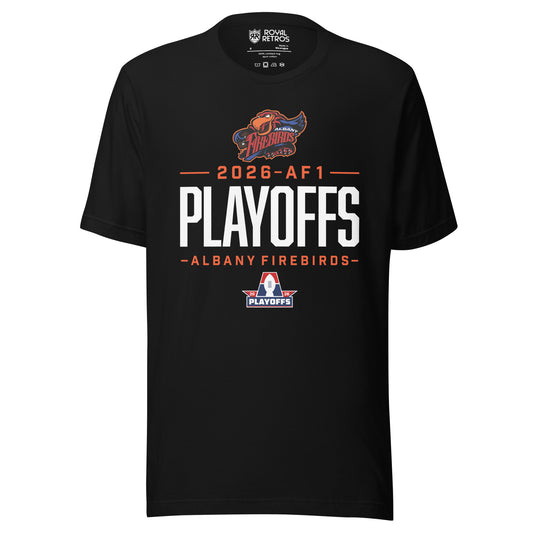
AF1 T-Shirts — The deepest category in the collection at 17 active tees, and the one that covers both halves of the shop. On the league side you get the core AF1 tee and the "No Sidelines No Limits" graphic — the slogan that has become AF1's unofficial motto, and a genuinely good piece of indoor-football shorthand for a game with no punts, no sidelines to run out of bounds on, and nowhere to hide. On the team side you get the two big 2026 postseason runs: the Chase The Crown series at $34.99 and the Playoffs series at $29.99, both produced for the six franchises that made the most noise this year. The single most in-demand shirt on the page is the Nashville Kats 2026 Champions Tee at $29.99 — the commemorative piece for the Kats' 59–53 Arena Crown win over Albany on August 9. Most tees $29.99; Chase The Crown tees $34.99; youth tee $24.99.
AF1 Trucker Hats — Six playoff trucker hats, one for each of the six teams represented in this collection: Albany Firebirds, Kentucky Barrels, Michigan Arsenal, Minnesota Monsters, Nashville Kats and Washington Wolfpack. Classic mesh-back trucker build, snapback closure, one-size-fits-most. All six are $29.99. These are the fastest-moving non-tee items in the collection and they are postseason-dated, which means once the 2026 run is done they become period pieces rather than restockable inventory. Browse the wider Royal Retros hats collection if you want to pair an AF1 lid with something from another league.
AF1 Hoodies — Two heavyweight pullovers. The "No Sidelines No Limits" hoodie at $64.99 carries the league slogan, and the AF1 On Field Hoodie at $79.99 is the heavier sideline-spec build taken from the AF1 On Field Collection. Sizes S–5XL. If you want to see what else Royal Retros builds at this weight, the full hoodies collection runs across every league we cover.
AF1 Sweatshirts — One piece, and it is the quiet favorite: the AF1 Quarter-Zip Sweatshirt at $59.99. Mid-weight, embroidered league mark, the item most AF1 staffers and season-ticket holders actually wear to games in April and May when the arena is still cold.
AF1 Polos — The AF1 Performance Polo at $54.99. Moisture-wicking activewear build with the league mark on the chest. This is the coaches-and-front-office piece, and the one to buy if you want AF1 branding you can wear somewhere that does not accept a graphic tee.
AF1 Jackets — The AF1 Satin Jacket, $219.99–$249.99, made to order. Full varsity-cut satin shell with chenille and twill league branding — the premium anchor of the whole collection and the only garment here built the way a varsity jacket was built fifty years ago. Because it is made to order, allow additional production time and treat it as final sale.
AF1 Bags — The AF1 Backpack at $79.99. Full-size team-travel build with the league mark, sized for a laptop plus a game-day kit.
AF1 Drinkware — The AF1 Tumbler at $34.99. Insulated stainless tumbler with the league mark. The lowest-friction AF1 gift in the collection and the one that does not need a size.
Sizes — Small through 5XL across the apparel. No big & tall upcharge. Hats are one-size-fits-most snapback trucker. The youth tee covers the kids.
Shop AF1 League Gear by Team
Twenty of the thirty active products in this collection are team-specific. Here is who is represented and what each franchise brings to the page.
Nashville Kats — 4 products in this collection, 33 across the full team shop. The 2026 Arena Crown champions and the headline act of the whole page. The Kats went 11–1 in the regular season, won their final nine games, took the No. 1 seed, and beat the Albany Firebirds 59–53 in front of a sell-out crowd at F&M Bank Arena on August 9, 2026. Their four pieces here are the 2026 Champions Tee ($29.99), the Chase The Crown Tee ($34.99), the Playoffs T-Shirt ($29.99) and the Playoffs Trucker Hat ($29.99). If you want a full Kats wardrobe rather than the postseason capsule, the Nashville Kats collection carries the complete line.
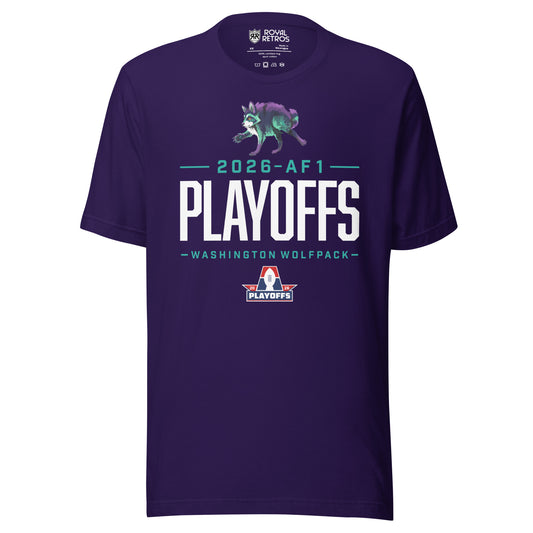
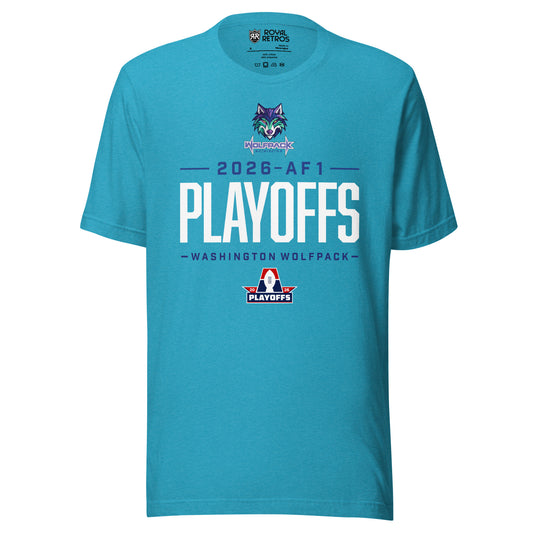
Washington Wolfpack — 4 products here, 23 across the team shop. Everett's team, playing out of Angel of the Winds Arena, and one of the eight founding franchises that walked out of the 2024 AFL to build Arena Football One. Their four pieces are the Playoffs T-Shirt ($29.99), the Chase The Crown Tee ($34.99), the Playoffs Trucker Hat ($29.99) and the Jimothy T-Shirt ($29.99) — a Pacific Northwest novelty tee riffing on the short-spined Seattle raccoon who went viral across the region this summer. It is the most purely regional item on the page and it sells to people who have never been to an arena football game in their lives. Full line at the Washington Wolfpack collection.
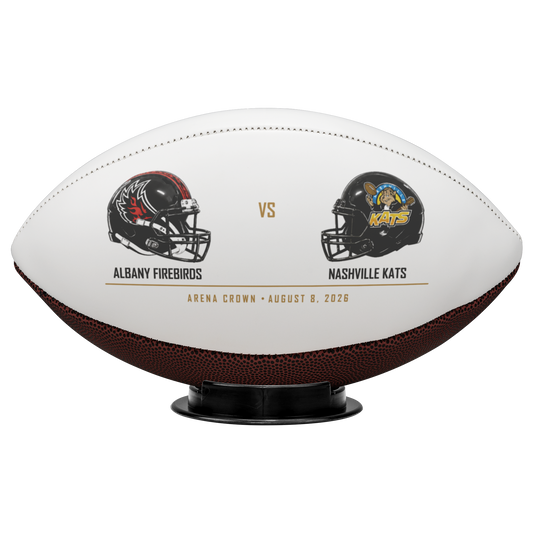
Albany Firebirds — 3 products here, 32 across the team shop. The defending champions who came up six points short. Albany went undefeated to win the inaugural 2025 AF1 title, returned thirteen members of that roster for 2026, and lost the Arena Crown on the last play of the game. The Firebirds name carries the longest arena football lineage of any franchise on this page — the original Albany Firebirds won ArenaBowl XIII in 1999. Three pieces here: Chase The Crown Tee ($34.99), Playoffs T-Shirt ($29.99), Playoffs Trucker Hat ($29.99). Full line at the Albany Firebirds collection.
Michigan Arsenal — 3 products here, 24 across the team shop. A 2026 expansion franchise that brought arena football back to Michigan, and one of two brand-new clubs to reach the postseason in their first year of existence. Chase The Crown Tee ($34.99), Playoffs T-Shirt ($29.99), Playoffs Trucker Hat ($29.99). Full line at the Michigan Arsenal collection.
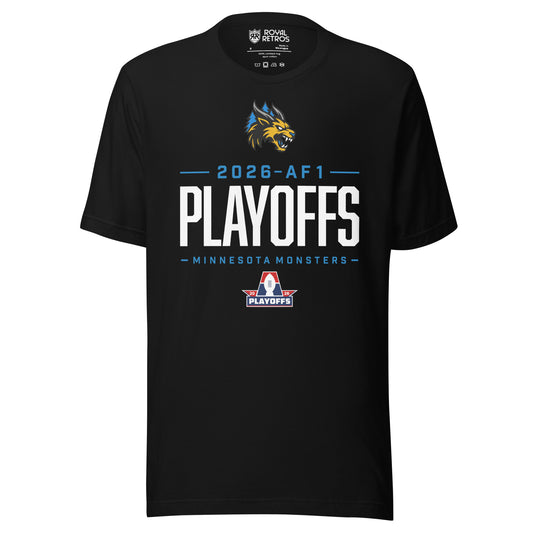
Minnesota Monsters — 3 products here, 23 across the team shop. The Monsters arrived in AF1 for 2026 with a trophy already in hand: as the Duluth Harbor Monsters they won The Arena League title in 2025 before rebranding and moving up. Chase The Crown Tee ($34.99), Playoffs T-Shirt ($29.99), Playoffs Trucker Hat ($29.99). Full line at the Minnesota Monsters collection.
Kentucky Barrels — 3 products here, 24 across the team shop. Northern Kentucky's expansion club, which kicked off its inaugural season in April 2026 and made the playoffs out of the gate. The bourbon-barrel identity is the best new logo package in the league and it prints beautifully. Chase The Crown Tee ($29.99), Playoffs T-Shirts ($29.99), Playoffs Trucker Hat ($29.99). Full line at the Kentucky Barrels collection.
Two more AF1 franchises have full collections on Royal Retros even though they are not represented in this league-gear subset — the Beaumont Renegades (20 active products) and the Oceanside Bombers (19 active products). And if you want everything AF1 in one place rather than this curated slice, the full AF1 collection runs to 322 products across the entire league.
Why Royal Retros for AF1 Gear
-
The official store of Arena Football One. Royal Retros is AF1's official store, and every AF1 team is licensed — league-branded and team-branded product alike. This is the real thing, not a workaround.
-
Both halves of the league in one place. League-wide AF1 branding and team-specific postseason gear, side by side. Most shops make you choose.
-
Current-season and championship product, not leftovers. The Nashville Kats 2026 Champions Tee, the Chase The Crown series and the Playoffs series are all tied to this year's actual postseason run.
-
Eight AF1 franchises with dedicated collections. Albany, Beaumont, Kentucky, Michigan, Minnesota, Nashville, Oceanside and Washington all have their own team shops on Royal Retros, not just a tag.
-
Arena football history as well as arena football present. Royal Retros carries 75 Arena Football League heritage pieces spanning 1987–2019 and an af2 collection alongside the current league. Nobody else covers the whole timeline.
-
Sizes Small through 5XL. No big & tall upcharge, on any garment in the collection.
-
Flat, honest pricing. Tees $24.99–$34.99. Trucker hats $29.99. Nothing on this page is priced on a "championship premium."
-
Real depth in the postseason line. The AF1 Postseason collection carries 30 products, and the AF1 On Field Collection another 18 — sideline-spec gear rather than fan-tier prints.
Quick Buying FAQ
Is AF1 gear from Royal Retros officially licensed?
Yes. Royal Retros is the official store of Arena Football One, and every AF1 team's product is officially licensed.
What sizes does AF1 gear come in?
Small through 5XL on virtually every apparel item — tees, hoodies, the quarter-zip, the polo and the satin jacket. We do not upcharge for big & tall sizes. Trucker hats are one-size-fits-most snapback. There is also an AF1 Youth T-Shirt at $24.99 for kids. Each product page carries its own size chart; the tees run true to size.
Can I add a name and number to AF1 gear?
The items in this collection are graphic and embroidered pieces rather than customizable jerseys, so name-and-number personalization is not offered on this page. If you want a personalized piece, look at the jersey styles inside the individual team collections — Nashville Kats, Albany Firebirds, Washington Wolfpack and the rest — where the customization option appears on eligible listings.
What are AF1 tees and hoodies made from?
Tees are pre-shrunk cotton and cotton-blend jersey with screen-printed graphics. Hoodies and the quarter-zip are heavyweight cotton-blend fleece. The performance polo is a moisture-wicking knit. The satin jacket is a full varsity-cut satin shell with chenille and twill applique. The trucker hats are structured front panel with mesh back and a snapback closure.
Is the satin jacket made to order?
Yes. The AF1 Satin Jacket ($219.99–$249.99) is a made-to-order piece, which is why it sits well above everything else on the page in price and in build quality. Allow extra production time on top of standard shipping, and note that made-to-order items are final sale.
How fast does AF1 gear ship, and what is the return policy?
Standard stocked items — tees, hats, hoodies, the polo, the quarter-zip, the tumbler and the backpack — ship within 3–5 business days. The made-to-order satin jacket takes longer and is final sale. Everything else follows our standard return policy at /pages/returns.
Will the 2026 championship and playoff gear be restocked?
Postseason and championship product is dated to a specific run. The Nashville Kats 2026 Champions Tee, the Chase The Crown series and the Playoffs series all commemorate the 2026 AF1 postseason, so once a size sells through it is generally gone rather than reordered. The league-branded core — the AF1 tee, hoodie, polo, quarter-zip, tumbler and backpack — is carried year-round.
Where Arena Football Came From — Jim Foster and a 9x12 Envelope
Arena football is the only major American sport that can point to the exact moment it was invented, and the exact object it was invented on.
In 1981, Jim Foster — then a promotions manager for the National Football League — sat in Madison Square Garden watching a Major Indoor Soccer League match. Indoor soccer in that era was doing something the outdoor game could not: it was packing mid-size arenas with a fast, high-scoring, wall-to-wall version of a sport people already understood. Foster looked at the boards, looked at the sightlines, and asked the obvious question that nobody had yet made work. Why not football?
He wrote the answer on a 9x12 manila envelope during the match — a sketch of the field, notes on how the gameplay would have to change, the beginnings of a rulebook. That envelope is the founding document of an entire sport.
It then took six years to turn into a league. Foster spent that time solidifying the rules, building a business plan, commissioning proper artwork from a professional artist, and shopping the concept to television. NBC bit, agreeing to a test game. And critically — in a move no other American sports league has ever pulled off — Foster protected the invention itself. He filed a patent application with the United States Patent and Trademark Office on September 30, 1987. It was granted on March 27, 1990 as US Patent 4,911,433, making arena football the only sport in history played under a patented, legally rival-free rules package.
The Arena Football League played its first real season in 1987 with four teams: the Denver Dynamite, the Pittsburgh Gladiators, the Chicago Bruisers and the Washington Commandos. Denver won ArenaBowl I. All four of those original franchises are represented in the Royal Retros Arena Football League heritage collection today, alongside 70-plus other teams from across the league's 1987–2019 run.
How the Indoor Game Actually Works — and Why It Is Different
Arena football is not "football indoors." It is a distinct sport with its own physics, and the rules exist because a hockey-and-basketball arena floor is roughly half the length of a football field. Every difference flows from that constraint.
The field is 50 yards long and about 28 yards wide — roughly the width of an NBA court — with 8-yard end zones instead of the outdoor game's 10. That is a playing surface less than a quarter the area of an NFL field, which is why the scoreboard moves the way it does.
Eight players a side instead of eleven. Fewer bodies in a smaller space keeps the field from becoming a scrum, and it puts a premium on quarterbacks who can read a compressed defense at speed.
Rebound nets flank each goalpost, standing roughly 30 feet high and 20 feet wide. A forward pass that hits the net stays live — if a receiver catches it before it touches the ground or the wall, play continues. There is nothing like it in any other code of football, and it produces the single most distinctive highlight in the sport: the carom touchdown.
There is no punting. On a 50-yard field a punt is meaningless, so it is simply illegal. Fourth down is always a decision, which means arena football has never had the outdoor game's habit of surrendering possession. Every drive ends in a score, a turnover, or a failed conversion.
The walls are in play. Padded boards run the length of the field where sidelines would be. Receivers work off them, defenders pin against them, and there is no stepping out of bounds to stop the clock or save yourself a hit. This is the origin of the AF1 slogan printed on two shirts in this collection: No Sidelines, No Limits.
Ironman football. Historically, most players had to be capable of playing both offense and defense, with only designated specialists such as kickers exempt. The two-way requirement has been loosened and tightened at various points across the sport's history, but it remains the cultural signature of arena football and the reason arena players are so distinctively built — fast enough to cover, strong enough to block, and conditioned to do both for four quarters.
The drop kick is worth more. A successful drop-kick field goal counts four points instead of three, and a drop-kick conversion after a touchdown counts two instead of one. Arena football is the only professional league on earth where the drop kick — a nineteenth-century relic in every other code — is a live, strategically rational weapon.
And in 2026, "the one" came back. Arena Football One reinstated a scoring rule that had been absent from its inaugural 2025 season: on a kickoff, if the receiving team is tackled without getting the ball out of its own end zone, the kicking team is awarded a single point. Known historically as the rouge or the single, and rebranded by AF1 as "the one," it is the sort of rule that only makes sense in a sport where field position is measured in feet. Albany Firebirds head coach and general manager Damon Ware was among those publicly in favor of bringing it back.
The Peak Years — 1996 to 2008
The Arena Football League's golden era ran roughly from 1996 to 2008 under commissioner David Baker, and at its height it was a genuine second-tier national sport rather than a curiosity.
The tell was television. The ArenaBowl moved to NBC in the early 2000s, putting the championship game on broadcast network television in the summer dead zone between the NBA Finals and NFL training camp — the smartest scheduling decision in the sport's history. A generation of American sports fans encountered arena football for the first time because it was the only live football on TV in July.
The other tell was ownership. NFL money moved in. Tennessee Titans owner Bud Adams took a Nashville franchise. Jerry Jones put a team in Dallas. John Elway backed a club in Colorado. When men who already owned NFL franchises started buying arena teams, the league stopped being a novelty and started being an asset class.
On the field, the era produced genuine dynasties. The Tampa Bay Storm won five ArenaBowls — V, VII, IX, X and XVII — and became the closest thing the sport had to a blue-blood franchise. The San Jose SaberCats answered in the 2000s with titles in 2002, 2004 and 2007, beating the Arizona Rattlers for the first two and the Columbus Destroyers for the third. The Arizona Rattlers reached three consecutive ArenaBowls from 2002 through 2004 and lost all three — twice to San Jose and once to Tampa Bay — one of the more painful near-dynasties in American sport.
Below the top league sat af2, arena football's developmental circuit. Founded in 1999 and first played in 2000, af2 fielded fifteen teams in its opening season, expanded fast, and ran on the same rules and the same style of play as its parent league — but in smaller cities and smaller buildings. Its season ran April through July with the ArenaCup championship in August. af2 existed to develop players and, just as importantly, to teach outdoor-trained footballers how to play a game where the walls are live and there is no punt team. Royal Retros carries an af2 collection covering that 2000–2009 window.
Dozens of teams passed through the two leagues in this period and most of them are now the deep-cut heritage names that make arena football such good throwback territory — the New Orleans VooDoo, the Orlando Predators, the Chicago Rush, the Grand Rapids Rampage, the Milwaukee Mustangs, the Minnesota Fighting Pike, the Portland Forest Dragons, the Anaheim Piranhas, the Texas Terror, the Charlotte Rage. The Royal Retros Arena Football League collection carries 75 products spanning that entire roster of extinct franchises.
Kurt Warner and the Great Arena Football Crossover Story
Every alternative football league has a "he made it" story. Arena football has the best one in the history of American sport, and it is not close.
Kurt Warner went undrafted out of Northern Iowa and was cut by the Green Bay Packers in training camp in 1994. In 1995 he signed with the Iowa Barnstormers of the Arena Football League. What followed was three seasons of production that would be implausible in fiction: 43 touchdown passes in 1995, 61 in 1996, and 79 in 1997. He was named First-team All-Arena in both 1996 and 1997 and led the Barnstormers to back-to-back ArenaBowl appearances in those same two seasons.
The NFL still would not take him at his word. The St. Louis Rams made tentative overtures on the condition that he prove himself in NFL Europe first, so Warner went to Amsterdam, quarterbacked the Admirals to the league championship, and finally earned a training camp invitation. He won a job as a third-stringer.
By 1999 he was the NFL's Most Valuable Player and the starting quarterback of a Super Bowl-winning team, in his first season as a starter. He was inducted into the Pro Football Hall of Fame in 2017. He is the only person ever inducted into both the Pro Football Hall of Fame and the Arena Football Hall of Fame.
That is the argument for arena football in a single career. The indoor game is not a lesser version of football; it is a different one, and it develops a specific set of skills — reading compressed coverage, throwing into tight windows at speed, making decisions in a fraction of the time the outdoor game allows — that translate upward better than anyone expected. The Barnstormers of that era are heritage product in the Arena Football League collection today, and they sell for exactly this reason.
The pipeline runs the other way, too. Arena football has repeatedly absorbed outdoor football's coaching and executive talent, most visibly when former NFL head coach Jeff Fisher stepped in as interim commissioner of the 2024 Arena Football League and then helped lead the breakaway that created Arena Football One.
The Collapse, the Comeback, and the Second Collapse
Arena football's institutional history is a genuinely confusing sequence of bankruptcies, asset sales and name reuses. Here is the clean version.
The original Arena Football League ran from 1987 to 2008. It hit financial trouble during the 2008 season, and the damage was bad enough that the league canceled its entire 2009 season. It then went into bankruptcy.
In December 2009 the assets went to auction. A group made up largely of af2 investors, plus some of the non-NFL investors from the original league, purchased the intellectual property of both the AFL and af2 for $6.1 million. That buying entity was, confusingly, also called AF1 — "Arena Football 1, LLC." It is not the same organization as today's Arena Football One, and the two should not be conflated. Shortly after the purchase it adopted the Arena Football League name outright.
The second Arena Football League ran from 2010 to 2019, claiming the records and history of the 1987–2008 league and resuming the championship numbering with ArenaBowl XXIII in 2010. af2 itself did not survive the transition — it was effectively disbanded in September 2009 when no team committed to playing in 2010, with its stronger franchises absorbed into the reconstituted top league.
The second AFL's final season was 2019, ending with the Albany Empire beating the Philadelphia Soul for the championship. On November 27, 2019 the Arena Football League filed for Chapter 7 bankruptcy and closed permanently, after 32 years. That is the end of the line for the entity that traces back to Jim Foster's envelope.
The 2024 Revival — and Why It Fell Apart in Three Weeks
On February 1, 2023, G6 Sports Group announced it would revive the Arena Football League name. The new league launched in April 2024 with sixteen teams, six of which arrived through a pre-launch merger with the existing Champions Indoor Football league.
It went wrong almost immediately. Within three weeks, five of the sixteen teams had folded. A run of controversies and unfulfilled commitments followed. Founding commissioner Lee Hutton was fired, the ownership group reorganized around ten teams, and former NFL head coach Jeff Fisher was brought in as interim commissioner to stabilize the season. Three more clubs folded before the regular season ended. Eight teams were left standing.
Those eight had the sport, the players and the buildings. What they did not want was the corporate wreckage attached to the AFL name.
On September 6, 2024, all eight surviving franchises — together with Fisher and Kurz — announced their joint departure from the Arena Football League to establish a new league: Arena Football One. The point was explicit: a clean legal entity, separate from the entanglements that had swallowed the 2024 season.
This is the moment "AF1" starts meaning what it means on this page. Everything in this collection descends from that September 2024 walkout.
Arena Football One — 2025, 2026, and Where the League Is Now
Arena Football One played its inaugural season in 2025. The Albany Firebirds won it, and won it perfectly — an undefeated championship season, the strongest possible opening statement for a league that badly needed one after the 2024 debacle.
2026 brought expansion, with nine teams starting the season: the Albany Firebirds, Beaumont Renegades, Kentucky Barrels, Michigan Arsenal, Minnesota Monsters, Nashville Kats, Oceanside Bombers, Oregon Lightning and the Washington Wolfpack. The Billings Outlaws were announced for 2026 but never played a game, and the Oregon Lightning ended their season early in June, leaving eight teams to finish the year. Kentucky and Michigan came in as expansion clubs. Minnesota arrived from The Arena League, where the franchise had won the 2025 title as the Duluth Harbor Monsters before rebranding.
The league also reinstated "the one" — the rouge — for 2026, restoring a single point for a kickoff downed in the receiving team's own end zone.
And then Nashville took it. The Nashville Kats went 11–1, closed the regular season on a nine-game winning streak, and secured the No. 1 seed. In the 2026 Arena Crown — Arena Football One's championship game — the Kats beat the defending champion Firebirds 59–53 before a sell-out crowd of 4,066 at F&M Bank Arena on August 9, 2026.
The finish was the sort of thing arena football produces routinely and the outdoor game almost never does. Nashville retook the lead on the first play after the one-minute warning, Tyler Kulka hitting Malik Honeycutt for a 25-yard touchdown with 55 seconds remaining. Albany drove back. On the final play of the game, Nashville's Roderick Perry stopped Firebirds quarterback Sam Castronova short of the goal line on a quarterback sneak. Six points, one stop, one league title.
The Nashville Kats 2026 Champions Tee in this collection commemorates that game.
The Kats, the Firebirds, and Why These Names Keep Coming Back
Two of the names in this collection are not new. They are revivals, and understanding that is most of the pleasure of collecting arena football gear.
The Nashville Kats first existed from 1997 to 2001. They debuted on May 2, 1997 with a 47–21 win over the San Jose SaberCats in front of 11,582 people, and went 10–4 — a new Arena Football League record for wins by an expansion club. Under Pat Sperduto the original Kats reached back-to-back ArenaBowls in 2000 and 2001, then relocated to Atlanta in 2002 and became the Georgia Force. A second Nashville Kats franchise was awarded to Titans owner Bud Adams and returned to the floor in 2005 with Sperduto back on the sideline; it folded after the 2007 season. The name sat dormant for the better part of two decades before returning with the 2024 revival and carrying through into Arena Football One — where, in 2026, a Nashville Kats team finally won the title the first two never did.
The Albany Firebirds are the other long lineage. The original Albany franchise won ArenaBowl XIII in 1999, and Albany has fielded arena football in one form or another across a remarkable stretch of the sport's history. The current Firebirds won AF1's inaugural championship undefeated in 2025 and came within one goal-line stop of back-to-back titles in 2026.
That is the argument for buying current AF1 product now rather than later. The gear in this collection is not a throwback yet — but arena football's history says the names on these shirts have a way of becoming exactly that.
The Cultural Footprint of Arena Football
For a sport that has twice gone bankrupt, arena football has left a surprisingly deep mark.
It gave American television a genuinely successful summer football product at a time when nobody believed one could exist. It gave mid-size cities — Albany, Grand Rapids, Sioux Falls, Everett, Northern Kentucky — professional football of a kind the NFL's economics will never deliver to them, in buildings small enough that a crowd of four thousand feels loud rather than empty. It gave the video game industry a licensed arena football franchise in the mid-2000s, which for a certain age cohort was the first exposure to the rebound net and the four-point drop kick.
It gave the outdoor game players, and it took the outdoor game's coaches. And it produced a specific aesthetic — the maximalist 1990s logo, the electric colorways, the team names that no committee would approve today. VooDoo. Fighting Pike. Piranhas. Rage. Terror. Steamrollers. Thunderbears. Arena football branding was designed to be seen from the cheap seats of a hockey arena under bad lighting, and the result is some of the best graphic design in the history of American professional sport.
Royal Retros carries that heritage in the Arena Football League collection and the af2 collection, and the living version of it here in AF1 League Gear.
More Frequently Asked Questions About AF1 and Arena Football
What does AF1 stand for?
AF1 is Arena Football One — the indoor football league founded on September 6, 2024, when eight surviving franchises left the Arena Football League to form a new organization. AF1 played its inaugural season in 2025 and expanded for 2026, with nine teams starting the season and eight finishing it.
Is AF1 the same as the AFL?
No. They are separate leagues, and on Royal Retros they are separate collections. AF1 is the current Arena Football One league, founded 2024, playing now. AFL on this store means the Arena Football League — the historic indoor league that ran 1987–2008 and again 2010–2019 before closing permanently in bankruptcy. If you are shopping arena football heritage, /collections/afl is the one you want; if you are shopping the current league, you are already in the right place.
What is af2?
af2, or arenafootball2, was the Arena Football League's developmental league. It was founded in 1999, played its first season in 2000 with fifteen teams, used the same rules as the parent league in smaller markets, and crowned its champion in the ArenaCup. It was effectively disbanded in September 2009. Royal Retros carries an af2 collection.
Who won the 2026 AF1 championship?
The Nashville Kats, who beat the Albany Firebirds 59–53 in the 2026 Arena Crown on August 9, 2026 at F&M Bank Arena before a sell-out crowd of 4,066. Nashville finished the regular season 11–1 and entered the postseason as the No. 1 seed. The Nashville Kats 2026 Champions Tee is in this collection.
What is the AF1 championship game called?
The Arena Crown. This is a different name from the historic Arena Football League's championship, which was the ArenaBowl (numbered in Roman numerals, ArenaBowl I in 1987 through ArenaBowl XXXII in 2019). af2's championship was the ArenaCup. Three leagues, three championship names — a common source of confusion.
How many teams are in AF1?
Nine teams started the 2026 season: Albany Firebirds, Beaumont Renegades, Kentucky Barrels, Michigan Arsenal, Minnesota Monsters, Nashville Kats, Oceanside Bombers, Oregon Lightning and Washington Wolfpack. The Billings Outlaws were announced for 2026 but never played a game, and the Oregon Lightning ended their season early in June, so eight teams finished the year.
Why is there no punting in arena football?
The field is only 50 yards long, so a punt would either sail into the end zone or gain almost nothing. Punting is simply illegal in the arena game. The practical effect is that every fourth down is a live decision and drives end in scores or turnovers rather than exchanges of field position — a large part of why arena football scorelines run so high.
What are the rebound nets for?
Two nets, roughly 30 feet high and 20 feet wide, flank each goalpost. A forward pass that strikes the net stays live, and a receiver who catches it before it hits the ground or the wall keeps the play alive. It is unique to arena football and it is the sport's signature highlight.
Why is a drop kick worth four points?
Arena football rewards difficulty. A drop-kick field goal counts four points rather than three, and a drop-kick conversion after a touchdown counts two rather than one. Arena football is the only professional league in the world where the drop kick remains a genuinely useful weapon rather than a historical curiosity.
What is "the one" in AF1?
A scoring rule reinstated for the 2026 season. On a kickoff, if the receiving team is tackled without advancing the ball out of its own end zone, the kicking team is awarded one point. Historically it was known as the rouge or the single; AF1 rebranded it as "the one." It was absent from the league's inaugural 2025 season.
Did Kurt Warner really play arena football?
Yes. Warner played for the Iowa Barnstormers of the Arena Football League from 1995 to 1997, throwing 43, 61 and 79 touchdown passes in those three seasons and earning First-team All-Arena honors in 1996 and 1997. He reached the NFL by way of NFL Europe, was named NFL MVP and won a Super Bowl in 1999, and entered the Pro Football Hall of Fame in 2017. He is the only person inducted into both the Pro Football Hall of Fame and the Arena Football Hall of Fame.
What is the difference between the AF1 League Gear and AF1 Postseason collections?
This collection combines league-wide AF1 branding with the team postseason pieces. The AF1 Postseason collection is the full 30-product playoff line across all teams that made the run, and the AF1 On Field Collection is the sideline-spec gear. The full AF1 collection at 322 products contains all of them plus every team shop.
Do you carry gear for other alternative football leagues?
Yes. Beyond arena football, Royal Retros covers the USFL, the XFL and the UFL. Arena football is the indoor branch of that same story — American football's long, stubborn history of leagues that were not the NFL.
Shop AF1 by Team
-
Albany Firebirds — Undefeated inaugural AF1 champions, 2025. Arena Crown runners-up, 2026. 32 active products.
-
Beaumont Renegades — Texas AF1 franchise. 20 active products.
-
Kentucky Barrels — Northern Kentucky expansion club, inaugural season 2026. 24 active products.
-
Michigan Arsenal — 2026 expansion franchise, playoff qualifier in year one. 24 active products.
-
Minnesota Monsters — 2025 Arena League champions as the Duluth Harbor Monsters, AF1 from 2026. 23 active products.
-
Nashville Kats — 2026 Arena Crown champions. 11–1, nine straight wins to close the season. 33 active products.
-
Oceanside Bombers — AF1 franchise. 19 active products.
-
Washington Wolfpack — Everett, Washington. Founding AF1 franchise. 23 active products.
Shop Related Football Collections
-
AF1 — Full Collection — Every Arena Football One product on Royal Retros. 322 products across the whole league.
-
AF1 Postseason — The complete 2026 playoff line, 30 products.
-
AF1 On Field Collection — Sideline-spec gear, 18 active products.
-
Arena Football League (1987–2019) — 75 heritage products from the historic indoor league. Denver Dynamite, Pittsburgh Gladiators, Chicago Bruisers, Washington Commandos, Tampa Bay Storm, Philadelphia Soul, Detroit Drive and dozens more.
-
af2 (2000–2009) — The Arena Football League's developmental circuit and the ArenaCup era.
-
USFL — The spring league, 1983–85 and the modern revival.
-
XFL — Both XFL eras.
-
UFL — The current spring league.
-
Royal Retros Hats — Trucker hats, snapbacks and fitted caps across every league we cover.
-
Royal Retros Hoodies — Heavyweight pullovers across every league we cover.
AF1 League Gear at Royal Retros — The Official Store of Arena Football One. League & Team Apparel. Tees, Trucker Hats, Hoodies & Satin Jackets. Sizes S–5XL.