The World Hockey Association Collection — Royal Retros WHA Fan Shop
Authentic 1972–1979 Throwbacks. Custom Names & Numbers. Sizes S–5XL. Every Original Franchise.
Royal Retros carries the most comprehensive WHA throwback collection on the web — authentic 1972–1979 jerseys, hats, T-shirts, hoodies, and apparel for every franchise that ever skated in the World Hockey Association. From Bobby Hull's Winnipeg WHA sweater to a Wayne Gretzky Indianapolis Racers throwback, from the Howe-family Houston Aeros era to the rarest franchises that played a single season — every team is represented. Custom name and number available on most jerseys. Period-correct construction in sizes Small through 5XL. If you've spent years searching for WHA gear, this is the shop.
What You Can Shop in the WHA Collection
WHA Jerseys — The crown jewel of the collection. Authentic 1972–1979 replica and custom jerseys for every WHA franchise, in twill, mesh, and modern reproduction fabrics. Period-correct color palettes, lettering style, sleeve striping, and crest detail throughout. Custom name and number available on most styles — make a 1976 Winnipeg or 1974 Houston throwback your own.
WHA Hats — Snapback, fitted, flex, and unstructured hat styles featuring WHA team logos, period-appropriate colors, and authentic crest detail. Everyday-wearable snapbacks, game-day fitted caps, and soft-crown unstructured styles.
WHA T-Shirts — Soft, premium cotton tees representing the great teams, championship years, and iconic players of the league's seven seasons. Pre-shrunk, tagless, sized for comfort.
WHA Hoodies, Sweatshirts, and Crewnecks — Year-round WHA team apparel for the dedicated throwback fan. Heavyweight cotton blends, period-correct embroidery and screen printing.
WHA Jackets — Where available, premium outerwear honoring 1970s sideline jacket design. Vintage-style satin and wool blends.
Customization — Most WHA jerseys can be personalized with your name and number. Free customization on eligible items — look for the "Custom" option on each product listing. Custom items are final sale.
Sizes — All WHA apparel ranges from Small through 5XL on virtually every product. No big & tall upcharge.
Shop by Marquee WHA Team
Winnipeg WHA — The most successful franchise of the WHA era. Three Avco World Trophies (1976, 1978, 1979), the Bobby Hull contract that legitimized the league, and the Hot Line of Hull, Anders Hedberg, and Ulf Nilsson. Authentic Winnipeg WHA jerseys (custom and replica), team-color snapbacks, T-shirts, hoodies, and apparel honoring the league's defining franchise. Shop the Winnipeg WHA collection →
Houston Aeros — The franchise that gave the WHA its most iconic storyline: the Howe family reunion. Gordie Howe came out of NHL retirement at age 45 to skate alongside his sons Mark and Marty, and the Aeros won back-to-back Avco World Trophies in 1974 and 1975. Authentic Aeros jerseys, hats, T-shirts, and apparel — the only place in pro sports where a father-and-sons line ever skated together. Shop the Houston Aeros collection →
Edmonton WHA — Where Wayne Gretzky's professional career began. The Oilers' WHA-era roster carried straight into the NHL in 1979 and built the dynasty that won five Stanley Cups in seven years. Authentic Edmonton WHA jerseys, hats, T-shirts, and apparel.
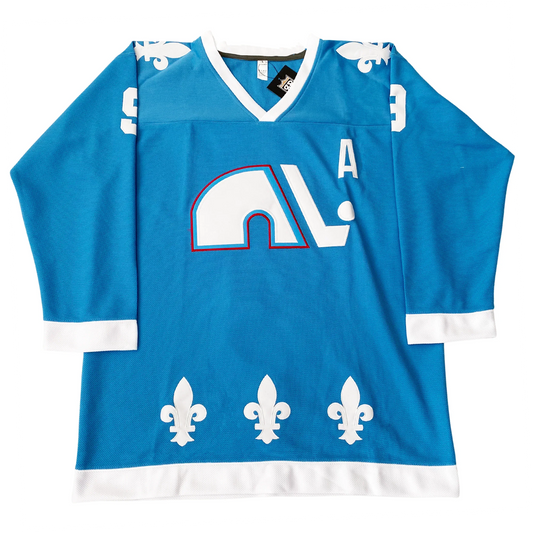
Quebec WHA — Quebec City's francophone hockey identity. The 1977 Avco World Trophy champion behind Marc Tardif (154-point season) and Real Cloutier. Fleur-de-lis crest, blue-and-white sweaters, one of the most stylish franchises in hockey history. Shop the Quebec WHA collection →
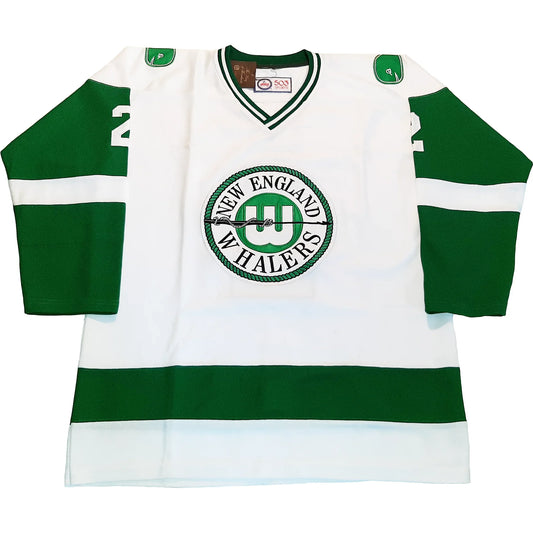
Hartford WHA / New England WHA — The first WHA champion (1973 New England Whalers) and one of hockey's most beloved logos: the green W with the whale's tail forming the H. Authentic 1972–1979 throwback gear from the league's first champions. Shop the Hartford WHA / New England WHA collection →
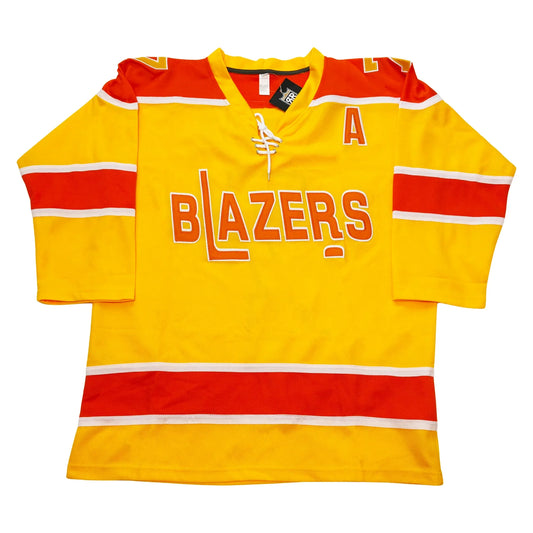
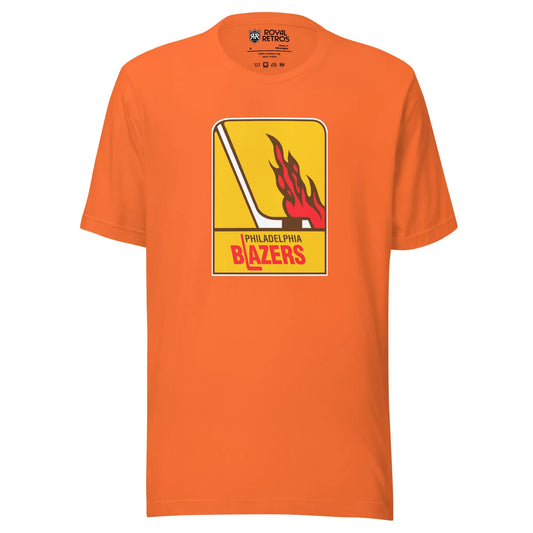
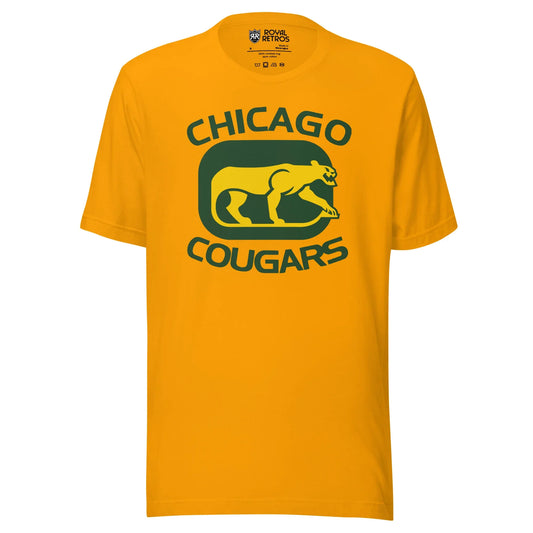
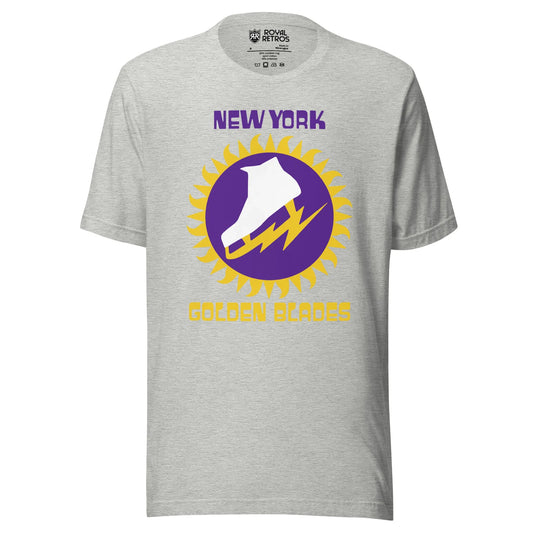
Plus rare-team coverage: Indianapolis Racers (Wayne Gretzky's first pro team), Cincinnati Stingers, Birmingham Bulls, Cleveland WHA (Crusaders), Minnesota Fighting Saints, Phoenix Roadrunners, Calgary Cowboys, Chicago Cougars, Los Angeles Sharks / Michigan Stags / Baltimore Blades, the New York / San Diego Mariners / Jersey Knights franchise, the Philadelphia / Vancouver / Calgary Blazers franchise, the Ottawa Nationals / Toronto Toros / Birmingham franchise, and the Denver Spurs / Ottawa Civics franchise. If a team played in the WHA, we carry their gear.
Why Royal Retros Is the Home of WHA Throwback Gear
Royal Retros built its reputation on going deeper than any other retailer into the leagues that mainstream sports stores have forgotten — and the WHA is one of the most important of those leagues. Here's what sets our WHA collection apart at retail:
-
Every WHA franchise represented. Winnipeg, Houston, Edmonton, Quebec, New England, Hartford, Indianapolis, Cincinnati, Birmingham, Cleveland, Minnesota, Phoenix, Calgary, Chicago, Los Angeles, Michigan, Baltimore, New York, San Diego, Jersey, Philadelphia, Vancouver, Ottawa, Toronto, Denver — every team has a place in the collection.
-
Authentic WHA-era design. Period-correct colors, lettering, crest detail, sleeve striping. We don't modernize the look.
-
Every design vetted for period accuracy. Color palettes, crest construction, and lettering match 1972–1979 game-worn references.
-
Free customization on most jerseys. Add your name and number at no extra cost on eligible items.
-
Sizes Small through 5XL. No big & tall upcharge.
-
Rare-team coverage. Some WHA franchises played a single season. The Denver Spurs lasted half a year. The Michigan Stags played about half a season. We carry gear for all of them.
Quick Buying Questions
What sizes do WHA jerseys come in?
Small through 5XL on virtually every jersey style. Hats are typically one-size-fits-most (snapback / flex) or fitted in standard cap sizes. We don't upcharge for big & tall sizes.
Can I add my name and number to a WHA jersey?
Yes — most styles offer free customization. Look for the "Custom" option on the product listing. Custom items are final sale and made to order, so allow 7–10 business days for production before shipping.
What materials are WHA jerseys made from?
Heavyweight twill on most replica jerseys, sublimated polyester on custom and remix styles, and authentic period-correct construction on select pieces. T-shirts are premium pre-shrunk cotton. Hoodies and sweatshirts are heavyweight cotton blends.
How accurate is the design?
Color palettes, lettering style, sleeve striping, and crest detail are all reproduced to match 1972–1979 game-worn uniforms wherever historical reference imagery exists. Each design is vetted for period accuracy before we add it to the catalog.
How fast does it ship and what's the return policy?
Standard products ship within 3–5 business days. Custom items (those with personalized name/number) are made to order and ship within 7–10 business days. Custom items are final sale. Standard items follow our return policy at /pages/returns.
Gift Ideas for the WHA Fan in Your Life
The WHA fan is a specific kind of hockey fan — older, knowledgeable, deeply nostalgic about a brief golden window in the sport's history. Generic NHL gifts miss the mark. WHA throwback gear hits.
-
For the dad or grandpa who watched it live: A 1976 Winnipeg Jets jersey with Hull's #9, a Houston Aeros throwback with Howe's #9, or a New England Whalers jersey from the inaugural-champion era. These are the moments they remember.
-
For the Quebec or Hartford expat: A Quebec Nordiques fleur-de-lis sweater or a Whalers hoodie still carries enormous regional pride. These franchises shaped their cities.
-
For the Edmonton Oilers fan who remembers the WHA roots: The 99 Gretzky story started with eight games in Indianapolis Racers blue-and-red — a jersey nobody else carries.
-
For the obscure-team obsessive: The Calgary Cowboys, Phoenix Roadrunners, Chicago Cougars, and Cleveland Crusaders are WHA franchises with cult fan bases — gear that almost nobody else in the throwback world carries.
-
For the Slap Shot fan: The Minnesota Fighting Saints connection to the Carlson Brothers (the real-life Hanson Brothers from the film) makes a Saints sweater the deep-cut Slap Shot gift.
-
Year-round demand. WHA gift demand is not seasonal. Birthdays, Father's Day, anniversaries, holidays — vintage hockey nostalgia is a year-round purchase driver. Most WHA orders ship as gifts.
What Was the World Hockey Association?
The World Hockey Association (WHA) was a major professional ice hockey league that operated in North America from October 1972 through May 1979. It was founded by Gary Davidson and Dennis Murphy — the same entrepreneurs who had created the American Basketball Association — as a direct competitor to the dominant established NHL. Davidson and Murphy saw the same opportunity in hockey that they had seen in basketball: the NHL was capping player salaries through a reserve clause, ignoring major U.S. and Canadian markets, and refusing to expand fast enough to absorb the talent pool. A second league, properly capitalized and willing to pay, could break that ceiling overnight.
The WHA was not a minor league or a developmental circuit. It paid major-league salaries — and in many cases, salaries that exceeded what the NHL was offering. It signed hundreds of NHL veterans, dozens of European stars, and the entire next generation of young North American talent. By its second season, the league was outdrawing the NHL in several markets. By its midpoint, the NHL was being forced to renegotiate every player contract in its own ranks just to keep up. The WHA played seven full regular seasons, crowned six different champions of its Avco World Trophy, and ended on its own terms — through a negotiated merger rather than a competitive collapse.
The History of the WHA — A Complete Overview
The Founding (1971–1972). Gary Davidson and Dennis Murphy announced the formation of the WHA in November 1971 with a target launch of October 1972. Initial press coverage was skeptical — until the Bobby Hull signing changed everything. In June 1972, the Winnipeg Jets signed Hull — the Chicago Black Hawks' superstar left winger and one of the five most popular players in the NHL — to a 10-year contract for $2.75 million, then the largest professional sports contract ever signed.
The 1972–73 Inaugural Season. The WHA opened play with twelve charter franchises: New England Whalers, Cleveland Crusaders, Quebec Nordiques, Philadelphia Blazers, New York Raiders, Ottawa Nationals (East); Winnipeg Jets, Houston Aeros, Minnesota Fighting Saints, Chicago Cougars, Los Angeles Sharks, Alberta Oilers (West). The New England Whalers won the inaugural Avco World Trophy.
The 1973–74 Season — The Howe Reunion. Gordie Howe came out of retirement at age 45 to play for the Houston Aeros so he could skate alongside his sons Mark and Marty — the only father-and-sons line in major-league professional sports history. The Aeros won the Avco World Trophy and Gordie won league MVP at age 46. The Aeros repeated as champions in 1974–75.
The Mid-Period (1975–1977) — Talent Wars. European stars Anders Hedberg and Ulf Nilsson signed with the Winnipeg Jets in 1974, joining Bobby Hull on the Hot Line. Frank Mahovlich, Paul Henderson, Bernie Parent, Derek Sanderson, Real Cloutier, Marc Tardif, Robbie Ftorek, Norm Ullman wore WHA sweaters. Winnipeg won 1976. Quebec won 1977.
The 1977–78 Season. The Winnipeg Jets won their second Avco World Trophy. Merger negotiations between the WHA and NHL entered their final phase.
The 1978–79 Final Season — Gretzky's Debut. The Indianapolis Racers signed 17-year-old Wayne Gretzky in June 1978. Gretzky played eight games before the Racers' financial collapse forced owner Nelson Skalbania to sell his contract to the Edmonton Oilers in November 1978. Gretzky finished as WHA Rookie of the Year. The Winnipeg Jets won the final Avco World Trophy in May 1979.
The Merger and Aftermath (1979). Four WHA franchises were admitted to the NHL for the 1979–80 season: the Edmonton Oilers, the Quebec Nordiques, the Winnipeg Jets, and the New England Whalers (renamed Hartford Whalers). The remaining WHA franchises folded. Within a decade, all four of the surviving franchises had won or contended for the Stanley Cup.
Year-by-Year WHA Avco World Trophy Champions
The Avco World Trophy was awarded to the WHA's playoff champion each season, sponsored by the Avco Financial Services corporation. Six different franchises won the trophy across the league's seven seasons — a competitive balance that the NHL of the same era never matched.
-
1972–73 — New England Whalers (defeated Winnipeg Jets 4–1 in the finals). Inaugural-season champions led by Larry Pleau, Tom Webster, Tim Sheehy, and goaltender Al Smith.
-
1973–74 — Houston Aeros (defeated Chicago Cougars 4–0 in the finals). The first championship of the Howe family era.
-
1974–75 — Houston Aeros (defeated Quebec Nordiques 4–0 in the finals). Back-to-back Aeros titles. Gordie Howe at 47 was still the dominant figure on the ice.
-
1975–76 — Winnipeg Jets (defeated Houston Aeros 4–0 in the finals). Bobby Hull, Anders Hedberg, and Ulf Nilsson finally broke through.
-
1976–77 — Quebec Nordiques (defeated Winnipeg Jets 4–3 in the finals). Marc Tardif and Real Cloutier delivered Quebec City its first major hockey title.
-
1977–78 — Winnipeg Jets (defeated New England Whalers 4–0 in the finals). Winnipeg's second of three.
-
1978–79 — Winnipeg Jets (defeated Edmonton Oilers 4–2 in the finals). The final Avco World Trophy. Wayne Gretzky's Oilers fell short, but he was already a year away from rewriting the NHL record book.
The takeaway: Six different champions in seven years. The Houston Aeros and Winnipeg Jets won two and three apiece — but New England, Quebec, Edmonton (finalist), and Houston all reached the championship round. That kind of competitive balance is exactly what Gary Davidson and Dennis Murphy had bet would happen when free-agent salaries reset.
The Bobby Hull Signing — A Detailed Account
No event in WHA history matters more than the Bobby Hull signing. Without it, the league probably folds in its first year. Without it, the NHL probably crushes the upstart competitor through a refusal to schedule, refusal to license, refusal to acknowledge. With it, the WHA became a major league overnight.
In June 1972, after months of preliminary contact, the Winnipeg Jets signed Hull to a 10-year contract worth $2.75 million, with $1 million as an immediate signing bonus. The bonus alone was more than Hull's annual salary with the Chicago Black Hawks. The Jets — financially backed by an investment group fronted by Ben Hatskin — paid the bonus check publicly on June 27, 1972, at a press conference held in downtown Winnipeg at the corner of Portage and Main, in temperatures hovering around 90 degrees. The image of Hull holding the giant check became one of the defining photographs of the era.
Hull's contract was the largest in professional sports history at the time — bigger than any NFL contract, bigger than any MLB contract, bigger than any other hockey or basketball contract. It was also the moment the NHL realized it could no longer treat its players as captive labor. Within weeks of the Hull signing, dozens of other NHL veterans began listening to WHA offers. By season opener in October 1972, the WHA had signed Bernie Parent (Philadelphia Blazers), Gerry Cheevers (Cleveland Crusaders), Derek Sanderson (Philadelphia Blazers at $2.65 million), and dozens of other established stars.
Hull kept his end of the bargain. He won league MVP in his first WHA season (1972–73) with 51 goals and 52 assists in 63 games. He was the captain who led the Jets to three Avco World Trophies. He scored 303 goals across his seven WHA seasons. And when the Jets crossed into the NHL in 1979, Hull was 40 years old and still able to score for the Hartford Whalers in a brief return.
A Royal Retros Winnipeg Jets WHA jersey with the #9 on the back is more than a throwback piece of apparel. It's the jersey of the player whose contract built an entire major league. That's why it's the most-requested item in the entire WHA collection.
The Howe Family Reunion — The Greatest WHA Storyline
In June 1973, the Houston Aeros drafted Mark Howe (age 18) and Marty Howe (age 19). Both teenagers were sons of Gordie Howe — the recently retired (and just turned 45) Detroit Red Wings legend, widely considered the greatest hockey player who had ever lived. The drafting was a quiet inquiry: would Gordie consider returning to professional hockey to play with his sons?
He said yes. On June 7, 1973, Houston announced that Gordie Howe was coming out of retirement to sign a four-year, $1 million contract — and that all three Howes would skate together for the Aeros in 1973–74.
It worked beyond anyone's expectation. The Aeros went 41-19-8, finished first in the Western Division, and won the Avco World Trophy in a 4-0 sweep of the Chicago Cougars. Gordie Howe — at 46 years old — won the WHA's Most Valuable Player award. He scored 31 goals, added 69 assists for 100 points, and remained the centerpiece of the Aeros' top line for the rest of the season. Mark Howe, meanwhile, scored 38 goals as a teenager and immediately established himself as one of the most polished young talents in pro hockey.
The Aeros repeated as Avco champions in 1974–75. Gordie continued to play. Mark continued to develop. Marty held down a defensive role. And the Howe family reunion — the only father-and-sons line in any major-league professional sport, in any country, in any era — played for five more years before the franchise folded in 1978. (Mark and Gordie continued together with the New England Whalers for the WHA's final season, then crossed into the NHL together.)
A Royal Retros Houston Aeros jersey is, in a real sense, the only piece of major-pro-sports apparel that represents a father-and-sons line. There is no equivalent in baseball, football, basketball, or any other sport. That's a one-of-one nostalgic story, and the Aeros sweater is its only physical artifact at retail.
European Hockey Comes to North America — The Hedberg, Nilsson, and Nedomansky Story
Before the WHA, only a handful of European-born players had ever played meaningful minutes in major-league North American hockey. The NHL of the 1960s and early 1970s was almost exclusively Canadian, with a small handful of American players. The conventional wisdom was that European hockey was different — slower, more positional, less physical — and that European players couldn't compete in the North American game.
The WHA proved that wrong, conclusively, in five years.
The defining signings came in 1974, when the Winnipeg Jets landed Anders Hedberg and Ulf Nilsson — both 23 years old, both elite Swedish League talents, both about to become two of the best wingers in any league in the world. Coach Bobby Kromm placed them on a line with Bobby Hull. The Hot Line was born. Over four seasons together, Hedberg and Nilsson scored a combined 514 goals. In 1976–77, Hedberg scored 50 goals in 49 games — a rate that broke an unwritten barrier in the sport.
At roughly the same time, the Toronto Toros signed Vaclav Nedomansky — the great Czechoslovak national-team center who had defected from behind the Iron Curtain. Nedomansky's defection itself was a historic event; that he then averaged a point per game in the WHA was simply additional evidence that European hockey was a deep talent reservoir the NHL had been ignoring.
By the time of the WHA-NHL merger in 1979, the entire North American hockey establishment had accepted what the WHA had proven: European players were not just competitive, they were elite. Within a decade, Borje Salming, the Stastny brothers, Mats Naslund, Jari Kurri, and dozens of other Europeans had transformed the NHL. The pipeline that opened the door to today's globalized NHL was the WHA pipeline — Hedberg, Nilsson, and Nedomansky were the first ones through. Royal Retros' European hockey collection connects this story to the broader history of international hockey gear.
The Slap Shot Connection — How the WHA Made the Greatest Hockey Movie Ever
The 1977 film Slap Shot — Paul Newman as Reggie Dunlop, the Hanson Brothers' goonish glory, the Charlestown Chiefs as a struggling minor-pro franchise — was inspired in significant part by the WHA-era Minnesota Fighting Saints and the Eastern Hockey League's Long Island Ducks. The Saints, in particular, donated three real-life enforcers to the film: brothers Jeff, Steve, and Jack Carlson. The trio became the Hanson Brothers on screen — Jack, Steve, and Jeff, the bespectacled brawlers who upend the Charlestown Chiefs' season.
The Carlson brothers were genuine WHA-quality minor-pro players. Their Fighting Saints sweaters in the film are real Fighting Saints sweaters. Their goon-style brawling was a stylized version of actual EHL and WHA hockey of the era. The film immortalized the Saints — and by extension, the entire scrappy, glorious, sometimes-violent, always-entertaining world of WHA-era and EHL-era minor-pro hockey.
For the Slap Shot fan, a Royal Retros Minnesota Fighting Saints jersey is the deepest cut available — the actual real-life franchise that gave the film its three most iconic actors.
The Greatest Teams of the WHA — A Closer Look
Winnipeg Jets. The most successful franchise of the WHA era and one of the most beloved hockey teams ever assembled. Three Avco World Trophies (1976, 1978, 1979). Bobby Hull anchored the Hot Line with Anders Hedberg and Ulf Nilsson. Coach Bobby Kromm, defenseman Lars-Erik Sjoberg (the first European to captain a major-league North American hockey team), and goaltender Joe Daley anchored the most consistently dominant roster in the league. Every Jets season featured at least 39 wins. The Jets were also the first major-league North American hockey team to play a regular schedule of European-style positional hockey — a system that would, in time, become the dominant style across all professional hockey.
Houston Aeros. The Howe family franchise. After two solid debut seasons, the Aeros stunned hockey by signing 45-year-old Gordie Howe and his teenage sons Mark and Marty in 1973. Back-to-back Avco World Trophies in 1974 and 1975. Gordie won league MVP at age 46. The Aeros folded in 1978 and the Howes finished their WHA careers with the New England Whalers. Houston pro hockey continued in various lower leagues until the IHL/AHL Aeros revived the brand from 1994–2013 — Royal Retros covers both eras.
Edmonton Oilers. Originally the Alberta Oilers (1972), rebranded for 1973. A middle-of-the-pack WHA team until the November 1978 trade that brought 17-year-old Wayne Gretzky to Edmonton. With Gretzky, the Oilers reached the 1979 Avco final, lost to Winnipeg, and carried the youngest superstar in hockey directly into the NHL — where they won five Stanley Cups in seven years between 1984 and 1990. The single most important franchise transition in modern hockey history happened in November 1978, when Indianapolis owner Nelson Skalbania sold Gretzky's contract to Oilers owner Peter Pocklington. Pocklington bought a generational talent for $850,000.
Quebec Nordiques. Fleur-de-lis crest, blue-and-white sweaters, francophone roster heavy on Quebec-developed talent. Won the 1977 Avco World Trophy behind Marc Tardif (154-point 1977–78 season — a WHA single-season record) and Real Cloutier. The Nordiques' identity as the francophone alternative to the Montreal Canadiens — playing in Quebec City instead of Montreal, in French rather than playing French alongside English — gave the franchise an emotional weight no other expansion team had. Reached the NHL in 1979, drafted Peter Stastny in 1980, and became one of the NHL's most exciting franchises through the 1980s before eventually relocating to Denver to become the Colorado Avalanche.
New England Whalers. The first WHA champion (1973 Avco). Renamed Hartford Whalers when they crossed into the NHL in 1979. Gave hockey one of its most beloved logos: the green W with the whale's tail forming the H — a classic of mid-1970s sports graphic design that has only become more iconic with age. Larry Pleau (the franchise's all-time leading scorer), Tom Webster (a 50-goal scorer), Tim Sheehy, and Al Smith anchored the inaugural-champion roster. The Whalers brand survived the franchise's 1997 relocation to North Carolina and is now one of the top-three most-purchased throwback identities in all of hockey retail.
The Rest of the WHA — Twelve to Fourteen Teams, Seven Seasons
-
Indianapolis Racers. The franchise that signed 17-year-old Wayne Gretzky in June 1978 before owner Nelson Skalbania sold his contract to Edmonton in November. Folded December 1978. Authentic Racers gear is among the rarest in hockey memorabilia — 99% of it survives only on Royal Retros today.
-
Cincinnati Stingers. Initially included in the NHL merger plan before being cut. Mark Messier, Mike Gartner, Mark Howe, and Robbie Ftorek wore Stingers sweaters. Five future Hall of Famers can be linked to Cincinnati — an absurd talent density for a franchise that lasted four years.
-
Birmingham Bulls. Originally the Toronto Toros, relocated to Birmingham in 1976. Mark Napier, Rick Vaive, Michel Goulet, Rob Ramage, and Ken Linseman in the era's deepest pool of teenage NHL prospects — the Bulls signed underage players the NHL refused to draft, then watched them dominate.
-
Cleveland Crusaders. Cleveland's only major-league hockey of the modern era (1972–76). Goaltender Gerry Cheevers anchored the franchise's best teams before returning to the Boston Bruins.
-
Minnesota Fighting Saints. St. Paul-based franchise, two distinct iterations. Memorable for the Carlson brothers (Jeff, Steve, Jack — the Hanson Brothers in Slap Shot) and for being one of the league's most consistently competitive franchises before financial collapse in 1976.
-
Phoenix Roadrunners. 1974–1977, brought professional hockey to the Sun Belt years before the NHL would follow. The Roadrunners proved that southwest U.S. hockey could draw fans — a finding the NHL eventually acted on with the Coyotes (1996), the Lightning (1992), and the Panthers (1993).
-
Calgary Cowboys. A short-lived but identity-rich franchise (1975–1977) defined by cowboy-themed branding — chaps, lassos, and Western typography on a hockey jersey, an aesthetic experiment ahead of its time.
-
Chicago Cougars. Chicago franchise (1972–1975). Reached the 1974 Avco final. The Cougars represent the WHA's bid to put major hockey in a market the NHL had locked down through the Black Hawks; ultimately the franchise couldn't establish itself.
-
Los Angeles Sharks / Michigan Stags / Baltimore Blades. One franchise, three cities, three seasons. The Sharks (1972–74) became the Stags (1974, played about half a season) became the Blades (1975, played a few games) — a financial collapse trilogy that's now a beloved bit of WHA lore.
-
New York Raiders / Golden Blades / Jersey Knights / San Diego Mariners. A well-traveled franchise — Madison Square Garden 1972, Jersey Knights 1973–74, San Diego Mariners 1974–1977. The San Diego portion of this lineage actually drew genuine fan support and lasted three full seasons in California.
-
Philadelphia Blazers / Vancouver Blazers / Calgary Cowboys. Bernie Parent's brief WHA detour was with the Philadelphia Blazers — a single-season career change that nonetheless shook NHL Philadelphia to its core. The Blazers were also home to Derek Sanderson and his then-record-shattering contract.
-
Ottawa Nationals / Toronto Toros / Birmingham Bulls. Frank Mahovlich, Paul Henderson, and Vaclav Nedomansky played for the Toros era — three of the most recognizable names in Canadian hockey wearing WHA red and white.
-
Denver Spurs / Ottawa Civics. A franchise so short-lived it played in two cities in a single 1975–76 season. The ultimate WHA cult-rarity collectible.
The Legends of the WHA — Players Who Defined the League
Bobby Hull. The most important signing in WHA history. Hull's 1972 contract with the Winnipeg Jets — $2.75 million over 10 years, with $1 million paid up front — was the largest professional sports contract ever signed at the time. Hull won league MVP in his first WHA season, captained the Jets to three Avco World Trophies, and finished his WHA career with 303 goals across seven seasons. Inducted into the Hockey Hall of Fame in 1983.
Gordie Howe. Mr. Hockey. Came out of NHL retirement in 1973 at age 45 to skate with sons Mark and Marty for the Houston Aeros. Won WHA MVP in 1973–74 at age 46. Helped the Aeros to back-to-back Avco World Trophies. Total goals across NHL and WHA combined exceed 1,000.
Mark Howe. Brought NHL-ready talent to Houston at age 18. Hall of Fame NHL career, but the WHA years with the Aeros, New England Whalers, and Cincinnati Stingers were the foundation. Inducted 2011.
Wayne Gretzky. Played eight games with the Indianapolis Racers in fall 1978 before being sold to the Edmonton Oilers, where he finished the 1978–79 season as WHA Rookie of the Year. He was 17 years old. Carried into the NHL the following season and within five years was rewriting every offensive record in the sport.
Anders Hedberg and Ulf Nilsson. The Swedish duo who proved European hockey players could not just compete in North America but dominate it. Signed by the Winnipeg Jets in 1974, formed the Hot Line with Bobby Hull. Hedberg scored 50 goals in 49 games in 1976–77.
Bernie Parent. The future Hall of Fame goaltender briefly defected from the NHL's Philadelphia Flyers to the WHA's Philadelphia Blazers in 1972. His brief WHA stop signaled to the entire NHL that no star was untouchable.
Frank Mahovlich. The Big M wore Toronto Toros and Birmingham Bulls sweaters in the back end of a career that included six NHL Stanley Cups.
Marc Tardif. The Quebec Nordiques' offensive cornerstone. Tardif's 154-point 1977–78 season is the WHA single-season scoring record.
Real Cloutier. Scored 75 goals in 1978–79 and helped the Nordiques to their 1977 Avco World Trophy.
Robbie Ftorek. American-born Cincinnati Stingers center, won WHA MVP in 1976–77.
Gerry Cheevers. The mask-painting Boston Bruins goaltender played 1972–1976 with the Cleveland Crusaders before returning to Boston.
Mark Messier, Mike Gartner, Michel Goulet, Rick Vaive, Rob Ramage, Ken Linseman. Six future NHL Hall of Famers who all began their professional careers in the WHA — most with the Cincinnati Stingers or Birmingham Bulls — because the WHA would sign players younger than the NHL would.
The WHA's NHL Legacy — How a Seven-Year League Reshaped Hockey
When the WHA merged with the NHL in 1979, four franchises crossed over: the Edmonton Oilers, the Quebec Nordiques, the Winnipeg Jets, and the New England Whalers (renamed Hartford Whalers). The merger terms were brutally restrictive. Despite that, all four franchises immediately became NHL fixtures.
The Edmonton Oilers, with Wayne Gretzky already in place from his WHA debut season, became the defining NHL dynasty of the 1980s — five Stanley Cup championships in seven years between 1984 and 1990.
The Quebec Nordiques became one of the NHL's most exciting young teams in the 1980s, anchored by the Stastny brothers. The franchise relocated to Denver in 1995 as the Colorado Avalanche and won Stanley Cups in 1996 and 2001.
The Winnipeg Jets became a perennial playoff team through the 1980s. The franchise relocated to Phoenix in 1996 as the Coyotes. The current Winnipeg Jets — re-established in 2011 — is technically a separate franchise (the relocated Atlanta Thrashers).
The Hartford Whalers became one of the NHL's most distinctive identities of the 1980s and '90s. The franchise relocated to North Carolina in 1997 as the Carolina Hurricanes and won the Stanley Cup in 2006. The Whalers brand remains one of the most popular throwback identities in pro sports.
Beyond the surviving franchises, the WHA's influence on NHL hockey was structural and permanent. The WHA forced the NHL to abolish its reserve clause and accept genuine free agency. It opened the door to European talent. It legitimized U.S. and Canadian markets that the NHL had ignored. It demonstrated that 17- and 18-year-old players could compete at the major-league level. And it produced the player pool — Gretzky, Messier, Mark Howe, Mark Napier, Mike Gartner, Michel Goulet, Rick Vaive — that defined NHL hockey for the next two decades.
WHA vs NHL of the 1970s — A Direct Comparison
For seven seasons, the WHA and NHL coexisted as direct competitors for hockey talent and hockey fans. Hockey historians sometimes underplay how genuinely competitive the matchup was. The numbers tell a different story.
-
Salaries. Average WHA salary in 1974: roughly $40,000. Average NHL salary that same year: roughly $33,000. The WHA was paying players more, on average, than the older league.
-
European players. WHA opened the gate; NHL eventually followed. By 1978–79, the WHA had over 30 European-born players on its rosters. The NHL had fewer than 10.
-
Underage players. WHA signed players as young as 17 (Gretzky); NHL forbade signing players under 20. This single difference forced the NHL to lower its draft age in 1979.
-
Markets opened. WHA brought major-league hockey to Houston, Edmonton, Hartford, Quebec City, Winnipeg, Cincinnati, Indianapolis, Phoenix, and others. The NHL had ignored all of these markets.
-
Fan attendance. By 1976, the Jets were averaging 9,000+ per home game in Winnipeg — comparable to several NHL franchises. The Nordiques averaged similar in Quebec.
-
Television rights. WHA secured a national TV contract via SpHA (Sports for Pay Television) and CTV. NHL maintained its CBS deal. Neither league dominated television, but the WHA reached comparable audiences.
-
Style of play. WHA legalized European-style positional hockey years before the NHL. By 1977, WHA games were noticeably more skill-based, with more passing, less clutching, and faster transition. The NHL's conversion to this style took until the late 1980s.
The verdict of history is clear: the WHA was not a minor league trying to look like a major league. It was a major league that ran the older league a remarkable race for seven straight years.
The Cultural Legacy of the WHA
The World Hockey Association deserves a place in the conversation alongside the NHL when hockey historians talk about the founding of the modern game. It opened five new major-league markets that the NHL had ignored. It accelerated player free agency. It legitimized European hockey talent in North America. It produced the Howe family reunion, the Bobby Hull signing, the Hedberg and Nilsson lines, the Nordiques' fleur-de-lis identity, the original Whalers logo, and the Wayne Gretzky debut.
Wearing WHA throwback gear is an act of honoring that history. The WHA was real, it mattered, and Royal Retros is here to make sure no fan who wants to celebrate it has to settle for a generic throwback shirt or a half-hearted homage. Authentic. Period-correct. Every team. That's the WHA collection.
How to Identify Authentic WHA Throwback Apparel
WHA throwback gear is genuinely rare on the open market — most "vintage hockey" retailers stick to NHL teams or recent throwbacks, leaving WHA franchises to a tiny handful of specialists. Royal Retros is one of those specialists. Here's how to evaluate any WHA-era piece you're considering, whether from us or elsewhere:
-
Check the season-specific design. The Winnipeg Jets had different jersey designs in 1972, 1976, and 1979. The Houston Aeros redesigned for 1974 to coincide with Gordie Howe's arrival. The Whalers introduced the iconic green-on-white at a specific point. Authentic throwback gear matches a specific historical season.
-
Verify period-correct lettering and crest construction. 1970s WHA crests were typically twill stitched onto the sweater, not screen-printed. Letters were often felt or twill. A jersey advertised as "authentic" but with screen-printed crest is a modern reproduction, not a true throwback.
-
Sleeve striping should match the era. Most WHA jerseys had bold horizontal sleeve stripes — period correct. A WHA throwback with no stripes or with chevron-style sleeves is a modern restyle.
-
Check the team color palette. The Nordiques blue is a specific shade. Hartford green, Houston blue and white, Winnipeg red — all have specific period-correct values. Off-color reproductions look "almost right" but not quite.
-
For customization: Period-correct numbering used a specific font family. We use that family on our custom jerseys. Generic block fonts on a "WHA throwback" with a custom name are a tell that the seller doesn't specialize in the era.
-
Royal Retros standard: Every product in this collection is reviewed for period accuracy before it goes live. If the design isn't right for the 1972–1979 era, we don't carry it.
More Frequently Asked Questions About the WHA
What was the World Hockey Association?
The WHA was a major professional ice hockey league that operated in North America from October 1972 through May 1979. Founded by Gary Davidson and Dennis Murphy as a direct competitor to the NHL. Played seven full seasons, crowned six different Avco World Trophy champions, and merged with the NHL in 1979. Four WHA franchises — Edmonton, Hartford, Quebec, and Winnipeg — joined the NHL as part of the merger.
Who won the WHA Avco World Trophy?
Six different champions across the league's seven seasons: New England Whalers (1973), Houston Aeros (1974, 1975), Winnipeg Jets (1976, 1978, 1979), and Quebec Nordiques (1977). The Winnipeg Jets are the only franchise to win three Avco World Trophies.
Did Wayne Gretzky really play in the WHA?
Yes. Wayne Gretzky's professional debut came in October 1978 with the Indianapolis Racers at age 17. He played eight games for the Racers before the Edmonton Oilers acquired him in November 1978. He finished the 1978–79 WHA season with the Oilers as Rookie of the Year and carried into the NHL the following season.
What was the Bobby Hull contract?
In June 1972, the Winnipeg Jets signed Bobby Hull to a 10-year contract worth approximately $2.75 million, with $1 million as a signing bonus. At the time, it was the largest professional sports contract ever signed in any sport.
What happened to the WHA franchises that didn't join the NHL?
They folded entirely, with their players entering an expansion draft pool. Affected teams: Cincinnati Stingers, Birmingham Bulls, Indianapolis Racers, Houston Aeros, Cleveland Crusaders, Minnesota Fighting Saints, Phoenix Roadrunners, Calgary Cowboys, Chicago Cougars, Los Angeles Sharks / Michigan Stags / Baltimore Blades, the New York–to–San Diego franchise, the Philadelphia–to–Vancouver Blazers franchise, the Ottawa–to–Toronto–to–Birmingham franchise, and the Denver Spurs / Ottawa Civics franchise.
How many WHA jerseys does Royal Retros carry?
72 products across the WHA collection at last count, covering all 21 distinct WHA team identities. The number grows as we add new designs each season. Every original WHA franchise is represented.
Are there any movie-team WHA jerseys?
The closest connection is the Minnesota Fighting Saints, the actual real franchise that supplied the Carlson brothers (the Hanson Brothers) to Slap Shot. We don't carry Charlestown Chiefs gear (that's owned by the film studios), but the Fighting Saints jersey is the deepest authentic Slap Shot connection available at retail.
Where can I find related Royal Retros hockey collections?
Beyond the WHA, Royal Retros covers defunct legacy hockey franchises, pre-NHL historic hockey, the minor leagues that fed pro hockey, the European national team hockey identities, the IHL, and dozens of other lesser-known leagues across our broader hockey collection.
Shop by Team — The Complete WHA Collection
The World Hockey Association at Royal Retros — Authentic 1972–1979 Throwbacks. Custom Names & Numbers. Sizes S–5XL. Every Original Franchise.