



-
CUSTOM
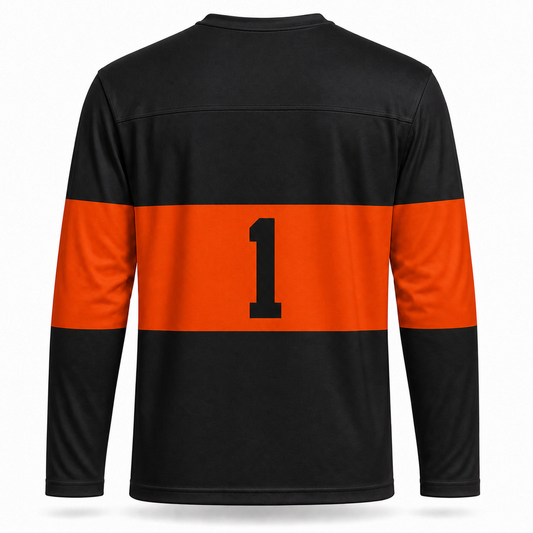
Duluth Eskimos Long Sleeve Jersey
Regular price Starting at $169.00 CADRegular priceUnit price per -
-
CUSTOM
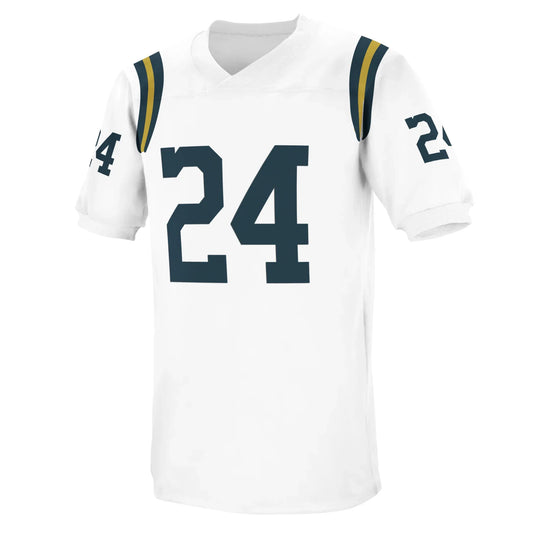
Dallas Texans Jersey
Regular price Starting at $162.00 CADRegular priceUnit price per -
-
CUSTOM
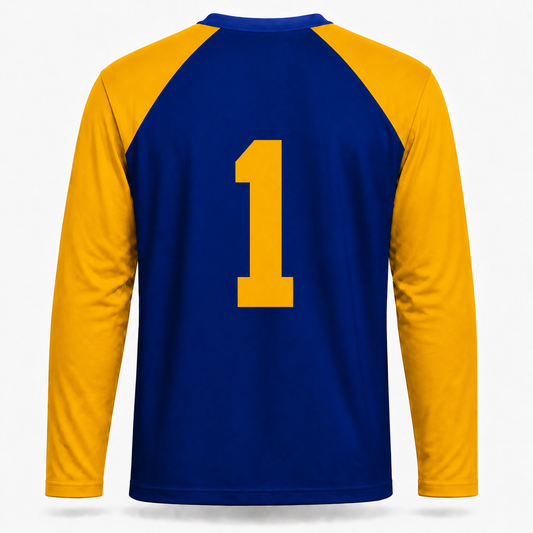
St Louis Gunners Long Sleeve Jersey
Regular price Starting at $169.00 CADRegular priceUnit price per -
-
-
CUSTOM
New York Titans Jersey
Regular price Starting at $120.00 CADRegular priceUnit price per -
-
CUSTOM
College All Star Football Jersey
Regular price Starting at $120.00 CADRegular priceUnit price per -
-
CUSTOM
Frankford Yellow Jackets Long Sleeve Jersey
Regular price Starting at $169.00 CADRegular priceUnit price per -
-
CUSTOM
Providence Steam Roller Long Sleeve Jersey
Regular price Starting at $169.00 CADRegular priceUnit price per -
-
CUSTOM
Boston Redskins Long Sleeve Jersey
Regular price Starting at $169.00 CADRegular priceUnit price per -
-
-
-
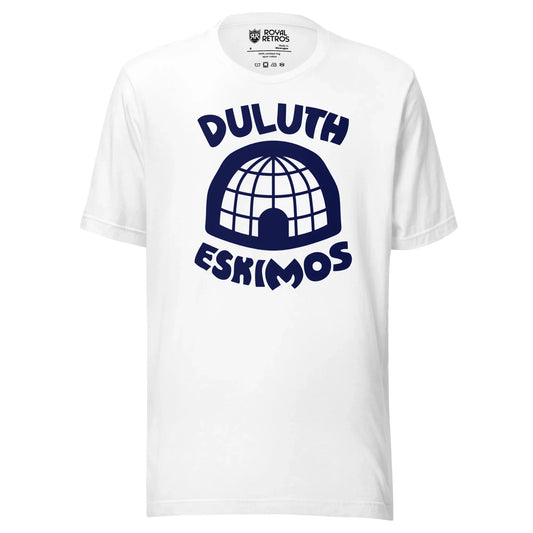
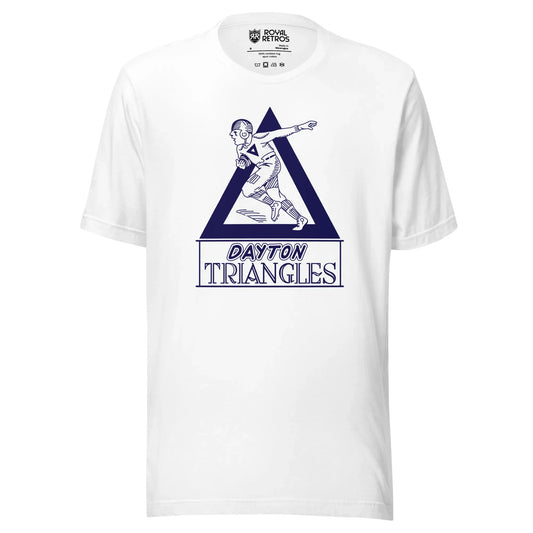
Dayton Triangles T-Shirt
Regular price $43.00 CADRegular priceUnit price per -
-
Baltimore Bombers T-Shirt
Regular price $43.00 CADRegular priceUnit price per -
-
CUSTOM
Silver Stripe Football Jersey
Regular price Starting at $162.00 CADRegular priceUnit price per -
-
CUSTOM
Canton Long Sleeve Football Jersey
Regular price Starting at $169.00 CADRegular priceUnit price per -
-
-
CUSTOM
Cleveland Rams Long Sleeve Jersey
Regular price Starting at $169.00 CADRegular priceUnit price per -
-
CUSTOM
Chicago Cardinals Jersey
Regular price Starting at $162.00 CADRegular priceUnit price per -

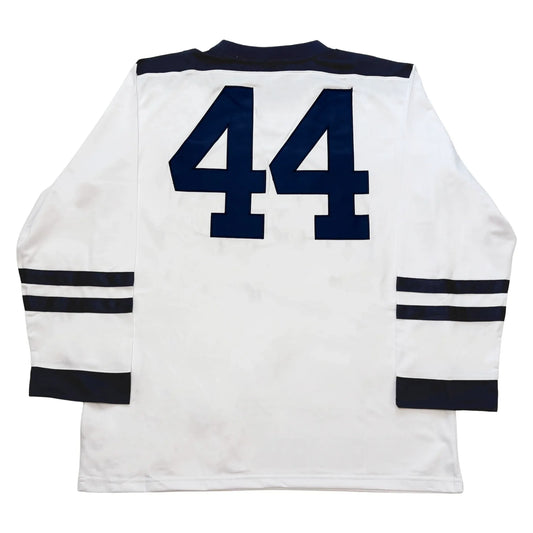


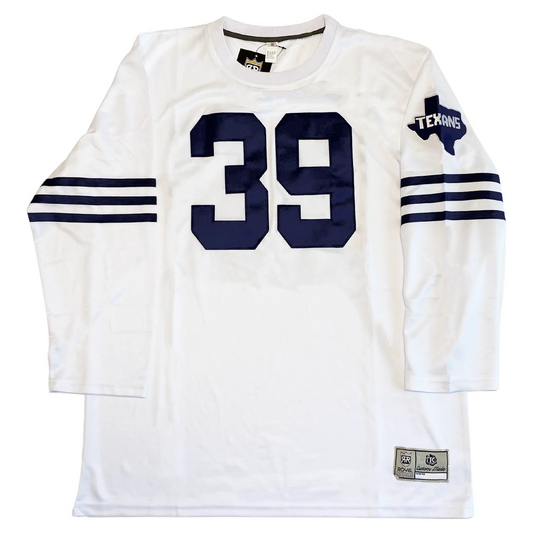


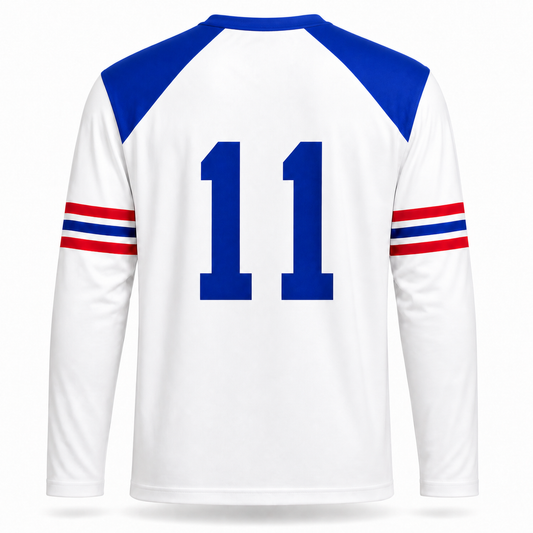










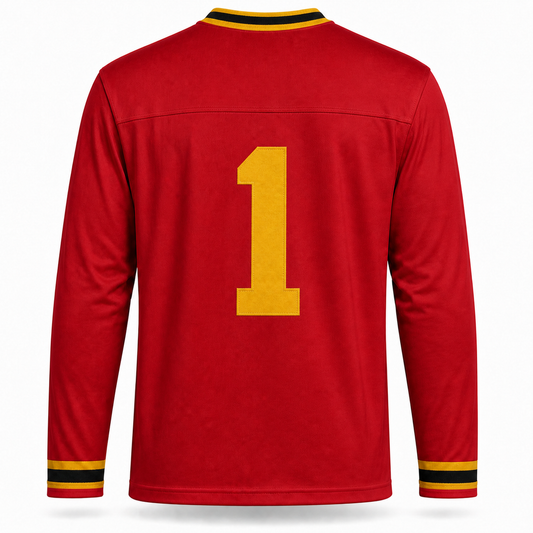






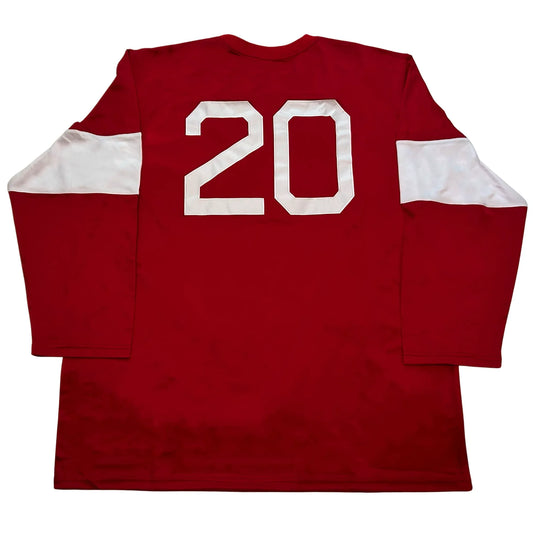


Vintage & Defunct Football — The Royal Retros Gridiron Heritage Collection
78 Throwbacks From Football's Lost Franchises. Tackle Twill, Custom Names & Numbers, Sizes S–5XL. Canton to Kezar, Pottsville to the Polo Grounds.
This is the deepest collection of defunct and forgotten pro football teams anywhere on the open web. Seventy-eight products — 73 live right now — covering the franchises that built the NFL and then vanished from it: the Canton football jersey from the town where the league was founded in a car showroom, the Duluth Eskimos who spent an entire season on the road, the Frankford Yellow Jackets who won a title and gave every dollar to charity, the Providence Steam Roller who played inside a bicycle velodrome. Premium tackle-twill heritage jerseys are $119.99. Era and nickname jerseys are $114.99. Lightweight custom jerseys are $84.99. T-shirts are $29.99, the hoodie is $59.99, and the one mini helmet here is $54.99. Free custom name and number on most jerseys, sizes Small through 5XL, no big & tall upcharge. If you want a jersey nobody else in the room will recognize, start here.
What You Can Shop in the Vintage & Defunct Football Collection
Tackle-Twill Heritage Jerseys — $119.99 — The top tier, reserved almost entirely for pre-1952 franchises. Sewn tackle-twill lettering and numerals, period-correct sleeve striping, heavier body weight than the standard custom line. Eleven pieces: Canton, Duluth Eskimos, Dayton Triangles, Frankford Yellow Jackets, Providence Steam Roller, St. Louis Gunners, Cleveland NFL, Boston NFL and New York NFL, plus Akron Pros and Pottsville Maroons in production. Free custom name and number.
Era & Nickname Jerseys — $114.99 — The largest group here, 41 live styles. These are the jerseys built around a moment rather than a logo: a defensive front, a stadium, a playoff run, a colorway that only existed for a few seasons — the kind of shorthand that means everything to the people who were there and nothing to anyone else, which is exactly what a good throwback should do. Also in this tier: the Chicago NFL throwback, the Dallas AFL jersey, the Oakland AFL jersey, the Kezar AAFC jersey and the Silver Stripe. Free custom name and number.
Lightweight Custom Jerseys — $84.99 — Sixteen live styles on the lighter build, in long-sleeve and short-sleeve cuts. This tier holds the college-town jerseys, the teams that never played a down (Baltimore Bombers, St. Louis Stallions), the New York AFL jersey, and both all-star jerseys — the College All-Star and the All-Star. Free custom name and number.
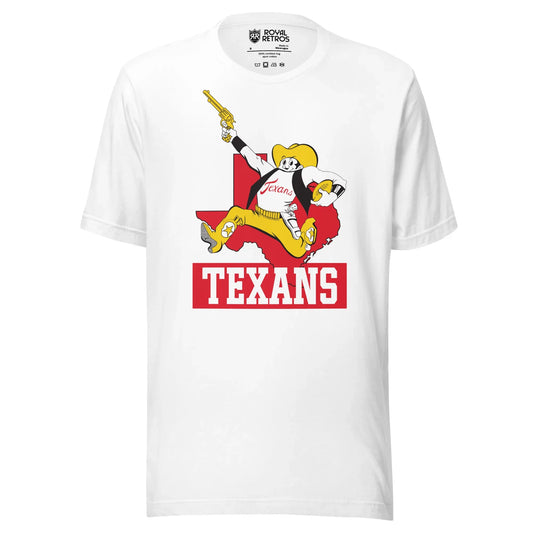
T-Shirts — $29.99 — Five soft pre-shrunk cotton tees, each built on a team most people have never heard of: Duluth Eskimos, Dayton Triangles, Dallas Texans, Baltimore Bombers and Seattle Kings. Sizes S–5XL. The easiest entry point into the collection and the best gift item on the page.
Hoodie — $59.99 — One heavyweight pullover, the Dallas Texans hoodie, carrying the 1962 AFL championship identity. More in Hoodies and Sweatshirts.
Mini Helmet — $54.99 — One piece, the Seattle Kings mini helmet, rendering a team that was designed, marketed and never played a down.
Customization — Free custom name and number on most jerseys here. Put a real name on the back — Jim Thorpe, Fritz Pollard, Ernie Nevers, Guy Chamberlin, Charley Trippi, Don Maynard — or your own. Custom items are made to order and final sale.
Sizes — Small through 5XL on virtually every product. No big & tall upcharge, and no price bump between S and 5XL.
The Marquee Groups — Where to Start
The Pre-War NFL Originals (11 products, $119.99) — Canton, Akron, Dayton, Duluth, Frankford, Providence, Pottsville and St. Louis: eight towns that held NFL franchises between 1920 and 1934 and hold none today. Every one is on the tackle-twill build. If you buy one thing from this page, buy from this group. Shop the pre-war originals — $119.99, S–5XL, free custom name and number.
Duluth Eskimos (2 products) — The jersey at $119.99 and the T-shirt at $29.99, with a dedicated Duluth Eskimos collection and cross-shopping in Minnesota. The most-searched genuinely obscure team on this page, and the one with the best story. Shop Duluth Eskimos gear — jersey $119.99, tee $29.99.
Dallas AFL — the 1962 champions (4 products) — Jersey $114.99, T-shirt $29.99, hoodie $59.99, plus a dedicated Dallas Texans (1952 and 1960–1963) collection covering both Dallas clubs that carried the name. Cross-shop Dallas-Fort Worth and Texas. Shop the Dallas AFL collection — jersey, tee and hoodie.
The Ohio Founders (3 products) — Canton at $119.99, Dayton Triangles at $119.99 with a matching tee at $29.99, and Akron Pros in production. Ohio is where professional football was organized, and the Ohio collection is the deepest state page on the site at 101 products. Shop the Ohio founders — tackle twill $119.99, tee $29.99.
Pennsylvania's Lost Franchises (2 products) — The Frankford Yellow Jackets jersey at $119.99 and the Pottsville Maroons jersey in production. Two Pennsylvania clubs, one championship each, one of them still disputed a century later. Cross-shop Philadelphia and Pittsburgh. Shop the Pennsylvania originals — $119.99, S–5XL.
Teams That Never Played a Down (5 products) — Baltimore Bombers jersey $84.99 and tee $29.99, St. Louis Stallions jersey $84.99, Seattle Kings tee $29.99 and mini helmet $54.99. Three cities that designed a team, marketed it, printed the logo — and lost the bid. See the full Proposed Teams collection and the St. Louis Stallions collection. Shop the teams that never were — from $29.99.
The 1960 AFL Originals (3 products) — New York AFL at $84.99, Oakland AFL at $114.99, Dallas AFL at $114.99. Three of the eight charter clubs of the 1960 American Football League, all wearing identities the league abandoned within a few years. Cross-shop New York and Bay Area. Shop the 1960 AFL originals from $84.99.
Houston's Four Eras (4 products, $114.99 each) — Jeppesen, Astrodome, Oil Derrick and Oil Rush, one jersey per stage of the city's AFL and NFL run, plus the dedicated Classic Houston Football Apparel collection and the broader Houston page. Shop Houston football history — four jerseys at $114.99.
Why Royal Retros Is the Home of Defunct Football Gear
- Coverage nobody else has. Eight defunct 1920s and 1930s NFL franchises in one place, on a premium tackle-twill build. Most vintage retailers carry none of these teams. A few carry one.
- 78 products, 73 live right now. Jerseys, T-shirts, a hoodie and a mini helmet across four price tiers.
- Real prices, no gatekeeping. $119.99 for premium tackle twill, $114.99 for era jerseys, $84.99 for the lightweight custom line, $29.99 for tees. Rarity is the point of this collection; it is not the pricing strategy.
- Free customization on most jerseys. Add a name and number at no extra cost on eligible items — a founding-era player, or your own.
- Sizes Small through 5XL. Same price at 5XL as at Small.
- Every era of the pro game. 1920 through 1999 on one page: the Ohio League towns, the Depression survivors, the wartime mergers, the AAFC, the 1960 AFL, the relocations, the nickname defenses, and the teams that never made it out of the bid process.
- Design accuracy first. Period sleeve striping, era-correct numeral fonts, documented color palettes. Where reference imagery is thin we build conservatively rather than invent.
Quick Buying Questions
What sizes do these jerseys come in?
Small through 5XL on virtually every jersey and T-shirt here. There is no big & tall upcharge — a 5XL costs the same as a Small. The mini helmet is a display size with no sizing options.
Can I add my own name and number?
Yes — free custom name and number on most jerseys, across all three jersey price tiers. Look for the "Custom" option on the product listing.
What are these jerseys made from?
The $119.99 heritage tier uses sewn tackle-twill lettering and numerals on a heavier body — the closest we get to period construction without going to wool flannel. The $114.99 era jerseys and the $84.99 lightweight line use durable athletic knit with sewn or screened numbering depending on the style. T-shirts are pre-shrunk cotton; the hoodie is a heavyweight cotton blend.
How fast does it ship, and what is the return policy?
Standard products ship within 3–5 business days. Custom items — anything with a personalized name or number — are made to order and ship within 7–10 business days. Custom items are final sale. Standard items follow our return policy at /pages/returns.
Why do some products show as unavailable?
A handful of styles are in production rather than sold out, including the Akron Pros and Pottsville Maroons jerseys. Seventy-three of the seventy-eight products on this page are live and shippable today.
The History — Football's Lost Franchises
Canton, Akron and Dayton — Where the NFL Actually Started
Professional football was organized in Ohio, in a car dealership, in 1920. On 17 September 1920 representatives of a handful of clubs met at Ralph Hay's Hupmobile showroom in Canton and formed the American Professional Football Association, renamed the National Football League in 1922. The minutes were written on Akron Pros stationery by Akron's Art Ranney, who was elected secretary-treasurer. Jim Thorpe, the biggest name in American sport, was made the league's first and largely ceremonial president.
The Canton Bulldogs were the reason Canton mattered. The club traced back to a Canton athletic club founded in 1904 and had been the strongest team in the informal Ohio League for years, largely because manager Jack Cusack signed Thorpe in 1915 for $250 a game and watched attendance jump from around 1,500 to 6,000 and beyond. In the NFL the Bulldogs won back-to-back championships — 10-0-2 in 1922 and 11-0-1 in 1923, both under player-coach Guy Chamberlin — and went 25 straight games without a defeat from 1921 to 1923, a record that stood for more than a century. Then it ended fast: the club lost roughly $13,000 in 1923, was sold to a Cleveland promoter who moved the name and players east, was bought back by local investors for 1925, and was dropped in the league's mass contraction before the 1927 season. Canton's consolation is permanent — the Pro Football Hall of Fame opened there in September 1963 precisely because of what happened in Ralph Hay's showroom.
The Akron Pros were the league's first champion, going 8-0-3 in 1920, scoring 151 points and allowing 7. There was no championship game; the title was voted to Akron at a league meeting in April 1921, over protests from Buffalo and Decatur, neither of whom had lost to them. Akron's larger place in history belongs to Fritz Pollard, who joined in 1919, was one of the first two Black players in the league in 1920 alongside Bobby Marshall, and in 1921 became co-head coach — the first Black head coach in NFL history. Paul Robeson played for Akron in 1921 as well. The Pros played their last season in 1926 as the Akron Indians, suspended operations in 1927 and surrendered the franchise in 1928.
The Dayton Triangles were named for Triangle Park, at the confluence of the Great Miami and Stillwater Rivers, and for the three factories that sponsored them. On 3 October 1920 the Triangles beat the Columbus Panhandles 14–0 at Triangle Park — Lou Partlow scored the first touchdown in a game between two league members, and George Kinderdine kicked the first extra point. It is the game the league traditionally recognizes as its first, though a second league game was played the same afternoon in Rock Island and kickoff times were never recorded. Dayton lasted ten NFL seasons, finished 18-51-8 and won only five games from 1923 onward. Triangle Park seated 5,000 and rarely filled it, so the club spent the back half of the decade as the league's longest-running road team, collecting $2,500 guarantees at Wrigley, Comiskey and the Polo Grounds, before a Brooklyn syndicate bought and moved the franchise in July 1930. Shop the founding towns in the Ohio collection.
The Duluth Eskimos — The Season That Never Came Home
Duluth joined the NFL in July 1923 as the Kelleys, named for the Kelley-Duluth Hardware Store. They were the northernmost club in professional football, and the weather was not a metaphor — in three Kelleys seasons they managed only 16 games total, because there was no realistic way to host football in Duluth in late November. In 1926 owner Ole Haugsrud signed college football All-American Ernie Nevers, renamed the club the Duluth Eskimos, and marketed the team as "Ernie Nevers' Eskimos."
Then he solved the weather problem by leaving. After one home game to open 1926, the Eskimos never played in Duluth again. By most accounts the club played roughly 29 games and covered something like 17,000 miles between late September 1926 and January 1927 — 14 of them league games, the rest exhibitions — at one point playing five games in eight days. Nevers, by the same accounts, was on the field for all but a couple of dozen minutes of a possible 1,740. The barnstorming worked as promotion and failed as a business. Haugsrud sold the franchise back to the league after 1927 and it went dormant; the rights were bought by an Orange, New Jersey operator in 1929, but because the franchise had sat idle a full year the league does not treat what followed as a continuation of Duluth. Haugsrud's standing did eventually pay off — he wound up with a small ownership stake in professional football in Minnesota decades later. Shop the Duluth Eskimos collection and the Minnesota page.
The Frankford Yellow Jackets — A Championship Team That Kept No Profits
The Frankford Athletic Association was organized in 1899 in the parlor of a suburban club in the Frankford neighborhood of Northeast Philadelphia, on $10 shares. Its charter said all profits went to charity, and it meant it: Frankford Hospital, the Frankford Day Nursery, local Boy Scouts and an American Legion post were beneficiaries, and the officers took no pay. The club joined the NFL in 1924.
Pennsylvania's blue laws banned Sunday football in Philadelphia, so the Yellow Jackets played home games on Saturday and very often traveled for a Sunday road game the next day — 15 to 20 games a season was normal. In 1926 they went 14-1-2 and won the NFL championship, in an era with no title game, when the best record simply took it. They opened with a 6–6 tie against Akron, swept New York 6–0 and 6–0, beat Green Bay 20–14 on Thanksgiving on a touchdown to Two-Bits Homan — launching a five-year Thanksgiving series between the two clubs — and closed with a 0–0 tie against Pottsville. Fourteen wins stood as the NFL single-season record until 1984. Guy Chamberlin, the same player-coach who had won two titles at Canton, won this one and resigned the next day.
Frankford's 71 career wins remain the most by any defunct NFL franchise. The end came quickly: a Depression collapse, a ten-game losing streak in 1930, then a fire that badly damaged Frankford Stadium before the 1931 season and forced the club out of its own neighborhood. They finished 1931 as a traveling team, beat Chicago 13–12 at Wrigley in October, were shut out in every other game, and returned the franchise to the league. In July 1933 the NFL granted an expansion franchise to Bert Bell and Lud Wray along with the failed Yellow Jackets' assets and the Philadelphia territory — a new 1933 club that does not claim Yellow Jacket history, though its early powder blue and yellow was a direct nod to Frankford's colors. Shop the Philadelphia collection.
The Providence Steam Roller — NFL Champions Inside a Bicycle Track
Providence was founded in 1916 by a Providence Journal sports editor and a writer on his staff, and played independent football for nine years before joining the NFL in 1925. From 1925 they played at the Cycledrome — a 10,000-seat oval built as a bicycle velodrome. The banked track pinched the field so tightly that the end zones were only about five yards deep.
In 1928 the Steam Roller went 8-1-2 and won the NFL championship. Their only loss was to Frankford, avenged 6–0 at the Cycledrome in late November. Frankford actually won more games that season at 11-3-2, but the pre-1932 standard was winning percentage, and Providence had it. Player-coach Jimmy Conzelman, later a Hall of Famer, was paid $292 a game and was named team MVP at a hotel banquet where the players received gold watches.
Providence also holds a genuine NFL first: on 6 November 1929 they hosted the Chicago Cardinals under floodlights at Kinsley Park — the first night game in NFL history. Six thousand came; Providence lost 16–0. That same week they played four games in six days and went 0-3-1. The roster came apart just as fast: the team's biggest star left to become a professional wrestler after winning the world heavyweight title in January 1929, another retired into insurance, another left to coach, and Conzelman's knee never came back. Operations were suspended after 1931 and the franchise was formally returned to the league in 1933. The 1928 Steam Roller remains the most recent NFL championship won by a franchise that no longer exists — and the first NFL title won by a New England team.
The Pottsville Maroons — The Title That Is Still Disputed
Pottsville was a Pennsylvania coal town, and the club that started there in 1920 as the Pottsville Eleven was built largely out of firemen from the Yorkville Hose Company. A local doctor bought the team for $1,500 in 1924, the year it took the Maroons name and won the one and only Anthracite League title, going 12-1-1 overall and outscoring opponents 288 to 17. When the Anthracite League collapsed after that single season, Pottsville applied to the NFL. They played at Minersville Park, a high-school field in the next town with room for about 6,000, and they were welcome partly because Pennsylvania's blue laws were simply not enforced in Pottsville — a team could play Frankford on Saturday and Pottsville on Sunday.
In 1925 the Maroons went 10-2 and beat the Chicago Cardinals 21–7 at Comiskey Park, giving them the best record in the league. Then they scheduled an exhibition against a team of former college all-stars at Shibe Park in Philadelphia and won it 9–7 before a disappointing crowd. Frankford complained that the game violated its territorial rights; league president Joe Carr suspended Pottsville and barred them from finishing the schedule. The Cardinals' owner refused the championship, and the league awarded no champion at the time; the title was only claimed for Chicago after that franchise changed hands in the early 1930s. The owners voted 12–2 in 1963 to leave the title where it was, and 30–2 in October 2003 not to reopen it. The 1925 Maroons carved a trophy out of anthracite coal; it went to the Pro Football Hall of Fame in 1963.
Pottsville's later years were thin — 10-2-1 in 1926, then 5-8, then 2-8. Players were given small footballs carved from coal at the end of 1928. The club was sold in the 1929 offseason to a New England partnership, moved to Boston as the Bulldogs, went 4-4, and folded. It has no connection to the Boston NFL franchise that started in 1932.
The St. Louis Gunners — Three Games in the NFL
The Gunners started in 1931 as the Battery A Gunners, sponsored by the 128th Field Artillery of the Missouri National Guard and based out of the St. Louis armory — which is where the name comes from. Their first head coach was Jimmy Conzelman, the same man who would win a title at Providence. As an independent they were formidable: 11-2-3 in 1933, outscoring opponents 297 to 72, beating two NFL clubs and tying a third.
They tried to buy into the NFL in August 1934 by purchasing the Cincinnati Reds' franchise for $20,000, and the other owners rejected the bid — St. Louis was judged too far and too expensive to visit. Then Cincinnati's membership was suspended mid-season, and on 6 November 1934 the league approved the sale and invited the Gunners to play out Cincinnati's final three games. They went 1-2: beat Pittsburgh 6–0, lost to Detroit 40–7, lost to Green Bay 21–14. Six former Cincinnati players joined them for the last two. That was the whole NFL career — the last time a club joined the league mid-season by inheriting another team's schedule, and the NFL's only presence in St. Louis until 1960. The Gunners moved to the rival American Football League for 1935 and never returned to the top level. Shop St Louis and Missouri.
The Franchises That Moved On — Chicago, Cleveland, Boston and New York
Four jerseys in the heritage tier belong to clubs that did not fold but left, and each identity is genuinely gone.
Chicago NFL traces to 1898 and got its color in 1901 when owner Chris O'Brien bought a lot of faded maroon college jerseys and announced, "That's not maroon; it's cardinal red." A charter member in 1920 for a $100 fee, its high point came at Comiskey Park on 28 December 1947: a 28–21 championship win over Philadelphia on a frozen field, the club wearing basketball shoes for traction and outrushing Philadelphia by roughly 280 yards to 60. That was the "Million Dollar Backfield" — Paul Christman, Charley Trippi, Elmer Angsman and Pat Harder, with Angsman running two 70-yard touchdowns on ten carries. The owner had died before the season and the players did not receive rings until 1997. The low point was 1944, when wartime manpower forced a merger with Pittsburgh as "Card-Pitt": 0-10, outscored 328 to 108, part of a 29-game losing streak that remains an NFL record. This is also where Duke Slater played, pro football's first Black lineman. The club left for St. Louis in 1960.
Cleveland NFL joined the league in 1937 and was bad for most of a decade before winning the championship 15–14 on 16 December 1945 in eight-below cold at Cleveland Municipal Stadium — the coldest title game to that point, and the first NFL championship won by an expansion team. A rookie quarterback threw a 37-yard touchdown and his extra point hit the crossbar and dropped over; the margin was a first-quarter safety, after a pass from the opposing end zone struck a goal post that then stood on the goal line. The rule was changed that offseason. Within a month the club left Cleveland for the West Coast, citing $64,000 of losses and a title game under half capacity, with a well-funded AAFC rival moving into town. That same stretch of seasons also saw professional football break its color line for good, with Black players signed on both coasts in 1946 for the first time in twelve years. Shop the Cleveland collection.
Boston NFL lasted five seasons, 1932 to 1936, at Braves Field and then Fenway Park, and produced Cliff Battles, who on 8 October 1933 ran 16 times for 215 yards — the first 200-yard rushing game in professional football history. It went 7-5 in 1936 and won a division, and then the finale at Fenway drew 4,813 people. The owner was so disgusted that he surrendered home-field advantage, and the 1936 NFL Championship Game was played at the Polo Grounds — the first title game in league history on a neutral field. The club left New England for good within days of that game. Shop the Massachusetts collection.
New York NFL ends a chain that begins with the Boston Yanks in 1944, founded by the manager of singer Kate Smith, who called them Yanks because what he really wanted was a team in Yankee Stadium. They went 14-38-3 in five seasons and are the only officially defunct NFL club to have held the first overall draft pick — twice. In 1949 he moved to New York by folding the Boston franchise and taking a new one, went 1-10-1 as the Bulldogs at the Polo Grounds, then bought the AAFC New York club's player rights, renamed the team the New York Yanks and moved into Yankee Stadium. 1950 went 7-5 — the only winning season anywhere in the chain. In 1951 the baseball club barred football during the World Series, forcing two "home" games to Los Angeles and Detroit. Sold back to the league, the team became the first Dallas Texans in 1952: 1-11, four Cotton Bowl dates drawing 54,065 combined, the owners out $250,000 by November. The league ran the last five games out of Hershey, Pennsylvania as a traveling team, and the only win came on Thanksgiving 1952 at the Rubber Bowl in Akron, a 27–23 upset of Chicago in front of about 2,200 people — the smallest crowd at an NFL game since 1939, on a day when an Akron high school championship at the same stadium drew 14,284. The 1952 Dallas Texans are the last NFL franchise to cease operations outright. Shop New York and the Dallas Texans collection.
The AAFC and Kezar Stadium
The All-America Football Conference was founded in 1944 by Chicago Tribune sports editor Arch Ward — the same man who invented baseball's All-Star Game and the College All-Star Game — and began play in 1946 with eight teams on a 14-game double round robin while the NFL played 11. The NFL's public position was contempt: its commissioner suggested the new league should "first get a ball, then make a schedule, and then play a game." The AAFC had better press access, wealthier owners, a postwar talent glut and the willingness to use air travel to put teams on the West Coast.
San Francisco's AAFC club played at Kezar Stadium in Golden Gate Park and went 9-5, 8-4-2, 12-2 and 9-3 — second to Cleveland every single year. The 1948 season was the cruel one: 12-2, both losses to an undefeated Cleveland, and no postseason at all. Cleveland won all four AAFC championships, went 52-4-3 overall and finished 14-0 in 1948, professional football's second perfect season. The league's opening game on 6 September 1946 also broke pro football's color line, months before Jackie Robinson's major-league debut. When the leagues made peace in December 1949, three AAFC clubs were admitted to the NFL — Cleveland, San Francisco and the original Baltimore Colts. The rest folded or merged, and AAFC statistics went unrecognized by the NFL for decades. Shop the AAFC collection, the Baltimore AAFC Colts, the Buffalo AAFC collection, the Candlestick Collection and Bay Area.
The 1960 American Football League — Dallas, New York and the Nine-Day Señors
Lamar Hunt tried to buy into an existing NFL franchise, was offered only a minority share, and founded a league instead. The AFL kicked off in 1960 with eight clubs.
The Dallas AFL club shared the Cotton Bowl with an NFL expansion team that arrived the same year; reserved seats were $4. In 1962 it went 11-3 and won the AFL championship in Houston on 23 December, 20–17 in double overtime — 77 minutes and 54 seconds of football, ending on a 25-yard field goal nearly three minutes into the sixth quarter. It was the longest game in professional football history at the time and remains the longest championship game in AFL or NFL history; neither overtime Super Bowl has needed a sixth quarter. Winning shares were $2,261. Despite the title the club was outdrawn in its own city and relocated the following year, one of several AFL franchises that changed addresses before the league's identities settled down.
The New York AFL club belonged to broadcaster Harry Wismer, who chose a name meant to sound larger than life. They wore navy blue and old gold at the decrepit Polo Grounds, tenantless since 1957. Sammy Baugh coached the first two seasons and demanded his entire $20,000 salary in cash up front. Don Maynard was the first player the club ever signed, caught 72 passes as a rookie, and with Art Powell formed the first receiving pair in professional football to both top 1,000 yards in a season. The seasons went 7-7, 7-7, 5-9; paychecks bounced in 1961, and by November 1962 the league itself was funding operations. The club was sold in March 1963 for $1 million and took on a new identity.
Oakland was the eighth and last charter franchise, awarded in January 1960 after Minneapolis defected to the NFL. A name-the-team contest run with the Oakland Tribune drew more than 10,000 entries and produced "Señors." The ridicule was instant, reportedly including a city council vote against it, and management reversed course in April 1960 — roughly nine days later, before the team ever played a down. Oakland spent 1960 and 1961 at Kezar and Candlestick in San Francisco because Berkeley would not have them.
Houston won the first two AFL championships, in 1960 and 1961, and lost the double-overtime classic in 1962 — three title games in three seasons. It played at Jeppesen Stadium from 1960 to 1964, Rice Stadium from 1965 to 1967, and in 1968 became the first professional football team to play its home games indoors when it moved into the Astrodome. All four Houston jerseys here map to those venues and eras. Shop Classic Houston Football Apparel and Houston.
The Teams That Never Played — Bombers, Stallions, Kings
The Baltimore Bombers were the proposed identity for Baltimore's 1993 NFL expansion bid, nine years after the city lost its NFL team overnight. The name — floated by an advertising executive who was a childhood friend of the prospective owner — honored the B-26 Marauder bombers built near Baltimore during the war. A trademark application went in on 4 December 1992, and the name was locked in with the league's marketing arm on 30 September 1993. Rejected finalists included Rhinos and Cobras. The expansion franchises went to Charlotte on 26 October 1993 and Jacksonville on 30 November 1993. Baltimore got a CFL team instead, and in 1996 a relocated NFL club — at which point "Bombers" was a candidate again and was rejected on the mayor's written advice, in light of the Oklahoma City bombing.
The St. Louis Stallions were the proposed identity for St. Louis's 1993 bid, six years after the city lost its NFL team to relocation. The plan was Busch Stadium temporarily while a downtown dome went up. The bid died over an unresolved fight about who would control the dome lease, compounded by an investor pulling out late; given about 30 days after Charlotte was awarded to fix the structure, St. Louis did not, and the second franchise went to Jacksonville. In the end the dome built for the Stallions was filled in 1995 by a different relocated NFL club — though the arch motif from the Stallions design work carried into its new home city's identity. Shop the St. Louis Stallions collection.
The Seattle Kings belonged to the group that chased Seattle's NFL expansion franchise through the early 1970s. Incorporated in February 1969 under a different animal name, the group rebranded as the Kings in late 1971 — partly for the King County domed stadium they expected to play in, partly because they had hired a college and NFL legend and Hall of Famer, Hugh "The King" McElhenny, as vice-president and general manager. They ran a serious operation, with offices near the site of the modern stadium, a giant Kings emblem on the building and uniform designs commissioned from the league's own marketing arm. The NFL awarded Seattle a franchise in June 1974 — but not to them. By late October the Kings group was out, undercapitalized, as the price of entry climbed to $16 million. In December the new managing partner remarked that there were already too many Kings in professional sports. That is why this collection carries a mini helmet for a team that never took the field. See the Proposed Teams collection.
All-Star Football — The Game the Pros Killed
The Chicago Charities College All-Star Game ran from 1934 to 1976 at Soldier Field — 42 games — and worked like nothing else in American sport: the reigning NFL champion against a team of the previous season's best college seniors. The pros won 31, the collegians won 9, and there were 2 ties. The first game in 1934 drew 79,432 and finished 0–0. The All-Stars' first win came in 1937, 6–0 over Green Bay on a 47-yard Sammy Baugh touchdown pass; their last came in 1963, 20–17 over that year's reigning NFL champions. And in the 1940s the All-Star squad was integrated while the NFL's own color barrier was still in force.
The end was farcical. On 23 July 1976, against a Pittsburgh team that had just won consecutive Super Bowls, the All-Stars lost both of their first two quarterbacks to injury, fell behind 24–0, and then a lightning storm hit. The game was stopped in the third quarter; fans stormed the flooded field and tore down the south goalposts, and parts of Soldier Field ended up under about 18 inches of water. The commissioner called it at 11:01 p.m., and the series was discontinued that December — coaches had stopped releasing high draft picks, and insurance and salary costs had risen. The series raised over $4 million for charity, and the 1976 game remains the last time an NFL team played anyone from outside the league.
The professional all-star game has its own history. The first, in January 1939, was not in Chicago — it was at Wrigley Field in Los Angeles, the minor-league ballpark, and it pitted the reigning champion against a team of all-stars. The rival AFL ran its own from January 1962 through January 1970, and produced the most consequential of them all: after the 1964 season its 21 Black All-Stars voted to boycott the host city of New Orleans over the treatment they received on arrival, two white teammates joined them in solidarity, and the league moved the game to Houston on 11 January 1965. It is generally recognized as the first boycott of a host city by players in American professional sport. Shop the All Star collection.
The Nickname Jerseys and the College Towns
Forty-one of the jerseys here are named for something other than a team, and that is deliberate. A defense gets a nickname, a stadium gets a nickname, a colorway lasts four seasons and becomes shorthand for a whole decade — and for a lot of fans that shorthand is the actual memory. These styles are built around a defensive front, a signature stadium, a playoff run or a colorway that only existed for a handful of seasons — a specific stretch of seasons and a specific uniform, recognized instantly by the people who were there and worn today simply because it is a great piece of design. That is exactly what a good throwback should do. All at $114.99 with free custom name and number, S–5XL.
Ten more live styles at $84.99 are cut for towns where Saturday football is as much a civic tradition as a campus one — the kind of place that empties out for a home game. Cross-shop Alabama, Georgia, Michigan, Florida and Washington.
More Frequently Asked Questions
What is actually in this collection?
Seventy-eight products covering defunct and relocated NFL franchises, 1960s AFL and AAFC originals, era and nickname jerseys for cities that still have football, college-town jerseys, and teams that were designed but never played. It is the gridiron heritage catch-all — everything with a real football story that does not belong to one of our dedicated league hubs.
Which teams here no longer exist at all?
Canton, Akron, Dayton, Duluth, Frankford, Providence, Pottsville, the St. Louis Gunners and the 1952 Dallas Texans all ceased to exist. The Baltimore Bombers, St. Louis Stallions and Seattle Kings never played a game. The rest relocated or were renamed.
Which is the rarest jersey on this page?
The Providence Steam Roller and the St. Louis Gunners. Providence won the 1928 NFL championship inside a bicycle velodrome and holds the most recent title won by a franchise that no longer exists; the Gunners played exactly three NFL games. Both are $119.99 on the tackle-twill build.
Who was the first NFL champion?
The Akron Pros, for the 1920 season, at 8-0-3 with 151 points scored and 7 allowed. There was no championship game — the title was voted to them at a league meeting the following April, over protests from two other clubs.
What was the first NFL game?
The game the league traditionally recognizes is Dayton Triangles 14, Columbus Panhandles 0, at Triangle Park in Dayton on 3 October 1920. A second game between league members was played the same afternoon in Illinois, and because kickoff times were never recorded, which one actually started first cannot be established.
Why is the 1925 championship still disputed?
Because Pottsville had the best record and was suspended before it could finish the season, over an exhibition played in Philadelphia; the Chicago club that was later credited with the title had its owner refuse it at the time. The owners voted 12–2 in 1963 to leave it as is, and 30–2 in 2003 not to reopen it.
Do you carry the more recent alternative leagues too?
Yes — separately, and each has its own hub: USFL jerseys and apparel (125 products), XFL jerseys and apparel (63), UFL (82), World Football League (61), Alliance of American Football (16), Atlantic Coast Football League (14), Continental Football League (12), CFLPA (53), and the whole indoor game at Arena Football HQ (425 products).
Can I get a jersey with a real historical player's name?
Yes. Free custom name and number on most jerseys — Jim Thorpe on Canton, Fritz Pollard on Akron, Ernie Nevers on Duluth, Guy Chamberlin on Frankford, Jimmy Conzelman on Providence, Charley Trippi on the Chicago throwback, Don Maynard on the New York AFL jersey. Custom items are final sale.
Shop Related Football Collections
- AAFC — The 1946–49 rival league that put major-league football on the West Coast. 21 products.
- Alliance of American Football — The 2019 spring league. 16 products.
- All Star — All-star and Pro Bowl gear across sports. 30 products.
- Arena Football League — The indoor game's flagship league. 75 products.
- Arena Football HQ — Every arena league and team in one hub. 425 products.
- Atlantic Coast Football League — Eastern minor-league pro football, 1962–73, including the Harrisburg Capitols. 14 products.
- Baltimore AAFC Colts — The original Colts, admitted to the NFL in 1950 and gone within a season. 2 products.
- Buffalo AAFC — The AAFC club whose fans petitioned to join the NFL and lost. 2 products.
- Candlestick Collection — San Francisco football and baseball at the Stick. 29 products.
- CFLPA — Canadian pro football. 53 products.
- Classic Houston Football Apparel — Jeppesen through the Astrodome. 4 products.
- Continental Football League — 1960s minor-league pro football. 12 products.
- Custom Football Jerseys — Every custom football jersey on the site. 206 products.
- Dallas Texans (1952 and 1960–1963) — Both Dallas clubs that carried the name. 4 products.
- Duluth Eskimos — Ernie Nevers and the season on the road. 2 products.
- Hoodies — Every hooded sweatshirt on the site. 98 products.
- New Arrivals — The most recent additions. 48 products.
- Proposed Teams — Teams that were designed, named and never played. 34 products.
- St. Louis Stallions — The 1993 expansion bid that lost. 3 products.
- Sweatshirts — Crewnecks and pullovers. 110 products.
- UFL — The current spring league. 82 products.
- USFL — 1980s spring football jerseys and apparel. 125 products.
- World Football League — The 1974–75 challenger. 61 products.
- XFL — Jerseys and apparel. 63 products.
Shop Related City and State Collections
- Alabama — 71 products.
- Bay Area — 128 products.
- Central Florida — 49 products.
- Chicago — 55 products.
- Cincinnati — 38 products.
- Cleveland — 35 products.
- Colorado — 35 products.
- Dallas-Fort Worth — 30 products.
- Florida — 102 products.
- Georgia — 26 products.
- Houston — 57 products.
- Kansas City — 28 products.
- Los Angeles — 67 products.
- Maryland — 46 products.
- Massachusetts — 26 products.
- Michigan — 45 products.
- Minnesota — 63 products.
- Missouri — 55 products.
- New York — 143 products.
- Ohio — 101 products.
- Philadelphia — 34 products.
- Pittsburgh — 50 products.
- St Louis — 57 products.
- Texas — 172 products.
- Upstate New York — 18 products.
- Washington — 86 products.
- Washington DC — 65 products.
Vintage & Defunct Football at Royal Retros — 78 Throwbacks From Football's Lost Franchises. Tackle Twill, Custom Names & Numbers, Sizes S–5XL.