



-
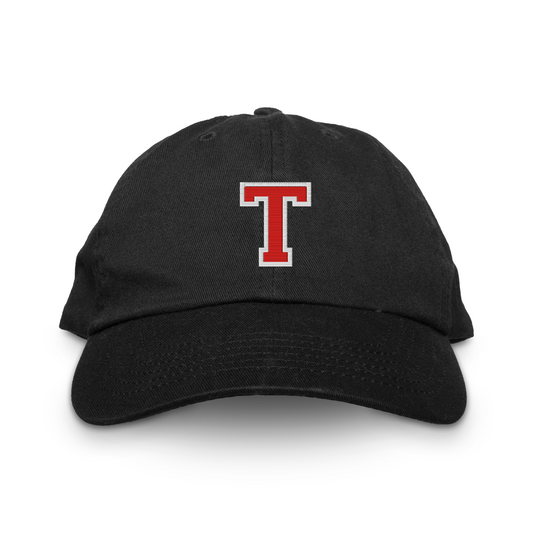
St Louis Browns Unstructured Hat
Regular price $43.00 CADRegular priceUnit price per -
-
San Francisco Sea Lions Snapback Hat
Regular price $50.00 CADRegular priceUnit price per -
-
Houston Colt 45's Flex Hat
Regular price $62.00 CADRegular priceUnit price per -
-
-
Pittsburgh Maulers Unstructured Hat
Regular price $43.00 CADRegular priceUnit price per -
-
Birmingham Black Barons Blackout Snapback Hat
Regular price $50.00 CADRegular priceUnit price per -
NLB Monarchs Blackout Snapback Hat
Regular price $50.00 CADRegular priceUnit price per -
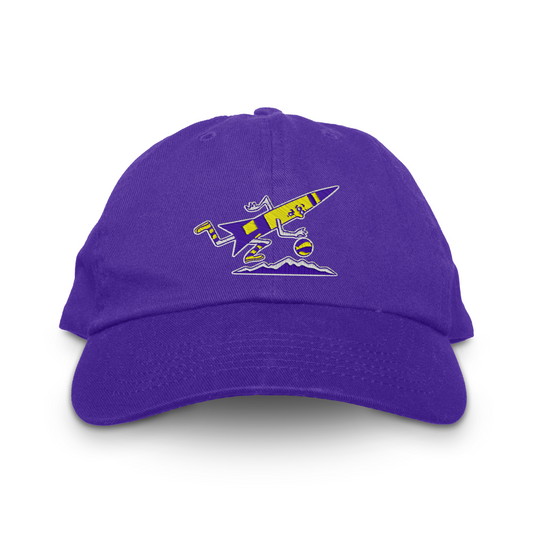
Denver Rockets Unstructured Hat
Regular price $43.00 CADRegular priceUnit price per -
-
Seattle Pilots Unstructured Hat
Regular price $43.00 CADRegular priceUnit price per -
-
Houston Colt 45's Wordmark Unstructured Hat
Regular price $43.00 CADRegular priceUnit price per -
-
Tampa Smokers Unstructured Hat
Regular price $43.00 CADRegular priceUnit price per -
-
Bellingham Mariners Unstructured Hat
Regular price $43.00 CADRegular priceUnit price per -
-
-
St Louis Browns Flex Hat
Regular price $62.00 CADRegular priceUnit price per -
-
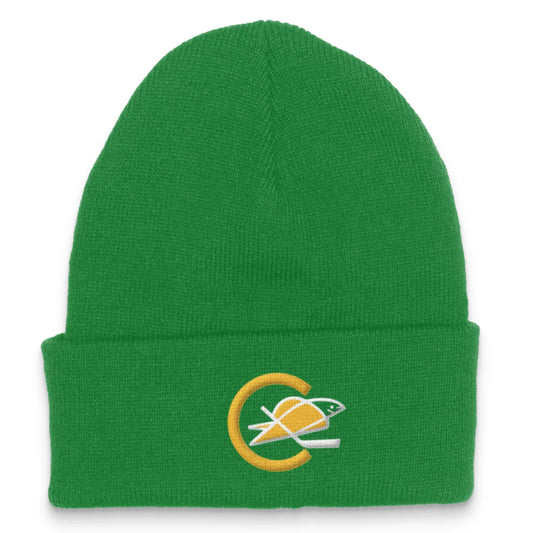
California Golden Seals Beanie
Regular price $36.00 CADRegular priceUnit price per -
-
Houston Colt 45's Beanie
Regular price $36.00 CADRegular priceUnit price per -
-
San Francisco Seals Beanie
Regular price $36.00 CADRegular priceUnit price per -
-
St Louis Browns Snapback Hat
Regular price $50.00 CADRegular priceUnit price per -
















Recently Viewed
All Hats — Vintage Throwback Snapbacks, Dad Hats, Truckers & Flex-Fit Caps
171 Active Styles Across Defunct Leagues, Negro Leagues Baseball, Arena Football and More. One-Size Adjustable or Two-Size Flex-Fit. $22.99–$42.99.
Royal Retros carries 171 active throwback hat styles out of a 294-design catalog built around nearly every defunct and obscure pro league we sell — Negro Leagues baseball, the World Hockey Association, the USFL and AF1, the Pacific Coast League, and dozens of one-off regional clubs no mainstream retailer touches. Five real hat constructions, not one generic cap reskinned 171 times: low-profile unstructured dad hats ($29.99), structured snapbacks including 5-panel curved-brim versions ($33.12–$39.99), foam-front trucker hats ($29.99–$32.99), stretch-construction flex-fit caps ($42.99), and cuffed knit beanies ($22.99–$24.99). Hats size differently than apparel — every style here is one-size-fits-most adjustable or two-band stretch-fit; we don't carry a true fitted (unadjustable, cap-sized) style at the moment, so nothing below claims one. This is a hub page for the entire hat catalog, not a single team's shop — use it to find your style first, then jump into the specific league or team collection linked throughout for the full product lineup. Shop by style, by sport, by league, then use the fit guide and buying FAQ below, or skip straight to the actual history of how the modern ball cap got built.
Shop Hats by Style
Construction is the first decision, before you even get to team or league — a snapback, a dad hat and a trucker hat can carry the exact same logo and still feel like three completely different products on your head. Here's what's actually in stock, style by style.
Snapback Hats — 38 active styles, $33.12–$39.99. A structured six-panel crown with an adjustable plastic snap closure at the back, one-size-fits-most. This is the cleanest, most "finished" silhouette in the catalog — the style most fans reach for when they want a hat that reads as a real cap rather than a soft, broken-in one. It's also the style most associated with the throwback resurgence generally, which is covered in more detail further down this page. Shop Snapback Hats.
5-Panel Curved-Brim Snapbacks — 11 of the snapback styles above are cut with five panels instead of six, giving a lower-profile crown with the same curved brim and adjustable snap closure, $33.12–$34.99. A distinct, slightly more casual silhouette than the standard 6-panel snapback, closer to a camp-cap profile than a traditional ballcap, and it has its own subcollection if that's the specific cut you're after. Shop 5-Panel Curved-Brim Snapbacks.
Unstructured / Dad Hats — 87 active styles, $29.99 flat. Soft, low-profile crown with a curved brim and a fabric strap-and-buckle back, one-size-fits-most. This is the single biggest style in the entire catalog — more than half of every active hat we carry is built this way — because it's the most forgiving fit and the most "vintage" look straight out of the package, no breaking-in required. If you only own one hat from a given team, there's a good chance it should be this one. Shop Unstructured Hats.
Trucker Hats — 26 active styles, $29.99–$32.99. Foam front panel over plastic mesh back for airflow, which also makes the crown sit taller than a standard cap since the foam front stands up stiff. Adjustable snap or hook-and-loop closure, one-size-fits-most. The style that runs coolest in warm weather, and the one with the deepest roots in promotional "gimme cap" culture — more on that below. Shop Trucker Hats.
Flex-Fit / Stretch Caps — 13 active styles, $42.99 flat. Structured, high-profile crown built on a stretch sweatband instead of a snap or strap — no adjuster at all. Sized in two stretch bands per product (check the individual product page for the exact range) rather than a true fitted cap size, so you still get the cleaner, no-strap look of a fitted cap without ordering to an exact head measurement. It's the smallest style count in the catalog and priced accordingly, at the top of the range. Shop Flex-Fit Hats.
Knit Hats / Beanies — 7 active styles, $22.99–$24.99. Cuffed knit construction, one-size stretch-to-fit, no brim. The cold-weather and gift-box pick when a ballcap isn't the right hat for the season, and the least expensive style in the catalog across the board. Browse alongside our unstructured styles or see the full catalog below.
Not sure which construction you want, or just want to browse everything hat-shaped in one place? Shop the general Hats collection for logo caps and styles that don't slot neatly into the five buckets above.
Shop Hats by Sport
Football Hats — 74 active styles, the largest sport category in the catalog. Arena football (AF1), spring football (USFL, UFL), the 1970s World Football League, WLAF/NFL Europe, the Canadian Football League, and heritage designs pulled from defunct pro football generally. Dad hat, snapback and trucker versions are all represented across this group, so the style choice above still applies once you've picked a league. Shop Legacy Football, Arena Football HQ, or Spring Football HQ.
Baseball Hats — 72 active styles. Negro Leagues baseball, defunct pro franchises, and Pacific Coast League and other regional minor-league clubs make up the bulk of the catalog's baseball side, and this is also where you'll find most of the flex-fit and knit product, alongside dad hats and snapbacks. Shop Legacy Baseball, NLB, West Coast Minors, or Regional Baseball.
Hockey Hats — 17 active styles. World Hockey Association, International Hockey League, Roller Hockey International, and other defunct pro hockey clubs. This is a smaller slice of the catalog than football or baseball, but it's built the same way — real teams, real leagues, not one generic "hockey" design. Shop Legacy Hockey, WHA, IHL, or Roller Hockey International.
Basketball Hats — 6 active styles, all American Basketball Association. A small but real corner of the catalog for a league that only existed for nine seasons before its 1976 merger, which is exactly the kind of short-lived league this site specializes in covering. Shop Legacy Basketball or ABA.
Shop Hats by League
AF1 / Arena Football One — 31 active hats, the single deepest league in the catalog by a wide margin. Dad hat, snapback and trucker versions across clubs including Nashville Kats, Albany Firebirds, Minnesota Monsters, Kentucky Barrels, Michigan Arsenal, Washington Wolfpack, Oceanside Bombers and Beaumont Renegades — several of those clubs are stocked in all three constructions at once, which is rare even within this catalog. Shop AF1.
NLB — Negro Leagues Baseball — 25 active hats spanning Homestead Grays, Newark Eagles, Kansas City Monarchs, Birmingham Black Barons, Pittsburgh Crawfords, Seattle Steelheads, San Francisco Sea Lions, St. Louis Stars, Indianapolis Clowns and Denver White Elephants. This is the deepest baseball-specific league represented here, and the styles run across all five constructions. Shop NLB.
West Coast Minors — Pacific Coast League — 23 active hats covering San Francisco Seals, Portland Beavers, Sacramento Solons, Hawaii Islanders, Seattle Rainiers and Oakland Oaks — a regional minor-league catalog with the same construction range as the biggest leagues here despite being a more niche baseball category. Shop West Coast Minors.
USFL — 19 active hats across the full 1980s roster: New Jersey Generals, Birmingham Stallions, Tampa Bay Bandits, Los Angeles Express, Michigan Panthers, Denver Gold, the Baltimore/Philadelphia Stars, Pittsburgh Maulers, Chicago Blitz, Houston Gamblers, Jacksonville Bulls, Oakland Invaders, San Antonio Gunslingers, Washington Federals, Arizona Wranglers, Oklahoma Outlaws and Orlando Renegades. Most of that roster is available in the dad hat construction specifically. Shop USFL.
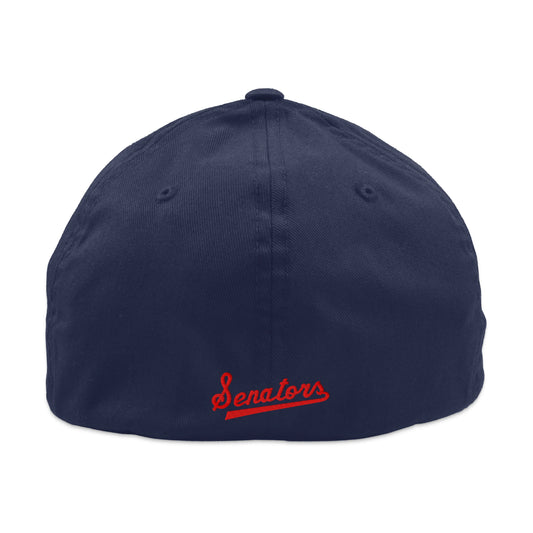
Defunct Pro Baseball — 12 active hats for franchises that no longer exist under those names, including St. Louis Browns, Seattle Pilots, Washington Senators, Houston Colt 45's and the New York Highlanders — a mix of dad hat, snapback and flex-fit construction depending on the club. Shop Defunct Pro Baseball.
WHA — World Hockey Association — 7 active hats for Houston Aeros, Indianapolis Racers, Toronto Toros, Cincinnati Stingers, Calgary Cowboys, Michigan Stags/Baltimore Blades and Los Angeles Sharks, all currently in the dad hat construction. Shop WHA.
ABA — American Basketball Association — 5 active hats covering Kentucky Colonels, Virginia Squires, the Oakland Oaks basketball club, Spirits of St. Louis and Pittsburgh's Pipers and Condors clubs — a compact but complete run of dad hats for a league that only played nine seasons before its 1976 merger. Shop ABA.
WFL — World Football League — 6 active hats from the 1970s spring-and-fall league that tried twice to compete with the NFL and folded both times, including clubs from Memphis, Philadelphia, the Hawaiian Islands and Southern California. Shop World Football League.
UFL — 6 active hats from the modern USFL/XFL merger, including St. Louis Battlehawks, DC Defenders, Arlington Renegades and Birmingham Stallions. Shop UFL.
WLAF / NFL Europe — 5 active hats for Rhein Fire, London Monarchs, Barcelona Dragons, Orlando Thunder and San Antonio Riders — the international developmental league that operated under a few different names from the late 1980s into the 2000s. Shop WLAF / NFL Europe.
CFL / CFLPA — 4 active hats covering Las Vegas Posse, Atlantic Schooners and Baltimore Stallions — the American-expansion and proposed-team era of Canadian football, plus player-association gear. Shop Canadian Football or CFLPA.
XFL — 3 active hats for Seattle Sea Dragons and San Francisco Demons, drawn from the league's multiple relaunches since 2001. Shop XFL.
IHL — International Hockey League — 2 active hats for Las Vegas Thunder and Detroit Vipers, the top minor-pro hockey league that ran largely independent of the NHL's affiliate system for most of the 20th century. Shop IHL.
RHI — Roller Hockey International — 2 active hats, a different sport entirely from roller derby, drawn from the outdoor in-line hockey league that operated through the 1990s. Shop Roller Hockey International.
Fit and Sizing Guide
Hats don't size the way apparel does, and we don't apply a blanket size claim to this collection — sizing depends entirely on the construction. If you've shopped our jerseys or tees before, set that standard apparel size range aside completely here; it doesn't apply to a single hat style we carry.
One-size-fits-most adjustable — dad hats, snapbacks and trucker hats all use an adjustable back (strap-and-buckle on dad hats, plastic snap on snapbacks, snap or hook-and-loop on truckers) built to fit most adult heads across a wide range. This covers the large majority of the catalog — 151 of the 171 active styles.
Two-band flex-fit / stretch — the 13 flex-fit styles have no snap or strap at all. Instead the sweatband is built from a stretch material and the hat is offered in two size bands, typically labeled something close to S/M and L/XL. Because the exact band range can vary slightly by manufacturer run, check the sizing note on the individual product page before ordering rather than assuming a universal measurement.
One-size stretch-knit — the 7 knit/beanie styles stretch to fit essentially any adult head with no adjuster needed.
How to measure your head — wrap a soft tape measure around your head about an inch above your ears, at the widest point, and hold it snug but not tight. That number tells you where you land in a flex-fit band even without a hat in hand. For adjustable styles (dad hat, snapback, trucker), fit range is generous enough that measuring in advance usually isn't necessary — the adjuster does the work.
Which styles run larger or smaller — an unstructured dad hat sits the most relaxed of the group since the crown itself has no internal stiffening; a snapback sits more precisely because the crown is structured before the adjuster ever comes into play; a trucker hat sits a little taller than either because the stiff foam front panel stands up rather than curving with your head; a flex-fit sits the snuggest of all since there's no slack to adjust out.
Crown height at a glance — from lowest to tallest profile, roughly: unstructured dad hat first, then snapback, then flex-fit, with trucker hats sitting tallest of the group because of that stiff foam front panel. That's a starting point for choosing a style based on how it sits on your head, separate from how it closes.
Why Royal Retros
- The deepest defunct-league hat catalog we can build. 171 active styles across more than 20 leagues most retailers don't touch at all.
- Five real hat constructions, not one cap reskinned. Dad hat, snapback (including 5-panel curved-brim), trucker, flex-fit and knit are genuinely different builds, not the same blank with a different tag.
- Honest pricing by construction. $22.99–$42.99 depending on style, with every price listed above matching what's actually on the product page.
- No overreach on sizing. We tell you exactly how each style is sized instead of pasting a one-size-fits-all claim across product types that don't work that way.
- Cross-shop by sport, league or team. Every hat here has a matching apparel collection if you want the jersey or tee to go with it.
- Multiple constructions per club where the catalog supports it. AF1 and NLB teams in particular are stocked in two or three different hat styles rather than a single one-size-fits-all design.
- A catalog built for collectors, not just fans of one team. Twenty-plus leagues in one place means you can build out a shelf of hats from leagues that no longer exist anywhere else in one order.
Quick Buying FAQ
What size hat should I order?
If the style is a dad hat, snapback or trucker, order without worrying about exact size — the adjustable back covers most adult heads. If it's a flex-fit style, check the product page for its specific S/M or L/XL band before ordering, since flex-fit has no adjuster to correct for a wrong guess.
Is the brim flat or curved?
It depends on the style. Snapbacks (both 6-panel and 5-panel curved-brim) and flex-fit caps generally run a curved brim in this catalog; individual product photos show the exact brim shape, since some snapback designs are offered flat. Check the product photo if brim shape matters to you.
What are the hats made from?
Cotton twill is the base material across most styles, with mesh panels on trucker hats for airflow and knit yarn construction on the beanies. Material specifics are listed on each product page.
How do I care for a throwback hat?
Spot-clean with a damp cloth and mild soap rather than machine washing — structured crowns (snapback, flex-fit) can lose their shape in a washer or dryer. Unstructured dad hats tolerate a gentle hand wash better than the structured styles, but air-dry either way.
Can I get a custom name or number on a hat?
No — customization is a jersey feature on this site, not a hat feature. Every hat ships exactly as photographed.
How fast does it ship, and what's the return policy?
Standard stock items ship within a few business days. Standard items follow our return policy at /pages/returns.
What's the best style for everyday wear versus a shelf display?
For everyday wear, an unstructured dad hat or a trucker hat is the most forgiving choice — both are built to be worn and washed without babying the shape. For a shelf or wall display where the hat won't be worn often, a structured snapback or flex-fit cap holds its crown shape better over time sitting still.
Is there a difference in quality between the styles, or just construction?
Construction, not quality — a $29.99 dad hat and a $42.99 flex-fit cap are built to different specs for different purposes, not different tiers of the same product. The price differences here track material and construction complexity, not a "good/better/best" hierarchy.
Are these officially licensed?
Not as a blanket claim across this collection. This catalog spans licensed product from some leagues alongside heritage tribute reproductions from leagues where Royal Retros holds no license. We don't make a collection-wide licensing claim here — check the individual product or league collection page for that league's specific status.
How Did the Baseball Cap Become the Standard Sports Hat?
It started as a rounded, buttoned cap with a long peak, worn by a New York-area amateur club in 1860, and by 1900 that "Brooklyn-style" cap was the dominant look in the sport. A pillbox-style version became popular in the late 1880s and gradually morphed into the rounded six-panel cap that's still the baseline shape today. Team monograms — letterforms stitched onto the crown to identify a club at a distance — first appeared in 1894, and the practice spread quickly across the sport in the following seasons.
The biggest single change came in the 1940s, when manufacturers began using latex rubber to stiffen the cap's structure. Before that, ball caps were genuinely floppy — soft crowns with short, unstiffened peaks that had little in common with the structured caps sold today. The 1940s shift toward a stiffer peak and a more structured crown is the moment the "modern" baseball cap silhouette actually arrived, decades before it became a mainstream fashion item.
What Is the Difference Between a Fitted Cap and a Snapback?
A fitted cap is sewn to an exact hat size with no adjustable closure at all — you order your precise head measurement or it doesn't fit. A snapback has an adjustable plastic strap at the back that snaps into a row of notches, making one hat fit a wide range of head sizes. For most of the baseball cap's history, fitted was the only option; the one-size-fits-all adjustable version didn't exist until the early 1970s, when it was introduced as a practical alternative to stocking a full run of fitted sizes. It's called a "snapback" specifically because of that snap closure, and the name stuck even as the style became one of the most recognizable in sports apparel.
What Is the Button on Top of a Baseball Cap Called?
It's called a squatchee, and it's a functional leftover from the cap's earliest construction. The panels that make up a traditional six-panel crown are gathered and stitched together at the very top, and the button — usually fabric-covered to match the cap — covers that seam. It's mostly decorative on a modern cap rather than structurally necessary, but it's a genuine construction detail rather than a pure design flourish, and whether a given style has one is one more small thing that separates one cap silhouette from another.
Why Did Snapback Hats Come Back Into Style?
Because hip-hop and rap culture adopted the snapback as a signature look starting in the 1990s, and that adoption turned a purely functional, one-size-fits-all sports hat into a fashion statement independent of the team on the front. The snapback's practicality — anyone can wear one without ordering a specific size — made it the natural hat for a culture built around bold graphics and instant recognizability, and that popularity has cycled in and out of mainstream fashion in the decades since without the style itself ever really going away.
Where Did the Trucker Hat Come From?
The trucker hat originated in the 1970s as a free promotional item — farm and feed-supply companies handed them out to farmers and truck drivers, which is where both the "trucker hat" and "gimme cap" nicknames come from. The design swaps the cotton front panel of a standard baseball cap for stiff foam, backed by a plastic mesh crown for breathability, which is also why a trucker hat sits taller on the head than most other caps — the foam front stands up straight instead of curving with your skull. That utilitarian, giveaway origin is exactly why the style came back into fashion in the early 2000s: suburban youth culture picked it up specifically because of its unglamorous, blue-collar association, worn with a sense of irony by skaters, pop-punk fans and hip-hop listeners alike. Musicians and actors of the era were widely credited with popularizing the look, and the trend was mainstream enough by the mid-2000s to become a punchline in its own right.
What Is a Flex-Fit or Stretch-Fit Cap?
A flex-fit cap uses a stretch material — typically a spandex-blend sweatband — instead of a snap or strap, letting one structured, high-profile cap fit a range of head sizes within a labeled band rather than an exact size. It's a more recent innovation than either the snapback or the trucker hat, made possible by advances in stretch textiles: the goal was to get the clean, no-adjuster look of a true fitted cap while still being able to stock just two sizes instead of a full fitted run. That's why flex-fit product tends to sit closer to the head than a snapback or dad hat — there's no slack in the construction to adjust out.
How Can You Date a Hat by Its Construction?
Crown height and stiffening are the two biggest tells. A soft, low, unstiffened crown with a short peak points toward pre-1940s construction, before latex rubber stiffening became standard and gave caps their modern structured shape. A taller, structured six-panel crown with a stiffened front panel is the mid-to-late-20th-century baseline that's still used today. A foam front with a mesh back and a notably tall crown is the trucker-hat construction that dates to the 1970s as a promotional item, even though the style itself wasn't treated as fashion until decades later. And a snug, adjuster-free fit built on stretch material rather than a snap is the newest construction of the group, since stretch-fit textiles are a comparatively recent addition to cap manufacturing. None of this is an exact science on a reproduction — a modern throwback can deliberately reproduce an older silhouette — but the construction details are the same ones collectors use to date an original.
Why Were Old-School Ballcaps Made of Wool?
Wool was the standard cap material for most of the 20th century because it held its shape and resisted wear well, and because it was simply the fabric available before synthetic performance textiles existed — the same reason wool was standard for the rest of a uniform. Wool gradually gave way to polyester and cotton-blend construction as those materials became cheaper and easier to manufacture at scale. On a modern shelf, a wool-feel cap now reads specifically as a vintage or premium signal rather than an everyday functional choice, which is part of why "classic wool" styling shows up so often on reproduction and throwback caps even when the underlying fabric has changed.
Why Did Throwback Sports Gear Become Popular Again?
Because streetwear and vintage fashion converged in the 2000s and 2010s, turning defunct-team merchandise from a niche fan interest into a genuine style category of its own. A hat for a team that no longer exists reads as a deliberate style choice rather than simple bandwagon fandom, and that specific appeal is exactly what built demand for a catalog like this one, where a single obscure club can carry three or four different hat constructions instead of just one generic design.
Why Do Some Throwback Caps Sit With a Flat Brim and Others Curved?
Because the flat brim is largely a styling choice tied to the modern snapback resurgence, while the curved brim is the older, functional shape designed for actual sun-shielding on the field. On-field caps have always used a curved peak because it does the job better; the flat, unbent brim became a deliberate look once snapbacks moved from function into fashion, since leaving the brim flat signaled a hat hadn't been broken in — part of the same hip-hop and streetwear-driven shift that made the snapback itself a style statement rather than just sports equipment. Dad hats and trucker hats in this catalog run curved brims almost without exception; snapbacks are the style most likely to be offered flat.
How to Identify a Quality Throwback Cap
A few construction details separate a well-made reproduction from a cheap one, regardless of style:
- Embroidered logos over printed ones. Embroidery holds its shape and color through wear and washing far longer than a heat-printed graphic, and it's the standard on higher-quality caps.
- A stiffened front panel on structured styles. Snapback and flex-fit caps should hold their shape on the front panel without collapsing when you set the hat down — that structure comes from a buckram or similar stiffening layer sewn behind the fabric.
- Sturdy hardware. A snapback's plastic snap closure and a dad hat's metal buckle should feel solid, not brittle, since that's the piece that takes the most wear over the life of the hat.
- Consistent stitching. Even seams and consistent embroidery density are the easiest visual tell of a well-constructed cap versus a rushed one.
- Ventilation eyelets near the crown. Small grommets or fabric eyelets sewn near the top of each panel aren't just decorative — they're a functional detail carried over from on-field caps, and their presence is another small sign the cap wasn't built to a shortcut pattern.
- Accurate color and logo work on a throwback design. On a reproduction specifically, the details that matter are period-correct colors and proportions rather than a modern reinterpretation of an old mark.
Extended FAQ
Do all the hat styles run true to size?
Adjustable styles (dad hat, snapback, trucker) are built with enough range in the closure that "true to size" doesn't really apply — they're designed to fit a wide span of head sizes by default. Flex-fit is the one style where getting the right band matters, since there's no adjustment to fall back on.
Do you carry youth or kids' sizing?
Not as a dedicated size option across this collection currently. Adjustable adult styles (dad hat, snapback, trucker) will fit many older kids and teens given how far the strap or snap adjusts, but there's no separate youth-cut product.
What's the difference between the 6-panel snapback and the 5-panel curved-brim snapback?
Panel count and profile. The standard 6-panel snapback uses six triangular fabric sections to build the crown, giving a slightly taller, more traditional silhouette. The 5-panel curved-brim version drops to five panels, which lowers the crown profile for a leaner, more casual look — same adjustable snap closure, same curved brim, different cut.
Is there a size sticker or tag I should keep?
Adjustable and one-size styles don't carry a size sticker the way apparel does — the adjuster itself is the sizing mechanism. Flex-fit product is labeled with its band (commonly close to S/M or L/XL) on an interior tag, which is worth checking before you remove any packaging.
Can I return a hat if it doesn't fit?
Standard, non-customized hats follow our normal return policy at /pages/returns. Since hats aren't sized to an exact measurement outside the flex-fit styles, fit issues are rare, but the return path is there if you need it.
Do these hats match the jerseys and tees for the same team?
In most cases, yes — if a league or team has an active hat here, check that team's own collection page for matching jerseys and tees built around the same colors and branding.
Are these hats unisex?
Yes — every style in this collection is built to a single adult fit rather than gendered sizing.
Can I get the same team in more than one hat style?
Often, yes. The leagues with the deepest coverage here — AF1 especially — carry the same club in two or three different constructions (dad hat, snapback, trucker), so check the team-specific collection page to see every style available for that club.
Do the hat colors match what's shown in the product photos?
Product photography is shot to represent each colorway as accurately as possible, but monitor calibration can shift color slightly on any screen. If exact color matching matters — for a gift or to match a jersey — the colorway name in the product description is the more reliable reference than the photo alone.
Why do some teams only have one hat style while others have three?
Catalog depth tracks how much a league or club has been built out overall, not demand. AF1 and NLB got the deepest build-out across multiple hat constructions; leagues with a single hat style per club, like WHA or ABA, are just as real a part of the catalog but haven't had the same multi-style treatment yet.
Building a Multi-League Hat Collection
Because this catalog spans more than 20 leagues rather than one, it's set up as well for a collector chasing breadth as it is for a fan buying one hat for one team. A practical way to start: pick one construction — dad hat is the obvious default given it's more than half the active catalog — and work across sports first (one football league, one baseball league, one hockey club) before doubling back to add a second style for the teams you care about most. AF1 and NLB are the two leagues deep enough to support that second pass on their own, since both are stocked in two or three constructions per club. Everything else in the catalog is verified live and linked below, organized alphabetically rather than by category, if you'd rather browse the whole thing at once. There's no wrong order to build a collection like this — the point of stocking 20-plus leagues in one place is that you can follow your own interest rather than a house-recommended path, whether that's one sport covered deeply or a shelf that jumps between football, baseball, hockey and basketball hats from a dozen different decades.
Shop Related Collections
ABA · AF1 · Arena Football HQ · Canadian Football · CFLPA · 5-Panel Curved-Brim Snapbacks · Flex-Fit Hats · Hats (General) · IHL · Legacy Baseball · Legacy Football · Legacy Hockey · Majors (Defunct Pro Baseball) · NLB · Legacy Basketball · Regional Baseball · Roller Hockey International · Snapback Hats · Spring Football HQ · Trucker Hats · UFL · Unstructured Hats · USFL · West Coast Minors · WHA · WLAF / NFL Europe · World Football League · XFL
Royal Retros — 171 Active Throwback Hats. Snapbacks, Dad Hats, Truckers, Flex-Fit and Knits. $22.99–$42.99.