




-
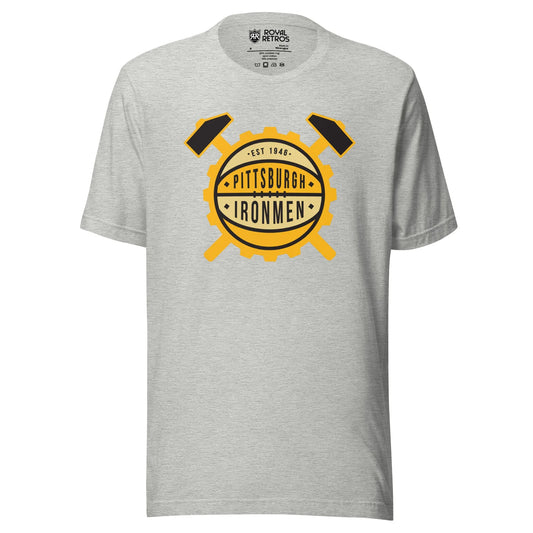
Pittsburgh Ironmen T-Shirt
Regular price $43.00 CADRegular priceUnit price per -
-
CUSTOM
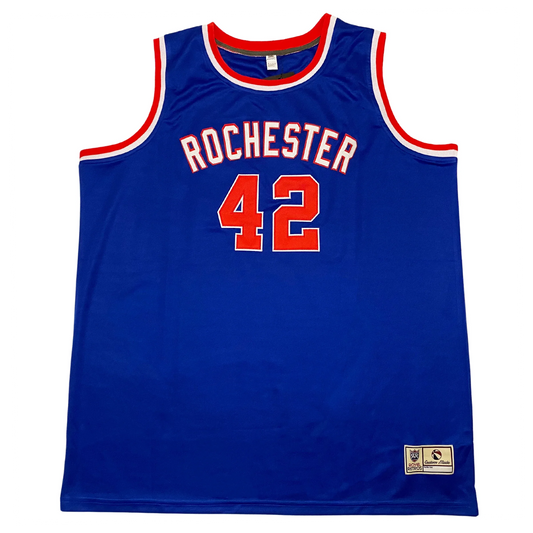
Rochester Royals Jersey
Regular price Starting at $121.00 CADRegular priceUnit price per -
-
CUSTOM
Toronto Huskies Jersey
Regular price Starting at $121.00 CADRegular priceUnit price per -
-
-
St Louis Bombers T-Shirt
Regular price $43.00 CADRegular priceUnit price per -
-
CUSTOM
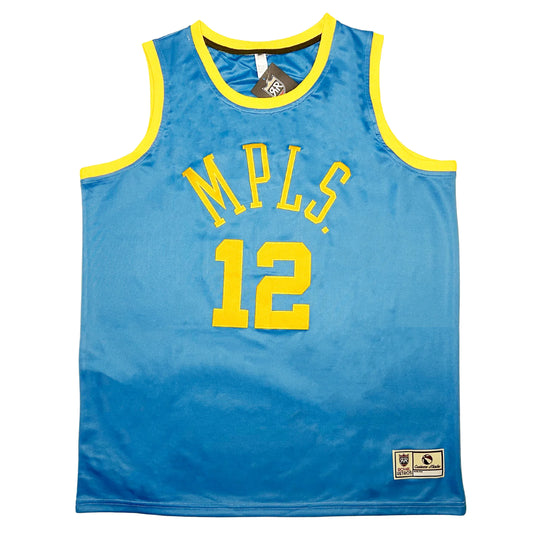
Minneapolis BAA Jersey
Regular price Starting at $121.00 CADRegular priceUnit price per -
-
CUSTOM
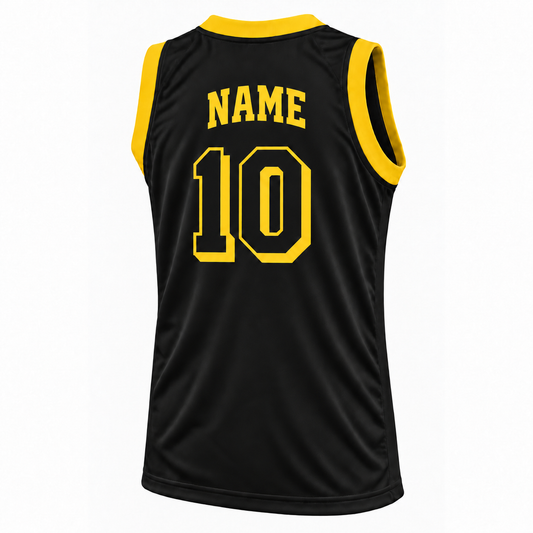
Pittsburgh Ironmen Jersey
Regular price Starting at $121.00 CADRegular priceUnit price per -
-
CUSTOM
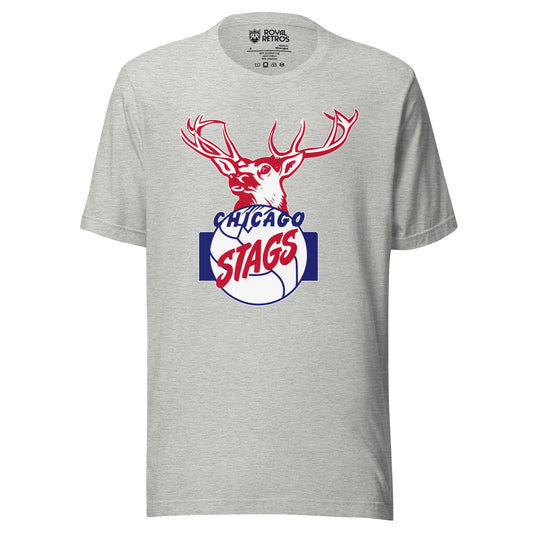
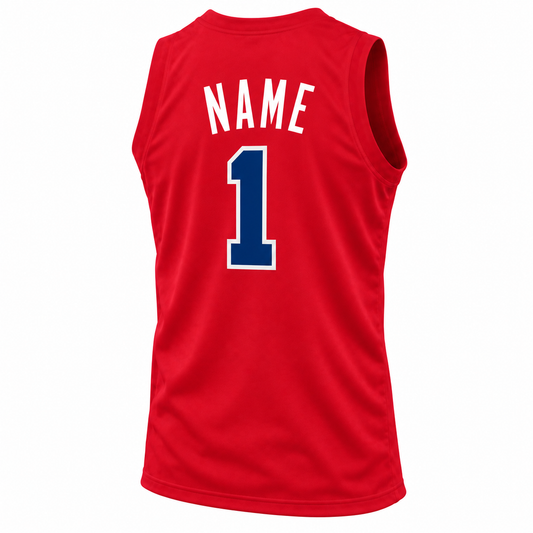
Chicago Stags Jersey
Regular price Starting at $121.00 CADRegular priceUnit price per -
-
CUSTOM
Philadelphia Warriors Jersey
Regular price Starting at $121.00 CADRegular priceUnit price per -













Recently Viewed
The Basketball Association of America Collection — Royal Retros BAA Fan Shop
Authentic 1946–1949 BAA Throwbacks. Custom Names & Numbers. Sizes S–5XL.
Royal Retros carries throwback jerseys and tees from seven Basketball Association of America franchises — the league that became the NBA. Jerseys are $84.99 in sizes S–5XL; tees are $29.99, most running S–5XL (the St. Louis Bombers tee runs XS–5XL). Shop the Philadelphia Warriors, the Toronto Huskies, the Pittsburgh Ironmen, the Chicago Stags, the Rochester Royals and the Minneapolis BAA jersey, plus Chicago Stags, Pittsburgh Ironmen and St. Louis Bombers tees. This is heritage tribute apparel built for a league that only existed for three seasons before merging into the NBA — nobody else carries throwbacks this deep across the BAA's original franchise map.
What You Can Shop in the BAA Collection
BAA Jerseys — Six franchises: Philadelphia Warriors (Blue or White), Toronto Huskies (Blue or White), Pittsburgh Ironmen (Black, Yellow or White), Chicago Stags (Red, Blue or White), Rochester Royals (Blue or White) and Minneapolis BAA (Blue). Sewn twill lettering, period-correct fonts. $84.99, sizes S–5XL.
BAA T-Shirts — Chicago Stags (Red, Athletic Heather, White or True Royal), Pittsburgh Ironmen (Black, Athletic Heather or White) and St. Louis Bombers (Red, Athletic Heather or White, sizes XS–5XL). $29.99.
Sizes — Jerseys and most tees run S–5XL. The St. Louis Bombers tee additionally offers XS, a small but useful extra for anyone shopping for a smaller build. No big & tall upcharge on anything in the collection.
Customization — Free personalization on every jersey: name, number or custom text, in your choice of Pro Stitched (authentic sewn numbers and lettering) or Replica (lightweight printed graphics) construction. Custom jerseys are made to order and final sale.
Shop by Franchise Era
The Founding Class (1946–47). Philadelphia Warriors, Toronto Huskies, Pittsburgh Ironmen and Chicago Stags all tipped off in the BAA's very first season. Toronto and Pittsburgh lasted exactly one year before folding; Chicago and Philadelphia kept going. Shop the Warriors, Huskies, Ironmen and Stags.
The NBL Raid (1948–49). The Rochester Royals and the Minneapolis franchise both jumped from the rival National Basketball League for the BAA's final season, bringing two of the sport's best rosters with them just before the two leagues merged into the NBA. Minneapolis arrived as the reigning NBL champion, built around a dominant young center who was about to become professional basketball's first true superstar. Shop the Royals and Minneapolis BAA jerseys.
Why Royal Retros Is the Home of BAA Throwback Gear
- Seven original franchises, not one generic logo tee. From the founding class of 1946 to the NBL arrivals of 1948, each jersey is built to its own team's real identity.
- Period-correct construction. Era-appropriate fonts, colors and lettering, referenced against photographic source material for each franchise.
- Flat, honest pricing. Every jersey is $84.99; every tee is $29.99.
- Sizes S–5XL on jerseys and most tees. True family sizing, no big & tall upcharge.
- Connected history. One of these franchises has its own dedicated deep-dive collection — shop the Rochester Royals' later Cincinnati era in our Cincinnati Royals collection.
Quick Buying Questions
What sizes do BAA jerseys and tees come in?
Jerseys and most tees run S–5XL. The St. Louis Bombers tee also offers XS. We don't upcharge for big & tall sizes.
Are these officially licensed?
No. These are heritage tribute reproductions built from period research, not officially licensed product. The BAA folded into the NBA in 1949, and most of the franchises in this collection never played another game under these exact names. We build these because the league that started professional basketball as we know it deserves better than a single generic "vintage" design slapped across seven different teams.
How fast does it ship and what's the return policy?
Stock items ship within 3–5 business days. Custom jerseys are made to order and typically ship within 7–10 business days, since every name and number is sewn or printed after you order rather than kept pre-made on a shelf. Standard items follow our return policy at /pages/returns.
Gift Ideas for the BAA History Fan
- For the "this is where the NBA actually started" gift: A jersey from any of the founding-class franchises makes the league's origin story wearable.
- For the one-season-wonder collector: The Toronto Huskies and Pittsburgh Ironmen both folded after a single season — genuinely rare pieces of basketball history.
- For the dynasty fan: The Minneapolis BAA jersey covers the roster that would go on to win the league's first true dynasty run in the years right after this collection's era.
- For the completist: Pair a BAA jersey with our deeper Cincinnati Royals collection to follow one franchise from its 1948 BAA arrival through its Cincinnati years.
- Year-round demand. Early-NBA-history nostalgia isn't seasonal — birthdays, Father's Day and the start of basketball season all work.
What Was the Basketball Association of America?
The BAA was the professional basketball league that became the NBA. It played three seasons, from 1946 to 1949, before merging with a rival league to form the National Basketball Association — and the modern NBA officially counts the BAA's three seasons as part of its own history, meaning every BAA banner and record belongs to a franchise's official NBA history today.
It's a short window by any measure — three seasons is barely longer than a single modern player's rookie contract — but it's the window in which the sport's biggest arenas, its first superstar scorers and its first true dynasty all showed up at once. Half the original 11 franchises didn't survive it. The ones that did, or that arrived partway through and stuck, built the foundation the rest of professional basketball has run on ever since.
Why was the BAA founded by hockey arena owners?
The BAA was founded in New York City on June 6, 1946, by a group of owners of major ice hockey arenas across the United States and Canada — venues like Boston Garden and Madison Square Garden that sat empty on many nights between hockey games. Boston Garden owner Walter Brown was a central figure in the league's founding, and the BAA became the first professional basketball league built specifically around playing in big-city arenas rather than smaller gyms and armories. Maurice Podoloff, already president of the American Hockey League, took the BAA presidency too — the first person in history to run two professional sports leagues at the same time.
Who were the original 11 BAA franchises?
The league opened its first season, 1946–47, with 11 teams: Boston Celtics, Chicago Stags, Cleveland Rebels, Detroit Falcons, New York Knickerbockers, Philadelphia Warriors, Pittsburgh Ironmen, Providence Steamrollers, St. Louis Bombers, Toronto Huskies and Washington Capitols. Royal Retros carries throwbacks from four of those original 11 — the Philadelphia Warriors, Chicago Stags, Pittsburgh Ironmen and St. Louis Bombers — plus the Toronto Huskies jersey covering the same founding season. The very first BAA game tipped off on November 1, 1946, at Maple Leaf Gardens in Toronto, with the Huskies hosting the Knickerbockers.
Which BAA teams folded after just one season?
Three of the original 11 didn't make it past that first 1946–47 season: the Toronto Huskies, the Pittsburgh Ironmen and the Cleveland Rebels. The Ironmen finished 15-47, a record analytics-minded historians now rank among the worst single seasons in professional basketball history, and the franchise folded after that lone year at Pittsburgh's Duquesne Gardens. Pittsburgh wouldn't host another major professional basketball franchise of any league until the ABA's Pipers and Condors arrived two decades later, for brief runs in 1967-68 and 1970-72. Both the Ironmen and the Huskies are among the shortest-lived franchises in the sport's modern professional history, and both are represented in this collection specifically because that one-season rarity is part of what makes them worth wearing.
Why did the Toronto Huskies fail after just one year?
The Huskies played their entire existence competing for arena dates with the Toronto Maple Leafs, whose hockey schedule took priority at Maple Leaf Gardens. Attendance declined steadily across the 1946-47 season, the franchise lost roughly $100,000, and it folded once the year ended. Professional basketball did not return to Toronto in any league for nearly five decades, until an NBA expansion franchise arrived in the city in 1995. Notable Huskies players included Mike McCarron, Leo Mogus and Red Wallace, none of whom are widely remembered today outside dedicated BAA history circles — which is exactly the gap this collection is built to fill.
What happened to the Chicago Stags and St. Louis Bombers?
Unlike Toronto and Pittsburgh, the Chicago Stags and St. Louis Bombers both played multiple seasons, through the BAA years and into the first NBA season, before folding in 1950. The Bombers' roster was dispersed around the league in a dispersal draft. Both franchises are fully dead marks today — no NBA team traces its lineage through either one, and neither is connected to any later Chicago or St. Louis pro basketball team that may share a city — which is part of why they're some of the purest "original era" pieces in this collection.
Why did the Chicago Stags actually fold, in 1950?
The Stags played five straight winning seasons out of Chicago Stadium and made the playoffs every year, including that first BAA Finals trip in 1947. The end came from an unusual direction: Harlem Globetrotters owner Abe Saperstein moved to buy the franchise in 1950 with a plan to rename it the Bruins, pair it with Globetrotters doubleheaders, and turn it into a regional team playing home games in multiple cities. Enough players balked at the plan that Saperstein tried to back out of the deal, and with the roster in limbo, the league simply folded the franchise instead. Hall of Famer Andy Phillip anchored that roster alongside Max Zaslofsky, Gene Vance and Kenny Rollins — a genuinely good team undone by a buyout that never actually happened.
Who won the first BAA championship, in 1947?
The Philadelphia Warriors beat the Chicago Stags four games to one in the league's first-ever championship series. Warriors forward Joe Fulks, a future Hall of Famer and one of the first true scoring stars in professional basketball, led all players with 26.2 points a game in the series, including a 37-point, series-defining performance in Game 1. It was the first championship in what the NBA now recognizes as its own official history.
What happened to the Philadelphia Warriors after the BAA years?
The Warriors played 16 seasons in Philadelphia, from the league's 1946 founding through 1962, adding a second championship in 1956 over the Fort Wayne Pistons behind stars Joe Fulks and Paul Arizin. The roster later featured Wilt Chamberlain, drafted in 1959, whose 100-point game on March 2, 1962 — against the New York Knicks, played at a neutral-site arena in Hershey, Pennsylvania — remains the single greatest individual scoring performance in professional basketball history. After that 1961-62 season, the franchise relocated to the West Coast and continues today under the same nickname in a different city, a rare case of a BAA-era franchise keeping its identity across a cross-country move.
Who won the 1948 BAA championship?
The Baltimore Bullets — an entirely different, unrelated franchise from the later Baltimore/Washington Bullets — beat the Philadelphia Warriors four games to two to win the league's second championship in 1948. It remains the only championship that 1944-founded Baltimore franchise ever won, in any league, before folding in 1954.
Who won the 1949 BAA championship, and why does it matter for two of this collection's jerseys?
The Minneapolis franchise, in its first BAA season after jumping from the rival National Basketball League, routed the Washington Capitols in six games behind a dominant young center who was quickly becoming the sport's first true superstar. He averaged 27.5 points and 13.5 rebounds a game in the series and was named the championship's outstanding player. That title was the first of what would become one of professional basketball's great early dynasties, won the same season the Rochester Royals — this collection's other NBL transplant — finished with the league's best regular-season record. Both franchises came into the BAA from the same rival league in the same year, and both are represented in this collection specifically because that 1948–49 season was the last one before the two leagues merged for good.
Who were the Rochester Royals' notable players in this era?
The Royals built their identity around Hall of Fame backcourt duo Bob Davies and Bobby Wanzer, whose partnership anchored the 1951 championship roster that beat the New York Knicks in a seven-game Finals. The roster also included two players who became famous well outside basketball: Otto Graham, later a Pro Football Hall of Fame quarterback, briefly played pro basketball for Rochester, and Chuck Connors — later a Hollywood actor best known for the television series "The Rifleman" — was also on the roster. Center Maurice Stokes, whose Rochester-to-Cincinnati career and career-ending injury is a defining chapter of this same franchise's Cincinnati years, rounds out one of the more remarkable rosters of the era. The Rochester Royals' full story, including its championship home arena and its eventual move, is covered in far more depth on Royal Retros' dedicated Cincinnati Royals collection.
How did the BAA and the NBL merge to form the NBA?
By the late 1940s, both the BAA and the rival National Basketball League were bleeding money, with several franchises in each league struggling to survive independently. On August 3, 1949, the two leagues agreed to merge, forming the National Basketball Association. Some of the strongest NBL franchises — including the Rochester Royals and Minneapolis's BAA transplant, both of which had already jumped to the BAA the year before — became instant contenders in the new, larger league. Many of the weaker franchises from both sides, including several represented in this collection, did not survive the transition at all.
Did any of these franchises become teams that still exist today?
Two of the seven did, under very different circumstances. The Rochester Royals relocated more than once over the following decades and plays today, under a different name, in a different city — its Cincinnati-era history has its own dedicated collection at Royal Retros. The Philadelphia Warriors also relocated and now plays under a different name in a different city as well. The Minneapolis franchise in this collection relocated to Los Angeles in 1960 and its nickname is still in use by that city's team today — which is why this collection's product is named "Minneapolis BAA" rather than using that nickname directly. The Chicago Stags, Pittsburgh Ironmen, St. Louis Bombers and Toronto Huskies, by contrast, are fully dead franchises with no living successor anywhere in professional basketball.
What about the four founding BAA teams Royal Retros doesn't carry?
Boston Celtics, New York Knickerbockers, Cleveland Rebels, Detroit Falcons, Providence Steamrollers and Washington Capitols rounded out the original 11 alongside the seven franchises in this collection. Of those, only the Celtics and the Knickerbockers are still operating continuously today under their original names in their original cities — the last two charter members standing from a league that started with 11. Cleveland and Detroit's franchises folded within their first two BAA seasons, the Steamrollers folded in 1949 just before the NBA merger, and the Washington Capitols — an entirely different team from the unrelated 1969-70 ABA franchise of a similar name — folded partway through the 1950-51 NBA season. None of the six are represented in this collection because Royal Retros doesn't currently carry product for them, but they're part of the same founding story as every jersey sold here.
What Makes Ours Period-Correct
Construction and accuracy. Sewn-on tackle-twill numbers and lettering where the original build called for it, era-correct fonts and colors, and true-to-original construction — every BAA design is checked against period references before it goes live.
More Frequently Asked Questions
What was the Basketball Association of America?
The professional basketball league that became the NBA, founded in 1946 by arena owners and merged with a rival league in 1949. The NBA officially counts the BAA's three seasons as part of its own history.
How many BAA teams does Royal Retros carry?
Seven — the Philadelphia Warriors, Toronto Huskies, Pittsburgh Ironmen and Chicago Stags from the league's 1946 founding class, plus the St. Louis Bombers, Rochester Royals and Minneapolis BAA franchise.
Which BAA teams still exist today?
None play under their original BAA names. Two of the seven franchises in this collection relocated and continue today under different names in different cities; the rest folded outright with no living successor.
Who won the most BAA championships?
Three championships were played across the league's three seasons — 1947, 1948 and 1949 — won by three different franchises: the Philadelphia Warriors, the original Baltimore Bullets, and the Minneapolis franchise represented here.
Why did some BAA teams fold after only one season?
Early professional basketball was a financial gamble. Several original franchises, including the Toronto Huskies and Pittsburgh Ironmen, lost money in markets that weren't ready to support a new league competing with hockey, boxing and college sports for arena dates and fans.
Shop Related Collections
- Custom Basketball Jerseys — The full basketball jersey catalog, S–5XL, free name and number on most.
- Basketball T-Shirts — The full basketball tee catalog.
- Chicago — Regional sports history from the Stags' home city.
- Cincinnati Royals — The Rochester Royals franchise's deep-dive Cincinnati-era collection.
- Legacy Basketball — Every defunct and historic pro basketball franchise Royal Retros carries.
- Philadelphia — Regional sports history from the Warriors' home city.
- Pittsburgh — Regional sports history from the Ironmen's home city.
- St Louis — Regional sports history from the Bombers' home city.
- Ontario — Regional sports history from the Huskies' home region.
The BAA at Royal Retros — Authentic 1946–1949 Throwbacks. Custom Names & Numbers. Sizes S–5XL. The League That Became the NBA.