



Homestead Grays
-
-
-
Homestead Grays Snapback Hat
Regular price $50.00 CADRegular priceUnit price per -
-
-
Homestead Grays Unstructured Hat
Regular price $43.00 CADRegular priceUnit price per -
-
CUSTOM
Washington Homestead Grays NLB Jersey
Regular price Starting at $121.00 CADRegular priceUnit price per -
-
CUSTOM
Homestead Grays Custom NLB Jersey
Regular price Starting at $121.00 CADRegular priceUnit price per -
-
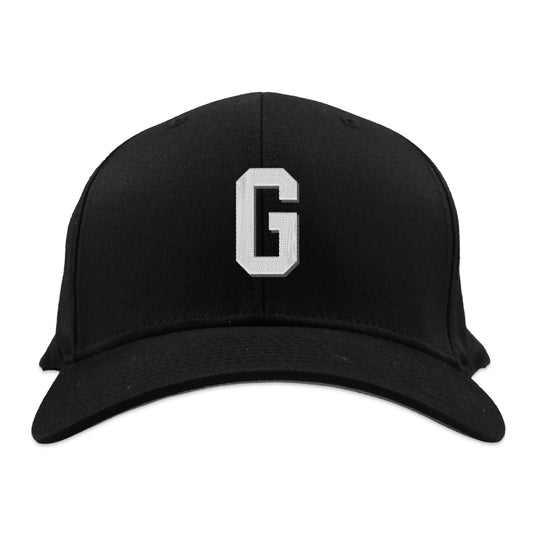
Homestead Grays Blackout Snapback Hat
Regular price $50.00 CADRegular priceUnit price per -
Homestead Grays Shorts
Regular price $107.00 CADRegular priceUnit price per -
-
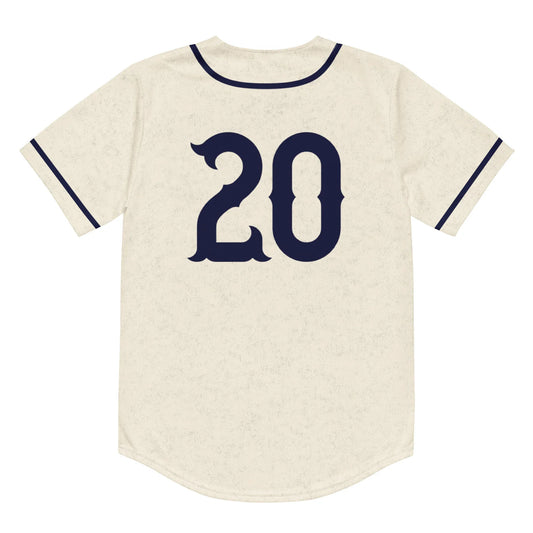
Homestead Grays Replica Jersey
Regular price $100.00 CADRegular priceUnit price per -
CUSTOM
Homestead Grays Flannel Jersey
Regular price Starting at $214.00 CADRegular priceUnit price per -
-
Homestead Grays Flex Hat
Regular price $62.00 CADRegular priceUnit price per -
-
CUSTOM
Homestead Grays NLB Remix Jersey
Regular price Starting at $121.00 CADRegular priceUnit price per -










Recently Viewed
The Homestead Grays Collection — Royal Retros Grays Fan Shop
Authentic Homestead Grays NLB Throwbacks. Custom Names & Numbers. Sizes S–5XL. Nine Consecutive NNL Pennants 1937–1945. The Josh Gibson and Buck Leonard Dynasty.
Royal Retros carries the deepest Homestead Grays throwback collection on the open web — 13+ products covering authentic 1912–1950 Negro National League jerseys, hats, T-shirts, hoodies, and Pittsburgh and Washington baseball history apparel honoring the franchise that won nine consecutive NNL pennants from 1937 through 1945 — the longest single-team championship run in any major-league baseball in any era. Josh Gibson, Buck Leonard, Cool Papa Bell, Cumberland Posey, Vic Harris, Smokey Joe Williams. Three Negro World Series championships (1943, 1944, 1948). Custom name and number on most jerseys. Sizes Small through 5XL. Most jerseys $64.99–$74.99, hats $24.99–$34.99, tees $29.99 — affordable across the entire collection.
What You Can Shop in the Grays Collection
Homestead Grays Jerseys — Throwback flannel-style baseball jerseys featuring the iconic "Grays" wordmark, the "Washington" road wordmark (the franchise played home games in both Pittsburgh and DC during the 1940s), and home/road styles spanning the franchise's 1912–1950 tenure. Choose twill-numbered replicas, lightweight builds, or full custom orders. Custom name and number available on most styles. Most jerseys $64.99–$74.99; premium flannels $149.99.
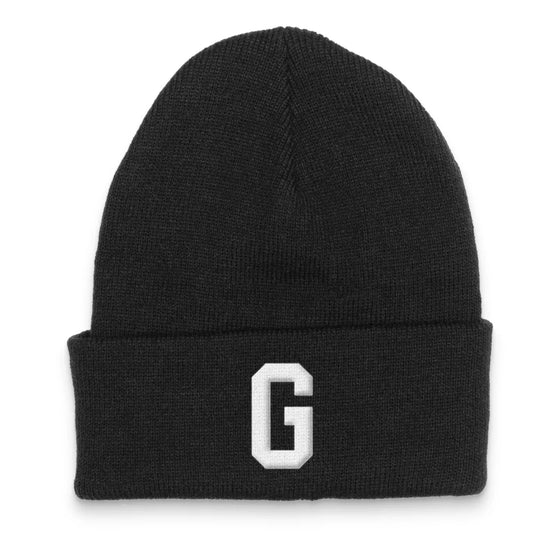
Homestead Grays Hats — Snapbacks, fitted caps, classic wool caps, dad hats, and unstructured styles featuring the Grays' "H" cap logo and the script "Grays" wordmark. Mostly $24.99–$34.99.
Homestead Grays T-Shirts — Soft-blend tees with vintage logos, Forbes Field nostalgia, Griffith Stadium graphics, Josh Gibson tributes, Buck Leonard callouts, and 1937–1945 dynasty designs. Sizes S–5XL. $29.99.
Homestead Grays Hoodies & Sweatshirts — Heavyweight pullovers and crewnecks for vintage baseball collectors and Negro Leagues history fans.
Customization — Free custom name and number on most jerseys. Pick a Grays legend — Josh Gibson, Buck Leonard, Cool Papa Bell, Sam Bankhead, Vic Harris, Smokey Joe Williams — or your own name. Custom orders are final sale and made to order.
Sizes — Small through 5XL on virtually every product. No big & tall upcharge.
Shop the Grays by Era
The Founding Era (1912–1928) — The Homestead Grays were founded in 1912 by Cumberland "Cum" Posey, a Black Pittsburgh businessman and former multi-sport athlete (Posey played professional basketball and was inducted into the Naismith Memorial Basketball Hall of Fame). The Grays began as a Pittsburgh-area sandlot team based in Homestead, Pennsylvania — the steel-mill suburb just upstream of the Monongahela River from downtown Pittsburgh. By 1925, the Grays had become a serious independent professional Black baseball franchise, traveling extensively and competing against the strongest Black baseball teams in the country.
The Independent and First-NNL Years (1929–1936) — The Grays operated independently through the late 1920s and early 1930s, joining the (first) Negro National League briefly before its 1932 collapse. The franchise survived the Great Depression years through Posey's stewardship and the steel-mill economy that sustained the Pittsburgh-area Black baseball fan base. Smokey Joe Williams — one of the great pre-1920 Black baseball pitchers — pitched for the Grays during this era.
The 1937 Acquisition of Josh Gibson and Cool Papa Bell — The most consequential roster move in Negro Leagues history. Pittsburgh Crawfords owner Gus Greenlee, facing financial pressure from a federal numbers-racket prosecution, sold catcher Josh Gibson and outfielder Cool Papa Bell to the cross-town Grays after the 1936 season. The transfer essentially ended the Crawfords' competitive era and began the Grays' nine-consecutive-pennant dynasty. Gibson immediately became the franchise's offensive cornerstone; Bell anchored the outfield.
The Nine-Pennant Dynasty (1937–1945) — The Grays won nine consecutive (second) Negro National League pennants from 1937 through 1945 — the longest single-team championship run in any major-league baseball in any era. The roster across the dynasty years included Gibson (catcher), Buck Leonard (first base, "the Black Lou Gehrig"), Cool Papa Bell (outfielder, until 1942), Sam Bankhead (utility), Ray Brown (pitcher), Roy Welmaker (pitcher), Vic Harris (outfielder/player-manager), Sam Hairston (catcher in later dynasty years), and Wilmer Fields (pitcher).
The Negro World Series Championships (1943, 1944, 1948) — The Grays appeared in the renewed Negro World Series five times during the 1940s, winning three: 1943 (defeated Birmingham Black Barons 4-3), 1944 (defeated Black Barons 4-1), and 1948 (defeated Black Barons 4-1 — the last formal Negro World Series ever played). The 1942 Series (lost to Kansas City Monarchs 4-0) and 1945 Series (lost to Cleveland Buckeyes 4-0) were the only Series defeats during the dynasty years.
The Post-Integration Decline (1946–1950) — The 1946 Grays were still competitive but began losing core talent to MLB integration's pull. Josh Gibson died in January 1947 at age 35 — three months before Jackie Robinson's MLB debut — without ever playing a regular-season game in the major leagues. Buck Leonard, then 38, would have been a logical MLB target but never received the call. The (second) Negro National League folded after the 1948 season; the Grays operated as an independent barnstorming team through 1950 before folding entirely.
Why Royal Retros Is the Home of Homestead Grays Throwback Gear
- Multi-era coverage. 1912 founding, the 1930s independent years, the 1937–1945 nine-pennant dynasty, the Negro World Series championship years (1943, 1944, 1948), and the post-integration era. Every chapter of Homestead Grays history is represented.
- Authentic NLB design. The "Grays" wordmark, the "Washington" road jerseys (the franchise played home games in both Pittsburgh and DC), the gray and red color palette, period-correct sleeve striping and crest construction.
- The 13-product lineup. Custom NLB jerseys, flannel jerseys, replica jerseys, Vintage Icons jerseys, hats (snapback, flex, classic wool), T-shirts, hoodies, and additional gear. The deepest Grays-specific catalog at this price point.
- Affordable pricing. Most Grays jerseys $64.99–$74.99. Most hats $24.99–$34.99. All tees $29.99. Premium flannel jerseys $149.99 — significantly under what other NLB-specialty retailers charge for comparable items.
- Free customization on most jerseys. Add your name and number at no extra cost on eligible items.
- Sizes Small through 5XL. No big & tall upcharge.
- Pittsburgh and DC baseball cross-shopping. Pair a Grays piece with the cross-town Pittsburgh Crawfords for the complete 1930s Pittsburgh Negro Leagues rivalry, the Washington Senators (the Grays shared Griffith Stadium with the Senators in the 1940s), and broader Pittsburgh sports streetwear.
Quick Buying Questions
What sizes do Grays jerseys come in?
Small through 5XL on virtually every jersey style. Hats are typically one-size-fits-most (snapback / flex) or fitted in standard cap sizes. We don't upcharge for big & tall sizes.
Can I add my name and number to a Grays jersey?
Yes — most styles offer free customization. Pick a Grays legend's name — Josh Gibson, Buck Leonard, Cool Papa Bell, Sam Bankhead, Vic Harris, Smokey Joe Williams — or your own name and number. Look for the "Custom" option on the product listing.
What materials are Grays jerseys made from?
Authentic flannel on select limited pieces, heavyweight twill on most replica jerseys, premium pre-shrunk cotton on T-shirts, and heavyweight cotton blends on hoodies. Period-correct construction wherever historical reference imagery exists.
Did the Homestead Grays play in Washington DC?
Yes — beginning in 1940, the Grays played a portion of their home schedule at Griffith Stadium in Washington DC, alongside their Pittsburgh-area home games at Forbes Field. The dual-city home arrangement reflected both franchises' need to maximize gate receipts and the Grays' strong fan support in DC's growing Black community. Players wore "Grays" jerseys for Pittsburgh games and "Washington" jerseys for DC games.
Are the Homestead Grays now considered an MLB-equivalent franchise?
Yes. After Major League Baseball's December 16, 2020 reclassification of the seven Negro Leagues operating between 1920 and 1948 as major leagues, every player who wore a Grays uniform during that period is now an MLB-recognized major leaguer. Josh Gibson is the all-time MLB leader in career batting average (.372), single-season batting average (.466 in 1943), career slugging percentage (.718), and career OPS (1.177).
How fast does it ship and what's the return policy?
Standard products ship within 3–5 business days. Custom items (those with personalized name/number) are made to order and ship within 7–10 business days. Custom items are final sale. Standard items follow our return policy at /pages/returns.
Gift Ideas for the Homestead Grays Fan
- For the Pittsburgh sports fan: Pittsburgh has two of the greatest Negro Leagues franchises ever assembled — the Grays and the cross-town Pittsburgh Crawfords. Owning both is a complete representation of 1930s–1940s Pittsburgh baseball heritage.
- For the DC baseball fan: The Grays played a portion of their 1940s home schedule at Griffith Stadium in Washington. For DC baseball fans, a Grays "Washington" road jersey is a deep-cut piece that honors the city's Negro Leagues heritage alongside the Washington Senators.
- For the Josh Gibson fan: Following the December 2020 MLB reclassification and the June 2024 statistical integration, Gibson is now the official MLB all-time leader in career batting average (.372), single-season batting average (.466 in 1943), career slugging percentage (.718), and career OPS (1.177). A Grays #20 jersey honors the greatest pure hitter in the official MLB record book. Gibson played the bulk of his career with the Grays (1930–31, 1937–46) after the brief Pittsburgh Crawfords stop in between.
- For the Buck Leonard fan: "The Black Lou Gehrig" played 17 seasons with the Grays at first base. Leonard and Gibson formed one of the most fearsome 3-4 lineups in baseball history. A Leonard Grays jersey honors the Hall of Famer (elected 1972) who anchored the dynasty.
- For the Cool Papa Bell fan: Bell joined the Grays in 1937 from the dissolving Pittsburgh Crawfords roster and played for the Grays through 1942 — five of the nine consecutive pennant years. A Grays #11 jersey honors his Pittsburgh-to-Washington dynasty contribution.
- For the historian: The 1937–45 nine-pennant streak is the longest single-team championship run in any major-league baseball in any era. The 1927 New York Yankees couldn't do it. The 1939 Yankees couldn't do it. The mid-1990s Atlanta Braves couldn't do it. Only the Grays. A Grays jersey is the historian's choice for "greatest dynasty ever" merch.
- For Father's Day, Black History Month, or Juneteenth: The Grays carry a meaning that generic team gear doesn't.
- Year-round demand. Grays nostalgia is not seasonal.
About the Homestead Grays
The Homestead Grays were a Negro Leagues baseball franchise that played from 1912 through 1950, anchored in Pittsburgh-area baseball culture for nearly four decades. Founded by Cumberland "Cum" Posey, the franchise progressed from sandlot team to independent professional outfit to (second) Negro National League powerhouse, ultimately becoming one of the most decorated franchises in Black baseball history.
The Grays played home games at multiple ballparks across their long tenure: Hodges Field in Homestead (early years), Forbes Field in Pittsburgh (sharing with the National League's Pittsburgh Pirates), and from 1940 onward Griffith Stadium in Washington DC (sharing with the American League's Washington Senators). The dual Pittsburgh-Washington home arrangement was unique in Black baseball — it gave the franchise access to two Black baseball fan markets and roughly doubled the team's available home-game gate receipts.
The franchise's 1937–1945 dynasty — nine consecutive (second) NNL pennants — is the longest single-team championship run in any major-league baseball in any era. Anchored by Josh Gibson at catcher and Buck Leonard at first base (often called "the Thunder Twins" by Negro Leagues writers, in homage to the New York Yankees' Murderers' Row), the Grays produced offensive output that no contemporary MLB team matched. Their pitching staff — Ray Brown, Roy Welmaker, Wilmer Fields, and others — was deep enough to sustain a nine-year championship run despite frequent salary disputes that cost Posey several star pitchers.
The Grays' two greatest players — Josh Gibson and Buck Leonard — were both elected to the Baseball Hall of Fame in 1972 in the Hall's first class of Negro Leagues inductees. Cumberland Posey was elected in 2006. Cool Papa Bell, who played for the Grays from 1937–1942, was elected in 1974. The franchise has more Hall of Fame elections than any other Negro Leagues team across its full history.
Josh Gibson — The Greatest Pure Hitter in Baseball History
Joshua Gibson — "the Black Babe Ruth" or, more accurately, the most powerful right-handed hitter in the history of professional baseball — played the bulk of his career with the Homestead Grays. Born December 21, 1911 in Buena Vista, Georgia, Gibson grew up in Pittsburgh and signed with the Grays in 1930 at age 18 as a backup catcher to Buck Ewing. Within two seasons he was the franchise's starting catcher and one of the dominant power hitters in any baseball league in the world.
His career split between two franchises: the Grays (1930–31, 1937–46) and the cross-town Pittsburgh Crawfords (1932–36). Gus Greenlee's 1937 sale of Gibson back to the Grays was the most consequential transaction in Black baseball history — it broke up the great 1935 Crawfords roster and started the Grays' nine-pennant dynasty.
After the December 2020 MLB Negro Leagues reclassification and the June 2024 statistical integration, Gibson became the official MLB all-time leader in:
- Career batting average: .372 (Cobb, second, .367)
- Single-season batting average: .466 in 1943 (Hugh Duffy, second, .440 in 1894)
- Career slugging percentage: .718 (Babe Ruth, second, .690)
- Career OPS: 1.177 (Babe Ruth, second, 1.164)
Gibson's documented home run totals — by some Negro Leagues accounts approaching 800 across all forms of baseball (Negro Leagues, Caribbean leagues, exhibition tours) — are still the subject of historical research. The MLB official record only credits the games played in the seven reclassified Negro Leagues, but historians universally agree Gibson was the most powerful hitter the game has ever seen.
Gibson died on January 20, 1947, at age 35 — three months before Jackie Robinson's MLB debut. He never played a regular-season MLB game. The exact cause of his death (brain tumor or a stroke from a long history of debilitating headaches) was never officially documented, and the Hall of Fame elected him posthumously in 1972 in the inaugural Negro Leagues class. A Royal Retros Homestead Grays #20 Gibson jersey is the jersey of the all-time MLB record-holder for batting average, slugging percentage, and OPS.
Buck Leonard — "The Black Lou Gehrig"
Walter "Buck" Leonard played 17 seasons at first base for the Homestead Grays (1934–1950) and was the second pillar of the dynasty alongside Josh Gibson. Born September 8, 1907 in Rocky Mount, North Carolina, Leonard signed with the Grays in 1934 after stints with several Eastern Black baseball clubs and quickly became the franchise's offensive anchor.
Leonard's nickname "the Black Lou Gehrig" reflected both his position (first base) and his consistent power production. He hit for high average (career .320 in NLB regular-season play, by current MLB statistical integration), drove in runs in massive volume, and provided durable everyday production for nearly two decades. Like Gibson, Leonard was widely regarded by Negro Leagues observers as a player who would have been an MLB All-Star caliber talent if integration had come a decade earlier.
By 1947, when MLB integration finally arrived, Leonard was 39 years old. The Brooklyn Dodgers organization briefly considered signing him for a Triple-A coaching/playing role, but no MLB call came. Leonard played for the Grays through 1950 and finished his career playing in the Mexican League into his early 40s.
The Hall of Fame elected Leonard in 1972, alongside Gibson — the first two Negro Leagues inductees in Hall history. Leonard died in 1997 at age 90. A Royal Retros Grays #2 (Leonard's number) jersey honors the inner-circle Negro Leagues Hall of Famer who provided the second half of Black baseball's most fearsome 3-4 hitting combination.
The 1937–1945 Dynasty — Nine Pennants in Nine Years
The Homestead Grays' 1937–1945 nine consecutive (second) Negro National League pennants is the longest single-team championship run in any major-league baseball in any era. The accomplishment is more impressive in context: the (second) NNL during the dynasty years included strong rivals in the Baltimore Elite Giants, Newark Eagles, New York Cubans, New York Black Yankees, and Philadelphia Stars — multiple of which had Hall of Fame talent. The Grays beat them all, year after year.
The dynasty's foundation was the offensive output of Gibson and Leonard. Across the nine pennant years, Gibson and Leonard combined to produce some of the most overwhelming hitting performances in baseball history. The supporting cast included Cool Papa Bell (1937–1942), Sam Bankhead (utility, brother of MLB pitcher Dan Bankhead), Vic Harris (player-manager from 1937), Ray Brown (pitcher and Gibson's son-in-law), Wilmer Fields (pitcher), Roy Welmaker (pitcher), and a rotating supporting cast of Negro Leagues regulars.
The dynasty's pitching staff was the unsung pillar. Ray Brown went 109-30 across his Grays career — a winning percentage that ranks among the highest in documented Black baseball history. Wilmer Fields was a multi-position threat who pitched and hit. Roy Welmaker was a left-hander who provided rotation depth. The pitching staff was deep enough to sustain a nine-year championship run despite frequent salary disputes that cost Posey players to higher-paying Mexican League and Caribbean League opportunities.
The 1942–1948 Negro World Series years saw the Grays appear five times: lost 1942 to Kansas City Monarchs 4-0 (Satchel Paige dominated), won 1943 over Birmingham Black Barons 4-3 (Gibson hit .417), won 1944 over Black Barons 4-1, lost 1945 to Cleveland Buckeyes 4-0, and won 1948 over Black Barons 4-1. The 1948 series was the last formal Negro World Series ever played; 17-year-old Willie Mays played center field for the Black Barons in that series.
Cumberland "Cum" Posey — The Owner Who Built the Dynasty
Cumberland Willis "Cum" Posey Jr. was the Homestead Grays owner who built the franchise into a dynasty. Born June 20, 1890 in Homestead, Pennsylvania, Posey was a multi-sport athlete in his youth — a basketball star at Penn State and Duquesne, a sufficient enough talent that he was elected to the Naismith Memorial Basketball Hall of Fame as both a player and a contributor.
Posey took over the Homestead Grays in 1912 (initially as a player, then as player-manager and owner) and built the franchise across nearly four decades of stewardship. Posey's signature accomplishment was managing both the business and the on-field operation through the financial pressures that destroyed many Negro Leagues franchises. He kept the Grays solvent through the Great Depression. He negotiated the 1937 acquisition of Josh Gibson and Cool Papa Bell from Gus Greenlee's collapsing Pittsburgh Crawfords. He arranged the 1940 dual-home-city arrangement at Griffith Stadium in Washington that doubled the franchise's gate receipts.
Posey died on March 28, 1946, at age 55 — just before the post-integration era that would have transformed the franchise's economics anyway. His brother Seward "See" Posey took over operations through the Grays' 1950 dissolution. The Hall of Fame elected Cumberland Posey in 2006 in the Negro Leagues wing.
Posey is the only person elected to both the Naismith Basketball Hall of Fame and the Baseball Hall of Fame — a reflection of the multi-sport athletic versatility that defined Black professional sports in the early 20th century.
Forbes Field and Griffith Stadium — The Grays' Two Home Ballparks
The Homestead Grays' dual-home-city arrangement during the 1940s dynasty years was unique in Black baseball. The franchise played roughly half its home games at Forbes Field in Pittsburgh (sharing with the National League's Pittsburgh Pirates on alternating game days) and roughly half at Griffith Stadium in Washington DC (sharing with the American League's Washington Senators on alternating game days).
Forbes Field was the Grays' Pittsburgh home, located in the Oakland neighborhood. The Grays used Forbes Field from 1922 through 1950 (with various interruptions). Forbes Field was demolished in 1971; the field's home plate is preserved in the floor of Posvar Hall on the University of Pittsburgh campus.
Griffith Stadium hosted the Grays from 1940 through 1948, located at the corner of Georgia Avenue and Florida Avenue NW in Washington DC. The Grays drew strong fan support in DC's growing Black community — in some years, the Grays' home attendance at Griffith Stadium exceeded the Senators' attendance at the same ballpark, despite the Grays playing fewer home games. Griffith Stadium was demolished in 1965.
The dual-city arrangement reflected both economics and culture: the Grays needed the larger combined market to sustain their dynasty-era payroll, and Black baseball fans in Washington had no MLB option for Black players (the Senators were one of the last MLB franchises to integrate, finally signing Carlos Paula in 1954). The Grays' Washington home games provided the city's Black baseball fans with a major-league-quality alternative.
The MLB Major League Reclassification and the Grays' Status
On December 16, 2020, Major League Baseball officially reclassified the seven Negro Leagues operating between 1920 and 1948 as major leagues. The 3,400+ documented Negro League players became major leaguers in the official MLB record book. The reclassification was retroactive — Negro League statistics merged into MLB's all-time records.
For the Homestead Grays, the reclassification means: every player who wore a Grays uniform between 1920 and 1948 is now, by MLB's own official designation, a former major-league player. The Grays' 1943, 1944, and 1948 Negro World Series titles are now MLB-recognized championship banners. The 1937–1945 nine consecutive NNL pennants are recognized as a major-league record run. Josh Gibson's career batting average (.372) is now the all-time MLB record. Buck Leonard, Cool Papa Bell, Cumberland Posey, and other Grays Hall of Famers are now formally recognized as MLB Hall of Famers in addition to their Negro Leagues recognition.
A Royal Retros Homestead Grays jersey is, formally, a major-league franchise jersey honoring a major-league franchise that won three World Series and nine consecutive pennants. The historical record is finally caught up to that fact.
What Makes Ours Period-Correct
Construction and accuracy. Sewn-on tackle-twill numbers and lettering where the original build called for it, era-correct fonts and colors, and true-to-original construction — every Grays design is checked against period references before it goes live.
More Frequently Asked Questions About the Homestead Grays
Who were the Homestead Grays?
A Negro Leagues baseball franchise that played from 1912 through 1950, anchored in Pittsburgh-area baseball culture. Founded by Cumberland "Cum" Posey, the Grays became a (second) Negro National League powerhouse and won nine consecutive NNL pennants from 1937 through 1945 — the longest single-team championship run in any major-league baseball in any era.
Who were the most famous Grays players?
Josh Gibson (catcher, all-time MLB leader in career batting average .372 after 2020 reclassification), Buck Leonard ("the Black Lou Gehrig," first base, 17 seasons with the Grays), Cool Papa Bell (outfielder, 1937–1942), Smokey Joe Williams (pre-1920s pitcher), Sam Bankhead, Ray Brown (pitcher with .784 winning percentage), Vic Harris (outfielder/player-manager), and Wilmer Fields.
How many Negro World Series did the Grays win?
Three: 1943 (defeated Birmingham Black Barons 4-3), 1944 (defeated Black Barons 4-1), 1948 (defeated Black Barons 4-1 — the last formal Negro World Series ever played). They lost two: 1942 (to Kansas City Monarchs) and 1945 (to Cleveland Buckeyes).
Where did the Homestead Grays play their home games?
Multiple ballparks across the franchise's history. Most importantly: Forbes Field in Pittsburgh (1922–1950) and Griffith Stadium in Washington DC (1940–1948). The dual-home-city arrangement was unique in Black baseball.
Why did the Homestead Grays fold?
Two factors converged in the late 1940s: (1) MLB integration's pull on Black baseball talent reduced the franchise's competitive ceiling and gate-attraction stars, and (2) the death of owner Cumberland Posey in 1946 removed the franchise's central operational stewardship. The Grays continued operating as an independent barnstorming team through 1950 before folding entirely.
How many Grays jerseys does Royal Retros carry?
13+ products covering jerseys, hats, T-shirts, hoodies, and gear. Both Pittsburgh and Washington home variants where applicable.
Where can I find related Royal Retros baseball collections?
Beyond the Grays, Royal Retros covers the full Negro Leagues collection (162+ products, 45+ teams), the cross-town Pittsburgh Crawfords, the Birmingham Black Barons (the Grays' three-time Negro World Series opponent), the Kansas City Monarchs, the Newark Eagles, the Cleveland Buckeyes (the team that broke the Grays' nine-pennant streak in 1945), and broader defunct legacy baseball.
Shop Related Pittsburgh, DC, and Negro Leagues Collections
- Pittsburgh Crawfords — Pittsburgh's other Negro National League dynasty. The 1935 Crawfords had five future Hall of Famers — Josh Gibson and Cool Papa Bell were sold to the Grays in 1937, starting the Grays' dynasty.
- Birmingham Black Barons — The Grays' three-time Negro World Series opponent (1943, 1944, 1948). Willie Mays played for the 1948 Black Barons in that series.
- NLB Monarchs (Kansas City) — The most decorated franchise in NLB history. Defeated the Grays in the 1942 Negro World Series.
- Cleveland Buckeyes — Defeated the Grays in the 1945 Negro World Series, ending the nine-pennant streak.
- Newark Eagles — Effa Manley's franchise. 1946 Negro World Series champions.
- Indianapolis Clowns — Hank Aaron's first pro team (1952).
- Chicago American Giants — Rube Foster's franchise.
- Washington Senators — Shared Griffith Stadium with the Grays during the 1940s.
- Royal Retros NLB Collection — The full 162-product Negro Leagues collection covering 45+ teams. Largest NLB shop on the open web.
- Pittsburgh Sports Streetwear — Multi-sport Pittsburgh apparel.
The Homestead Grays at Royal Retros — Authentic NLB Throwbacks. Custom Names & Numbers. Sizes S–5XL. Nine Consecutive Pennants. The Greatest Dynasty in Major-League Baseball History.