The XFL Collection — Royal Retros XFL Fan Shop
Authentic XFL Throwbacks from All Three Eras — 2001, 2020 and 2023. Custom Names & Numbers. Sizes S–5XL. Officially Licensed.
Royal Retros carries the deepest officially licensed XFL collection on the open web — 48 live products built around 23 team jerseys, 18 T-shirts, 4 hoodies and 3 hats spanning every one of the league's three lives. Every 2001 franchise is here: Las Vegas Outlaws, Los Angeles Xtreme, San Francisco Demons, New York/New Jersey Hitmen, Orlando Rage, Memphis Maniax, Chicago Enforcers and the Birmingham Bolts. So is every 2020 franchise — St. Louis Battlehawks, DC Defenders, Houston Roughnecks, Dallas Renegades, New York Guardians, Tampa Bay Vipers, Los Angeles Wildcats and the Seattle Dragons — plus the 2023 rebrands. Every jersey is $109.99. Tees are $29.99, hoodies $59.99, hats $29.99. Free custom name and number on most jerseys. Sizes Small through 5XL with no big & tall upcharge.
What You Can Shop in the XFL Collection
XFL Jerseys — 23 team jerseys, all $109.99, all with sewn tackle-twill numbering and period-correct color and lettering for the season they represent. Twelve cover the 2001 league, eight cover 2020, and three cover the 2023 relaunch. Free custom name and number on most styles. Sizes S–5XL. Whether you want the jersey that started the whole conversation or the one from the Saturday afternoon in 2020 when spring football briefly worked, it is in here.
2001 XFL Jerseys — All Eight Original Franchises — This is the deep end of the collection and the reason most people find this page. The 2001 Las Vegas Outlaws jersey is the black-and-silver Nevada identity that produced the single most famous nameplate in alternate-football history. The 2001 Los Angeles Xtreme jersey is the champion's kit — the only team ever to win the Million Dollar Game. The 2001 San Francisco Demons jersey belonged to the league's best-supported club and its championship runner-up. Add the New York/New Jersey Hitmen, Orlando Rage, Memphis Maniax, Chicago Enforcers and Birmingham Bolts jerseys and the entire 2001 league is covered, franchise for franchise. $109.99 each.
2001 Remix Jerseys — Four alternate-colorway reinterpretations of the 2001 identities for people who want the reference without the literal replica: the Las Vegas Outlaws remix, the San Francisco Demons remix, the Hitmen remix and the Orlando Rage remix. Same $109.99, same S–5XL range, same free customization — different palette. These read as streetwear first and throwback second, and they are the pieces that get asked about in public.
2020 XFL Jerseys — All Eight Franchises — The 2020 league only played five weeks, which is exactly why its jerseys are hard to find and exactly why people want them. The 2020 St. Louis Battlehawks jersey is the cult item — no spring football team in modern memory built a fanbase that fast. The 2020 DC Defenders jersey and the 2020 Houston Roughnecks jersey cover the two teams that led their divisions when the season stopped. Round it out with the Dallas Renegades, New York Guardians, Seattle Dragons, Tampa Bay Vipers and Los Angeles Wildcats jerseys. $109.99 each, S–5XL.
2023 XFL Jerseys — The third-era rebrands: the 2023 Seattle Sea Dragons jersey, the 2023 Vegas Vipers jersey and the 2023 Orlando Guardians jersey. These are the identities from the final XFL season before the merger with the USFL — short-lived even by XFL standards, and increasingly hard to source anywhere else. $109.99 each.
XFL T-Shirts — 18 tees, all $29.99, all sizes S–5XL, all soft pre-shrunk cotton with vintage logo and wordmark work. Seven cover the 2001 league (Outlaws, Xtreme, Demons, Hitmen, Rage, Maniax, Bolts), six cover 2020 — including two different Tampa Bay Vipers designs and a Dallas Renegades tee built around the team's helmet graphic — and three cover the 2023 identities. Two are league-wide: the plain XFL tee for people who want the logo and nothing else, and the XFL Million Dollar Game tee celebrating the 2001 championship, which is the single most deep-cut piece on this page.
XFL Hoodies & Sweatshirts — Four heavyweight pullovers at $59.99: the St. Louis Battlehawks throwback hoodie, the DC Defenders throwback hoodie, the San Francisco Demons hoodie and the New York Guardians hoodie. Sizes S–5XL. These are the cold-weather version of the jersey purchase and the easiest XFL piece to wear somewhere that is not a stadium.
XFL Hats — Three unstructured dad hats at $29.99: the DC Defenders throwback, the Seattle Dragons and the San Francisco Demons. Soft crown, curved brim, adjustable strap, one size fits most. Low-profile way to carry a defunct-league logo without explaining yourself in every room.
Customization — Free custom name and number on most XFL jerseys. This is the category where that matters more than anywhere else on the site, because the 2001 XFL is the league that let players put nicknames on their backs in the first place. Put your own name on it, put a number that means something on it, or put a piece of league history on it. Custom items are made to order and are final sale.
Sizes — Small through 5XL across virtually the entire collection. No big & tall upcharge, ever. Hats are one-size-fits-most adjustable.
Shop the Marquee XFL Teams
Las Vegas Outlaws (2001) — The most recognizable identity the XFL ever produced, and the home of the nameplate that outlived the league by a quarter century. Rod Smart wore "He Hate Me" on his back for the 2001 Outlaws, finished second in the league in rushing with 555 yards, and turned three words into a permanent piece of American sports vocabulary. Black and silver, desert-outlaw wordmark, the whole 2001 attitude in one kit. Shop the Las Vegas Outlaws collection — jersey $109.99, remix jersey $109.99, tee $29.99.
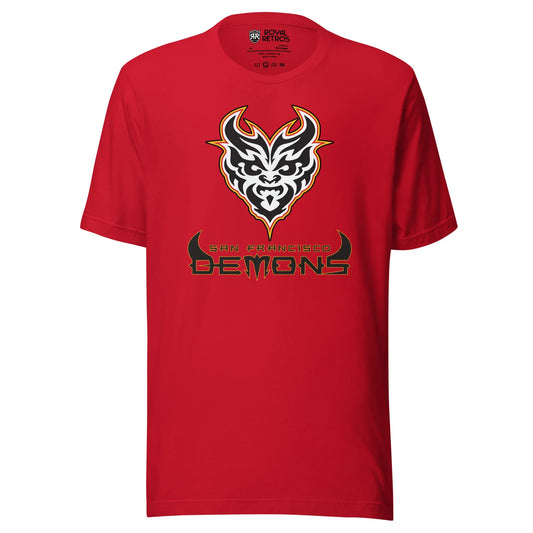
San Francisco Demons (2001) — The best-supported franchise in the 2001 league and the deepest team collection on this page: the 2001 jersey, the remix jersey, a tee, a hoodie and an unstructured hat. The Demons filled Pacific Bell Park, reached the Million Dollar Game, and left behind a logo that has aged better than almost anything else from that season. Shop the San Francisco Demons collection.
St. Louis Battlehawks (2020 & 2023) — The single greatest fan story in modern spring football. St. Louis lost its NFL team in 2016, got a Battlehawks team in 2020, and turned The Dome at America's Center into the loudest building the XFL ever had — inside five games. When the league came back in 2023, St. Louis led it in attendance. The 2020 Battlehawks jersey ($109.99) and the throwback hoodie ($59.99) are the two pieces that move fastest in this whole collection. Shop the St. Louis Battlehawks collection.
DC Defenders (2020 & 2023) — Washington's spring football team was the 2023 XFL's dominant regular-season club and one of the two 2020 division leaders. The Defenders collection here runs a jersey, a hoodie and a hat — the most complete head-to-toe kit of any 2020-era franchise on this page. Shop the DC Defenders collection — jersey $109.99, hoodie $59.99, hat $29.99.
Los Angeles Xtreme (2001) — The only XFL champion of the 2001 era. The Xtreme beat the San Francisco Demons 38–6 in the Million Dollar Game at the Los Angeles Memorial Coliseum on April 21, 2001, behind a quarterback who parlayed the season into an NFL comeback. If you want the winner's jersey rather than the memorable-loser's jersey, this is the one. Shop the Los Angeles Xtreme collection — jersey $109.99, tee $29.99.
Seattle Sea Dragons (2020 & 2023) — The rare franchise that ran in two different XFL eras under two different names, which means you can buy both. The 2020 Seattle Dragons jersey and the 2023 Seattle Sea Dragons jersey are both $109.99, alongside two tees and an unstructured hat. Shop the Seattle Sea Dragons collection.
Houston Roughnecks (2020 & 2023) — The best team the XFL ever had that never got to finish. Houston went 5–0 in 2020 and was the only undefeated club in the league when the season was suspended. They came back in 2023 and won the South Division. The 2020 Roughnecks jersey is $109.99. Shop the Houston Roughnecks collection.
Why Royal Retros Is the Home of XFL Throwback Gear
-
Every 2001 franchise and every 2020 franchise, jersey for jersey. All eight teams from the original XFL. All eight teams from the 2020 relaunch. No other retailer carries the league complete on both ends.
-
Officially licensed. Royal Retros' XFL apparel is officially licensed.
-
All three eras in one place. 2001, 2020 and 2023 — the wrestling-adjacent original, the serious football relaunch, and the final season before the UFL merger. Most sites carry one era. This page carries the league.
-
Flat, honest pricing. Every jersey is $109.99. Every tee is $29.99. Every hoodie is $59.99. Every hat is $29.99. No tiered pricing games, no surprise premium on the team you actually want.
-
Free customization on most jerseys. Add your name and number at no extra cost on eligible styles — in the league that invented putting whatever you wanted on the back.
-
Sizes Small through 5XL. Across virtually the entire collection, with no big & tall upcharge.
-
Period-correct design work. Colors, wordmarks, numbering fonts and jersey cuts matched to the specific season each piece represents. A 2001 jersey does not look like a 2020 jersey, because they did not look alike.
-
Spring-football cross-shopping. Pair an XFL piece with the USFL collection (125 products), the UFL collection (82 products) or the Arena Football League collection (75 products) — the full alternate-football shelf under one roof.
Quick Buying Questions
What sizes do XFL jerseys come in?
Small through 5XL on virtually every jersey, tee and hoodie in this collection. Hats are one-size-fits-most adjustable dad hats. We do not upcharge for big & tall sizes — a 5XL costs the same as a Small.
Can I add my own name and number to an XFL jersey?
Yes — most styles offer free customization. Look for the "Custom" option on the product listing, then enter the name and number you want. This is the league that let players put nicknames on their nameplates, so there is a strong argument for using the feature. Custom items are made to order and final sale.
Is this officially licensed?
Yes. Royal Retros' XFL apparel is officially licensed.
What are the jerseys made from?
Heavyweight athletic mesh and twill construction with sewn tackle-twill numbering on the team jerseys. T-shirts are premium pre-shrunk cotton. Hoodies are heavyweight cotton blends. Colors, lettering fonts and cuts are matched to the specific XFL season each piece represents rather than to a generic modern template.
What is a "remix" jersey?
A remix jersey is an alternate-colorway reinterpretation of an original XFL identity — the same wordmark and design language in a palette the team never actually wore. Four of the 2001 franchises have one: the Outlaws, Demons, Hitmen and Rage. They cost the same $109.99 as the standard jerseys and take the same free customization. Buy the standard jersey if you want the historically accurate kit; buy the remix if you want something that reads as streetwear.
How fast does it ship, and what is the return policy?
Standard products ship within 3–5 business days. Custom items — anything with a personalized name or number — are made to order and ship within 7–10 business days. Custom items are final sale. Standard items follow our return policy at /pages/returns.
Which XFL era should I buy?
If you remember watching football on NBC on a Saturday night in February 2001 and thinking you were getting away with something, buy 2001 — the Outlaws, Xtreme or Demons. If you remember the five weeks in 2020 when spring football suddenly looked like a real product, buy 2020 — the Battlehawks, Defenders or Roughnecks. If you followed the league all the way to the end, buy 2023 — the Sea Dragons, Vegas Vipers or Orlando Guardians. If you want the piece that says you were there for all of it, buy the Million Dollar Game tee.
What Was the XFL? Three Leagues, One Name, Twenty-Three Years
The XFL is the only professional football league in American history to be founded, killed, resurrected, killed again, resurrected a second time, and then merged out of existence — all under the same three letters. Between 2001 and 2023 it played three seasons, in three different decades, under three different ownership structures, with almost no continuity of personnel between them. It burned through a reported nine-figure sum of somebody's money each time. And it left a larger mark on how professional football is played and televised than most leagues that lasted twenty years.
Understanding what you are buying when you buy an XFL jersey means understanding which of the three leagues it came from, because they were not the same league in anything but name.
The 2001 XFL — Vince McMahon, NBC, and the Loudest Failure in Football
The original XFL was a fifty-fifty joint venture between the World Wrestling Federation, run by Vince McMahon, and NBC, run in this instance by sports division chief Dick Ebersol. The logic was simple and, on paper, not stupid. NBC had lost its NFL rights and had a hole in its winter Saturday schedule. McMahon had the most reliable machine in American television for manufacturing characters and conflict. The NFL's season ended in January and nothing filled February. Put a football league in that window, produce it like professional wrestling, and take the audience that the NFL had trained and then abandoned for six months.
The pitch was aggressive from the first press conference. McMahon promised football without the "No Fun League" — no fair catches, harder hits, fewer flags, cheerleaders in the huddle, cameras everywhere, and no tolerance for what he called the sanitized NFL product. The marketing was relentless and the WWF's promotional muscle was fully behind it. It worked, for exactly one night.
The Eight Original Franchises
The 2001 XFL fielded eight teams, all league-owned and centrally operated, playing a ten-game regular season followed by a four-team playoff. The Las Vegas Outlaws played in Nevada. The Los Angeles Xtreme played at the Los Angeles Memorial Coliseum. The San Francisco Demons played in the Bay Area and drew the league's best crowds. The New York/New Jersey Hitmen covered the biggest media market. The Chicago Enforcers covered the Midwest. The Orlando Rage and Memphis Maniax covered the Southeast, and the Birmingham Bolts — formally the Birmingham Thunderbolts — covered Alabama.
The identities were the best thing the league produced. Where the NFL had a half-century of accumulated visual conservatism, the XFL had a wrestling company's art department and no institutional memory to respect. The Maniax wordmark, the Rage logo, the Outlaws' black-and-silver desert menace, the Demons' hooded figure — these were designed to look good on a T-shirt in 2001 and they still look good on a T-shirt now. That is the entire commercial reason the 2001 XFL merchandise market exists twenty-five years later, and it is why twelve of the twenty-three jerseys in this collection come from a league that played ten games.
The Rules — Genuinely Radical, Occasionally Reckless
The 2001 rulebook was not a gimmick sheet, whatever its reputation. Several of its ideas were serious attempts to solve real problems with how football is played, and the league deserves more credit for them than it usually gets.
There was no coin toss. Instead the XFL used the opening scramble: one player from each team lined up twenty yards from a ball at midfield and sprinted for it, and whoever recovered it won possession. It was pure theater and it was also immediately dangerous — a player separated his shoulder in one of the first scrambles ever run.
There were no fair catches. Any punt that traveled more than twenty-five yards was a live ball recoverable by either team, which fundamentally changed punt strategy. To keep this from being a slaughter, the returner got a five-yard protective halo until he caught the ball, and the coverage team could not release from the line of scrimmage until the ball was actually kicked — a rule that made punt coverage slower and returns more viable.
There were no extra-point kicks. After a touchdown, teams ran a single play from the two-yard line for one point, with the clock running and the defense able to score by returning a fumble or interception the other way. The NFL would arrive at a version of this argument fifteen years later when it moved the extra point back to make it a real play. Overtime was a shootout format rather than a possession-and-a-half compromise.
And players could put whatever they wanted on their nameplates. That single permissive rule produced the most durable artifact of the entire 2001 season.
"He Hate Me" — Three Words That Outlived a League
Rod Smart was a running back for the Las Vegas Outlaws. He was not a star, exactly — he finished the 2001 season second in the XFL in rushing with 555 yards and three touchdowns, plus 27 catches for 245 yards, which is a good season and not a legendary one. But instead of "SMART" on the back of his jersey, he wore "HE HATE ME." His explanation was that opponents would hate him after he beat them; the phrase's grammar was part of the point.
It became the single most reproduced piece of XFL iconography ever made. Rival players on the Los Angeles Xtreme responded by wearing "I HATE HE" and "I HATE HE TOO" on their own backs, which is exactly the kind of thing a league run by a wrestling promoter was designed to generate. Smart went on to a real NFL career with the Carolina Panthers, and the nickname followed him there and into general American usage. Twenty-five years later, people who could not name a single other XFL player can quote it verbatim. The Las Vegas Outlaws collection exists because of it.
The Million Dollar Game
The 2001 championship game was called the Million Dollar Game, because the winning roster split a million dollars. It was played on April 21, 2001, at the Los Angeles Memorial Coliseum, and the Los Angeles Xtreme beat the San Francisco Demons 38–6.
Quarterback Tommy Maddox led the league in passing with 2,186 yards and was named the XFL's Player of the Year. His Xtreme season did something no other XFL career quite matched: it got him back to the NFL. Maddox had been out of the league for five years; after the Million Dollar Game he signed with the Pittsburgh Steelers and eventually became their starting quarterback, winning the NFL's Comeback Player of the Year award in 2002. Placekicker José Cortez was named MVP of the Million Dollar Game itself, hitting four field goals from 26, 38, 42 and 34 yards.
The XFL Million Dollar Game tee in this collection commemorates that game — the only championship the 2001 league ever crowned, and the only championship game in football history where the trophy was a cash prize split by the players.
Why the 2001 XFL Died
The debut on February 3, 2001, drew a 9.5 Nielsen rating and roughly fourteen million viewers — about double what NBC had guaranteed its advertisers. It was, briefly, a genuine television event.
Then it fell apart faster than almost any program in network history. Week two dropped 52% to a 4.6. Week three fell another 33% to a 3.1. Week four fell again to a 2.6. By late in the season an XFL broadcast drew a 1.5 — at the time the lowest rating ever recorded by a primetime program on a major American broadcast network.
The reasons are not mysterious. The football was poor: rosters assembled in weeks from NFL cuts and arena-league veterans, coaching staffs with no time to install anything, and a first nationally televised game so sloppy it became the story. The entertainment layer that was supposed to carry the product felt manufactured — the cheerleader storylines and the mic'd-up trash talk landed as desperate rather than dangerous. And the two ideas were in tension with each other: viewers who came for wrestling found actual football breaking out, and viewers who came for football found the presentation insulting.
NBC and the WWF announced the league's disbandment on May 10, 2001, one season and one championship game after it began. The WWF's after-tax loss was reported at roughly $35 million; NBC's was comparable. For nearly two decades, "the XFL" was American shorthand for a spectacular, expensive, publicly humiliating failure.
The 2020 XFL — The Serious Attempt
In January 2018, Vince McMahon announced he was doing it again. This time the funding came through Alpha Entertainment, an entity McMahon personally capitalized by selling WWE stock, and this time the pitch was the exact opposite of 2001: no gimmicks, no cheerleader storylines, no scramble. Just faster, cleaner, better-officiated football with a two-year runway to build rosters and coaching staffs before anyone played a down.
Oliver Luck — former NFL quarterback, former NCAA executive, and by some distance the most credible football administrator the XFL ever employed — was hired as commissioner and CEO. Real coaches were hired. Rosters were assembled over months rather than weeks. Broadcast deals were signed with ABC, ESPN and FOX. The league committed to paying for a genuine two-season runway rather than expecting instant profitability.
The 2020 Franchises
Eight teams, split East and West. The East ran the DC Defenders, the New York Guardians, the St. Louis Battlehawks and the Tampa Bay Vipers. The West ran the Dallas Renegades, the Houston Roughnecks, the Los Angeles Wildcats and the Seattle Dragons.
The franchise identities were markedly more disciplined than 2001's — closer to modern NFL and MLS design language, built to be worn rather than to shock. And two of them found audiences almost immediately. The Houston Roughnecks won their first five games and were the only undefeated team in the league when play stopped. The St. Louis Battlehawks, playing in a city that had lost its NFL team in 2016 and was still visibly angry about it, turned The Dome at America's Center into the loudest venue in spring football within a month. The Battlehawks phenomenon is the reason the 2020 Battlehawks jersey is the most-requested single item on this page.
The 2020 Rulebook — Where the Real Innovation Happened
The 2020 XFL's rules were the most genuinely influential thing any version of the league ever produced, and several of them were engineered specifically to fix problems the NFL had failed to solve.
The XFL kickoff, designed by league football-operations executive Sam Schwartzstein, lined the coverage and return teams up five yards apart and froze them until the returner touched the ball. It removed the high-speed collision that made kickoffs the most dangerous play in football while keeping the return itself alive — an outcome the NFL had spent a decade failing to achieve by simply moving the touchback line around.
The tiered conversion replaced the extra point with a choice: one point from the two-yard line, two points from the five, three points from the ten. That single change made late-game arithmetic dramatically more interesting, because a three-score deficit was no longer necessarily a three-possession deficit.
The league also ran a double forward pass (legal as long as the first pass did not cross the line of scrimmage), a 25-second play clock with a running-clock structure that shortened games to under three hours, an overtime shootout of alternating single plays from the five-yard line, and — most consequentially for broadcast — fully transparent replay review, with the replay official mic'd and shown on camera working through the decision in real time. Viewers heard the officiating conversation as it happened. Nothing about that had ever been standard in American football.
Five Weeks, Then Nothing
The 2020 season kicked off on February 8, 2020. The football was legitimately watchable, the ratings were modest but stable, attendance in St. Louis and Houston was strong, and the rule innovations were being written about seriously by people who covered the NFL. It was, by any reasonable measure, working.
On March 12, 2020, five weeks into a ten-week season, the league suspended operations because of COVID-19. It never resumed. On April 9 McMahon fired Oliver Luck, who sued for wrongful termination seeking $23.8 million — litigation that dragged on for years before settling. On April 13, 2020, Alpha Entertainment filed for Chapter 11 bankruptcy, listing assets and liabilities between $10 million and $50 million.
The 2020 XFL is the great counterfactual of modern American sports. It is the only version of the league that was killed by something entirely outside its own control, and it was the version that had the best chance. That is why the 2020 jerseys in this collection are the hardest to replace: eight franchises, five weeks of existence, and a fanbase that never got closure. Every one of those eight jerseys is stocked here.
The 2023 XFL — Dwayne Johnson, RedBird, and the Third Life
In August 2020, the XFL's assets went to a bankruptcy auction. They were bought by an investor group consisting of RedBird Capital Partners, Dany Garcia, and Dwayne "The Rock" Johnson — a former college football player at the University of Miami whose professional football career had ended in the Canadian Football League before he became the most bankable movie star in the world. The reported price was around $15 million. The transaction closed on August 21, 2020.
The symmetry was hard to miss. The league Vince McMahon built to be professional wrestling's football project was now owned by professional wrestling's biggest export, buying it out of McMahon's bankruptcy for a fraction of what McMahon had spent building it.
The 2023 Season
The relaunched XFL kicked off on February 18, 2023, with eight teams split North and South — a geographic realignment specifically designed to put the league's three Texas markets in one division. The North ran the DC Defenders, the Seattle Sea Dragons, the St. Louis Battlehawks and the Vegas Vipers. The South ran the Houston Roughnecks, the Arlington Renegades, the San Antonio Brahmas and the Orlando Guardians.
Four of those were rebrands or relocations of 2020 franchises. The Dallas Renegades became the Arlington Renegades. The Seattle Dragons became the Seattle Sea Dragons. The New York Guardians moved to Florida as the Orlando Guardians. The Tampa Bay Vipers moved west as the Vegas Vipers. The Los Angeles Wildcats did not return, and the San Antonio Brahmas were new. That reshuffle is exactly why the 2023 jerseys are the scarcest tier in this collection — three of those identities existed for a single ten-game season and then were folded into a different league entirely.
The 2023 season went to form and then did not. The DC Defenders finished 9–1 and won the North outright. The Houston Roughnecks won the South. The Arlington Renegades finished the regular season with a losing record, won the South title game anyway, and then beat the Defenders 35–26 in the XFL Championship Game at the Alamodome in San Antonio on May 13, 2023, with quarterback Luis Perez named the game's MVP. It remains the last game the XFL ever played under its own name. St. Louis, once again, led the league in attendance.
The 2024 Merger — How the XFL Became the UFL
Spring football in 2023 had a structural problem: there were two leagues competing for the same finite pool of players, markets, broadcast windows and fans, and neither was going to reach profitability while the other existed. The XFL had eight teams. The relaunched USFL had eight teams. Together they had roughly one league's worth of viable demand.
On September 28, 2023, the two leagues announced their intent to merge. Antitrust review was completed on November 30, 2023. On December 31, 2023, Dany Garcia and Dwayne Johnson announced the new entity's name on FOX NFL Sunday: the United Football League. Russ Brandon, the XFL's president and CEO, would run the merged league; Daryl Johnston, the USFL's president of football operations, would run football. Games would air across FOX, ESPN, ABC and FS1.
The UFL's first season kicked off on March 30, 2024, with a game between the two leagues' reigning champions — the XFL's Arlington Renegades against the USFL's Birmingham Stallions, who went on to win the inaugural UFL title. Four XFL franchises carried directly into the merged league: the Arlington Renegades, DC Defenders, San Antonio Brahmas and St. Louis Battlehawks. The Houston Roughnecks name survived too — Houston was the one market both leagues shared, and the USFL's Houston club took the Roughnecks identity. The rest of the XFL's identities stopped existing.
That is the whole reason a page like this one matters. Every jersey in the 2001 and 2023 tiers, and half of the 2020 tier, represents a team that no longer exists in any form. If you want a Memphis Maniax jersey, a Vegas Vipers jersey or an Orlando Rage jersey, nobody is manufacturing new demand for them — you are buying a closed chapter. Shop the successor league in the UFL collection and the other half of the merger in the USFL collection.
What the NFL Took From the XFL
For a league that never completed two full seasons across three attempts, the XFL's influence on how professional football is played and broadcast is disproportionate — and the record is now unambiguous rather than a matter of opinion.
The clearest case is the kickoff. In 2024, NFL owners voted 29–3 to adopt a "dynamic kickoff" modeled directly on the XFL's format — coverage and return teams lined up close together and frozen until the ball is fielded. The XFL had proven the concept: more than 90% of its kickoffs were returned in the 2023 season, against an NFL rate that had collapsed toward touchbacks. In the NFL's first season with the rule, average player speeds on kickoffs fell, the concussion rate on the play dropped 43% against the 2021–2023 average, and lower-extremity strains hit their lowest level since at least 2018. A league that folded got the NFL to change its most dangerous play.
The second case is broadcast transparency. The 2020 XFL put the replay official on camera and on microphone, showed the review process as it happened, and put reporters and cameras in places the NFL had always kept closed. The NFL has moved steadily in that direction ever since — more replay-booth audio, more sideline and locker-room access, more in-game interviews. The 2001 XFL's aggressive use of the aerial cable camera and of mic'd-up players and coaches, mocked at the time as wrestling nonsense, is now simply what a football broadcast looks like.
The third case is pace and end-game math. The XFL's shortened play clock and running-clock rules produced consistently sub-three-hour games. Its tiered conversion — one, two or three points from progressively longer distances — is the most-discussed unadopted rule in football, and the NFL's own decision to move the extra point back in 2015 came from the same underlying complaint: that the automatic PAT was a dead play.
None of that saved the XFL. All of it is why the league is taken more seriously in retrospect than it ever was at the time, and it is a large part of why demand for XFL merchandise has gone up rather than down in the years since the league stopped existing.
The XFL's Cultural Footprint
There is no other defunct sports league in America whose logos are worn by people too young to have watched a single one of its games. The 2001 XFL's visual identity work — the Maniax, the Rage, the Outlaws, the Demons, the Hitmen — arrived at the exact moment when late-nineties extreme-sports design was peaking, and it has aged into something genuinely desirable. Y2K aesthetics came back around, and the XFL was sitting there waiting.
"He Hate Me" entered the language permanently. The 2001 season became a recurring subject of documentary filmmaking, most prominently in ESPN's "30 for 30" treatment, which reintroduced the whole story to an audience that had only ever heard the punchline. The 2020 St. Louis Battlehawks became a case study in what happens when a city that has been abandoned by the NFL is handed a team it can actually claim. And the sight of Dwayne Johnson buying Vince McMahon's failed football league out of bankruptcy is the kind of narrative symmetry that nobody would accept in fiction.
Practically, that footprint has one consequence for anyone shopping this page: XFL gear is nostalgia merchandise for three completely different audiences at once. The person buying a 2001 Outlaws jersey and the person buying a 2020 Battlehawks jersey are not the same customer and are usually not the same age. Both of them are here.
More Frequently Asked Questions About the XFL
How many XFL seasons were actually played?
Three, and one of them was incomplete. The 2001 season ran ten regular-season games plus playoffs and the Million Dollar Game. The 2020 season played five of ten scheduled weeks before COVID-19 suspended it permanently. The 2023 season ran a full ten games plus playoffs and a championship. The XFL then merged with the USFL to form the UFL in 2024.
Who won the XFL championship?
The Los Angeles Xtreme won the 2001 Million Dollar Game, beating the San Francisco Demons 38–6 at the Los Angeles Memorial Coliseum on April 21, 2001. The Arlington Renegades won the 2023 XFL Championship Game, beating the DC Defenders 35–26 at the Alamodome in San Antonio on May 13, 2023. The 2020 season was suspended before a champion was crowned.
Who owned the XFL?
The 2001 league was a fifty-fifty joint venture between Vince McMahon's World Wrestling Federation and NBC. The 2020 league was funded by McMahon through Alpha Entertainment, which filed for Chapter 11 bankruptcy in April 2020. The 2023 league was owned by RedBird Capital Partners with Dany Garcia and Dwayne Johnson, who acquired the assets in a bankruptcy auction for a reported $15 million in August 2020.
Why did the XFL fail in 2001?
Bad football and a presentation that satisfied neither audience it was chasing. Rosters and coaching staffs were assembled far too quickly to produce competent play, and the wrestling-style entertainment layer read as forced rather than transgressive. The debut drew a 9.5 rating; within four weeks it was down to a 2.6, and a later broadcast drew a 1.5 — at the time the lowest primetime rating in major-network history. NBC and the WWF folded the league on May 10, 2001, each absorbing a reported loss around $35 million.
Why did the XFL fail in 2020?
It did not fail on the merits. The 2020 XFL had credible football, an experienced commissioner, a real broadcast package, and growing audiences in St. Louis and Houston. It suspended operations on March 12, 2020, five weeks into a ten-week season, because of the COVID-19 pandemic, and the ownership entity filed for bankruptcy a month later.
What was "He Hate Me"?
The nameplate worn by Las Vegas Outlaws running back Rod Smart during the 2001 XFL season, in place of his surname — the league permitted players to use nicknames. Smart finished second in the XFL in rushing that year with 555 yards. The phrase became the most recognizable artifact of the entire league and followed him into an NFL career with the Carolina Panthers. Rival Los Angeles Xtreme players answered it with "I Hate He" and "I Hate He Too" on their own jerseys.
What happened to the XFL teams?
The 2001 franchises all ceased to exist when the league folded in May 2001. Of the 2020 and 2023 franchises, four carried directly into the United Football League after the 2024 merger with the USFL: the Arlington Renegades, DC Defenders, San Antonio Brahmas and St. Louis Battlehawks. The Houston Roughnecks name survived as well — Houston was the only market both leagues shared, so the USFL's Houston club adopted the Roughnecks identity. The Orlando Guardians, Vegas Vipers, Seattle Sea Dragons, Los Angeles Wildcats, New York Guardians and Tampa Bay Vipers did not continue.
Which XFL rules did the NFL adopt?
Most directly, the kickoff. NFL owners voted 29–3 in 2024 to adopt a "dynamic kickoff" modeled on the XFL's format, after the XFL demonstrated a return rate above 90% in 2023. In its first NFL season the rule cut the concussion rate on kickoffs by 43% against the prior three-year average. The NFL has also moved steadily toward the XFL's transparent-replay and mic'd-up broadcast standards.
Are XFL jerseys still made?
Not as active team merchandise — every 2001 identity and most of the 2020 and 2023 identities belong to teams that no longer exist. Royal Retros carries officially licensed XFL throwbacks covering all eight 2001 franchises, all eight 2020 franchises and three of the 2023 identities, at $109.99 per jersey, sizes S–5XL, with free custom name and number on most styles.
How many XFL products does Royal Retros carry?
48 live products: 23 team jerseys at $109.99, 18 T-shirts at $29.99, 4 hoodies at $59.99 and 3 hats at $29.99. That is the deepest XFL-specific collection on the open web, and the only one that covers all three eras of the league.
Shop XFL by Team
-
Birmingham Bolts — 2001. Formally the Birmingham Thunderbolts. Alabama's XFL franchise. Jersey $109.99, tee $29.99.
-
Chicago Enforcers — 2001. The league's Midwest club. Jersey $109.99.
-
Dallas Renegades — 2020, later the Arlington Renegades and the 2023 XFL champions. Jersey $109.99, helmet-graphic tee $29.99.
-
DC Defenders — 2020 and 2023. Finished 9–1 atop the 2023 North Division. Jersey $109.99, hoodie $59.99, hat $29.99.
-
Houston Roughnecks — 2020 and 2023. Undefeated at 5–0 when the 2020 season stopped. Jersey $109.99.
-
Las Vegas Outlaws — 2001. The "He Hate Me" team and the league's most recognizable identity. Jersey $109.99, remix jersey $109.99, tee $29.99.
-
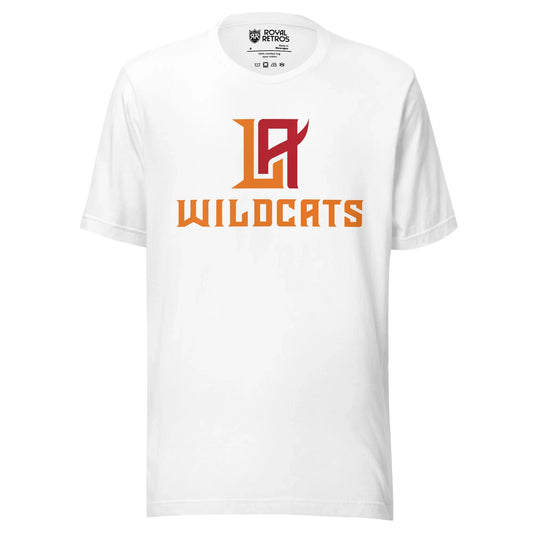
Los Angeles Wildcats — 2020. Did not return for 2023. Jersey $109.99, tee $29.99.
-
Los Angeles Xtreme — 2001. The only Million Dollar Game champion. Jersey $109.99, tee $29.99.
-
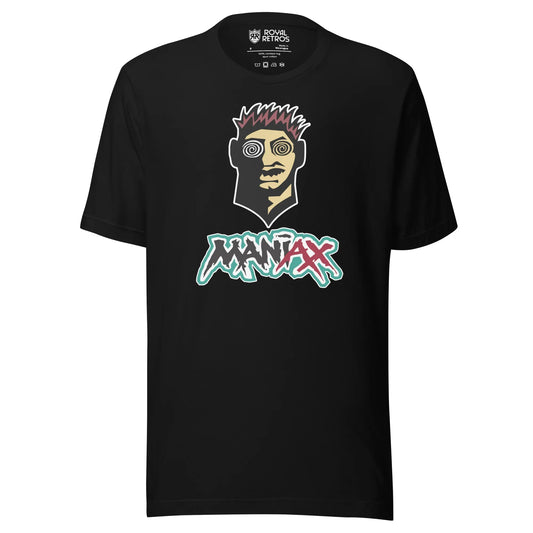
Memphis Maniax — 2001. One of the best logos the league ever produced. Jersey $109.99, tee $29.99.
-
New York Guardians — 2020. Relocated to Orlando for 2023. Jersey $109.99, hoodie $59.99, tee $29.99.
-
New York/New Jersey Hitmen — 2001. The league's biggest market. Jersey $109.99, remix jersey $109.99, tee $29.99.
-
Orlando Guardians — 2023. One season only. Jersey $109.99, tee $29.99.
-
Orlando Rage — 2001. Jersey $109.99, remix jersey $109.99, tee $29.99.
-
San Antonio Brahmas — 2023 expansion franchise, carried into the UFL.
-
San Francisco Demons — 2001. Best-supported franchise of the original league and the Million Dollar Game runner-up. Jersey $109.99, remix jersey $109.99, hoodie $59.99, tee $29.99, hat $29.99.
-
Seattle Sea Dragons — 2020 as the Seattle Dragons, 2023 as the Sea Dragons. Both jerseys $109.99, two tees $29.99, hat $29.99.
-
St. Louis Battlehawks — 2020 and 2023. Led the XFL in attendance and carried into the UFL. Jersey $109.99, hoodie $59.99.
-
Tampa Bay Vipers — 2020. Relocated to Las Vegas for 2023. Jersey $109.99, two tees $29.99.
-
Vegas Vipers — 2023. One season only. Jersey $109.99, tee $29.99.
Shop Related Football Collections
Shop XFL by City
-
St. Louis — Battlehawks country, and the best spring-football city in America.
-
Houston — Roughnecks gear alongside the rest of Houston's vintage football history.
-
Washington DC — Defenders gear and DC sports throwbacks.
-
Nevada — Las Vegas Outlaws and Vegas Vipers, two eras of XFL football in the same city.
-
Bay Area — San Francisco Demons and Northern California sports apparel.
-
New York — Hitmen and Guardians.
-
Chicago — Enforcers and Chicago sports throwbacks.
-
Dallas-Fort Worth — Renegades gear.
-
Texas — Roughnecks, Renegades and Brahmas, plus the rest of Texas football history.
-
Central Florida — Orlando Rage, Orlando Guardians and Tampa Bay Vipers.
-
Tennessee — Memphis Maniax and Tennessee sports apparel.
-
Alabama — Birmingham Bolts and Alabama sports throwbacks.
The XFL at Royal Retros — Officially Licensed Throwbacks from All Three Eras. 2001, 2020 and 2023. Custom Names & Numbers. Sizes S–5XL.