Custom Baseball Jerseys — The Deepest Throwback Jersey Catalog at Royal Retros
Free Custom Names & Numbers. Sizes S–5XL. 246 Designs Spanning Negro Leagues Baseball, Vanished Ballclubs, the Federal League, the Pacific Coast League & International Baseball.
Royal Retros' Custom Baseball Jerseys collection is the widest throwback baseball catalog we sell — 246 in-stock jersey designs spanning Negro Leagues baseball, the vanished major league clubs of the first half of the twentieth century, the two-year Federal League, the Pacific Coast League and a long list of other historic minor leagues, a single winter of the Senior Professional Baseball Association, and international programs from Mexico to Japan to Cuba. Custom jerseys run $84.99, remix builds $84.99, ready-to-wear replicas $69.99, and heavyweight flannels $149.99 for the pre-1970s era. Free custom name and number on most styles, sizes Small through 5XL, no big & tall upcharge. Whether you're chasing a specific Negro Leagues franchise, a Pacific Coast League team that never left the West Coast for the majors, or the three-season club that wore a revolver across its chest, it's in this collection somewhere.
Most baseball throwback retailers stock one design per team and call it done. We build the same franchise across multiple seasons where the uniform actually changed, and we build franchises that never made it past a fan contest, a bankruptcy filing, or a single winter league schedule. That is the difference between a novelty rack and a catalog — 246 active designs, hand-sorted by league and era below, none of it padded with duplicate colorways of the same three teams.
Shop by League & Era
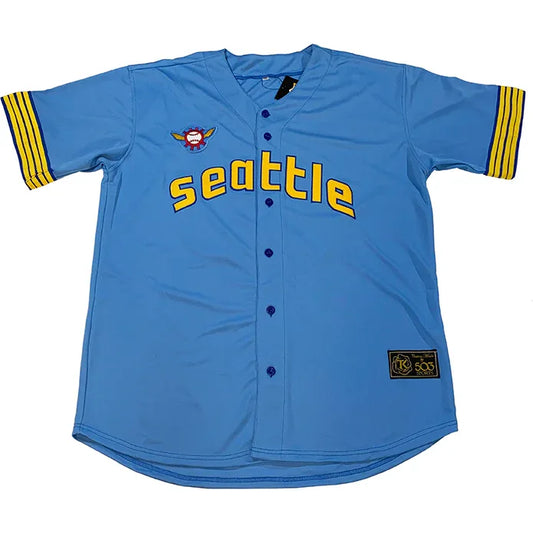
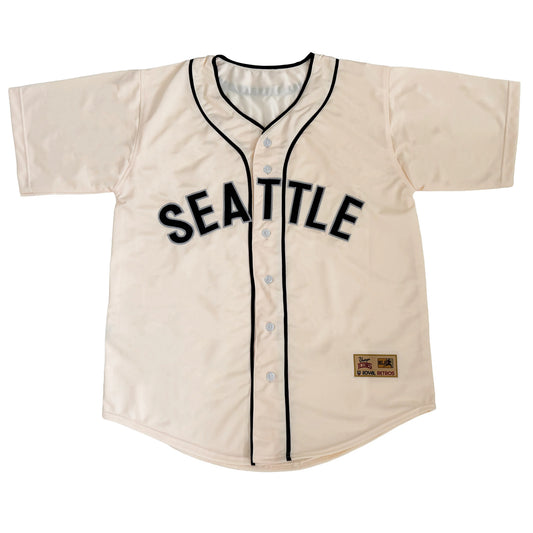
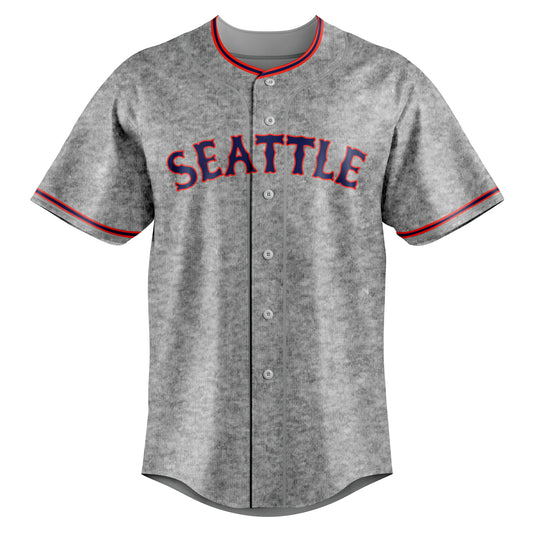
Negro Leagues Baseball — 74 jerseys. The deepest single category in the collection: the Homestead Grays, the Kansas City Monarchs across seven separate seasons (1921, 1924, 1935, 1942, 1945, 1948, 1953), the Birmingham Black Barons, the Pittsburgh Crawfords, the Newark Eagles, the Chicago American Giants across three eras, the Seattle Steelheads in four builds, the Baltimore Elite Giants, the Indianapolis Clowns and ABCs, the New York Cubans, and dozens of franchises most retailers have never heard of — the Chattanooga Choo-Choos, the Cuban X Giants, the St. Paul Gophers, the Oakland Larks, the Fort Worth Black Panthers, the Cincinnati Tigers. Several clubs get more than one build because the roster, the sponsor and sometimes the city changed inside a single decade — the Chicago American Giants alone run from a 1914 design through 1934, and the Baltimore Elite Giants get both a 1944 and 1945 build. Shop the full Negro Leagues collection, or start with the flagship team pages: Kansas City Monarchs, Homestead Grays, Birmingham Black Barons, Pittsburgh Crawfords, Newark Eagles and Philadelphia Stars.
Vanished Ballclubs — 39 jerseys. Franchises that moved, renamed or folded outright before today's league map existed: the St. Louis Browns across five seasons, the Washington Senators across six, the Houston Colt .45s' full three-year run, the one-season Seattle Pilots, the New York Highlanders from before the pinstripes existed, the Boston Bees and Beaneaters, the Boston Americans, the Brooklyn Robins, the New York Gothams, and the Cleveland Spiders and Bronchos. This is the category for a fan whose team is gone in one of four ways: moved and renamed, like the Browns and the Pilots; moved and kept the name, like the Senators, twice; stayed and renamed itself, like the Colt .45s and the Highlanders; or simply stopped existing, like the Spiders. No current club sells any of this gear, because no current club owns the identity anymore. St. Louis Browns · Washington Senators · Houston Colt .45s · Seattle Pilots · New York Highlanders.
The Federal League — 3 jerseys. Baseball's forgotten third major league lasted exactly two seasons, 1914 and 1915, put eight clubs in the field, and refused to honor the reserve clause that bound players to one team for life. We build the pennant-winning Chicago Whales, the St. Louis Terriers and the Kansas City Packers — three of the smallest, hardest-to-find reproduction targets in the entire catalog. Shop Chicago Whales, or browse the wider Federal League collection.
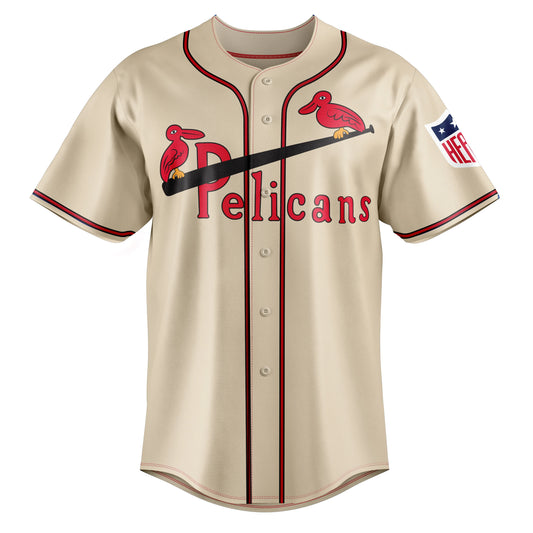
Pacific Coast League & Historic Minor League Baseball — 75 jerseys. The largest minor league category we carry: seven year-specific Portland Beavers jerseys running 1950 through 2009, the San Francisco Seals, the Hawaii Islanders, the PCL Padres across four decades, the Sacramento Solons, Hollywood Stars, Oakland Oaks, Salt Lake Gulls and Trappers, Seattle Rainiers, and the independent Portland Mavericks — plus a long tail of affiliated-era minor league clubs out of Denver, Minneapolis, Louisville, Memphis, Tucson, Calgary, Newark, and Montreal. Some of these designs cover cities that never got a major league franchise at all — Oklahoma City, El Paso, Kinston, Jamestown, Huntsville — and exist here purely because minor league baseball had its own century-long identity, independent of anything happening above it. Shop historic minor league baseball, or narrow to the West Coast Minors collection.
International Baseball — 25 jerseys. National-team builds for Mexico, Cuba, Japan, Puerto Rico, the Dominican Republic, Venezuela, Canada, Colombia and China, plus club programs with real history behind them: Tokyo's Tokyo Giants, Japan's Orix Blue Wave, Cuba's Havana Sugar Kings — a Cuban League and International League club that operated out of Havana until the early 1960s — and the Puerto Rican winter-league clubs Santurce Cangrejeros and Ponce Leones, plus the Dominican Republic's Santiago Aguillas. This is the category for fans whose baseball roots run through winter ball and international competition rather than any domestic league at all. Shop the full International Baseball collection.
Senior Professional Baseball Association — 2 jerseys. A single winter, 1989 into 1990, when a league built entirely of former players over 35 played a full season across Florida and Arizona before folding partway through its second year. We carry the West Palm Beach Tropics and the St. Lucie Legends — two of the shortest-lived franchise identities anywhere on this page. Shop the Senior Professional Baseball Association collection.
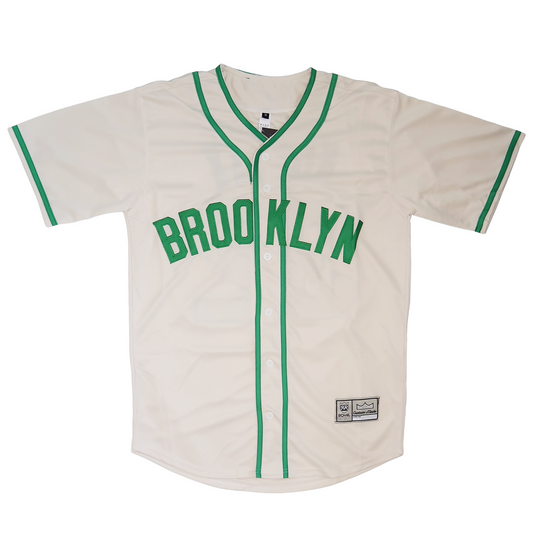
City & Emblem Jerseys — 28 jerseys. Designs built around a city, a letter or a symbol instead of a specific team name — the Elephant jersey from Philadelphia's origin story, the Swashbuckler and Pittsburgh jerseys, the Tiger jersey, the Plaid NY and World's Fair designs, and city jerseys for Boston, Brooklyn, Cleveland, Detroit, Milwaukee, Texas, Kansas City and Las Vegas — plus the North Pole Nicks for the fan who wants a baseball jersey at Christmas.
Shop by Team
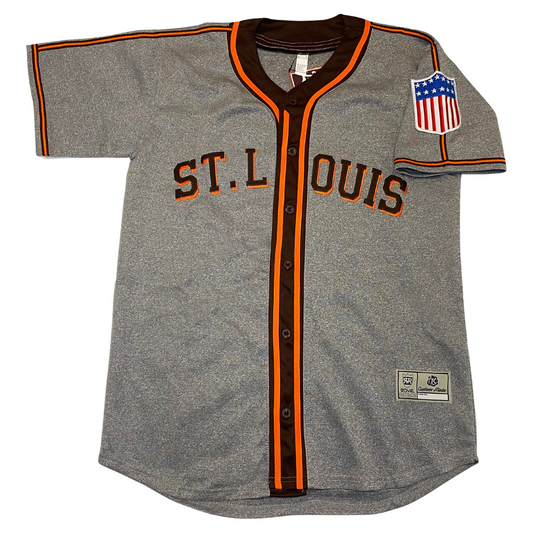
St. Louis Browns — 15 active pieces. Five year-dated jerseys (1914, 1937, 1944, 1950, 1953) plus a replica, a remix and a $149.99 flannel from the franchise's only pennant year, 1944 — a wartime pennant clinched on the season's final day, followed by a World Series played entirely in one ballpark because both teams called it home. Shop St. Louis Browns.
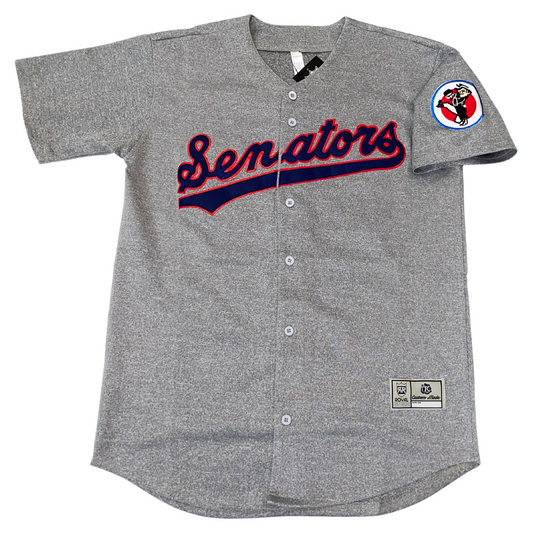
Washington Senators — 15 active pieces. Six seasons — 1938, 1945, 1953, 1957, plus script and standard builds — a flannel, a remix and a replica, covering both Washington franchises that carried the name across six decades of American League baseball in the capital. Shop Washington Senators.
Houston Colt .45s — 16 active pieces. Home and road customs, a championship build, a $69.99 replica, a $149.99 flannel and a remix — the deepest single-franchise program in the collection for a club that existed three years and wore one of the most recognizable uniforms the sport has produced. Shop Houston Colt .45s.
Seattle Pilots — 12 active pieces. The 1969 custom jersey, the spring training jersey, a replica and the $149.99 flannel, for the shortest-lived modern-era franchise in the sport — one 64-98 season and a scrambled-egg captain's cap that nothing else in baseball has matched since. Shop Seattle Pilots.
New York Highlanders — 4 active pieces. The Hilltop Park identity, from before the pinstripes existed and before the franchise took the shorter name newspapers wanted for headlines. Shop New York Highlanders.
Kansas City Monarchs — 12 active pieces. Seven separate seasons — 1921, 1924, 1935, 1942 (plus a flannel), 1945, 1948 and 1953 — from the winningest, longest-running franchise in Negro Leagues history and a club that fielded future Hall of Famers across four decades. Shop Kansas City Monarchs.
Homestead Grays — 12 active pieces. Custom, replica, remix and flannel builds for the club that won nine straight Negro National League pennants, splitting home games between Pittsburgh and Washington for years at a time. Shop Homestead Grays.
Birmingham Black Barons — 10 active pieces. Custom, remix and flannel jerseys spanning the 1940s and '50s, including the 1959 build, from a franchise that sent players directly into the integrated majors. Shop Birmingham Black Barons.
Pittsburgh Crawfords — 11 active pieces. Custom and remix builds across the 1935 and late-1930s rosters, from one of the most talent-stacked teams in Negro Leagues history — a roster later credited with more Hall of Famers than most major league clubs assembled in a decade. Shop Pittsburgh Crawfords.
Portland Beavers — 11 active pieces. Seven year-specific jerseys, 1950 through 2009, tracking the Pacific Coast League franchise from Vaughn Street to its final downtown decade at the ballpark that later became a soccer stadium. Shop Portland Beavers.
San Francisco Seals — 13 active pieces. Script, monogram, remix and button-down builds from one of the Pacific Coast League's marquee franchises, the club that developed a teenage Joe DiMaggio before he ever left California. Shop San Francisco Seals.
Chicago Whales — 3 active pieces. The only Federal League club we build a full jersey program around — 1915 pennant winners by less than a thousandth of a percentage point, in the steel-and-concrete ballpark that still hosts major league baseball today. Shop Chicago Whales.
More Pacific Coast League franchises. The PCL Padres across four decades, the Hawaii Islanders, the Sacramento Solons and the independent Portland Mavericks round out the West Coast lineup.
Construction: Flannel, Tackle Twill, Pro-Stitched & Replica
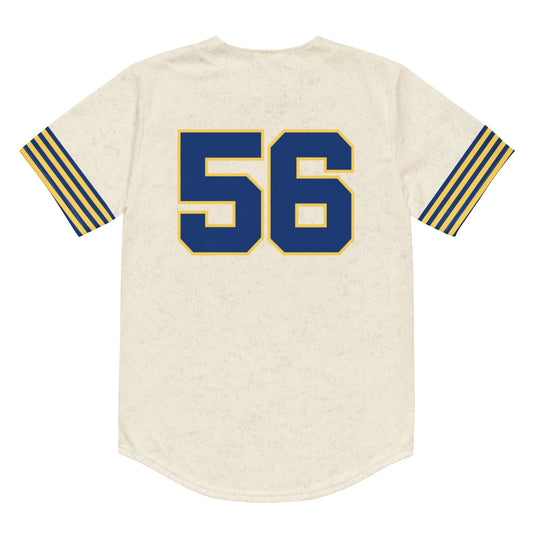
Custom Jerseys — $84.99, pro-stitched. The core of the catalog: sewn-to-order builds in twill and mesh with the graphics of the stated team and season, and where free name and number personalization lives. "Pro-stitched" means the team name, numbers and any chest mark are cut from tackle twill — a heavier, tightly woven twill fabric — and sewn directly onto the jersey body with a dense zigzag or satin stitch around every letter, the same method full-scale athletic manufacturers use for on-field product. It costs more in labor than printing, but it's the only method that gives lettering real texture and holds up to repeated washing without cracking or peeling.
Replica Jerseys — $69.99. Fixed, ready-to-wear builds with the team graphics applied by sublimation or heat-transfer print rather than sewn twill — lighter construction, no separate cutting and stitching step, faster turnaround, and a lower price than a pro-stitched custom build. The tradeoff is texture: a replica graphic sits flat against the fabric instead of standing slightly proud the way sewn tackle twill does, which is the fastest way to tell the two constructions apart in person. Shop the full replica jersey range.
Flannel Jerseys — $149.99. Heavyweight wool-blend flannel with felt or twill lettering and period-correct plackets, built to the construction standard baseball actually used before the knit era arrived. Ten flannels live in this collection, covering the pre-1970 teams where the construction difference matters most: St. Louis Browns, Senators, Houston Colt .45s, Pilots, Homestead Grays, Birmingham Black Barons, Kansas City Monarchs, Chicago American Giants, San Francisco Sea Lions and Seattle Steelheads. Shop every flannel we make.
Remix Jerseys — $84.99. Alternate colorways and updated layouts on a vintage foundation, for fans who want the team without the exact historical palette. Shop the remix collection.
Most of the collection is jerseys, with one made-to-order exception: Houston Colt .45s twill shorts at $49.99, cut to match the jersey program. For hats, tees, hoodies and jackets that pair with these jerseys, see the hats, baseball tees, long sleeves, hoodies and jackets collections.
Customization & Sizes
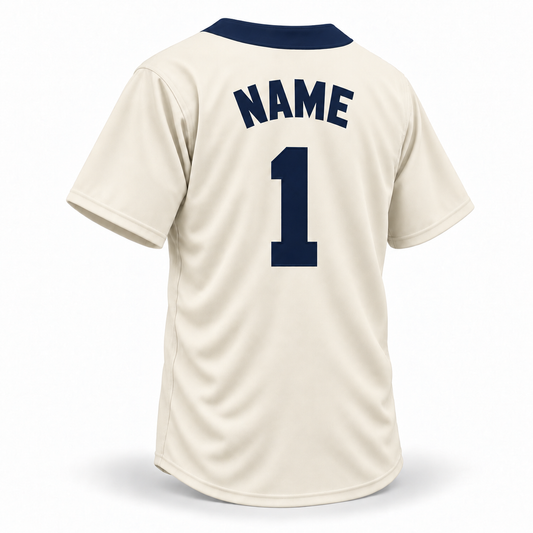
Free name and number on most jerseys. Add a franchise original — Satchel Paige, Josh Gibson, Walter Johnson, Rusty Staub — or your own name and number, at no extra cost on eligible styles. Custom items are made to order and final sale, so double-check spelling and numbers before you submit.
Sizes Small through 5XL on virtually every jersey in the collection, with no big & tall upcharge. A few made-to-order pieces, like the twill shorts, ship on a longer production window — check the product page for its specific size range.
Why Royal Retros for Baseball Jerseys
-
246 active jerseys across seven leagues and eras. Negro Leagues baseball, vanished ballclubs, the Federal League, the Pacific Coast League and historic minors, international programs, the Senior Professional Baseball Association, and city and emblem designs.
-
Franchises nobody else bothers with. The Chicago Whales. The Seattle Steelheads. The St. Paul Gophers. One-line footnotes at most retailers, full jerseys here.
-
Period-correct construction. Flannel for the pre-1970 teams, twill and mesh for modern reproductions, referenced against photographic source material for the stated year.
-
Flat, honest pricing. Custom $84.99, replica $69.99, flannel $149.99, remix $84.99. No "collector's edition" markup and no era surcharge.
-
Free customization on most jerseys, sizes S–5XL. True family sizing, no big & tall upcharge.
-
Heritage tribute apparel. These are tribute reproductions of historic uniforms, made by us. We are not affiliated with, endorsed by, or sponsored by any current league or club.
-
The deepest baseball jersey catalog anywhere. Cross-shop this hub with the Negro Leagues collection, historic minor leagues, West Coast minors, the Federal League and international baseball.
Quick Buying Questions
What sizes do these jerseys come in?
Small through 5XL on virtually every jersey in the collection. We don't upcharge for big & tall sizes.
Can I add my name and number?
Yes — most jersey styles include free custom name and number. Look for the "Custom" option on the product page. Custom items are made to order and final sale.
What's the difference between the $69.99 replica, the $84.99 custom and the $149.99 flannel?
The replica is a fixed, ready-made build with the graphics already applied — quicker to ship, lower price. The custom jersey is sewn to your order and is where free name and number personalization lives. The flannel is a heavyweight build in the construction pre-1970 uniforms actually used: thicker fabric, felt or twill lettering, period plackets and sleeve trim. Only teams from that era offer it.
How fast does it ship and what's the return policy?
Stock items ship within 3–5 business days. Custom jerseys are sewn to order and typically ship within 7–14 business days. Custom items are final sale. Standard items follow our return policy at /pages/returns.
Which league should I start with if I don't know what I'm looking for?
Match the story you already know. If you grew up on a specific city's team that no longer exists under that name, start with Vanished Ballclubs. If you want the deepest historical bench, Negro Leagues baseball has the most jerseys and the most franchises. If the team you're thinking of is still playing today, just somewhere else and under a different name, the Pacific Coast League and historic minors section is where to look.
Are these officially licensed baseball jerseys?
No. These are heritage tribute reproductions of historic uniforms, designed and produced by Royal Retros. We are not affiliated with, endorsed by, or sponsored by any league or club, current or historic.
The Baseball Jersey Through Its Eras
A baseball jersey carries its decade in its construction, not just its graphics. The fabric, the front closure, the collar and the lettering method all changed on a fairly predictable timeline over more than a century of the sport, and reading those details is the fastest way to tell a genuine period reproduction from a modern shirt with an old logo stamped on it.
How has the baseball jersey changed since the early 1900s?
It moved from heavy wool flannel to lightweight synthetic knit over roughly seventy years, in three broad stages. From the 1900s through the late 1960s, jerseys were wool or a wool-cotton flannel blend, cut full and heavy, closed with a full button placket, and lettered with felt or chain-stitched twill sewn directly onto the fabric. Around 1970, double-knit polyester uniforms arrived, dramatically lighter and more flexible, and within a few seasons most of the sport had switched over; this is also when pullover styles without a button front became common, since knit fabric didn't need the structure a placket provided. From the 1990s onward, "throwback" and alternate uniforms brought button-front styling and heavier-looking fabric back into fashion even though the underlying material stayed modern and breathable — which is exactly the era Royal Retros' reproductions are built to match visually while using contemporary, wearable fabric.
What's the difference between a button-front and a pullover baseball jersey?
A button-front jersey has a full placket of buttons running down the chest, the standard construction for essentially the entire sport from its earliest organized decades through the late 1960s. A pullover jersey has no placket at all — it goes on over the head, usually with a V-neck or crew collar, and it's the style that took over through the 1970s and '80s once double-knit fabric made the traditional button closure unnecessary. Most of Royal Retros' custom and flannel builds use button-front construction because most of the franchises in this collection played before the pullover era existed.
What is a placket on a baseball jersey?
The placket is the reinforced strip of fabric down the center front of a button-style jersey where the buttons and buttonholes are actually sewn. It's doubled or interfaced so the fabric doesn't stretch or tear around the buttonholes, and its width, stitching and button spacing are some of the most reliable era markers on a uniform — a narrow placket with widely spaced buttons reads differently than the tighter spacing common by mid-century.
What is tackle twill lettering?
Tackle twill is a heavier, tightly woven twill fabric that gets die-cut into letters and numbers, then sewn onto a jersey with a dense zigzag or satin stitch tracing every edge. It's the lettering method behind most of the fully sewn, "pro-stitched" jerseys in this collection, and it's been the standard way athletic uniforms have carried team names and numbers for most of the sport's history, long before screen printing or sublimation existed as options. A tackle twill letter has a small amount of physical height and a visible stitched border — run a finger across it and you can feel the edge — which is the single fastest way to tell a sewn jersey from a printed one without reading a tag.
Why do some vintage-style jerseys use a two-button or lace-up collar instead of a full placket?
Because the earliest decades of the sport did. Before the modern full-button front became standard, many nineteenth- and early twentieth-century uniforms closed with only a short lace-up placket at the neck or a two- or three-button collar rather than buttons running the full length of the chest. That collar style shows up on some of the earliest designs in this collection and is one more construction detail, alongside fabric and lettering method, that ties a jersey to a specific decade rather than a generic "old-timey" look.
Why did players wear sanitary hose and stirrup socks?
It was a two-layer sock system built for hygiene and team color at the same time. Underneath, players wore a plain white "sanitary" sock, which could be washed and replaced without touching the team's colored hose. Over that went the stirrup — a colored sock with the foot cut away so the white sanitary showed through in a gap at the ankle and instep. The width of that gap and the stripe pattern on the stirrup itself changed by team and by decade, which is why a fully accurate uniform photo reference includes the socks, not just the jersey.
What made Negro Leagues jersey design distinct?
Negro Leagues clubs operated as independent businesses first and ballclubs second, and the uniforms reflect it. Teams changed sponsors, home cities and even names more often than an established major league franchise would, and that instability shows up as scripted, hand-lettered-looking team names, bolder and less standardized color combinations, and a willingness to put a city name or a nickname on the chest instead of a fixed wordmark passed down for decades. It's also why the same franchise — the Chicago American Giants, the Baltimore Elite Giants, the Kansas City Monarchs — can look meaningfully different from one five-year stretch to the next, and why Royal Retros builds several of these teams across multiple distinct seasons rather than a single generic design.
What made Pacific Coast League jersey design distinct?
For most of the first half of the twentieth century, the Pacific Coast League operated almost like a third major league on the West Coast, a full continent away from the sport's East Coast head office, and its uniforms developed their own regional habits as a result — script wordmarks, monogram chest marks, and brighter, more graphic color combinations than the more conservative look common in the East. Longer PCL seasons and a large geographic footprint also meant more home and road variations per team than a typical era-matched Eastern club, which is part of why franchises like the San Francisco Seals and the Portland Beavers have so many distinct year-specific looks to choose from.
When did baseball jerseys start showing numbers and names?
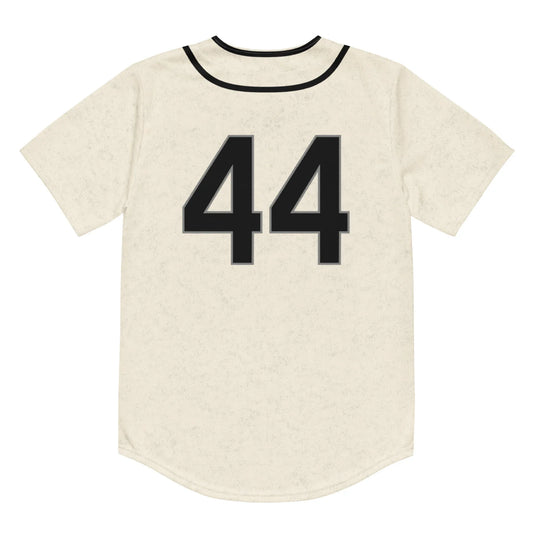
Numbers on the back became a fixture across the 1930s, after a slow, team-by-team adoption through the 1920s driven mostly by fans wanting an easy way to identify a player from the stands. Names above the number took much longer — that convention didn't become common until the 1960s, decades after numbering had already standardized. It's why a period-correct early-century reproduction often carries no number at all, and why adding one to certain early designs would actually break the historical accuracy rather than improve it.
How can you tell how old a baseball jersey is by its construction?
Check the fabric first, then the front, then the lettering. Heavy wool or wool-blend flannel with a full button placket and felt or chain-stitched lettering points to the pre-1970 era. A lightweight knit pullover with no placket and machine-embroidered or heat-applied lettering points to the 1970s through the 1990s. A modern moisture-wicking mesh replica with sublimated graphics is a current-era construction regardless of what year is printed on the back. None of these is better or worse — they're just different manufacturing eras, and matching the construction to the season on the jersey is the difference between a genuine period reproduction and a costume with the wrong materials.
What Makes Ours Period-Correct
Construction and accuracy. Sewn-on tackle-twill and embroidered numbers where the original called for it, era-correct fonts and colors, and true-to-original construction — every design is checked against period references before it goes live.
Frequently Asked Questions About Throwback Baseball Jerseys
How many baseball jerseys does Royal Retros carry?
246 active jersey designs in this collection alone, across Negro Leagues baseball, vanished ballclubs, the Federal League, the Pacific Coast League and historic minors, international programs, the Senior Professional Baseball Association, and city and emblem designs. Counting hats, tees and other apparel across our full baseball range, the total is much larger.
What is a "flannel" baseball jersey?
A heavyweight wool-blend reproduction built to the construction standard baseball actually used before the knit era, with felt or twill lettering, a full button placket and period-correct sleeve and collar trim. It's the closest a modern reproduction gets to what a player from the 1930s through the 1960s actually wore on the field.
Do you make Negro Leagues jerseys?
Yes — 74 active designs, the largest single category in this collection, covering the Homestead Grays, Kansas City Monarchs, Birmingham Black Barons, Pittsburgh Crawfords, Newark Eagles, Chicago American Giants and dozens of other franchises. Shop the full Negro Leagues collection.
What was the Pacific Coast League?
A high-level minor league based on the West Coast that operated for much of the twentieth century as something close to a third major league, with long seasons, strong attendance and its own regional star system, before West Coast expansion in the late 1950s changed its role. Portland, San Francisco, Sacramento, Hollywood and Hawaii all fielded well-known PCL clubs.
What was the Federal League?
A rival major league that operated for the 1914 and 1915 seasons only, before folding as part of a legal settlement that reshaped professional baseball's antitrust status. The Chicago Whales won the tightest pennant race the sport has ever produced in 1915.
Do you carry international baseball jerseys?
Yes — 25 active designs covering national programs from Mexico, Cuba, Japan, Puerto Rico, the Dominican Republic, Venezuela, Canada, Colombia and China, plus club-level jerseys like the Tokyo Giants, Orix Blue Wave, Havana Sugar Kings, Santurce Cangrejeros and Ponce Leones. Shop international baseball.
Can I get a jersey for a team that isn't listed here?
Often, yes. Between this collection, the Negro Leagues collection, historic minor leagues and the Proposed Teams collection we carry several hundred baseball designs, and new ones are added regularly.
What does "pro-stitched" mean, and is it worth paying more for?
Pro-stitched means the lettering and numbers are cut from tackle twill and sewn onto the jersey rather than printed on. It costs more than a replica because it's more labor, but it's also the more durable construction — sewn twill doesn't crack, peel or fade the way a printed graphic can after repeated washing, and it's the same lettering method full-scale athletic manufacturers use on actual on-field uniforms.
What's a good first jersey if I'm just starting a collection?
Start with the era you actually remember, not the one that's most famous. A specific season from a team whose ballpark you can picture beats a generic "vintage" design every time, and it's exactly what year-dated builds like the Browns, Senators, Colt .45s and Monarchs jerseys are built for. If you want the safest entry point regardless of team, the $69.99 replica tier gives you the graphics without the full pro-stitched investment.
Shop Related Baseball Collections
-
Baseball T-Shirts — Every tee that pairs with these jerseys.
-
Birmingham Black Barons — Custom, remix and flannel jerseys across the 1940s and '50s.
-
Chicago Whales — The 1915 Federal League pennant winners.
-
Federal League — Baseball's third major league, 1914–1915.
-
Flannel Jerseys — Every $149.99 heavyweight flannel we make.
-
Hats — Snapbacks, dad hats, flex-fits and fitted caps.
-
Hawaii Islanders — The Pacific Coast League's most remote outpost.
-
Historic Minor League Baseball — The full minor league range.
-
Hoodies — Heavyweight fleece across every team we cover.
-
Homestead Grays — Nine straight Negro National League pennants.
-
Houston Colt .45s — The full three-season uniform program.
-
International Baseball — Mexico, Cuba, Japan, Puerto Rico and more.
-
Jackets — Satin warm-ups and outerwear, made to order.
-
Kansas City Monarchs — Seven seasons from Negro Leagues baseball's winningest club.
-
Long Sleeve T-Shirts — Every long sleeve we carry.
-
Newark Eagles — The full Newark Eagles jersey program.
-
New York Highlanders — Hilltop Park, before the pinstripes.
-
Negro Leagues Collection — 74 jerseys across dozens of franchises, plus hats and tees.
-
PCL Padres — San Diego's Pacific Coast League era across four decades.
-
Philadelphia Stars — The full Philadelphia Stars jersey program.
-
Pittsburgh Crawfords — One of the most talent-stacked rosters in the sport's history.
-
Portland Beavers — Seven Pacific Coast League throwbacks, 1950–2009.
-
Portland Mavericks — The independent club that filled Portland's gap years.
-
Remix Jerseys — Modern reinterpretations of vintage designs.
-
Replica Jerseys — The $69.99 ready-to-wear tier.
-
Sacramento Solons — Longtime Pacific Coast League rival up and down the Valley.
-
San Francisco Seals — Script, monogram and remix builds from a PCL marquee franchise.
-
Seattle Pilots — All the pieces from the one season that happened.
-
Senior Professional Baseball Association — One winter, over-35 rosters, 1989–1990.
-
Shorts — Made-to-order twill and fleece shorts.
-
St. Louis Browns — Fifteen pieces spanning five decades.
-
Washington Senators — Fifteen pieces spanning both Washington franchises.
-
West Coast Minors — Pacific Coast League and beyond.
Custom Baseball Jerseys at Royal Retros — 246 Designs, Seven Leagues and Eras. Free Names & Numbers. Sizes S–5XL. If the Team Existed, We Probably Built It.