





-
CUSTOM
1960 USA Hockey Jersey
Regular price Starting at From $129.00 CADRegular priceUnit price per -
-
CUSTOM
CCCP Hockey Jersey
Regular price Starting at From $129.00 CADRegular priceUnit price per -
-
CUSTOM
1984 USA Hockey Jersey
Regular price Starting at From $129.00 CADRegular priceUnit price per -
-
CUSTOM
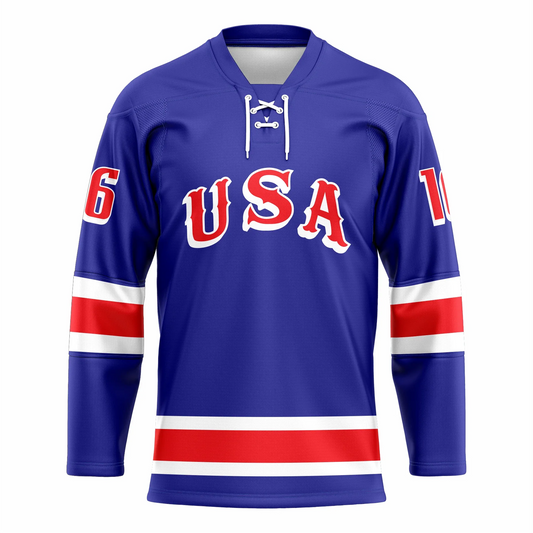
1980 USA Hockey Jersey
Regular price Starting at From $129.00 CADRegular priceUnit price per -
-
CUSTOM
USA Canada Cup Jersey
Regular price Starting at From $129.00 CADRegular priceUnit price per -
-
CUSTOM
Winnipeg Falcons Jersey
Regular price Starting at $178.00 CADRegular priceUnit price per -
-
CUSTOM
Winnipeg Maroons Jersey
Regular price Starting at $178.00 CADRegular priceUnit price per -
-
CUSTOM
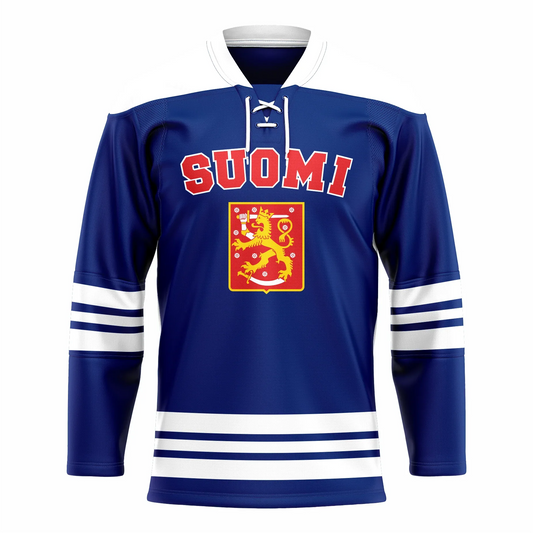
Finland Hockey Jersey
Regular price Starting at From $129.00 CADRegular priceUnit price per -
-
CUSTOM
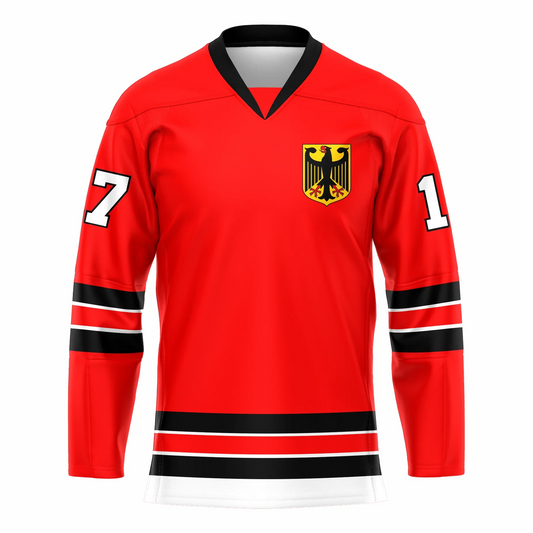
Germany Hockey Jersey
Regular price Starting at From $129.00 CADRegular priceUnit price per -
-
CUSTOM
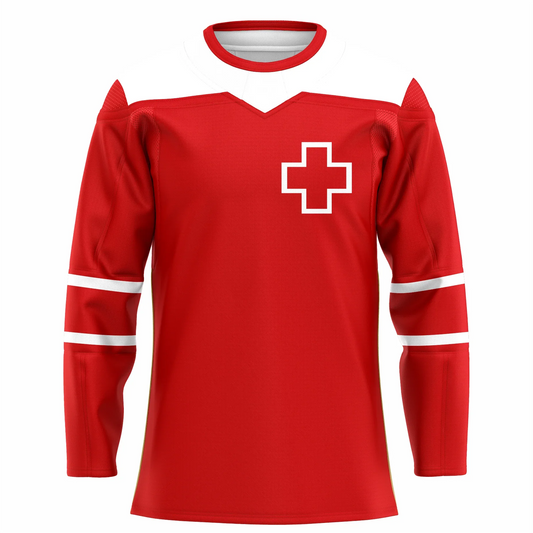
Switzerland Hockey Jersey
Regular price Starting at From $129.00 CADRegular priceUnit price per -
-
CUSTOM
Czechoslovakia Hockey Jersey
Regular price Starting at $178.00 CADRegular priceUnit price per -
-
CUSTOM
1968 USA Hockey Jersey
Regular price Starting at From $129.00 CADRegular priceUnit price per -
-
CUSTOM
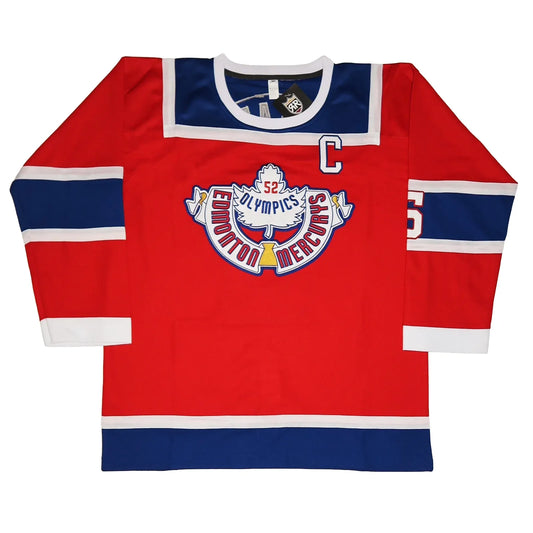
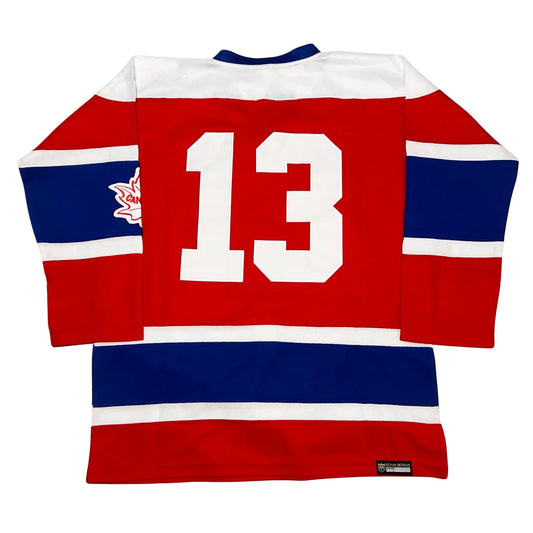
Edmonton Mercurys Jersey
Regular price Starting at $178.00 CADRegular priceUnit price per -
-
CUSTOM
Canada Cup Team Canada Jersey
Regular price Starting at From $129.00 CADRegular priceUnit price per -
-
CUSTOM
1964 Canada Hockey Jersey
Regular price Starting at From $129.00 CADRegular priceUnit price per -
-
CUSTOM
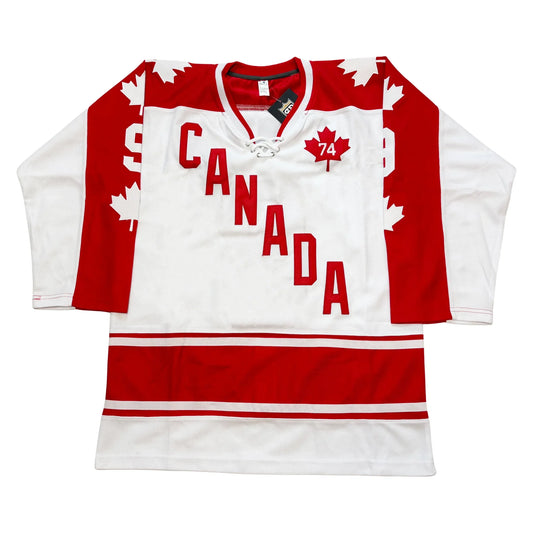
Summit Series Canada Jersey
Regular price Starting at From $129.00 CADRegular priceUnit price per -

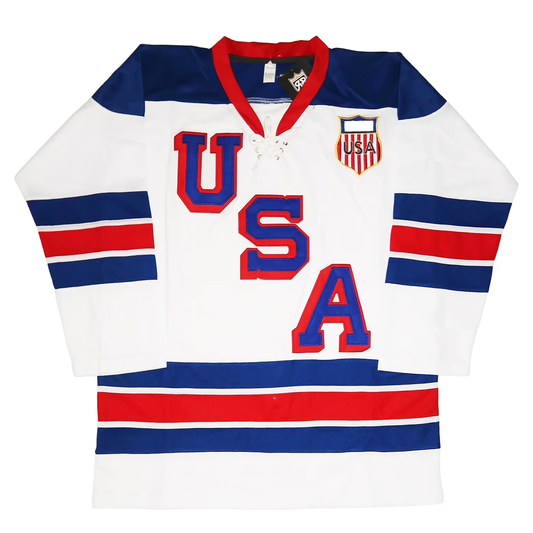


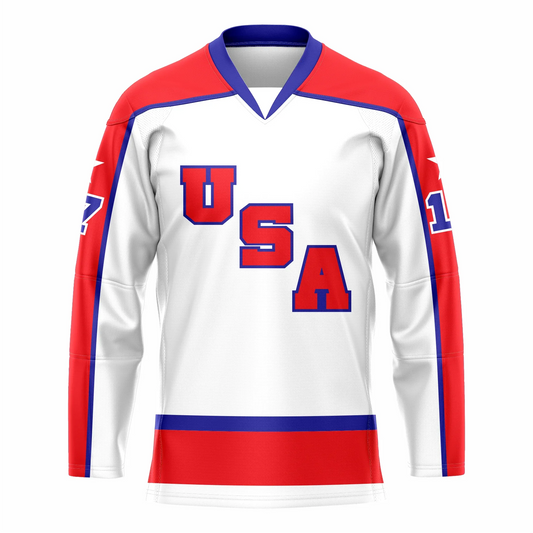


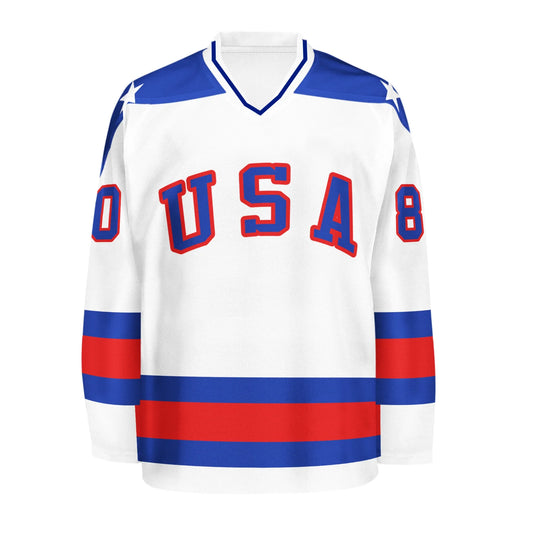


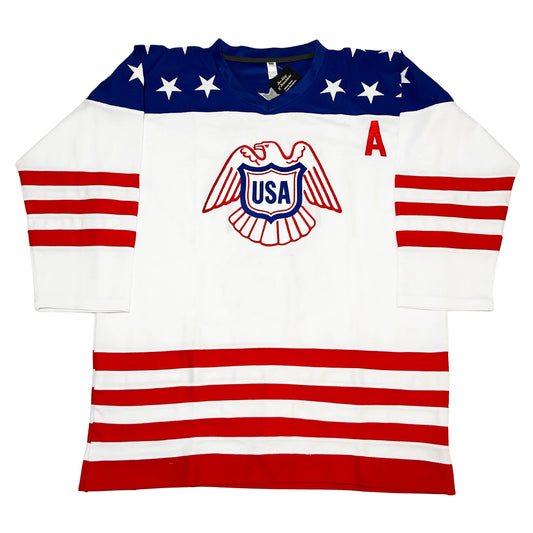
















Recently Viewed
The International & Olympic Hockey Collection — Royal Retros National Team Fan Shop
Olympic Ice. World Championships. The Miracle on Ice. Custom Names & Numbers. Sizes S–5XL.
Royal Retros carries one of the deepest international hockey jersey collections on the web — heritage throwbacks honoring the national teams, Olympic squads, and tournament dynasties that built the global game. From the 1980 Miracle on Ice–era Team USA sweater to the unmistakable red of a Soviet CCCP jersey, from 1972 Summit Series Team Canada to the Winnipeg Falcons squad that won hockey's very first Olympic gold in 1920 — this is the collection for fans who love the game beyond club logos and league borders. Custom name and number available on most jerseys. Period-correct construction in sizes Small through 5XL. If you have spent years searching for a proper retro national team jersey, you have found the shop.
What You Can Shop in the International Hockey Collection
This is a focused jersey collection — every piece is a national team or Olympic-era hockey sweater, built to honor a specific country and a specific era of international competition. Here is what is on the rack.
Olympic & National Team Jerseys — The heart of the collection. Heritage-inspired Team USA, Team Canada, Soviet CCCP, Czechoslovakia, Finland, Germany, and Switzerland jerseys, plus the historic Canadian club teams that represented the nation at the Games. Period-correct national crests, bold tournament striping, classic block lettering, and authentic country color palettes throughout. Custom name and number available on most styles — put your own name on a 1980 Team USA throwback or a 1972 Summit Series sweater.
Made-to-Order Custom Jerseys — Most jerseys in this collection are made to order, with free personalization. Add your name and number, or build a tribute to a legendary player of the era. Made-to-order styles are crafted when you order, so they arrive fresh and built to your spec.
Ready-to-Ship Styles — Select pieces, including the 1960 USA Vintage Icons jersey, are stocked and ready to ship now — heavyweight sewn tackle-twill numbering, 100% polyester, out the door within a few business days. If you need a jersey fast, start there.
Customization — Most international jerseys can be personalized with your name and number at no extra cost. Look for the "Custom" option on each product listing. Custom items are made to order and final sale.
Sizes — International hockey jerseys range from Small through 5XL on virtually every style. No big & tall upcharge. Whether you are buying for a kid who just discovered the Miracle on Ice or an adult collector who watched the Summit Series live, the size is on the page.
Shop by Marquee Jersey
1980 Team USA — The Miracle on Ice — The most famous jersey in the history of international hockey. On February 22, 1980, a roster of American college players beat the four-time defending gold medalist Soviet Union at Lake Placid, then beat Finland two days later for the gold. The blue-and-white "USA" sweater of that team is an icon of the sport. Our heritage throwback reproduces the period look — custom name and number available, sizes S–5XL. Shop the 1980 USA hockey jersey →
Soviet CCCP — The Big Red Machine — No jersey in hockey carries more mystique than the red Soviet sweater with the bold "CCCP" crest. The USSR national team was the most dominant program the sport has ever seen — a generation of Olympic and World Championship titles, and the team that turned international hockey into a global rivalry. This is one of the most-searched retro hockey jerseys we carry. Shop the CCCP hockey jersey →
1972 Summit Series — Team Canada — Eight games, September 1972, Canada versus the Soviet Union: the series that defined a hockey nation. Paul Henderson's goal with 34 seconds left in Game 8 in Moscow is the most replayed moment in Canadian sports history. Our Summit Series Team Canada jersey honors that red maple-leaf sweater. Shop the Summit Series Canada jersey →
Canada Cup — Team Canada — The Canada Cup was the best-on-best tournament of its era, and Team Canada's red-and-white Canada Cup sweater is one of the cleanest designs the game has produced. A must for any Team Canada or best-on-best hockey fan. Shop the Canada Cup Team Canada jersey →
1960 Team USA — The First Miracle — Twenty years before Lake Placid, the United States won Olympic hockey gold at Squaw Valley in 1960 — the "forgotten miracle." We carry the 1960 USA jersey as both a made-to-order custom piece and a stocked, ready-to-ship Vintage Icons edition. Shop the 1960 USA hockey jersey →
Winnipeg Falcons — Hockey's First Olympic Champions — When Olympic hockey debuted at the 1920 Antwerp Games, Canada was represented by the Winnipeg Falcons — a team largely of Icelandic-Canadian players — and they won the gold. The Falcons jersey is the deepest of deep cuts: the origin point of Olympic hockey itself. Shop the Winnipeg Falcons jersey →
Plus the full national team roster: 1968 Team USA, 1984 Team USA, 1976 USA Canada Cup, 1964 Team Canada, the Edmonton Mercurys (Canada's 1952 Olympic champions), the Winnipeg Maroons, Czechoslovakia, Finland, Germany, and Switzerland. If a nation shaped international hockey, its sweater belongs in this collection.
Why Royal Retros Is the Home of International Hockey Throwbacks
Royal Retros built its reputation by going deeper than mainstream sports retailers into the teams, leagues, and eras that most shops ignore. International hockey is exactly that kind of category — rich, beloved, historically deep, and almost completely overlooked by the big jersey sites. Here is what sets our collection apart at retail.
- Real era depth. We do not carry one generic "Team USA" jersey — we carry 1960, 1968, 1980, and 1984, because the eras look different and fans want the right one.
- Nations beyond the obvious. Czechoslovakia, Finland, Germany, and Switzerland alongside the USA, Canada, and Soviet powers. The full international picture, not just the headline teams.
- Period-correct design. National crests, tournament striping, lettering, and country color palettes reproduced to match the era each jersey represents.
- Free customization on most jerseys. Add your name and number at no extra cost on eligible styles — or build a tribute to a legend of the era.
- Ready-to-ship options. Need it fast? Stocked styles like the 1960 USA Vintage Icons jersey ship within a few business days.
- Sizes Small through 5XL. No big & tall upcharge, on virtually every jersey.
- Deep-cut coverage. The Winnipeg Falcons and Edmonton Mercurys are jerseys almost nobody else in the throwback world carries — the actual origin teams of Olympic hockey history.
Quick Buying Questions
What sizes do international hockey jerseys come in?
Small through 5XL on virtually every jersey in this collection. We do not upcharge for big & tall sizes. Check the size selector on each product page for the exact range available on that style.
Can I add my name and number to an international hockey jersey?
Yes — most styles offer free customization. Look for the "Custom" option on the product listing. Custom jerseys are made to order and final sale, so allow production time before shipping. You can use your own name and number, or recreate a legendary player of the era.
Which jerseys ship the fastest?
Ready-to-ship styles, including the 1960 USA Vintage Icons jersey, are stocked and ship within a few business days. Made-to-order and custom jerseys are crafted when you order and take longer — the lead time is shown on each product page.
What materials are these jerseys made from?
Construction varies by style. Made-to-order jerseys use durable sublimated and stitched construction in period-correct colors. Ready-to-ship styles like the Vintage Icons edition feature heavyweight sewn tackle-twill numbers and letters on 100% polyester. Each product page lists the specifics.
Are these officially licensed national team jerseys?
These are heritage-inspired throwback jerseys — tribute designs that honor historic teams, Olympic squads, and tournament eras. They are made for fans and collectors who want to celebrate the history of international hockey.
How accurate is the design?
National crests, lettering, tournament striping, and country color palettes are reproduced to match the era each jersey represents, wherever historical reference imagery exists. Every design is reviewed for period accuracy before it joins the catalog.
Gift Ideas for the International Hockey Fan
The international hockey fan is a particular kind of fan — someone who loves the game's biggest stage, remembers where they were for the Miracle on Ice, or grew up on Olympic tournaments and best-on-best rivalries. Generic club gear misses the mark. A national team throwback hits.
- For the fan who watched the Miracle on Ice live: A 1980 Team USA jersey is the single most evocative gift in hockey — it brings back February 22, 1980 in one glance.
- For the Cold War hockey obsessive: A Soviet CCCP jersey is the other half of every great rivalry of the era — bold, instantly recognizable, and almost impossible to find done well.
- For the Canadian who knows their hockey history: The 1972 Summit Series sweater or a Canada Cup jersey speaks to the moments that define the nation's game.
- For the deep-cut collector: The Winnipeg Falcons — the 1920 team that won hockey's first Olympic gold — is a gift nobody else can give them.
- For the European hockey fan: A Czechoslovakia, Finland, Germany, or Switzerland jersey honors a national program with its own proud history.
- Year-round, every-Olympics demand. International hockey gear is not tied to one club's season — it spikes with every Winter Olympics and World Championship and never really goes quiet.
The History of International Hockey: A Century on the World Stage
International hockey is the story of the game at its grandest scale — nations, not franchises, and tournaments that stop a country in its tracks. It is older than the NHL's modern era, older than most professional leagues, and it has produced the single most famous game ever played. The jerseys in this collection are the artifacts of that story. To understand why a red CCCP sweater or a blue 1980 USA jersey carries so much weight, it helps to walk through the century that made them matter.
What Is International Hockey?
International hockey is competition between national teams — countries icing their best players against one another rather than club teams competing within a league. Its two great stages are the Olympic Winter Games and the World Championships, governed globally by the International Ice Hockey Federation (the IIHF), founded in 1908. Over the decades a third tier of best-on-best events joined them: the Summit Series of 1972, the Canada Cup tournaments that ran from 1976, and the World Cup of Hockey that followed. Where club hockey is about civic identity — a city, a barn, a local rivalry — international hockey is about national identity. The crest on the front is a country. That is what makes these jerseys feel different, and why they have always been collected differently.
The Birth of Olympic Hockey: Antwerp 1920 and the Winnipeg Falcons
Ice hockey made its Olympic debut not at a Winter Games — there were none yet — but at the 1920 Summer Olympics in Antwerp, Belgium. Canada needed a team, and the team it sent was the Winnipeg Falcons: a club built largely of Icelandic-Canadian players from Winnipeg's West End, many of whom had been excluded from other local teams and had formed their own. The Falcons had just won the Allan Cup as Canada's top amateur club, and in Antwerp they steamrolled the field, outscoring opponents by a combined 27–1 across the tournament to win the first Olympic hockey gold medal ever awarded.
The Winnipeg Falcons jersey is therefore the true origin point of everything in this collection — the first sweater ever to win the sport's biggest prize. For a hockey fan who values history, there is no deeper cut.
Canada's Golden Age: 1924–1952
Once the Winter Olympics began in 1924 at Chamonix, Canada simply owned the event. Canadian club teams — the Toronto Granites, the Winnipeg club sides, RCAF squads — were sent as the national representative, and they dominated. Canada won Olympic gold in 1924, 1928, and 1932, often by absurd margins. Great Britain's gold in 1936 was a genuine upset, though its roster leaned heavily on British-born players who had learned the game in Canada. After the Second World War, Canada won again in 1948 with the RCAF Flyers.
The last chapter of that golden age belonged to the Edmonton Mercurys. A senior amateur club sponsored by an Edmonton car dealership, the Mercurys won the 1950 World Championship and then took Olympic gold at Oslo in 1952. What nobody knew at the time was that the 1952 gold would be Canada's last Olympic hockey championship for fifty years. The Edmonton Mercurys jersey marks the end of an era — the moment before the balance of power shifted east.
The Rise of the Soviet Machine
The Soviet Union did not play organized ice hockey — "Canadian hockey," as it was called there — until after the Second World War. Yet within a decade the USSR had built the most dominant national program the sport has ever known. The Soviets entered the World Championship for the first time in 1954 and won it. They entered the Olympics in 1956 at Cortina d'Ampezzo and won gold. It was one of the fastest ascents in the history of international sport.
The architecture behind it was a coaching and development system, led by figures like Anatoli Tarasov, that treated hockey as a science — emphasizing puck possession, weaving passing patterns, conditioning, and year-round training at a level the West had not imagined. Generations of legendary players moved through it: goaltender Vladislav Tretiak, the defensive pairing of the later era, and forward units drilled until they functioned as a single organism. From the mid-1950s through the 1980s the Soviet team was the standard against which every other hockey nation measured itself.
The red CCCP jersey — the letters are the Cyrillic initials of the Soviet Union — became one of the most recognizable uniforms in all of sport. It was the sweater of the "Big Red Machine," and it remains, decades after the USSR dissolved, one of the most sought-after retro hockey jerseys anywhere.
Squaw Valley 1960: The First Miracle
Long before Lake Placid, there was Squaw Valley. At the 1960 Winter Olympics in California, an American team that few expected to contend beat both Canada and the Soviet Union on its way to the gold medal — the first Olympic hockey title in United States history. It has been called the "Forgotten Miracle," overshadowed by what would happen twenty years later, but it was a genuine upset of the established order. The 1960 Team USA jersey — available as a made-to-order custom piece and as a stocked Vintage Icons edition — honors that first American gold.
The 1960s: Soviet Dominance and the Amateur Question
Through the 1960s the Soviet machine rolled on, winning Olympic gold in 1964 at Innsbruck and again in 1968 at Grenoble, along with World Championship after World Championship. The 1964 Team Canada and 1968 Team USA jerseys belong to this period — the era when Western teams, still required to field amateurs, were increasingly outmatched by Soviet and Eastern Bloc programs whose players were nominally amateurs but trained full-time. The growing unfairness of that arrangement — true amateurs against state-supported "amateurs," and neither allowed to use professionals — set the stage for the most important series in the sport's history.
The 1972 Summit Series: Canada vs. the USSR
By 1972 the frustration had a solution: an eight-game series between a Team Canada of NHL professionals and the Soviet national team. Canadians expected a coronation. Instead, the Soviets won the opening game in Montreal 7–3 and the series became a national reckoning — eight games, four in Canada and four in Moscow, played at a pitch of intensity that hockey had never seen.
It came down to Game 8 in Moscow, tied, with the series on the line. With 34 seconds remaining, Paul Henderson scored to give Canada a 6–5 win and the series. It remains the most replayed goal in Canadian sports history, and the Summit Series permanently changed how the hockey world understood itself: the gap between Canada and the USSR was real, narrow, and electric. The Summit Series Team Canada jersey carries all of that weight.
The Canada Cup Era: Best-on-Best Arrives
The Summit Series proved there was an appetite for true best-on-best hockey, and the Canada Cup was the answer. First held in 1976 and recurring through the 1980s into the early 1990s, the Canada Cup invited the world's top hockey nations — Canada, the USSR, Czechoslovakia, Sweden, Finland, the United States — to send their best professionals to a single tournament. Canada won the inaugural 1976 event; the Soviets answered in 1981; and the 1987 Canada Cup, decided by a Wayne Gretzky–to–Mario Lemieux connection, is regarded by many as the highest-quality hockey ever played.
The Canada Cup Team Canada jersey and the 1976 USA Canada Cup jersey both belong to this golden age of tournament hockey — the period when the international game finally featured every nation's very best, on the same ice, at the same time.
Lake Placid 1980: The Miracle on Ice
And then came the game everyone knows. At the 1980 Winter Olympics in Lake Placid, New York, the United States fielded a team of college players and recent amateurs, coached by Herb Brooks, with an average age of about 21. The Soviet Union had won four straight Olympic golds and had recently beaten an NHL All-Star team. Days before the Olympics, the Soviets had beaten this American squad 10–3 in an exhibition.
On February 22, 1980, the United States beat the Soviet Union 4–3. Mike Eruzione scored the winning goal; goaltender Jim Craig held the line; broadcaster Al Michaels asked a nation, "Do you believe in miracles?" Two days later the U.S. came from behind to beat Finland 4–2 and clinch the gold medal — because, in a detail many people forget, beating the Soviets did not win anything yet. The Miracle on Ice has been voted the greatest sports moment of the twentieth century, and the 1980 Team USA jersey is the single most meaningful artifact in this entire collection.
1984 and the End of the Amateur Era
The 1984 Team USA jersey represents the Sarajevo Olympics — the last Games of the old order. Through the 1980s the line between amateur and professional in Olympic hockey eroded year by year, and the Soviets continued to dominate the medal stand. The amateur-only model that had governed Olympic hockey since 1920 was on its last legs, and the sport was heading toward a new era.
The Modern Era: NHL Players and Canada's Return
Two changes reshaped international hockey in the 1990s and 2000s. First, the collapse of the Soviet Union in 1991 sent a wave of brilliant Russian, Czech, Slovak, and other Eastern European players into the NHL, and Czechoslovakia split into separate Czech and Slovak national teams in 1993. Second, in 1998 at Nagano, the Olympics opened to NHL professionals for the first time — finally putting the true best players in the world on Olympic ice.
The results were unforgettable. The Czech Republic, backed by goaltender Dominik Hasek, won gold at Nagano in 1998. Canada won Olympic gold at Salt Lake City in 2002 — its first since the Edmonton Mercurys half a century earlier — and won again at Vancouver in 2010, where Sidney Crosby's overtime "golden goal" against the United States set off a national celebration, and once more at Sochi in 2014. International hockey had become, at last, a tournament of genuine bests — and the jerseys of every earlier era only grew more valuable as the history deepened.
The Great Hockey Nations
Every jersey in this collection represents a national program with its own arc. Here is a closer look at the countries on the racks.
United States
American international hockey is defined by two miracles — the 1960 gold at Squaw Valley and the 1980 gold at Lake Placid — bookending a program that has produced World Championship medals, World Cup of Hockey success, and a steady supply of NHL talent. We carry the U.S. national team across four eras: 1960, 1968, 1980, and 1984, plus the 1976 Canada Cup sweater.
Canada
Hockey's founding nation and, for the first half of the twentieth century, its uncontested champion. Canada's international story runs from the Winnipeg Falcons in 1920 through the Edmonton Mercurys in 1952, through the agony and triumph of the 1972 Summit Series, into the Canada Cup dynasty and the modern Olympic golds. Explore more Canadian hockey heritage in the Canada collection.
The Soviet Union & Russia
From a standing start after World War II to total dominance within a decade, the Soviet program rewrote what was possible in hockey. The CCCP jersey is the emblem of the Big Red Machine — and one of the most-requested retro hockey sweaters we sell.
Czechoslovakia
One of the sport's great powers, Czechoslovakia was a perennial medal contender and World Champion, the chief Eastern European rival to the Soviets, before splitting into the Czech and Slovak national teams in 1993. The Czechoslovakia jersey honors that unified golden era.
Finland
For decades Finland — "Suomi" — was the hard-working underdog of international hockey, before breaking through to its first World Championship in 1995 and growing into a genuine power that has since climbed to the top of the Olympic podium. The Finland jersey celebrates one of the game's most beloved national programs.
Germany & Switzerland
Two of Europe's foundational hockey nations. Both competed in the earliest Olympic tournaments, both have produced memorable upsets and surges of success across the decades, and both remain proud, distinctive programs. The Germany jersey and Switzerland jersey round out the European side of the collection.
International Hockey FAQ
What was the Miracle on Ice?
The Miracle on Ice is the United States' 4–3 victory over the Soviet Union at the 1980 Winter Olympics in Lake Placid, on February 22, 1980. A team of American college players beat the four-time defending Olympic champions, then beat Finland to win the gold medal. It is widely regarded as the greatest moment in American sports history. The 1980 Team USA jersey honors that team.
What was the 1972 Summit Series?
The Summit Series was an eight-game series in September 1972 between a Team Canada of NHL professionals and the Soviet Union's national team. Canada won the series on Paul Henderson's goal with 34 seconds left in Game 8 in Moscow. It is the most celebrated series in Canadian hockey history.
Why does the Soviet jersey say "CCCP"?
"CCCP" is the Cyrillic abbreviation for the Union of Soviet Socialist Republics — the Soviet Union. The letters appeared across the chest of the national team's red sweater, which is why the jersey is universally known to collectors as the "CCCP jersey."
Who won the first Olympic hockey gold medal?
Canada, represented by the Winnipeg Falcons, won the first Olympic hockey gold at the 1920 Antwerp Olympics — the tournament that introduced ice hockey to the Games.
Can I customize an international hockey jersey with my name?
Yes. Most jerseys in this collection offer free name and number customization — look for the "Custom" option on the product page. Custom jerseys are made to order and final sale.
Do you carry national teams beyond the USA, Canada, and the Soviet Union?
Yes — the collection includes Czechoslovakia, Finland, Germany, and Switzerland, alongside historic Canadian Olympic club teams like the Winnipeg Falcons, the Winnipeg Maroons, and the Edmonton Mercurys.
Shop the International Hockey Collection
Team USA: 1960 USA Hockey Jersey · 1960 USA Vintage Icons Jersey (ready to ship) · 1968 USA Hockey Jersey · 1980 USA Hockey Jersey · 1984 USA Hockey Jersey · USA Canada Cup Jersey
Team Canada: 1964 Canada Hockey Jersey · Summit Series Canada Jersey · Canada Cup Team Canada Jersey · Winnipeg Falcons Jersey · Winnipeg Maroons Jersey · Edmonton Mercurys Jersey
International: CCCP / Soviet Hockey Jersey · Czechoslovakia Hockey Jersey · Finland Hockey Jersey · Germany Hockey Jersey · Switzerland Hockey Jersey
More hockey at Royal Retros: Custom Hockey Jerseys · World Hockey Association · International Hockey League (IHL) · Minor League Hockey · Historic Hockey
From the Winnipeg Falcons to the Miracle on Ice — a century of international hockey, on the rack at Royal Retros. Custom names & numbers. Sizes S–5XL.