



-
CUSTOM
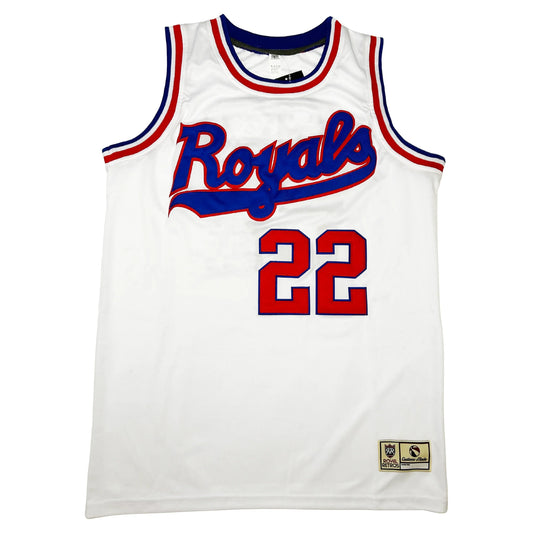
1971 Cincinnati Royals Jersey
Regular price Starting at $123.00 CADRegular priceUnit price per -
-
CUSTOM
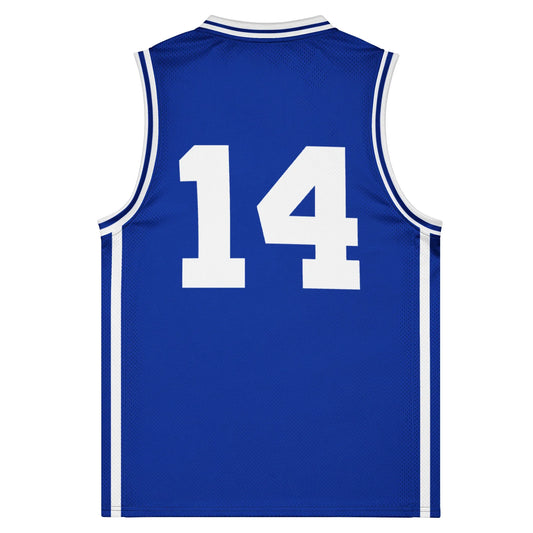
1965 Cincinnati Royals Jersey
Regular price Starting at $123.00 CADRegular priceUnit price per -
-
Cincinnati Royals Replica Jersey
Regular price $102.00 CADRegular priceUnit price per -
CUSTOM
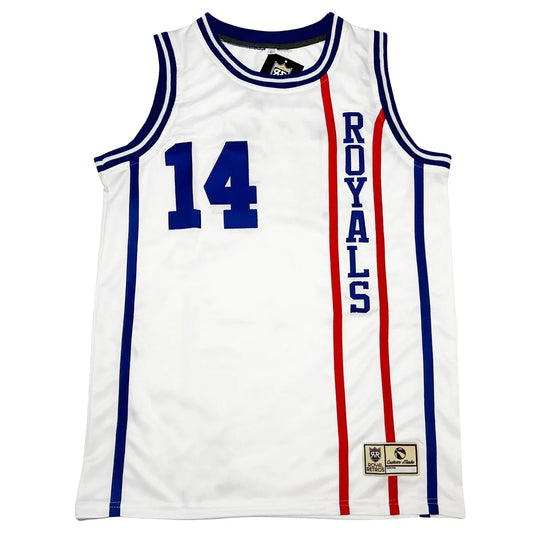
1969 Cincinnati Royals Jersey
Regular price Starting at $123.00 CADRegular priceUnit price per -






The Cincinnati Royals Collection — Royal Retros Cincinnati NBA Fan Shop
Authentic Cincinnati Royals Throwback Jerseys. Custom Names & Numbers. Sizes S–5XL. The Oscar Robertson Era, Rebuilt.
Royal Retros carries four Cincinnati Royals throwbacks built around the franchise's Cincinnati years: the 1965, 1969 and 1971 year-specific jerseys, plus a replica cut. Year-specific jerseys run $84.99; the replica is $69.99. Most styles include free custom name and number, and every jersey in the collection is available Small through 5XL with no big & tall upcharge. The Cincinnati Royals played in the NBA from 1957 to 1972 and the name has not returned to the league since — this collection is where that era lives on.
What You Can Shop in the Cincinnati Royals Collection
Cincinnati Royals Jerseys — Three year-specific throwbacks: the 1965 jersey, in blue, from the Oscar Robertson–Jerry Lucas prime; the 1969 jersey, in white or blue, from the Bob Cousy rebuild; and the 1971 jersey, in blue or white, from the franchise's final season in Cincinnati. Sewn twill lettering, period-correct fonts and color. $84.99, sizes S–5XL.
Cincinnati Royals Replica Jersey — A simplified replica cut at a lower price point, $69.99, sizes S–5XL, for fans who want the identity without the year-specific detail.
Customization — Free custom name and number on most jerseys. Put a Royals original on the back — Oscar Robertson, Jerry Lucas, Jack Twyman, Wayne Embry, Nate Archibald — or your own name and number. Custom items are made to order and final sale.
Sizes — Small through 5XL on every jersey in this collection. No big & tall upcharge.
Shop the Cincinnati Royals by Year — What Each Jersey Means
1965 — The Robertson–Lucas Prime. The 1964-65 Royals went 48-32, finished second in the Eastern Division and pushed into the Division semifinals before falling to the eventual conference finalist. Oscar Robertson led the team in both scoring and assists, and by that point in his career his cumulative averages were still triple-double pace across five full seasons — a stretch of individual production the league had never seen before. Jerry Lucas, in just his second season, averaged 21 points and 20 rebounds a game, and the Royals as a team led the entire NBA in points scored. This is the jersey of the best basketball team Cincinnati ever fielded, built around two Hall of Famers in their absolute prime. Shop the 1965 jersey.
1969 — The Cousy Rebuild. Boston Celtics legend Bob Cousy took over as head coach before the 1969-70 season and immediately remade the roster, trading longtime star Jerry Lucas to San Francisco for players who fit a faster, smaller style built on ball movement instead of a dominant post presence. Cousy even activated himself as a player that season at age 41 — briefly the oldest player in NBA history, and a genuinely strange sight: a Hall of Fame point guard checking into games for the team he was coaching. The Royals finished 36-46 and missed the playoffs, but the 1969 jersey is the look of a franchise mid-reinvention, caught between two very different eras. Shop the 1969 jersey.
1971 — The Last Season in Cincinnati. The 1971-72 Royals went 30-52, but the season belonged to second-year guard Nate "Tiny" Archibald, an undersized, 6-foot-1 second-round pick who averaged 28.2 points and 9.2 assists a game and won the NBA's Most Improved Player award. It was also the last season the franchise played as the Cincinnati Royals — before the next season, the team relocated out of Ohio for good, and Archibald's breakout turned out to be the last great individual season the city ever saw from an NBA team wearing its name. The 1971 jersey is the final chapter. Shop the 1971 jersey.
Want the look without picking a year? The replica jersey carries the Royals identity at a lower price point, and it's a solid starting point if this is your first Cincinnati Royals piece and you'd rather add a year-specific jersey later once you know which era speaks to you.
Why Royal Retros Is the Home of Cincinnati Royals Throwback Gear
- Three distinct seasons, not one generic logo tee. 1965, 1969 and 1971 — each jersey built to the year it represents, plus a replica cut for fans who just want the look.
- Period-correct construction. Era-appropriate fonts, colors and lettering, referenced against photographic source material for each season.
- Flat, honest pricing. Every year-specific jersey is $84.99; the replica is $69.99. No "collector's" markup.
- Free customization on most jerseys. Add a name and number at no extra cost on eligible items.
- Sizes S–5XL. True family sizing, no big & tall upcharge.
- Ohio's NBA history, in one place. The Royals split home dates across Ohio during their Cincinnati years, playing regularly in Cleveland, Columbus and Dayton in addition to Cincinnati Gardens. Shop more Ohio sports history in our Ohio collection.
Quick Buying Questions
What sizes do Cincinnati Royals jerseys come in?
Small through 5XL on every jersey in the collection, including the replica. We don't upcharge for big & tall sizes.
Can I add my name and number to a Royals jersey?
Yes — most styles include free custom name and number. Choose a Royals original or your own. Look for the "Custom" option on the product page. Custom items are final sale.
Which Cincinnati Royals jersey year should I pick?
For the best team the franchise fielded in Cincinnati, go 1965. For the Bob Cousy rebuild years, 1969. For the franchise's last season in Ohio and Nate Archibald's breakout year, 1971. If you just want the identity without a specific year, the replica jersey is the simpler, lower-priced option.
Are these officially licensed?
No. These are heritage tribute reproductions built from period research, not officially licensed product. The Cincinnati Royals played their last game under that name in 1972, and no NBA franchise has used it since. We build these because the history deserves better than a single generic "vintage" design.
How fast does it ship and what's the return policy?
Stock items ship within 3–5 business days. Custom jerseys are sewn to order and typically ship within 7–10 business days. Custom items are final sale. Standard items follow our return policy at /pages/returns.
Gift Ideas for the Cincinnati Royals Fan
- For the Oscar Robertson historian: The 1965 jersey covers the years he was putting up career averages that no other player matched for half a century.
- For the Ohio sports completist: Pair a Royals jersey with something from our Ohio collection for the full statewide story — the Royals played "home" games in four different Ohio cities.
- For the NBA history buff: A franchise that started in Rochester, won its only title there in 1951, hosted the league's All-Star Game in 1966, spent fifteen years in Cincinnati, and has relocated twice since is a deeper story than most defunct teams can offer.
- For the humanitarian-story fan: The Maurice Stokes and Jack Twyman story is one of the most remarkable in American sports history, and it happened on this roster.
- For the budget-minded gift: The $69.99 replica jersey delivers the Royals identity without the year-specific price point.
- Year-round demand. Royals nostalgia isn't seasonal — Father's Day, birthdays and the start of NBA season all work.
About the Cincinnati Royals
The Cincinnati Royals were Cincinnati, Ohio's NBA franchise from 1957 to 1972 — fifteen seasons that included one of the greatest individual seasons in basketball history, a roster stacked with future Hall of Famers, one of the sport's most remarkable stories of loyalty and care, and, in the end, no championship. The Royals never came back to Cincinnati after 1972, and the name has not returned to the NBA since. What the franchise left behind is a strange kind of legacy: a decade and a half of some of the best basketball ever played in Ohio, tied to a city that no longer has the team to show for it.
The roster turned over almost completely across those fifteen seasons, but the throughline was talent. A Rochester championship pedigree gave way to Jack Twyman's scoring seasons and the Maurice Stokes tragedy in Cincinnati's first years, then to the Oscar Robertson-Jerry Lucas-Wayne Embry core that made the mid-1960s Royals one of the best teams in the league, then to the Bob Cousy rebuild and Nate Archibald's breakout in the franchise's final Cincinnati seasons. Almost every era produced a player good enough to be remembered on his own, which is part of why the history supports four very different jerseys rather than one generic throwback.
Why did the Royals move to Cincinnati?
The franchise originated in Rochester, New York, where it won the 1951 NBA championship — still the only title in franchise history — defeating the New York Knicks in a seven-game Finals. By the mid-1950s, Rochester's ticket sales had declined sharply, and in April 1957 the Harrison brothers, who owned the team, moved the Royals to Cincinnati as part of a broader westward and southward shift among professional sports franchises in that era. Cincinnati offered a bigger market and a fresh start.
What were the Royals before Cincinnati — the Rochester years?
The franchise was founded in Rochester, New York in 1945 and won a championship in its very first professional season, taking the National Basketball League title in 1945-46 before the NBA existed in its modern form. The Rochester Royals built their identity around three future Hall of Famers — guards Bob Davies and Bobby Wanzer, whose backcourt partnership was talked about in the same breath as the great guard tandems of the era, and center-forward Arnie Risen. That core won the franchise's only NBA championship in 1951, and all three were later inducted into the Naismith Memorial Basketball Hall of Fame. When the Royals moved to Cincinnati six years later, they brought a championship pedigree with them — even if the roster that made the trip looked very different from the one that won the title.
What was Cincinnati Gardens, and why does it matter to Royals history?
Cincinnati Gardens opened on February 22, 1949, originally built for hockey, and was among the largest indoor arenas in the country when it opened. It became the Royals' home arena for their entire Cincinnati tenure, from the 1957 move through the franchise's final season in 1972. Every era covered in this collection — the Robertson-Lucas prime, the Cousy rebuild, and Archibald's breakout — played its home games on that floor.
Did the Cincinnati Royals ever host an NBA All-Star Game?
Yes — once. Cincinnati Gardens hosted the 1966 NBA All-Star Game on January 11, 1966, a sellout with standing-room tickets sold on top of that, drawing 13,653 fans. The East beat the West 137-94, and Royals guard Adrian Smith won the game's MVP award in front of his home crowd. It remains the only NBA All-Star Game ever played in Cincinnati — the Royals relocated before the city got a second chance to host one.
Who was Adrian Smith, the 1966 All-Star Game MVP?
Adrian Smith joined the Royals in the 15th round of the 1958 NBA draft, a sharpshooting guard who spent his first several seasons as Oscar Robertson's backup before becoming a starter in 1964-65, when he averaged 15.1 points a game while shooting 46 percent from the field and 83 percent from the free-throw line. Before his NBA career, Smith won an Olympic gold medal in 1960 with a US team later inducted into the Basketball Hall of Fame as a group. His finest moment in a Royals uniform came on his home floor: MVP honors in the 1966 NBA All-Star Game at Cincinnati Gardens, the only All-Star Game the city ever hosted.
Why did the Cincinnati Royals play home games in Cleveland, Columbus and Dayton?
Beginning around 1966, the Royals began scheduling a portion of their home slate outside Cincinnati Gardens, playing regular-season "home" games in Cleveland, Columbus and Dayton. The Cleveland dates continued until the Cleveland Cavaliers joined the NBA as an expansion franchise in 1970. The strategy was an attempt to build a statewide Ohio fan base rather than relying on Cincinnati alone to support the team — and it also demonstrated that Ohio's other major cities could support NBA basketball, a fact that helped set up Cleveland's own expansion franchise a few years later. It is one of the more unusual scheduling arrangements in NBA history: a single franchise treating an entire state as its home market, years before anyone talked about "regional" sports marketing.
What was the territorial draft, and why does it matter for this roster?
From 1949 through 1966, the NBA let a team forfeit its first-round pick in exchange for the rights to any player from a college within about 50 miles of its home arena — a rule designed to let teams keep locally famous college stars in front of the fans who already knew them. Both Oscar Robertson and Jerry Lucas joined the Royals as territorial picks, in 1960 and 1962 respectively, without the team having to compete in the open draft for them. Of the 23 territorial picks made league-wide over the rule's history, 12 went on to the Naismith Memorial Basketball Hall of Fame — a remarkable hit rate, and the Royals landed two of the best of them back to back.
Who was Jack Twyman before Oscar Robertson arrived?
Before Oscar Robertson's rookie season in 1960, Jack Twyman was already the Royals' best player. A scoring forward from the franchise's Rochester-to-Cincinnati transition years, Twyman averaged a career-high 31.2 points a game in the 1959-60 season, finishing second in the league only to Wilt Chamberlain. He made six All-Star teams across his career, was named All-NBA Second Team twice, and finished with 15,840 career points at a 19.2 points-per-game average over eleven seasons. Twyman was inducted into the Naismith Memorial Basketball Hall of Fame in 1983 and remains one of the most respected figures in franchise history — not only for what he did on the court, but for what he did off it.
What happened to Maurice Stokes, and why does the NBA still honor Jack Twyman for it?
In the last game of the 1957-58 season — the Royals' first season in Cincinnati — forward Maurice Stokes fell hard to the floor, hit his head and was briefly knocked unconscious before returning to the game. On the flight home, his condition deteriorated rapidly; he suffered a seizure, fell into a coma, and was later diagnosed with post-traumatic encephalopathy, a brain injury that left him permanently paralyzed. He had just been named to his third straight All-Star team.
Stokes could no longer speak or care for himself. His teammate Jack Twyman became his legal guardian and spent the rest of Stokes's life organizing fundraisers and helping cover his care — an extraordinary commitment from one teammate to another, made with no family obligation behind it. Stokes died in 1970 at age 36. The NBA now presents the Twyman-Stokes Teammate of the Year Award each season in honor of both men. It remains one of the most cited stories of loyalty in American professional sports.
What made Oscar Robertson's Cincinnati Royals seasons historic?
Oscar Robertson arrived as a territorial pick in 1960, won NBA Rookie of the Year that season, and played his entire Cincinnati career there — ten seasons — before being traded away in 1970. In 1961-62, his second season, he averaged 30.8 points, 12.5 rebounds and 11.4 assists a game — a triple-double for an entire season, a feat no other player matched for more than fifty years. By 1964-65, his cumulative career averages were still triple-double pace across five full seasons. Robertson made 12 consecutive All-Star teams, won the NBA Most Valuable Player award in 1964, was named to nine All-NBA First Teams, and led Cincinnati to the playoffs in each of his first six seasons — though the franchise never advanced to the NBA Finals during his time there. No player before him had combined that level of scoring, rebounding and playmaking in the same body, and it happened entirely in a Royals uniform.
Who was Jerry Lucas, and why did he leave Cincinnati?
Jerry Lucas joined the Royals as a territorial draft pick in 1962, after an accomplished college career, and quickly became one of the best rebounders in the league, averaging 21 points and 20 rebounds a game by his second season. Across his Cincinnati years he was a perennial All-Star and one of the most efficient big men of his era, forming, alongside Oscar Robertson, one of the most productive frontcourt-backcourt pairings the league had seen. When Bob Cousy took over as head coach before the 1969-70 season, he wanted smaller, faster forwards who could drive to the basket, and Lucas didn't fit that plan. Early that season Lucas was traded to San Francisco — a deal he had the contractual right to approve — closing out the Robertson-Lucas partnership that had defined the Royals' best years.
Who was Wayne Embry, and why is he in the Basketball Hall of Fame?
Wayne Embry spent eight seasons with the Royals, from 1958 to 1966, patrolling the middle at 6-foot-8 and 240 pounds against the era's great centers, earning the nickname "the Wall." He made five consecutive All-Star teams from 1961 through 1965 and served as team captain from 1962 to 1966, averaging 12.5 points and 9.1 rebounds across 831 regular-season games. He later won an NBA championship with Boston, and after his playing career he became one of the first Black general managers in North American professional sports. Embry was inducted into the Naismith Memorial Basketball Hall of Fame in 1999.
Did Bob Cousy really play for the team he coached?
Yes. Bob Cousy, the Boston Celtics legend, was hired to coach the Royals before the 1969-70 season and rebuilt the roster around a faster style of play. Partway through that season, at age 41, Cousy activated himself as a player — briefly making him the oldest player to appear in an NBA game. He played in a handful of games as a backup guard before returning to the bench full time. It remains one of the stranger footnotes in the franchise's history: a Hall of Fame point guard suiting up for the team he was coaching, more than a decade after his playing prime.
Who was Nate "Tiny" Archibald, and why does his Cincinnati season matter?
Nate Archibald was a second-round pick in the 1970 NBA draft, an undersized, 6-foot-1 guard whom Bob Cousy hoped could grow into the same kind of steady floor leader Cousy himself had been in Boston. Archibald spent his first two professional seasons in Cincinnati, culminating in a 1971-72 season — the franchise's last in Ohio — in which he averaged 28.2 points and 9.2 assists a game and won the NBA's Most Improved Player award. The following season, playing for the same franchise after its relocation, Archibald became the only player in NBA history to lead the league in both scoring and assists in the same season. He went on to a 14-year career, three All-NBA First Team selections and six All-Star selections — a Hall of Fame-caliber career that started with a scout's bet on an undersized guard nobody else wanted enough to pick before the second round.
Did the Cincinnati Royals ever win a championship?
No — not in Cincinnati. The franchise's only NBA championship came in 1951, while it was still based in Rochester. Across fifteen seasons in Cincinnati, the Royals reached the playoffs regularly during the Oscar Robertson years but never advanced past the Eastern Division finals.
What happened to the Cincinnati Royals franchise?
Attendance told the story of the Royals' last years in Cincinnati. Average attendance had fallen below 4,000 a game by 1972, with only about 126,000 fans announced as paying their way in across the entire 1971-72 season. Consecutive losing seasons hurt, the 1969 trade of Jerry Lucas and the 1970 trade of Oscar Robertson each cost the team a fan-favorite Hall of Famer, and Cincinnati's newly arrived NFL franchise was pulling a growing share of the local sports dollar toward football. Ironically, the club still turned a small profit in Cincinnati because it owned Cincinnati Gardens and its concessions outright — the move wasn't about the balance sheet so much as the ceiling on how big the franchise could grow if it stayed. In the spring of 1971, with attendance still lagging, ownership began looking for a new home, and with under two weeks left in the season the team announced it was relocating to Kansas City for 1972.
The Royals played their final game in Cincinnati in March 1972. The franchise relocated to Kansas City, splitting home games between Kansas City and Omaha, Nebraska for its first several seasons there. It dropped the Omaha half of the schedule in 1975, relocated again in 1985, and continues today in a different city under a different name. Nate "Tiny" Archibald, who broke out in his final Cincinnati season, went on to lead the NBA in both scoring and assists in the same season shortly after the move — a feat no other player has matched, achieved by a player Cincinnati fans had watched develop.
Hall of Famers Who Wore a Cincinnati Royals Uniform
At least five players who spent meaningful time with the Cincinnati Royals were later inducted into the Naismith Memorial Basketball Hall of Fame:
- Oscar Robertson — Rookie of the Year, 1964 MVP, and the only player to average a triple-double for a full NBA season for more than fifty years.
- Jerry Lucas — territorial pick, elite rebounder, one of the most efficient big men of his era.
- Jack Twyman — six-time All-Star, 15,840 career points, and half of one of American sports' most cited stories of teammate loyalty.
- Wayne Embry — five-time All-Star center known as "the Wall," later an NBA championship winner and pioneering front-office executive.
- Bob Cousy — already a Hall of Fame player from his Boston career when he took over as Royals head coach, and briefly activated himself as a player at age 41.
Add Nate Archibald's Hall of Fame-caliber career, which began in Cincinnati, and Maurice Stokes's tragically shortened three-time All-Star run, and the Royals' Cincinnati roster holds up against any franchise's from the era.
Cincinnati's NBA Legacy Today
Cincinnati has been without an NBA team since the Royals left in 1972, making it one of the larger American metro areas that has gone the longest without top-level professional basketball. The city's basketball identity from that era survives mostly in the record books — Oscar Robertson's triple-double season, the 1966 All-Star Game, five Hall of Famers who wore the uniform — and in throwback apparel like this collection. It's also part of a bigger Ohio sports story: the Royals' own attempt to build a statewide following by playing games in Cleveland, Columbus and Dayton previewed exactly the kind of regional fandom that Ohio sports still runs on today. Shop the rest of that story in our Ohio collection.
What Makes Ours Period-Correct
Construction and accuracy. Sewn-on tackle-twill numbers and lettering where the original build called for it, era-correct fonts and colors, and true-to-original construction — every Cincinnati Royals design is checked against period references before it goes live.
More Frequently Asked Questions About the Cincinnati Royals
Who were the Cincinnati Royals?
Cincinnati, Ohio's NBA franchise from 1957 to 1972. The team originated as the Rochester Royals, won the 1951 NBA championship in Rochester, then moved to Cincinnati and played there for fifteen seasons before relocating again.
Where did the Cincinnati Royals play?
Primarily at Cincinnati Gardens, which opened in 1949 and hosted the 1966 NBA All-Star Game, though from around 1966 onward the team also scheduled home games in Cleveland, Columbus and Dayton to build a statewide Ohio following.
Did Oscar Robertson play his whole career for the Royals?
He played his entire Cincinnati career there — ten seasons, from his 1960 territorial draft selection through a 1970 trade — before finishing his career elsewhere.
What is the Twyman-Stokes story?
Royals forward Maurice Stokes suffered a career-ending brain injury in the final game of the 1957-58 season that left him permanently paralyzed. Teammate Jack Twyman became his legal guardian and provided for his care for the rest of Stokes's life. The NBA's Twyman-Stokes Teammate of the Year Award honors both men.
How many Hall of Famers played for the Cincinnati Royals?
At least five spent meaningful time on the Cincinnati roster — Oscar Robertson, Jerry Lucas, Jack Twyman and Wayne Embry as players, plus Bob Cousy as a Hall of Fame player who also coached and briefly played for the team. Nate Archibald's Hall of Fame-caliber career also began in Cincinnati.
Why did the Royals leave Cincinnati?
Attendance had fallen below 4,000 a game by 1972, and the trades of Jerry Lucas and Oscar Robertson cost the team its two biggest draws. Ownership relocated the franchise after the 1971-72 season — the second relocation in franchise history, following the original 1957 move from Rochester.
What happened to the Cincinnati Royals after they left?
The franchise relocated to Kansas City in 1972, moved again in 1985, and continues today in a different city under a different name.
How many Cincinnati Royals products does Royal Retros carry?
Four — three year-specific jerseys (1965, 1969 and 1971) and a replica cut. Every one of them is built around the Cincinnati era of the franchise, not the years before or after.
Did the Cincinnati Royals ever play outside Ohio during the regular season?
Not in the sense of relocating — their full-time home stayed at Cincinnati Gardens throughout their fifteen Cincinnati seasons. But from around 1966 on, a real portion of their "home" schedule was played away from Cincinnati Gardens, in Cleveland, Columbus and Dayton, all still within Ohio. It's one of the few times in NBA history a single franchise spread its home dates across an entire state rather than settling on one arena.
Shop Related Collections
- Custom Basketball Jerseys — The full basketball jersey catalog, S–5XL, free name and number on most.
- Kansas City — Regional sports history from the city the franchise moved to after Cincinnati.
- Ohio — Statewide Ohio sports history, including the cities where the Royals played home games.
The Cincinnati Royals at Royal Retros — Authentic NBA Throwbacks. Custom Names & Numbers. Sizes S–5XL. Rochester to Cincinnati, 1945–1972.