

AAFC Fan Shop
-
AAFC Buffalo Bisons T-Shirt
Regular price $43.00 CADRegular priceUnit price perSale price $43.00 CAD -
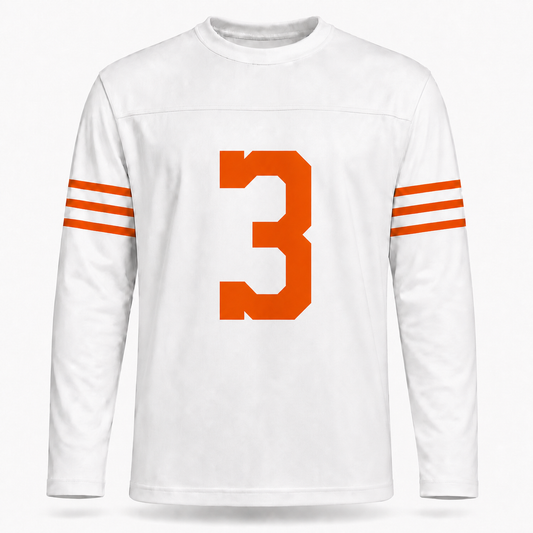
Brooklyn Dodgers AAFC Jersey
Regular price Starting at $121.00 CADRegular priceUnit price perSale price Starting at $121.00 CAD -
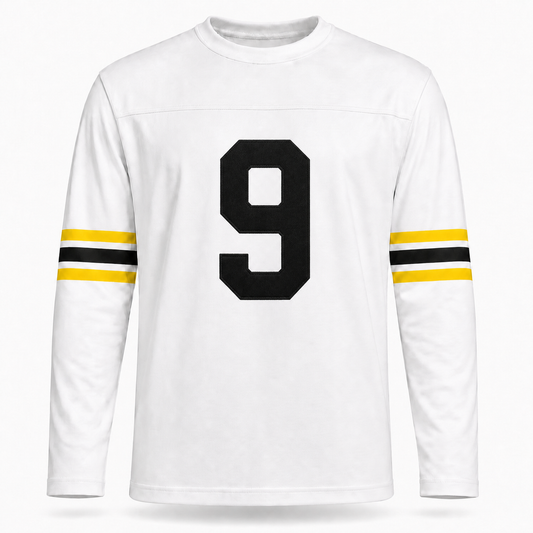
San Francisco AAFC Jersey
Regular price Starting at $121.00 CADRegular priceUnit price perSale price Starting at $121.00 CAD -
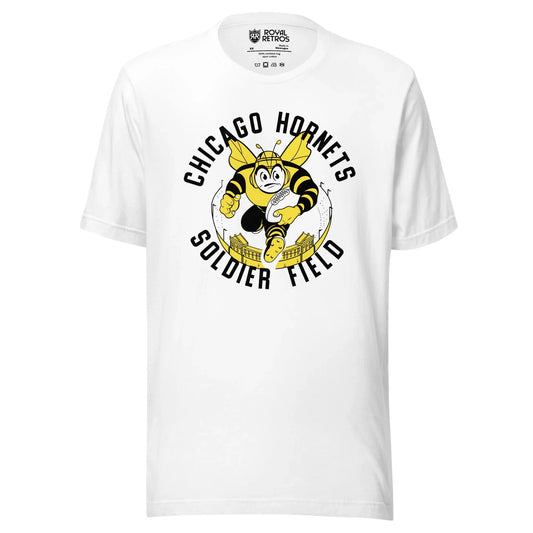
Chicago Hornets T-Shirt
Regular price $43.00 CADRegular priceUnit price perSale price $43.00 CAD -
AAFC Yankees T-Shirt
Regular price $43.00 CADRegular priceUnit price perSale price $43.00 CAD -
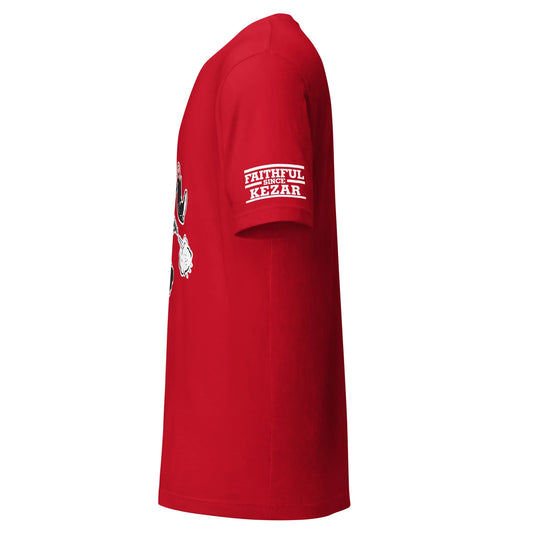
Prospector T-Shirt
Regular price $43.00 CADRegular priceUnit price perSale price $43.00 CAD -
Miami Seahawks T-Shirt
Regular price $43.00 CADRegular priceUnit price perSale price $43.00 CAD -
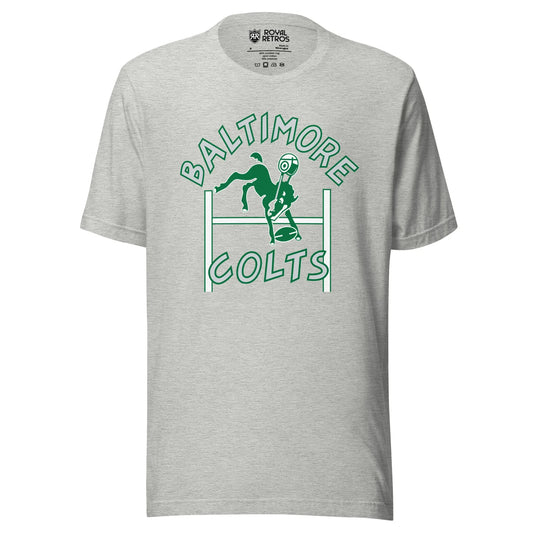
AAFC Baltimore Colts T-Shirt
Regular price $43.00 CADRegular priceUnit price perSale price $43.00 CAD -
Prospector Hoodie
Regular price $85.00 CADRegular priceUnit price perSale price $85.00 CAD -
New York (AAFC) Yankees Football Jersey
Regular price Starting at $121.00 CADRegular priceUnit price perSale price Starting at $121.00 CAD -
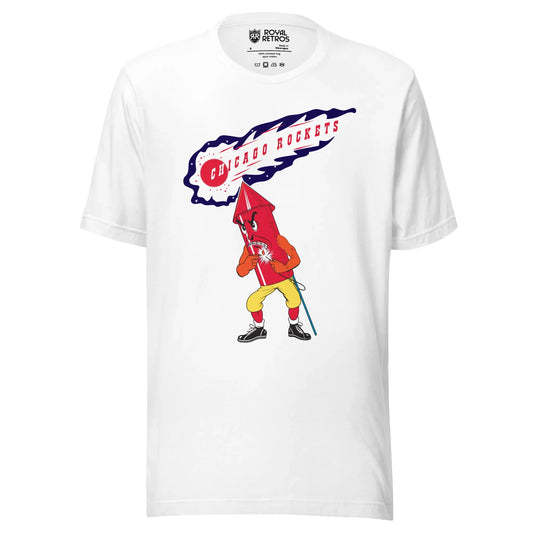
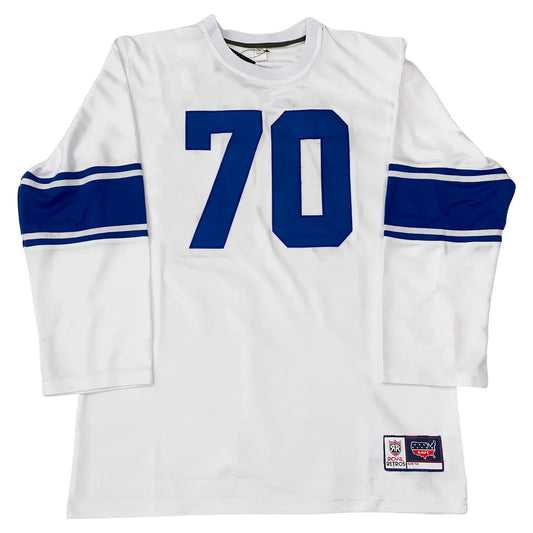
Chicago Rockets/Hornets AAFC Jersey
Regular price Starting at $121.00 CADRegular priceUnit price perSale price Starting at $121.00 CAD -
Baltimore AAFC Colts Jersey
Regular price Starting at $121.00 CADRegular priceUnit price perSale price Starting at $121.00 CAD -
Buffalo AAFC Bisons Jersey
Regular price Starting at $121.00 CADRegular priceUnit price perSale price Starting at $121.00 CAD -
AAFC Champions Jersey
Regular price Starting at $121.00 CADRegular priceUnit price perSale price Starting at $121.00 CAD -
Miami Seahawks AAFC Jersey
Regular price Starting at $121.00 CADRegular priceUnit price perSale price Starting at $121.00 CAD -
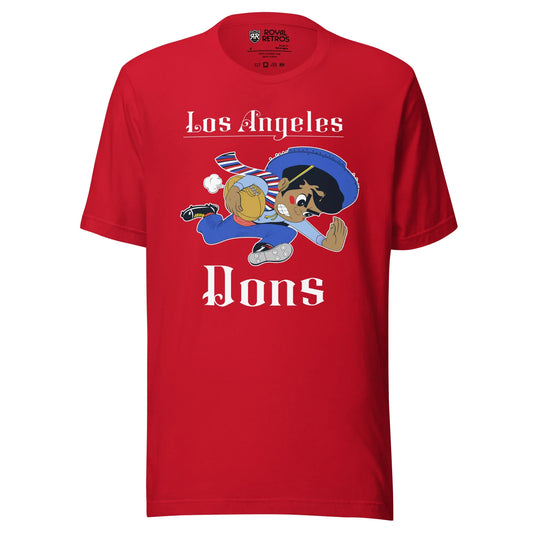
Los Angeles Dons AAFC Jersey
Regular price Starting at $121.00 CADRegular priceUnit price perSale price Starting at $121.00 CAD
The All-America Football Conference Collection — Royal Retros AAFC Fan Shop
Authentic 1946–1949 Throwbacks. Custom Names & Numbers. Sizes S–5XL. Every Original Franchise.
Royal Retros carries the most comprehensive officially licensed AAFC throwback collection on the web — authentic 1946–1949 jerseys, hats, T-shirts, hoodies, and apparel for every original All-America Football Conference franchise. From the dynasty Cleveland AAFC sweater to a rare Miami AAFC throwback (the league's shortest-lived team, 1946 only), every charter and replacement franchise is represented. Custom name and number available on most jerseys. Period-correct twill, mesh, and heavyweight construction in sizes Small through 5XL. If you've spent years searching for AAFC gear and only found generic throwbacks or half-hearted homages, this is the shop you've been looking for.
What You Can Shop in the AAFC Collection
AAFC Jerseys — The crown jewel of the collection. Authentic 1946–1949 replica and custom jerseys for every charter and replacement franchise, in flannel, twill, mesh, and modern reproduction fabrics. Period-correct color palettes, lettering style, sleeve striping, and crest detail throughout. Custom name and number available on most styles — make a 1949 throwback your own. Heavyweight tackle-twill construction on most replica jerseys; sublimated polyester on custom and remix styles.
AAFC Hats — Snapback, fitted, flex, and unstructured hat styles featuring AAFC team logos, period-appropriate colors, and authentic crest detail. From everyday-wearable snapbacks to game-day fitted caps to soft-crown unstructured styles for the more casual look. Hat sizes range from one-size flex to standard fitted-cap sizing.
AAFC T-Shirts — Soft, premium cotton tees representing the great teams, championship moments, and iconic players of the league's four seasons. Pre-shrunk, tagless, sized for comfort. Available in team-color and vintage-graphic styles.
AAFC Hoodies, Sweatshirts, and Crewnecks — Year-round AAFC team apparel for the dedicated throwback fan. Heavyweight cotton blends, period-correct embroidery and screen printing. Pullover hoodies, full-zip hoodies, and crewneck sweatshirts available across the marquee teams.
AAFC Jackets — Where available, premium outerwear honoring 1940s sideline jacket design. Vintage-style satin and wool blends for the most committed AAFC collectors.
Customization — Most AAFC jerseys can be personalized with your name and number. Free customization on eligible items — look for the "Custom" option on each product listing. Note: custom items are final sale.
Sizes — All AAFC apparel ranges from Small through 5XL on virtually every product, with select hat styles in fitted or one-size. Big & tall sizes are not upcharged.
Shop by Marquee AAFC Team
Cleveland AAFC — The most-stocked AAFC franchise in the Royal Retros collection. Authentic Cleveland AAFC jerseys (custom and replica), team-color snapbacks, premium T-shirts, hoodies, and crewnecks. Cleveland was the AAFC's defining dynasty — four straight championships from 1946 through 1949, an undefeated 1948 season, and a 47–4–3 regular-season record across the league's four years. The gear has the same dynasty energy. Shop the Cleveland AAFC collection.
San Francisco AAFC — West Coast football's foundation. Custom and replica jerseys, hats, T-shirts, and apparel honoring the Pacific's flagship pro football franchise from 1946–1949. Heavyweight tackle-twill construction on most jerseys; period-correct red-and-gold color palette. Shop the San Francisco AAFC collection.
Baltimore AAFC — The original Baltimore pro football franchise (1947–1949), distinct from the modern Indianapolis Colts (which trace to a separate 1953 expansion). Limited but authentic — replica jerseys, T-shirts, and apparel honoring the first Baltimore pro football era. Shop the Baltimore AAFC collection.
New York AAFC — Yankee Stadium pro football. The AAFC's New York franchise played its home games in Yankee Stadium and reached the AAFC Championship Game in two of the league's four seasons. Authentic 1946–1949 throwback jerseys, hats, and apparel. Shop the New York AAFC collection.
Buffalo AAFC — Bisons (1946) → Bills (1947–1949). The original Buffalo Bills name lives in this collection — and we mean the AAFC original, not the modern AFL franchise. Custom and replica jerseys, hats, T-shirts. Shop the Buffalo AAFC collection.
Plus rare-team coverage: Brooklyn AAFC (Brooklyn Dodgers football), Chicago AAFC (Rockets / Hornets), Los Angeles Dons, and the ultra-rare Miami AAFC (Seahawks, 1946 only — the league's shortest-lived franchise). If a team played in the AAFC, we carry their gear.
Why Royal Retros Is the Home of AAFC Throwback Gear
Royal Retros built its reputation on going deeper than any other retailer into the leagues that mainstream sports stores have forgotten — and the AAFC is one of the most important of those leagues. Here's what sets our AAFC collection apart at retail:
- Every original AAFC franchise represented. Cleveland, San Francisco, Baltimore, New York, Buffalo, Brooklyn, Los Angeles, Chicago, and Miami — every charter and replacement franchise has a place in the collection. No other retailer comes close to this breadth.
- Authentic AAFC-era design. Our jerseys reproduce the colors, lettering, and design details of 1946–1949 game-worn uniforms. We don't modernize the look. We honor the period.
- Officially licensed throwback gear. Every product is produced under proper licensing for the AAFC era.
- Free customization on most jerseys. Add your name and number at no extra cost on eligible items.
- Sizes Small through 5XL. AAFC fandom isn't size-restricted, and our pricing isn't size-tiered.
- Rare-team coverage. The Miami Seahawks lasted one season. The Brooklyn Dodgers football team folded mid-league. The original Baltimore Colts existed for three AAFC seasons and one NFL season before disappearing entirely. We carry gear for all of them. If you want the deep cuts of professional football history, this is the only place to find them.
Quick Buying Questions
What sizes do AAFC jerseys come in?
Small through 5XL on virtually every jersey style. Hats are typically one-size-fits-most (snapback / flex) or fitted in standard cap sizes. We don't upcharge for big & tall sizes.
Can I add my name and number to an AAFC jersey?
Yes — most styles offer free customization. Look for the "Custom" option on the product listing. Note: custom items are final sale and made to order, so allow 7–10 business days for production before shipping.
What materials are AAFC jerseys made from?
Heavyweight tackle-twill on most replica jerseys, sublimated polyester on custom and remix styles, and authentic period-correct flannel on select limited-edition pieces. T-shirts are premium pre-shrunk cotton or cotton blends. Hoodies and sweatshirts are heavyweight cotton blends with embroidered or screen-printed team graphics.
Are these officially licensed?
Yes — every product in the AAFC collection is produced under proper AAFC-era licensing. The history is authentic, and the products honor it.
How accurate is the design?
Color palettes, lettering style, sleeve striping, and crest detail are all reproduced to match 1946–1949 game-worn uniforms wherever historical reference imagery exists. Where original imagery is incomplete (especially for short-lived teams like the 1946 Miami Seahawks), we work from period-correct references and verified team-color records.
How fast does it ship and what's the return policy?
Standard products ship within 3–5 business days. Custom items (those with personalized name/number) are made to order and ship within 7–10 business days. Custom items are final sale. Standard items follow our return policy — see /pages/returns for details.
What Was the All-America Football Conference?
The All-America Football Conference was a major professional football league that operated in the United States from 1946 through 1949. It was founded in 1944 by Arch Ward, the legendary Chicago Tribune sports editor who had previously created baseball's All-Star Game and college football's College All-Star Game. Ward saw an opportunity in the post-World War II sports boom and assembled a group of wealthy owners willing to challenge the NFL head-on with a parallel league of comparable quality.
The AAFC was not a minor league or a developmental circuit. It paid major-league salaries, signed major-league talent — including 40 players who had served in World War II and were returning to professional sports — and played in major-league markets, several of which the NFL had ignored entirely. By its second season, the league was outdrawing the NFL in attendance per game. By its third, it was producing some of the highest-quality football the country had ever seen. The AAFC was, in every sense that matters, a major league.
What ended the AAFC was not failure on the field. It was the mismatch between the league's competitive ceiling and its competitive floor. While the Cleveland Browns established a dynasty that overwhelmed the rest of the AAFC, several smaller-market franchises struggled to fill seats against teams that couldn't beat them. After four seasons, the league negotiated a merger with the NFL — and three of its franchises crossed over, carrying the AAFC's legacy directly into the NFL's record books.
The History of the AAFC — A Complete Overview
The Founding (1944–1945). Arch Ward announced the formation of the AAFC in June 1944, while World War II was still being fought and the NFL was operating with manpower-depleted rosters. Ward's pitch was straightforward: the country was about to be flooded with returning servicemen who wanted to play professional football, the NFL had long ignored major American cities like Cleveland, San Francisco, Los Angeles, Miami, Buffalo, and Baltimore, and there was room in the postwar economy for a second major football league. By the end of 1945, Ward had assembled eight charter franchises and signed enough talent to launch the league for the 1946 season.
The 1946 Season — The Browns Begin. The AAFC opened play in September 1946 with eight teams: the Cleveland Browns, San Francisco 49ers, Los Angeles Dons, Chicago Rockets, Buffalo Bisons, Brooklyn Dodgers, Miami Seahawks, and New York Yankees. From the very first game, one team stood apart. The Cleveland Browns, named for and coached by Paul Brown, won their first regular-season game 44–0 and never looked back. They finished 12–2 in the regular season and defeated the New York Yankees 14–9 in the inaugural AAFC Championship Game. The Browns also became one of the first integrated teams in modern professional football when fullback Marion Motley and lineman Bill Willis joined the roster — playing the same season that Kenny Washington and Woody Strode integrated the NFL with the Los Angeles Rams. The Miami Seahawks, plagued by financial problems, folded after the season and would be replaced for 1947 by the Baltimore Colts.
The 1947 Season — The Yankees Return, the Browns Repeat. The Buffalo Bisons rebranded as the Buffalo Bills, the Baltimore Colts replaced the folded Miami Seahawks, and the league settled into a more stable eight-team alignment. The New York Yankees, led by quarterback Spec Sanders — who set a professional football single-season rushing record of 1,432 yards that would stand for two decades — dominated the Eastern Division. But the Browns were still the Browns. Cleveland went 12–1–1 in the regular season and faced New York again in the championship, this time winning 14–3 at Yankee Stadium. Otto Graham, Marion Motley, Mac Speedie, Dante Lavelli, and Lou Groza were now established as the most fearsome offensive core in professional football.
The 1948 Season — Perfection in Cleveland. The 1948 Cleveland Browns delivered one of the greatest seasons any professional football team has ever played. They went 14–0 in the regular season — the first undefeated, untied season in modern pro football history — and then crushed the Buffalo Bills 49–7 in the AAFC Championship Game to finish 15–0. Otto Graham threw for 25 touchdowns. Marion Motley led the league in rushing. The Browns scored at will and surrendered points only grudgingly. The 1948 Browns are still cited by football historians as one of the most complete teams of any era, and their undefeated season predated the Miami Dolphins' 1972 perfect season by 24 years. The rest of the AAFC, meanwhile, was struggling. Several franchises were losing money; attendance gaps between the marquee teams and the bottom of the standings were widening; and the NFL, watching from the sidelines, sensed an opening.
The 1949 Season — The Final Year. Knowing this would likely be the AAFC's last season, the league consolidated to seven teams — the Brooklyn Dodgers and New York Yankees merged into the Brooklyn-New York Yankees, and the Chicago Rockets rebranded as the Chicago Hornets. A single-division format replaced the two-division structure, with the top four teams advancing to a playoff. The Browns, predictably, finished first. They beat the Buffalo Bills in the semifinal and then defeated the San Francisco 49ers 21–7 in the final AAFC Championship Game on December 11, 1949 — Cleveland's fourth straight AAFC title in the league's four-year existence. By the time the trophy was lifted, merger negotiations between the AAFC and NFL were already in their final stages.
The Merger and Aftermath (1950). On December 9, 1949 — two days before the final AAFC Championship — the NFL and AAFC announced a merger. Three AAFC franchises were absorbed into the NFL for the 1950 season: the Cleveland Browns, the San Francisco 49ers, and the Baltimore Colts. The remaining AAFC teams folded, with their player rosters distributed among NFL clubs through a special draft. The skeptics insisted that even the best AAFC teams would be exposed by NFL competition. The Browns answered them in week one of the 1950 season by defeating the defending NFL champion Philadelphia Eagles 35–10, and went on to win the 1950 NFL Championship in their first NFL season — beating the Los Angeles Rams 30–28 in one of the great title games in league history. The AAFC was gone, but its dynasty had simply changed addresses.
The Greatest Teams of the AAFC — A Closer Look
Cleveland Browns. The single most successful franchise in the history of any American football league relative to its years of existence. The Cleveland Browns won every AAFC Championship from 1946 through 1949, posted a regular-season record of 47–4–3 across four seasons, went undefeated and untied through the entire 1948 calendar year, and then transitioned into the NFL in 1950 and immediately won the NFL Championship. The Browns of this era featured Paul Brown as head coach, Otto Graham at quarterback, Marion Motley at fullback, Bill Willis on the line, Lou Groza at tackle and kicker, and Dante Lavelli and Mac Speedie at receiver — a roster that produced six Pro Football Hall of Famers from the AAFC years alone. The Browns invented the modern messenger-guard system, refined the screen pass, and pioneered the use of game film as a coaching tool.
San Francisco 49ers. The AAFC brought professional football to the West Coast, and the San Francisco 49ers were the league's flagship franchise on the Pacific. Owned by the Morabito family and coached by Buck Shaw, the 49ers played in front of some of the largest crowds in professional football history at Kezar Stadium, regularly drawing over 50,000 fans for league games. Quarterback Frankie Albert ran one of the most innovative offenses in the AAFC, mixing the T-formation with the bootleg and play-action sequences that would later become NFL staples. The 49ers finished second to the Browns in three of the AAFC's four seasons and reached the 1949 AAFC Championship Game, the league's final title contest. Joe Perry, who debuted in 1948, would go on to become the first NFL player to rush for 1,000 yards in consecutive seasons.
Baltimore Colts (Original). The original Baltimore Colts entered the AAFC in 1947 as replacement for the folded Miami Seahawks and quickly became one of the league's most enthusiastic markets. Baltimore had hungered for professional football for years, and the Colts answered with passionate fan support — even when the team itself struggled to compete with the Browns and 49ers. The Colts crossed over to the NFL with the 1950 merger but folded after a single 1–11 season in 1950. The original Colts franchise should not be confused with the modern Indianapolis Colts, which trace their lineage to a separate Baltimore expansion team founded in 1953. The 1947–1950 Colts are a distinct historical franchise.
The Rest of the AAFC — Eight Cities, Four Seasons
- New York Yankees. Owned by Dan Topping (also the owner of MLB's Yankees), the AAFC's New York Yankees played in Yankee Stadium and reached the AAFC Championship Game in both 1946 and 1947. Quarterback Spec Sanders set a professional football single-season rushing record of 1,432 yards in 1947 that stood until the NFL's 14-game era.
- Buffalo Bisons / Bills. Originally the Buffalo Bisons in 1946, the franchise rebranded as the Buffalo Bills in 1947 and reached the 1948 AAFC Championship Game (where they were defeated by the undefeated Browns). The "Bills" name was revived 13 years later for the AFL franchise that became the modern team — a direct nod to the AAFC original.
- Brooklyn Dodgers. The AAFC's Brooklyn franchise, sharing a name and city with baseball's Dodgers, struggled financially through three seasons before merging with the New York Yankees in 1949.
- Los Angeles Dons. The AAFC's Los Angeles franchise, with entertainer Don Ameche among its part-owners and a nickname drawn from Spanish-colonial Los Angeles tradition, brought big-time professional football to Southern California in direct competition with the NFL's Rams.
- Chicago Rockets / Hornets. The Chicago Rockets, rebranded as the Chicago Hornets for 1949, competed in the same market as the NFL's Bears and Cardinals — a market that perhaps couldn't sustain three professional football franchises. The team posted a losing record in every AAFC season but produced some memorable individual seasons.
- Miami Seahawks. The shortest-lived AAFC franchise, the Miami Seahawks lasted only the 1946 season before folding due to financial problems. They were replaced for 1947 by the Baltimore Colts. Authentic 1946 Seahawks gear is among the rarest AAFC apparel in the collection.
The Legends of the AAFC — Players Who Defined the League
Otto Graham. The greatest quarterback of the AAFC era and one of the greatest of any era. Graham led the Cleveland Browns to all four AAFC Championships, won three more NFL Championships after the merger, and ended his career having played in the championship game of his league in every single one of his ten professional seasons — an accomplishment no other quarterback in football history can match. Graham's career touchdown-to-interception ratio, completion percentage, and championship rate were all record-setting. He was inducted into the Pro Football Hall of Fame in 1965.
Paul Brown. The most influential coach in professional football history. Paul Brown invented or popularized nearly every coaching technique that defines the modern game: the use of full-time assistant coaches, classroom-style chalk talks, intelligence testing of players, the use of radio communication from coach to quarterback, the modern playbook, the draw play, the screen pass, the use of film study, the practice schedule, and the year-round front-office structure. The Cleveland Browns are named for him. He later founded the Cincinnati Bengals. Brown's coaching tree includes Don Shula, Chuck Noll, Bill Walsh, and through them virtually every successful NFL coach of the past sixty years.
Marion Motley. The greatest fullback of the AAFC era and one of the most important figures in the integration of professional football. Motley joined the Cleveland Browns in 1946 alongside Bill Willis, the same season Kenny Washington and Woody Strode integrated the NFL — making 1946 the year the modern color line in professional football came down. Motley led the AAFC in rushing in 1948 and was an All-AAFC selection in all four of the league's seasons. He was inducted into the Pro Football Hall of Fame in 1968.
Bill Willis. The first Black professional football player of the modern era, signed by the Cleveland Browns in 1946 — technically before Marion Motley joined the same team — and one of the most dominant defensive linemen of the AAFC era. Willis was selected as an All-AAFC player in all four seasons and continued his Hall of Fame career with the Browns in the NFL after the merger. His combination of speed and strength helped pioneer the modern middle-guard position. He was inducted into the Pro Football Hall of Fame in 1977.
Frankie Albert. The San Francisco 49ers' quarterback and one of the most innovative offensive players of his generation. Albert was a master of the bootleg, the play-action pass, and the misdirection running game, and he ran the West Coast's first elite professional football offense. After his playing career, Albert served as the 49ers' head coach in the late 1950s.
Spec Sanders. The New York Yankees' star halfback and the AAFC's most prolific runner. In 1947 Sanders rushed for 1,432 yards in a 14-game season — a per-game pace that still ranks among the best in professional football history. He led the Yankees to two consecutive AAFC Championship Games in 1946 and 1947.
Buddy Young. One of the AAFC's most electrifying speed players, Buddy Young played for the New York Yankees and was among the league's top-tier kick returners and receivers. After the AAFC folded he played for the original Baltimore Colts in the NFL and then for the Dallas Texans, becoming one of the most accomplished Black skill-position players of his era.
Y.A. Tittle. The future Pro Football Hall of Fame quarterback began his professional career with the original Baltimore Colts in the AAFC's 1948 season. Tittle would go on to a 17-season professional career, four NFL Championship Game appearances, and induction into the Pro Football Hall of Fame in 1971 — but the AAFC was where it all started.
Lou Groza, Dante Lavelli, Mac Speedie. Three of the most decorated Cleveland Browns of the AAFC era. Lou "The Toe" Groza was a tackle and the Browns' kicker, eventually inducted into the Pro Football Hall of Fame as a kicker in 1974. Dante Lavelli and Mac Speedie formed one of the great receiving duos of the late 1940s, with Speedie leading the AAFC in receiving in three of the league's four seasons and Lavelli ranking among the best clutch receivers in football history. Lavelli was inducted into the Pro Football Hall of Fame in 1975.
The AAFC's NFL Legacy — How a Four-Year League Reshaped Pro Football
When the AAFC merged with the NFL after the 1949 season, three franchises crossed over: the Cleveland Browns, the San Francisco 49ers, and the original Baltimore Colts. The doubters in the NFL insisted that even the AAFC's best teams would be exposed once they faced "real" competition. They could not have been more wrong.
The Cleveland Browns won the 1950 NFL Championship in their very first NFL season, defeating the Los Angeles Rams 30–28 in one of the most thrilling title games in league history. They reached the NFL Championship Game in each of their first six NFL seasons (1950 through 1955), winning three of them. Otto Graham finished his career with seven combined AAFC and NFL championships in ten seasons. Paul Brown's coaching system became the template every NFL franchise tried to copy. The Browns of the early NFL era were, if anything, an even more dominant franchise than the Browns of the AAFC era.
The San Francisco 49ers settled into the NFL as a perennial contender. They never won an NFL Championship in the league's pre-Super Bowl era but established themselves as one of the league's most stable and respected franchises. The 49ers' AAFC origin story made them, and continues to make them, the only major American professional sports franchise on the West Coast that has been continuously operating in the same city since the 1940s.
The original Baltimore Colts had a much shorter NFL run. The franchise went 1–11 in 1950 and folded after the season. The current Indianapolis Colts trace their lineage to a separate Baltimore expansion franchise founded in 1953 — they are not the same organization as the AAFC-era Colts. But the original Colts mattered: they planted professional football in Baltimore, and the city's hunger for the sport survived the franchise's collapse, paving the way for the 1953 expansion that would eventually become the Colts of Johnny Unitas and beyond.
Beyond the surviving franchises, the AAFC's influence on the NFL was absorbed through hundreds of players who joined NFL rosters after the 1949 merger and through coaching ideas that quickly spread league-wide. The AAFC's geographic reach also forced the NFL to expand westward, opening cities like San Francisco and Dallas that had been outside the league's footprint. In every sense that matters, the modern NFL is the AAFC's continuation as much as it is the NFL's.
The Cultural Legacy of the AAFC
The All-America Football Conference deserves a place in the conversation alongside the NFL when football historians talk about the founding of the modern game. It opened West Coast football. It accelerated integration. It produced the Cleveland Browns dynasty, the offensive innovations of Paul Brown, and the championship lineage of Otto Graham. It put pro football in Baltimore, San Francisco, and Los Angeles, where the sport had previously had a fragmented or absent presence. And when it ended, it didn't disappear — it folded into the NFL and made the NFL stronger.
Wearing AAFC throwback gear is an act of honoring that history. It says you know that the Browns weren't always an NFL franchise. It says you know there was a Baltimore Colts before the Indianapolis Colts. It says you understand that Otto Graham's championship streak began in a league most people no longer remember. It says you respect the four-year run of the most dominant team in pro football history. The AAFC was real, it mattered, and Royal Retros is here to make sure no fan who wants to celebrate it has to settle for a generic throwback shirt or a half-hearted homage. Authentic. Period-correct. Every team. That's the AAFC collection.
More Frequently Asked Questions About the AAFC
What was the All-America Football Conference?
The All-America Football Conference (AAFC) was a major professional football league that operated from 1946 through 1949. It was founded by Arch Ward, the longtime Chicago Tribune sports editor, as a parallel major league to the NFL. The AAFC played four full seasons before merging with the NFL after 1949. Three AAFC franchises — the Cleveland Browns, the San Francisco 49ers, and the original Baltimore Colts — joined the NFL as part of the merger.
When did the AAFC operate?
The AAFC played four regular seasons: 1946, 1947, 1948, and 1949. The league was first announced in June 1944, organized in 1945, and began play in September 1946. The final AAFC Championship Game was played on December 11, 1949, two days after the NFL-AAFC merger had been announced.
Who won the AAFC Championships?
The Cleveland Browns won every AAFC Championship: 1946 (defeating the New York Yankees 14–9), 1947 (defeating the New York Yankees 14–3), 1948 (defeating the Buffalo Bills 49–7 to complete a 15–0 undefeated season), and 1949 (defeating the San Francisco 49ers 21–7). No other team in the AAFC's four-year existence won a championship. The Browns then transitioned to the NFL in 1950 and won the NFL Championship in their first NFL season.
Which AAFC teams joined the NFL?
Three AAFC franchises joined the NFL as part of the 1949 merger: the Cleveland Browns, the San Francisco 49ers, and the original Baltimore Colts. The Cleveland Browns and San Francisco 49ers continue to operate today as longstanding NFL franchises with continuous lineage to their AAFC origins. The original Baltimore Colts folded after the 1950 NFL season; the modern Indianapolis Colts trace to a separate 1953 Baltimore expansion franchise and are not the same organization.
Why is the AAFC important to football history?
The AAFC is important for several reasons. It produced the most dominant short-run dynasty in professional football history (the 1946–1949 Cleveland Browns). It integrated alongside the NFL in 1946 with Marion Motley and Bill Willis, helping bring down the modern color line in professional football. It introduced or accelerated the use of West Coast and Sun Belt cities in major-league American football. And it produced the coaching and offensive systems — through Paul Brown and his coaching tree — that would shape the NFL for decades to come.
Was Marion Motley really one of the first Black players in modern pro football?
Yes — and the timing matters. Marion Motley and Bill Willis joined the Cleveland Browns of the AAFC in 1946. The same year, Kenny Washington and Woody Strode joined the Los Angeles Rams of the NFL. The 1946 season is the year the modern color line in professional football came down, and the AAFC and NFL shared in that history simultaneously. Jackie Robinson would integrate Major League Baseball the following year, in 1947. Motley and Willis are both enshrined in the Pro Football Hall of Fame.
What is the difference between the original Baltimore Colts and today's Indianapolis Colts?
The original Baltimore Colts played in the AAFC from 1947 through 1949, joined the NFL in the 1950 merger, went 1–11, and folded after a single NFL season. The modern Indianapolis Colts trace their lineage to a separate franchise: a Dallas Texans team relocated to Baltimore as the (new) Baltimore Colts in 1953, then moved to Indianapolis in 1984. The two organizations share a city name and a nickname but are distinct franchises. AAFC-era Baltimore Colts gear represents the original 1947–1949 organization.
Shop by Team — The Complete AAFC Collection
Browse the AAFC collection by team. Every charter and replacement AAFC franchise is represented in the collection:
- Baltimore AAFC (Original Colts, 1947–1949)
- Brooklyn AAFC (Brooklyn Dodgers, 1946–1948; Brooklyn-New York Yankees, 1949)
- Buffalo AAFC (Buffalo Bisons 1946; Buffalo Bills 1947–1949)
- Chicago AAFC (Chicago Rockets 1946–1948; Chicago Hornets 1949)
- Cleveland AAFC (Cleveland Browns, 1946–1949)
- Los Angeles AAFC (Los Angeles Dons, 1946–1949)
- Miami AAFC (Miami Seahawks, 1946 only)
- New York AAFC (New York Yankees, 1946–1948; Brooklyn-New York Yankees, 1949)
- San Francisco AAFC (San Francisco 49ers, 1946–1949)
New AAFC products and team designs are added regularly. The collection is always growing — because the AAFC's history is too important to ever be fully told in a single throwback line.
The All-America Football Conference at Royal Retros — Authentic 1946–1949 Throwbacks. Custom Names & Numbers. Sizes S–5XL. Every Original Franchise.