




-
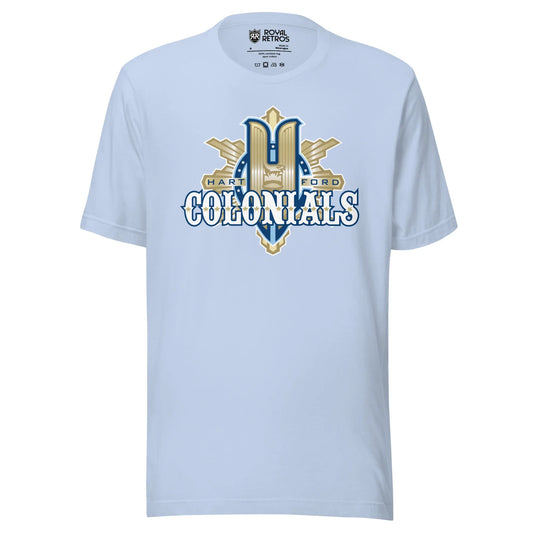
Hartford Colonials T-Shirt
Regular price $29.99 USDRegular priceUnit price per -
-
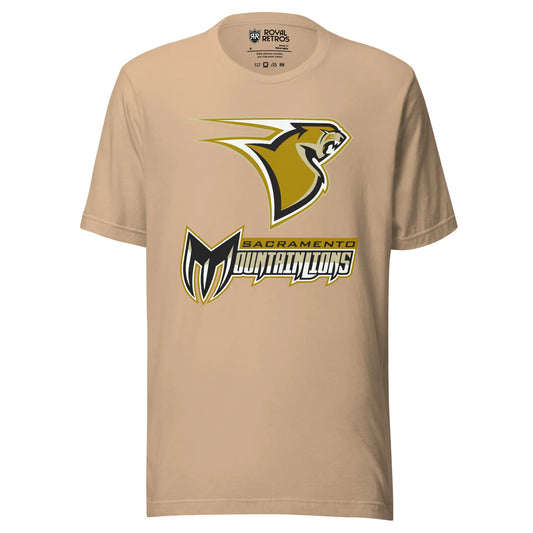
Sacramento Mountain Lions T-Shirt
Regular price $29.99 USDRegular priceUnit price per -
-
CUSTOM
Omaha Nighthawks Jersey
Regular price Starting at $84.99 USDRegular priceUnit price per -
-
-
-
Virginia Destroyers T-Shirt
Regular price $29.99 USDRegular priceUnit price per -
-
Omaha Nighthawks T-Shirt
Regular price $29.99 USDRegular priceUnit price per -
-
CUSTOM
Florida Tuskers Jersey
Regular price Starting at $84.99 USDRegular priceUnit price per -
-
CUSTOM
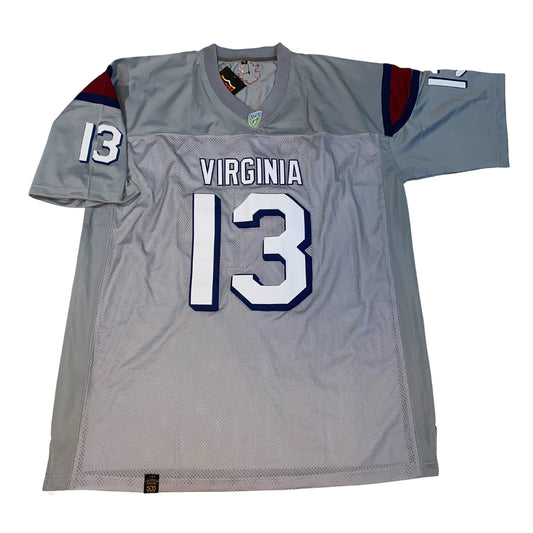
Virginia Destroyers Jersey
Regular price Starting at $84.99 USDRegular priceUnit price per -
-
New York Sentinels Mini Helmet
Regular price $54.99 USDRegular priceUnit price per -
Hartford Colonials Mini Helmet
Regular price $54.99 USDRegular priceUnit price per -
Las Vegas Locomotives Mini Helmet
Regular price $54.99 USDRegular priceUnit price per -
Sacramento Mountain Lions Mini Helmet
Regular price $54.99 USDRegular priceUnit price per -
CUSTOM
Sacramento Mountain Lions Jersey
Regular price Starting at $84.99 USDRegular priceUnit price per -
Omaha Nighthawks Mini Helmet
Regular price $54.99 USDRegular priceUnit price per









Recently Viewed
The Original UFL Collection (2009–2012) — Royal Retros United Football League Throwbacks
Tribute Throwbacks from the Original United Football League, 2009–2012. Custom Names & Numbers. Sizes S–5XL. Locomotives, Tuskers, Destroyers, Nighthawks, Mountain Lions, Colonials.
This is the original United Football League — the fall league that played from 2009 to 2012, not the spring league that carries the same three letters today. Royal Retros carries ten in-stock jerseys and tees for it: four custom tackle-twill jerseys at $84.99 for the Florida Tuskers, Virginia Destroyers, Omaha Nighthawks and Sacramento Mountain Lions, and six T-shirts at $29.99 covering those four plus the two-time champion Las Vegas Locomotives and the Hartford Colonials. Jerseys carry free custom name and number. Sizes Small through 5XL across the board, with no big & tall upcharge. This league lasted four autumns, burned through more than $100 million, produced three championship games and then stopped mid-season on a Saturday in October 2012 and never came back. Almost nobody makes gear for it. We do.
What You Can Shop in the Original UFL Collection
Original UFL Jerseys — 4 in stock, $84.99. Built on our custom football program with sewn-on tackle-twill numbers and lettering rather than screen print or heat-pressed vinyl. The range covers the Florida Tuskers, the Orlando-based team that went 6–0 in the league's first regular season and lost both of the first two title games; the Virginia Destroyers, the 2011 champions and the only team other than Las Vegas to win this league; the Omaha Nighthawks, the best-supported franchise the UFL ever fielded; and the Sacramento Mountain Lions, the relocated California Redwoods. Heavyweight athletic mesh shell, sewn numerals, full cut. Free custom name and number on every jersey in this collection. Cross-shop the wider custom football jersey catalog.
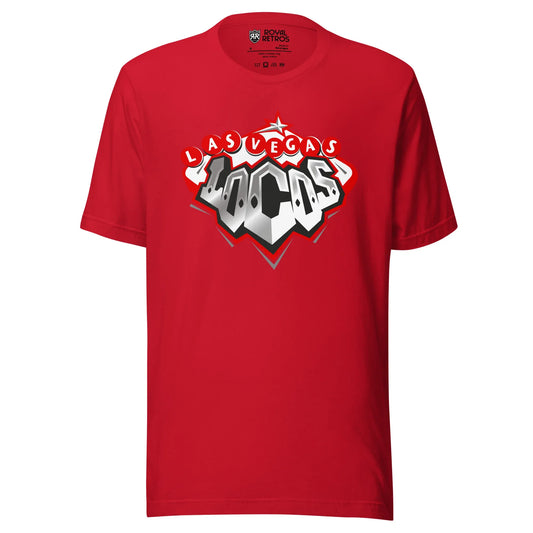
Original UFL T-Shirts — 6 in stock, $29.99. The widest category here and the easiest entry point into a league most retailers pretend never happened. Soft pre-shrunk cotton, S–5XL. The six cover the Las Vegas Locos — the team's own shorthand for the Locomotives, and the only UFL club to appear in all three championship games — plus the Florida Tuskers, Hartford Colonials, Omaha Nighthawks, Sacramento Mountain Lions and Virginia Destroyers. These are the shirts you wear to be asked "wait, what's that?" by somebody who thinks they know football. Browse every football tee we make in Football T-Shirts.
Customization. Free custom name and number on all four original UFL jerseys. This matters more here than almost anywhere else in the store, because this league has no merchandise back-catalog to fall back on — if you want a specific Locomotives or Nighthawks name on a back, customization is the only route to it. Put a 2009 starter on it, put the quarterback you drove to Rosenblatt to watch on it, or put your own name on it. Custom items are made to order and final sale. See the full custom jersey program.
Sizes. Small through 5XL on every jersey and tee in this collection. We do not charge more for big & tall — a 5XL costs exactly what a Medium costs. That has been the policy since day one and it is not changing.
Shop the Original UFL Teams
Las Vegas Locomotives — the dynasty, such as it was. The Locos are the only franchise that played all four UFL seasons, the only one to reach all three championship games, and the winner of the first two. They beat the undefeated Florida Tuskers 20–17 in overtime at Sam Boyd Stadium on November 27, 2009, on a 33-yard field goal, then beat them again 23–20 in Omaha exactly one year later. Jim Fassel, who took the New York Giants to a Super Bowl, coached them for the league's entire existence. When the UFL shut down on October 20, 2012, Las Vegas was undefeated and on course for a fourth final. They never got to play it. Shop the Las Vegas Locos tee at $29.99, and cross-shop the wider Nevada collection.
Florida Tuskers — the best team that never won anything. Orlando's franchise went 6–0 in the 2009 regular season, the only unbeaten regular season in league history, and lost the championship game in overtime. In 2010 they went back to the final and lost that one too, by three. Jay Gruden was hired as head coach and general manager on February 9, 2010, one of several future NFL head coaches this league employed before the NFL got round to it. In January 2011 the franchise ceased operations in Orlando and its remnants were moved to Virginia Beach. Shop the Florida Tuskers jersey at $84.99 and tee at $29.99, plus the Central Florida collection and the wider Florida collection.
Virginia Destroyers — the only other champion. Built in 2011 out of the relocated Tuskers, coached and general-managed by Marty Schottenheimer, and winners of the 2011 UFL Championship Game 17–3 over the two-time champion Locomotives on October 21, 2011. Safety Aaron Rouse was named game MVP. It was the only professional championship Schottenheimer ever won in a head-coaching career of more than 200 NFL victories — a detail that has outlived the league itself and is the single most-told story about the UFL. The Destroyers are the one team from this league with a dedicated collection page at Royal Retros. Shop the Virginia Destroyers collection — jersey $84.99, tee $29.99 — or the wider Virginia collection.
Omaha Nighthawks — the market that actually showed up. Added as the league's fifth franchise for 2010, and immediately the best-attended team the UFL ever had: four home sellouts, never fewer than 21,000 through the gate at Johnny Rosenblatt Stadium, a total of 91,143 and an average of 22,786 — both all-time league records that no other UFL market came close to. The 2010 roster carried Pro Bowlers Jeff Garcia, Ahman Green and Cato June, plus former Ohio State back Maurice Clarett, and Nebraska's own Eric Crouch joined for 2011 before being injured in the opener. Omaha hosted the 2010 championship game. If any city deserved a league that could stay solvent, it was this one. Shop the Omaha Nighthawks jersey at $84.99 and tee at $29.99.
Sacramento Mountain Lions — the second life of the California Redwoods. The Redwoods played 2009 as a Bay Area franchise with no fixed home, then moved to Sacramento for 2010 and became the Mountain Lions. Dennis Green coached them, and in June 2010 he brought in Daunte Culpepper — his old Minnesota quarterback and comfortably the biggest name ever to sign a UFL contract. Culpepper was UFL Offensive Player of the Week twice that season and retired after it. Sacramento played all three of the league's later seasons. Shop the Sacramento Mountain Lions jersey at $84.99 and tee at $29.99, plus the Sacramento collection.
Hartford Colonials — the shortest story in the league. The 2009 New York Sentinels, an 0–6 team that played out of Hofstra and Giants Stadium, were moved to Hartford for 2010 and renamed. They played one season at Rentschler Field, went 3–5, and were suspended by the league in August 2011 — a month before their third season would have started — when the UFL admitted it could not afford five teams after losing more than $100 million in two years. One season, one uniform, gone. Shop the Hartford Colonials tee at $29.99, plus the wider Connecticut collection.
The teams without gear — yet. The New York Sentinels (2009, 0–6, with four-time All-Pro defensive end Simeon Rice on the roster) and the California Redwoods (2009, 2–4) are both covered in the history below, but neither currently has an in-stock jersey or tee in this collection. If you want either, tell us — demand is genuinely how these get built. Meanwhile the New York collection covers a century of New York teams that no longer exist.
Why Royal Retros for Original UFL Gear
- Almost nobody else carries this league. The original UFL died in 2012 owing money to its own players. There is no league store, no successor merchandising arm, no rights-holder running a heritage program. If you want a Nighthawks jersey or a Colonials tee, this is close to the only place on the open web that makes one.
- Heritage tribute pieces, honestly described. These are tribute throwbacks to a dissolved league. We carry them because the teams mattered to the cities that had them, and we say so plainly rather than dressing a dissolved league up as something it stopped being in 2012.
- Real tackle-twill construction. Sewn-on twill numbers and lettering, not heat-pressed vinyl. The difference shows the first time you wash it, and it shows in photographs.
- Free customization on every jersey here. Name and number at no extra cost. Most retailers charge $30–$50 for this, and for a league with no surviving merchandise catalog it is the only way to get a specific name on a back.
- Sizes S–5XL with no big & tall upcharge. Same price at 5XL as at Medium.
- We keep dead leagues alive on purpose. The original UFL sits alongside the World Football League, the Alliance of American Football, the 1983–85 USFL and every other failed challenger in Spring Football HQ and Legacy Football. Folded is not the same as forgotten.
- We tell you which UFL you are buying. Two completely different leagues have used this name. We run separate collections for each, and we label them.
Quick Buying Questions
Is this the same as the current UFL?
No — these are two entirely different, entirely unrelated leagues that happen to share a name. This collection is the original United Football League, which played in the fall, from 2009 to 2012, with the Las Vegas Locomotives, Florida Tuskers, New York Sentinels, California Redwoods, Hartford Colonials, Omaha Nighthawks, Sacramento Mountain Lions and Virginia Destroyers. It folded mid-season in October 2012 and never returned. The modern United Football League is a spring league founded in 2024 out of the USFL–XFL merger, with the Birmingham Stallions, DC Defenders, St. Louis Battlehawks and Dallas Renegades. There is no shared ownership, no shared franchise, no shared history and no continuity of any kind between them — the modern league simply reused an available name. If you are looking for Stallions, Battlehawks or Defenders gear, you want the modern UFL collection instead.
How do I tell which UFL a team belongs to?
Season and team name. If the team is a Locomotive, Tusker, Sentinel, Redwood, Colonial, Nighthawk, Mountain Lion or Destroyer, and the season is 2009, 2010, 2011 or 2012, it is the original league and it is on this page. If the team is a Stallion, Defender, Battlehawk, Renegade, Panther, Showboat, Brahma, Roughneck, Gambler, King, Aviator or Storm, and the season is 2024 or later, it is the modern league and it is in the modern UFL collection.
What sizes does original UFL gear come in?
Small through 5XL on every jersey and tee in this collection. We do not upcharge for big & tall sizes — a 5XL costs the same as a Medium.
Can I add my own name and number to an original UFL jersey?
Yes, free, on all four jerseys here. Look for the "Custom" option on the product page. Because this league has no surviving merchandise program, customization is the only way to get a specific 2009–2012 name on a jersey back. Custom items are made to order and final sale.
How much do original UFL jerseys and tees cost?
Jerseys are $84.99 — Florida Tuskers, Virginia Destroyers, Omaha Nighthawks and Sacramento Mountain Lions. T-shirts are $29.99 — those four plus Las Vegas Locos and Hartford Colonials. Free custom name and number on the jerseys.
What are these jerseys made from?
Heavyweight athletic mesh and poly-twill shells with sewn-on tackle-twill numbers and lettering. T-shirts are soft pre-shrunk cotton. No heat-pressed vinyl on the jerseys.
How fast does it ship, and what is the return policy?
Stock items ship within 3–5 business days. Custom jerseys are sewn to order and typically ship within 7–10 business days. Custom and made-to-order items are final sale. Standard items follow our return policy at /pages/returns.
Which teams do you carry gear for?
Six of the eight franchises that ever wore an original UFL uniform: Las Vegas Locomotives, Florida Tuskers, Virginia Destroyers, Omaha Nighthawks, Sacramento Mountain Lions and Hartford Colonials. The New York Sentinels and California Redwoods are not currently in stock.
What Was the Original UFL?
The United Football League was a professional American football league that played four autumn seasons between 2009 and 2012. Its founding premise was unusual and, in hindsight, close to suicidal: rather than dodge the National Football League by playing in the spring, as almost every challenger since 1983 had done, the UFL would play in the fall, head to head with the NFL and college football, and win by going where the NFL was not — major markets with no professional franchise of their own.
That was the pitch. Las Vegas, Orlando, Sacramento, Omaha, Hartford, Norfolk–Virginia Beach: cities with stadiums, television households and no Sunday team. The league would sign recognizable players who had fallen off NFL rosters, hire former NFL head coaches with real name recognition, charge affordable ticket prices, and become both a viable spectator product and an obvious talent pipeline. Commissioner Michael Huyghue, a former Jacksonville Jaguars executive, argued publicly that the UFL could function as the professional development league the NFL had never built for itself.
The money behind it was serious. The league was founded by Bill Hambrecht, the San Francisco investment banker who had previously been a minority partner in the USFL's Oakland Invaders, and Tim Armstrong, then a senior Google executive and later chief executive of AOL. Mark Cuban was publicly attached as a prospective owner in the early planning and backed out before the first season kicked off. Original plans called for an eight-team launch in 2008. What actually took the field, in October 2009, was four teams.
The Coaches — The League's Best Idea
If the UFL got one thing unambiguously right, it was the sideline. For a start-up paying modest salaries, the roster of head coaches it assembled was extraordinary, and it is the reason the league got as much press as it did.
The 2009 "Premiere Season" launched with four head coaches, every one of them a former NFL head coach or coordinator: Jim Fassel at Las Vegas, who had taken the Giants to Super Bowl XXXV; Jim Haslett at Florida, a former NFL Coach of the Year in New Orleans; Dennis Green at California, who had won four division titles in Minnesota; and Ted Cottrell at New York, a long-serving NFL defensive coordinator.
The names kept coming. Jay Gruden was hired as Florida's head coach and general manager on February 9, 2010, four years before he became head coach of Washington. Marty Schottenheimer, 200-game winner and one of the most successful regular-season head coaches in NFL history, came out of retirement to run the Virginia Destroyers in 2011. Dennis Green stayed through the Sacramento years. Fassel coached the Locomotives for the entire life of the league.
By the third season, four of the five franchises the UFL had ever fielded were being led by men who had held NFL head-coaching jobs. That is not a normal ratio for a start-up league, and it produced the sport's neatest and most durable footnote: Marty Schottenheimer, who never reached a Super Bowl in 21 NFL seasons, finally won a professional championship — in the UFL, in Virginia Beach, in October 2011, at the age of 68.
Season by Season, 2009–2012
2009 — The Premiere Season. Four teams, six games each, played October into November: the Florida Tuskers in Orlando, the Las Vegas Locomotives, the California Redwoods in the Bay Area and the New York Sentinels, who split home dates between Hofstra and Giants Stadium. Florida was the class of the league at 6–0. Las Vegas finished 4–2, California 2–4 and New York 0–6. The championship game was played at Sam Boyd Stadium outside Las Vegas on Friday, November 27, 2009, and the Locomotives beat the unbeaten Tuskers 20–17 in overtime on a 33-yard field goal. Games aired on Versus and HDNet. The reviews were better than anyone expected.
2010 — Five teams, and Omaha. The league restructured its geography. The winless New York Sentinels were moved to Hartford and rebranded the Hartford Colonials, playing at Rentschler Field. The California Redwoods moved inland to become the Sacramento Mountain Lions. And the UFL added its only true expansion franchise, the Omaha Nighthawks, at Johnny Rosenblatt Stadium — which promptly became the best story the league ever had, selling out all four home dates and averaging 22,786 fans, more than double what most UFL markets managed. Daunte Culpepper signed with Sacramento in June and won UFL Offensive Player of the Week twice. Omaha's roster carried Jeff Garcia, Ahman Green, Cato June and Maurice Clarett. The championship game returned to Omaha on Saturday, November 27, 2010, and the Locomotives beat the Tuskers again, 23–20, for a second straight title. On the field, this was the league's high-water mark. Off it, the losses were already past $100 million.
2011 — The year it visibly broke. Nothing about the third season went to plan. In January the Florida Tuskers ceased operations in Orlando and were relocated to Virginia Beach to become the Virginia Destroyers under Marty Schottenheimer. In August, a month before kickoff, the league suspended the Hartford Colonials outright — the commissioner said plainly that after losing more than $100 million in two years, the UFL could not afford five teams, and Rentschler Field's rent made Hartford the one to go. Four teams played a shortened schedule that was then shortened again: the regular season was abandoned after the games of October 15 with two weeks still to run, and the championship game was pulled forward to October 21, 2011. Virginia, 3–1, beat two-time champion Las Vegas 17–3, with strong safety Aaron Rouse taking game MVP. Schottenheimer had his ring. The league had roughly a year left.
2012 — Four weeks and out. For the first and only time, the UFL entered a season with no expansion, no contraction and no relocation: the same four teams — Las Vegas, Sacramento, Omaha and Virginia — returning for a planned eight-game schedule beginning September 26, 2012. Commissioner Michael Huyghue had resigned on January 31. A new television deal with CBS Sports Network was announced on July 26, on terms where the league paid all its own production costs and received no rights fee. Players went unpaid. Attendance collapsed. On October 20, 2012, after four weeks and eight games, the UFL suspended operations — with the Las Vegas Locomotives undefeated and, for the third time in four years, the best team in the league. The season was never completed.
How It Ended — The Money
The UFL did not fold quietly at the end of a season. It stopped in the middle of one, and the wreckage was public.
The structural problem was there from the start. The league owned all or part of every franchise, which meant every loss in every market landed on the same balance sheet with no independent owners to absorb it. It launched into the teeth of the Great Recession, in 2009, selling a brand-new fall football product against the NFL. It never secured a broadcast contract that paid it money — Versus and HDNet in 2009 and 2010, Comcast SportsNet in 2011, and by 2012 a CBS Sports Network arrangement in which the UFL covered production and collected no rights fee. Television was a marketing expense, not revenue.
By the end of the 2010 season the league had lost more than $100 million. The 2011 season was truncated twice and cost it Hartford. The 2012 season stopped after four weeks with players' wages outstanding. That winter, players began filing legal action to recover unpaid salaries; seventy-eight players filed suit against the league in the District Court of Clark County, Nevada. The UFL said publicly that it intended to resume the suspended season in spring 2013. It never assembled the agreements to do so, and no UFL game was ever played again.
What it left behind was a genuine competitive product that a handful of cities loved — Omaha above all — and a cautionary tale about the one thing every failed challenger league has in common: not talent, not coaching, not fan interest, but the gap between the cost of professional football and what anyone is willing to pay to watch it in a market the NFL has already decided not to enter.
Who Played in the Original UFL
The headliners. Quarterback Daunte Culpepper, a three-time Pro Bowler in Minnesota, was the biggest name to sign a UFL contract, joining Sacramento in 2010 to be reunited with Dennis Green and taking two Offensive Player of the Week awards before retiring. Four-time All-Pro defensive end Simeon Rice, a Super Bowl winner with Tampa Bay, signed with the New York Sentinels for the 2009 season. Omaha's 2010 roster alone carried Pro Bowl quarterback Jeff Garcia, Pro Bowl running back Ahman Green and Super Bowl-winning linebacker Cato June, alongside former Ohio State back Maurice Clarett. Nebraska's Heisman-winning quarterback Eric Crouch joined the Nighthawks for 2011 and was injured in the opener. Quarterback Josh Johnson, who would go on to play for more NFL franchises than almost anyone in the modern era, took snaps for Sacramento in 2012.
The pipeline that half-worked. The UFL's stated purpose was to move players onto NFL rosters, and it did — dozens of UFL players signed NFL contracts during and after the league's four seasons, and coaches and assistants from UFL sidelines turned up across the NFL for the next decade. Jay Gruden went from the Florida Tuskers to an NFL head-coaching job in Washington. The problem was never that the football was bad. It was that a league playing in the fall, against the NFL, with no rights fee and no independent owners, could not survive being good.
None of these names appear on our jerseys by default — you choose. Every original UFL jersey here includes free custom name and number, so you can put a 2009 starter, a 2011 champion, or your own name on the back.
Where the Original UFL Sits in the Long Line of Challengers
Nobody has ever built a second professional football league in the United States that lasted. The original UFL is one entry in a long, well-documented list, and Royal Retros carries most of the others.
World Football League (1974–1975). The first modern challenger, and — like the UFL — a fall league taking the NFL on directly. Gary Davidson launched it with twelve teams and a strategy of raiding NFL stars, most famously signing Larry Csonka, Jim Kiick and Paul Warfield away from Miami. It folded twelve games into its second season amid unpaid players and inflated attendance figures. The parallels with 2012 are uncomfortable and exact. Shop the World Football League collection.
United States Football League (1983–1985). The most successful challenger anyone has mounted, and the one that established spring football as the sensible alternative strategy. Three seasons, real stars — Herschel Walker, Jim Kelly, Steve Young, Reggie White, Doug Flutie — and then a vote to move to the fall and sue the NFL for antitrust. It won the case and was awarded one dollar. It never played again. Shop the USFL collection.
XFL, first version (2001). One season, enormous opening ratings, catastrophic ratings by week four, canceled after the championship game. It gave broadcast football the skycam and the mic'd-up sideline. Shop the XFL collection.
United Football League (2009–2012). This league. The last serious attempt to challenge the NFL in the fall rather than the spring, and the proof of why nobody has tried it since.
Alliance of American Football (2019). A spring league with strong reviews and a promising debut audience that ran out of money and shut down eight weeks into a ten-week season. Players found out it was over when they were told to leave the hotel. Shop the AAF collection.
XFL, second version (2020), and the USFL revival (2022–2023). Two more spring attempts, running simultaneously by 2022, competing for the same players and the same audience. In 2024 they merged rather than both die. Shop the XFL collection or the USFL collection.
United Football League (2024–present). The merged spring league that took this league's name a dozen years after it stopped playing. Entirely separate, entirely unrelated. Shop the modern UFL collection.
Cross-shop the whole lineage in Spring Football HQ, and the older, regional and indoor professional game in Legacy Football, Minor League Football, Other Football, the Arena Football League, af2 and AF1.
More Frequently Asked Questions About the Original UFL
What years did the original UFL play?
Four fall seasons: 2009, 2010, 2011 and 2012. The 2011 season was cut short by two weeks and the 2012 season was abandoned after four weeks. The league suspended operations on October 20, 2012, and never resumed.
Who founded the original UFL?
Bill Hambrecht, a San Francisco investment banker and former minority partner in the USFL's Oakland Invaders, and Tim Armstrong, then a senior Google executive and later chief executive of AOL. Mark Cuban was publicly linked as a prospective owner in the planning stage but withdrew before the first season.
Why did the original UFL play in the fall instead of the spring?
By design. The league's premise was that it did not need to avoid the NFL calendar if it avoided NFL cities — that major markets without a professional team would support fall football of their own. Las Vegas, Orlando, Sacramento, Omaha, Hartford and Virginia Beach were all chosen on that logic. It is the last time a serious challenger league tried it.
How many teams were in the original UFL?
Four in 2009, five in 2010, four in 2011 and four in 2012. Eight distinct identities existed across the four seasons: Las Vegas Locomotives, Florida Tuskers, New York Sentinels, California Redwoods, Hartford Colonials, Omaha Nighthawks, Sacramento Mountain Lions and Virginia Destroyers — though the Sentinels became the Colonials, the Redwoods became the Mountain Lions and the Tuskers became the Destroyers, so only six ever existed at one time.
Who won the original UFL championships?
The Las Vegas Locomotives won 2009 (20–17 over Florida in overtime, November 27, 2009) and 2010 (23–20 over Florida, November 27, 2010). The Virginia Destroyers won 2011 (17–3 over Las Vegas, October 21, 2011). No championship was played in 2012 because the season was abandoned.
Why did the original UFL fold?
Money. The league owned all or part of every franchise, so every market's losses hit one balance sheet. It launched into the Great Recession, played opposite the NFL and college football, and never secured a television contract that paid it a rights fee. Losses passed $100 million within two years, Hartford was suspended in 2011 to cut costs, and by October 2012 players were going unpaid. Seventy-eight players later filed suit in Clark County, Nevada, to recover wages.
Was the original UFL any good?
Genuinely, yes. Four of five franchises were coached by former NFL head coaches. Rosters carried Pro Bowlers and Super Bowl winners. Omaha averaged 22,786 fans a game in 2010. The football was not the problem.
Is the original UFL related to the USFL or the XFL?
No. It shares no ownership, franchises or history with either. The modern UFL is the merged successor to the USFL and XFL; the 2009–2012 league predates all of that and is unconnected to it. The only genuine link is a personal one: founder Bill Hambrecht had been a minority partner in the original USFL's Oakland Invaders in the 1980s.
Where did the original UFL teams play?
Las Vegas at Sam Boyd Stadium; Florida in Orlando; New York at Hofstra and Giants Stadium; California across Bay Area venues; Hartford at Rentschler Field; Omaha at Johnny Rosenblatt Stadium; Sacramento in Sacramento; Virginia at the Virginia Beach Sportsplex.
Which original UFL market drew the best crowds?
Omaha, without argument. The Nighthawks sold out all four home games in 2010, never drew under 21,000, and posted a season total of 91,143 and an average of 22,786 — both all-time UFL records. The 2010 championship game was played there.
How many original UFL products does Royal Retros carry?
Ten in-stock jerseys and tees: four custom jerseys at $84.99 for the Florida Tuskers, Virginia Destroyers, Omaha Nighthawks and Sacramento Mountain Lions, and six T-shirts at $29.99 for those four plus the Las Vegas Locos and Hartford Colonials. All S–5XL, free custom name and number on the jerseys.
Do you carry the modern UFL as well?
Yes, in a completely separate collection. Shop the modern UFL (2024–present) for Birmingham Stallions, DC Defenders, St. Louis Battlehawks and Dallas Renegades gear.
Shop by Original UFL Team and Region
- Virginia Destroyers — 2011 UFL champions, 17–3 over Las Vegas. Marty Schottenheimer's only professional title. Jersey $84.99, tee $29.99. The one original UFL franchise with its own collection page.
- Virginia — The Destroyers and the rest of Virginia's sports history.
- Nevada — Home of the Locomotives, the only two-time UFL champion and the only club to play all four seasons.
- Central Florida — Orlando's Tuskers, 6–0 in 2009 and beaten in both of the first two finals.
- Florida — The wider Florida collection, Tuskers included.
- Sacramento — The Mountain Lions, formerly the California Redwoods, coached by Dennis Green.
- Connecticut — The Hartford Colonials, one season at Rentschler Field before the league suspended them.
- New York — The 0–6 Sentinels of 2009, and a century of other New York teams that no longer exist.
Shop Related Football Collections
- UFL (2024–present) — The modern spring league. Same three letters, completely different league.
- Spring Football HQ — Every challenger league we carry in one place.
- USFL — The 1983–85 original and the 2022–23 revival.
- XFL — 2001, 2020 and 2023.
- Alliance of American Football — The 2019 league that lasted eight weeks.
- World Football League — The 1974–75 fall challenger the UFL unknowingly re-ran.
- Legacy Football — AAFC, regional and historic professional football.
- Minor League Football — The developmental and regional game.
- Other Football — Everything else that ever put eleven men on a field for money.
- Arena Football League — The indoor game, 1987 onward.
- af2 — The Arena Football League's developmental circuit.
- AF1 — The modern arena circuit.
- Custom Football Jerseys — The full football jersey catalog, S–5XL, free name and number on most.
- Football T-Shirts — Every football tee we make.
- Custom Jerseys — The full customization program across every sport.
The Original UFL at Royal Retros — 2009–2012 Tribute Throwbacks. Locomotives, Tuskers, Destroyers, Nighthawks. Jerseys $84.99, Tees $29.99. Custom Names & Numbers. Sizes S–5XL.