



-
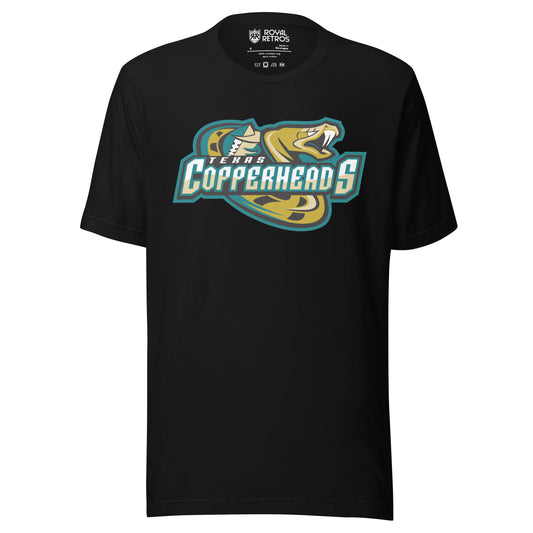
Texas Copperheads T-Shirt
Regular price $44.00 CADRegular priceUnit price per -



Recently Viewed
The af2 Collection — Royal Retros Arena Football 2 Fan Shop
af2 Indoor Football Throwbacks, 2000–2009. 15 Deep-Cut Teams. All Tees $29.99. Sizes S–5XL.
Royal Retros carries 15 af2 throwback T-shirts covering fifteen franchises from arena football's forgotten developmental league — the small-market indoor circuit that ran ten seasons from 2000 through 2009 and then vanished so completely that most of these teams have no merchandise anywhere else on the internet. San Diego Riptide. Roanoke Steam. Mohegan Wolves. Cincinnati Jungle Kats. Oklahoma City Yard Dawgz. Mobile Wizards, who went 0–16 and never won a game. Mississippi Headhunters, who never played one. Every tee is $29.99, printed on 4.2 oz combed and ring-spun cotton and stocked S–5XL in four colors. If you went to these games — in Uncasville, in Peoria, in North Little Rock, in Honolulu — this is the only place that remembers.
What You Can Shop in the af2 Collection
af2 T-Shirts — 15 teams, $29.99 each. Every product here is a T-shirt, and every one is a different af2 franchise. This is a one-tee-per-team collection by design: fifteen separate teams rather than fifteen variations on one popular team.
The fabric. 4.2 oz combed and ring-spun cotton — 100% cotton on solids, a 52/48 cotton-poly blend on Athletic Heather. Extra soft, lightweight, pre-shrunk and side-seamed, so the shirt holds its shape through the wash instead of twisting the way cheap tubular tees do.
The fit. Unisex classic fit — a true-to-size everyday cut, neither slim nor boxy. If you are between sizes, size down.
The colors and sizes. Black, True Royal, Athletic Heather and White, in S, M, L, XL, 2XL, 3XL, 4XL and 5XL — the full run, on every single team, at the same $29.99. No big & tall upcharge. A 5XL Roanoke Steam tee costs exactly what a Small costs.
The graphics. Printed team graphics drawn from each franchise's period identity — vintage-inspired reproductions produced as historical tributes.
Looking for af2 jerseys, hats or hoodies? We do not carry them — af2 is T-shirt-only here, and we would rather tell you that than sell you a search result. For jerseys see Custom Football Jerseys or Replica Football Jerseys; for headwear Snapback Hats, Unstructured Hats and Trucker Hats; for fleece and outerwear Hoodies and Jackets. For arena football teams that do have full apparel ranges, start at Arena Football HQ.
Marquee af2 Teams at Royal Retros
Every af2 tee costs the same and every team gets one shirt, so "marquee" here means the franchises with the biggest stories.
Oklahoma City Yard Dawgz — the collection's flagship, and the best roster af2 ever assembled. Their 2004 debut led the entire league in attendance and Barry Switzer was a founding co-owner. $29.99, S–5XL.
Peoria Pirates — the only af2 champion in this collection, winners of ArenaCup III in 2002, and later owned by the man who invented arena football. $29.99, S–5XL.
Arkansas Twisters — one of the very few franchises to play all ten af2 seasons, from the charter year to the last. $29.99, S–5XL.
San Diego Riptide — Southern California's only real taste of the developmental indoor game, four seasons at the San Diego Sports Arena. Shop the Riptide tee alongside the rest of our San Diego collection.
Albany Conquest — eight seasons in upstate New York, arriving at 13–3 and winning af2 Coach of the Year in their expansion season. Shop the Conquest tee alongside the rest of our New York collection.
Hawaiian Islanders — three seasons in Honolulu, owned by New York Islanders billionaire Charles Wang, who named the team after his hockey club. Shop the Islanders tee alongside the rest of our Hawaii collection.
Why Royal Retros Is the Home of af2 Throwback Gear
- Deep-cut coverage nobody else attempts. Fifteen af2 franchises, most of which lasted one to four seasons and none of which have an active licensor or a surviving team store. The Cincinnati Swarm existed for one season. The Mobile Wizards existed for one season and lost all sixteen games.
- One tee per team, not fifteen tees for one team. Built for breadth. If you want a specific obscure indoor football club, the odds are far better here than at a general retro shop.
- Full size run at one price. S–5XL on every team, $29.99 across the board, no big & tall upcharge.
- Real garment spec, not a mystery blank. 4.2 oz combed and ring-spun cotton, pre-shrunk, side-seamed, unisex classic fit, four colorways.
- Researched, not generated. Every team carries its actual years of operation, home arena and league context. We do not invent franchise history to fill space, and where the record is genuinely unclear we leave it out.
- Part of a real arena football catalog. af2 sits inside Arena Football HQ alongside the Arena Football League and AF1.
- Fast, honest fulfillment. Ships in 3–5 business days.
Quick Buying Questions
What sizes do af2 T-shirts come in?
S, M, L, XL, 2XL, 3XL, 4XL and 5XL — the complete run on every team in the collection. There is no big & tall upcharge; every size is $29.99.
Can I add a custom name and number to an af2 shirt?
No. The af2 collection is printed-graphic T-shirts only, with Color and Size options and no personalization. If you want a custom name and number, shop Custom Football Jerseys instead — that is where our customizable football product lives.
What are af2 T-shirts made from, and what colors?
4.2 oz combed and ring-spun cotton — 100% cotton on solids, a 52/48 cotton-poly blend on Athletic Heather. Extra soft, lightweight, pre-shrunk, side-seamed, printed graphics, unisex classic fit. Colors are Black, True Royal, Athletic Heather and White on every team.
How fast do they ship, and what is the return policy?
Standard products ship within 3–5 business days. Standard items follow our return policy at /pages/returns. Because af2 tees carry no personalization, they are standard returnable items rather than final-sale custom orders.
Do you carry af2 jerseys or hats?
Not at present. af2 is a T-shirt collection at Royal Retros. For football jerseys see Custom Football Jerseys and Replica Football Jerseys; for headwear see Snapback Hats and Unstructured Hats. The Arena Football League and AF1 collections carry broader product ranges.
Which af2 teams do you actually stock?
Fifteen. The full alphabetized roster, with each team's years and history, is further down this page.
What Was af2?
af2 — styled lowercase, and often written arenafootball2 — was the Arena Football League's own developmental indoor football league. It was founded in 1999 and played ten seasons, from 2000 through 2009. The AFL owned 50.1% of it.
The purpose was twofold and only half of it was sporting. The AFL had spent the 1990s proving that indoor football worked in big buildings in big cities, and by the end of the decade a cluster of rival small-market circuits had noticed. af2 was the AFL's move to occupy the mid-size and small markets itself before somebody else did, and to do it while founder Jim Foster's patent on the rebound net still had eight years left to run. That patent, upheld in court in 1998, expired on March 27, 2007. af2 was built inside that window.
The league did not so much launch as acquire. A startup called the Xtreme Football League — Birmingham-based, and nothing whatsoever to do with the WWE and NBC venture of the same name — had lined up nine teams using ECHL owners and ECHL arenas for a 2000 debut. On July 29, 1999, af2 bought the entire league and all nine of its teams. The Xtreme Football League never played a down. Its clubs — Birmingham Steeldogs, Carolina Rhinos, Tennessee Valley Vipers, Jacksonville Tomcats, Norfolk Nighthawks, Pensacola Barracudas, Richmond Speed, Roanoke Steam and Tallahassee Thunder — became af2's founding core, which is why the Roanoke Steam tee in this collection is a charter-franchise shirt.
af2 took the field in March 2000 with fifteen teams and drew more than 868,000 fans in its first season, averaging over 7,200 a game. Jerry Kurz ran the league as president for all ten years and went on to become AFL Commissioner from 2010 to 2014.
af2 was not a farm system — and that was deliberate
This is the single most misunderstood thing about the league. af2 is routinely described as the AFL's minor league, and structurally it was the junior partner, but there were no affiliations between af2 clubs and AFL clubs. No parent teams. No assignments. No call-ups.
Foster was explicit about why: affiliation would have let AFL teams stash players in af2 and pull them back at will. So af2 players signed one-year, sixteen-week contracts and became free agents at expiry. A player could move up — many did — but at the end of his season, on his own merits, not mid-season on somebody else's say-so.
The practical effect was that af2 teams were real teams with real continuity, not holding pens. It is why franchises like the Tulsa Talons and Quad City Steamwheelers built genuine dynasties, and why a fan in Peoria or Huntsville could follow a roster across seasons.
How the Indoor Game Worked
af2 played the same arena football the AFL played, and the format is worth explaining, because it is not a gimmick — it is a genuinely different sport that happens to share a ball with football.
- The field is a hockey rink. 200 feet by 85 feet, yielding a 50-yard field of play with 8-yard end zones instead of the outdoor game's 10 — a little over a quarter the area of an NFL field. In hockey-configured buildings the end zones are often rounded.
- Eight men a side, not eleven, from an active roster of roughly twenty.
- The rebound nets. The defining feature, and the one thing Foster's patent actually protected. Nets flank each goalpost — 32 feet high, 30 feet wide, hung from the rafters. Missed field goals and kickoffs rebound off them and stay live for either team to recover, and a pass off the net stays live until it hits the ground, so catches and interceptions off the net are legal. It is why arena football looks like pinball.
- Narrow, high goalposts. Nine feet wide with a 15-foot crossbar, versus 18.5 feet and 10 feet outdoors. Field goals are hard; extra points are not automatic.
- Punting is illegal. There is no punt. Fourth down is a decision every single time, which is why scores run into the sixties and seventies.
- The walls are in play. Padded barriers over the hockey dasher boards line the sidelines and a ball off the wall is live. One foot in bounds completes a catch.
Ironman football, and what af2 kept
Classic arena football was ironman football: players went both ways. Everyone played offense and defense except the quarterback, the kicker, one Offensive Specialist and two Defensive Specialists, with substitution capped at one per position per quarter. It produced a specific kind of athlete — the receiver/defensive back who caught touchdowns in one series and covered them in the next.
The AFL abandoned ironman play for 2007 and moved to free substitution. af2 kept honoring two-way football regardless, still naming a dedicated Ironman MVP in 2007 and 2008 after its parent had walked away from the concept. Kevin Harvey of the Richmond Speed won Ironman of the Year in back-to-back seasons in 2001 and 2002 — the only repeat winner on record.
What af2 players were paid
This is the number that explains the league. af2 players earned $200 to $500 per game, plus a minimum $50 bonus for a win. Sixteen weeks of that, and then free agency. By 2009 the AFL's minimum was $31,000 a season and its average around $80,000. Meanwhile af2 franchise fees ran $600,000 to $1 million — a serious sum for a level of football that paid its athletes a few hundred dollars a night, and one reason so many of these clubs lasted a single season.
Nobody played af2 for money. They played it because it was professional football, in a real arena, in front of several thousand people, with a real chance of being seen.
The Small-Market Map
af2's markets ran from Milwaukee at roughly 1.74 million people down to Albany, Georgia at about 164,000. Almost every one already had minor-league hockey, because that is where the buildings were: an af2 team needed a rink-sized floor, and ECHL and UHL cities had exactly that. The league ran two conferences, American and National, with three deliberately uneven divisions each, drawn on geography to hold travel costs down.
It grew fast and shrank fast. Fifteen teams in 2000, twenty-eight in 2001, a peak of thirty-four in 2002, then down to twenty by 2005 and back up to twenty-nine by 2008. Expansion outran the business: a great many of those clubs were financially unstable from the day they were awarded.
What that churn produced, incidentally, is this collection: upwards of fifty distinct franchises across ten seasons, most for only two or three years apiece, in cities that had never had professional football and mostly never got it again. Mobile. Roanoke. New Haven. Uncasville. Honolulu. Corpus Christi. These are not markets with merchandise histories.
The ArenaCup — All Ten, in Full
af2's championship game was the ArenaCup, contested once a season from 2000 to 2009. ArenaCup I through ArenaCup X, no gaps, no renumbering. Here is the complete list.
- ArenaCup I — August 10, 2000. Quad City Steamwheelers 68, Tennessee Valley Vipers 59, at Moline, Illinois.
- ArenaCup II — August 10, 2001. Quad City Steamwheelers 55, Richmond Speed 51, at Moline.
- ArenaCup III — August 23, 2002. Peoria Pirates 65, Florida Firecats 47, at Carver Arena, Peoria.
- ArenaCup IV — August 23, 2003. Tulsa Talons 58, Macon Knights 40, at Tulsa.
- ArenaCup V — August 27, 2004. Florida Firecats 39, Peoria Pirates 26, at Estero, Florida.
- ArenaCup VI — August 27, 2005. Memphis Xplorers 63, Louisville Fire 41, at Bossier City, Louisiana.
- ArenaCup VII — August 26, 2006. Spokane Shock 57, Green Bay Blizzard 34, at San Juan, Puerto Rico.
- ArenaCup VIII — August 25, 2007. Tulsa Talons 73, Wilkes-Barre/Scranton Pioneers 66, at Bossier City.
- ArenaCup IX — August 25, 2008. Tennessee Valley Vipers 56, Spokane Shock 55 in overtime, at Spokane.
- ArenaCup X — August 22, 2009. Spokane Shock 74, Wilkes-Barre/Scranton Pioneers 27, near Las Vegas.
Seven different champions in ten years. Of the fifteen teams in this collection, only the Peoria Pirates ever won one — and Peoria are the only team here to have reached the game at all.
The venue rule tracks the league's ambitions. ArenaCups I through V went to the higher seed's home floor; ArenaCup VI in 2005 was the first at a neutral site, the same year the AFL took its ArenaBowl neutral to Las Vegas. Neutral sites ran through ArenaCup VIII, then af2 reverted to the higher-seed format for 2008 after neutral-site attendance disappointed — which is how ArenaCup IX ended up in Spokane.
Television tells the same story in reverse. TNN carried ArenaCups I and II nationally; then the AFL moved to NBC and af2 lost its national window, dropping to a single Tulsa station in 2003 and, in 2004, no television coverage at all for ArenaCup V. Fox Sports Net picked it up in 2005 and Comcast SportsNet from 2006, and the 2008 season streamed online. A league that opened on national cable closed on a webstream.
ArenaCup IX — the greatest game af2 ever played
On August 25, 2008 the Tennessee Valley Vipers went into Spokane as a 10–6 third seed — the weakest record of any af2 champion — and beat the Shock 56–55 in overtime. It was the first ArenaCup to go to overtime, the first time the road team won the title game, and the largest crowd for any af2 championship at 10,662. The Vipers had knocked out both conference number-one seeds to get there, which no af2 team had ever done.
And they did it with their backup. Starting quarterback Kevin Eakin was helped off four plays in. In came Tony Colston, who had attempted four passes all season. He threw seven touchdown passes, ran for two more, and converted the game-winning two-point conversion in overtime. In 2009 the league voted it the greatest game in af2 history.
The Fifteen Franchises in This Collection
These are teams with no Wikipedia infobox worth trusting, no active licensor and, in several cases, no surviving photographs of the uniform. Here is what is actually documented about each.
The charter club: Roanoke Steam (2000–2002)
One of the nine Xtreme Football League clubs af2 bought in July 1999, and therefore a founding franchise. Roanoke Civic Center, Virginia. The name was unveiled on December 10, 1999 at the Virginia Museum of Transportation — a steam-locomotive city naming a football team Steam. Pete Shaw coached the first season, Steven Jerry the next two. They went 3–13, 7–9 and 8–8, and never made the playoffs.
Two players are worth knowing. Matt D'Orazio quarterbacked Roanoke in 2001 and went on to be ArenaBowl XX MVP, 2008 AFL MVP and ArenaBowl XXII MVP. And Chris Sanders won af2 Offensive Player of the Week in his first game in 2002, then promptly left to re-sign with the Tennessee Titans — which tells you exactly what af2 was for.
The end was ugly and instructive. In May 2002 the ownership LLC declared Chapter 7 and fired the entire staff; the af2 league office ran the team itself to finish the schedule, then shut it down in late July after a two-month buyer search failed. The turf was sold in 2004 for $45,000.
Albany Conquest / Albany Firebirds (2002–2009)
Eight seasons at the Times Union Center — the Pepsi Arena in period releases, same building — and the longest continuous run in this collection except Arkansas. Records of 13–3, 13–3, 6–10, 4–12, 5–11, 6–10, 5–11 and 7–9: a spectacular start and a long slow fade, with division titles in 2002 and 2003. Ron Selesky won af2 Coach of the Year for the expansion season; Pete Costanza coached 2003 and 2005 to 2007 and is now a six-time Grey Cup champion assistant. Linebacker Alvin Ray Jackson made All-af2 in 2009 and then three First-team All-Arena sides in the AFL.
They renamed themselves the Albany Firebirds for 2009 only, reviving the 1990s AFL identity, after a deal with the local paper and the arena operator brought them back from an expected fold. They never played again.
The team that never played: Mississippi Headhunters
The strangest shirt in the collection, and we are going to be straight about it: the Mississippi Headhunters never played a single game.
The dormant Columbus Wardogs — Columbus, Georgia, not Ohio — were sold in summer 2005 to developer Greg Disotell, relocated to Biloxi and renamed the Headhunters, intending to start play in 2006 at the Mississippi Coast Coliseum. Then Hurricane Katrina came ashore that August and wrecked the building. The franchise moved its plans inland to Pearl, in metro Jackson, announcing 33 acres on I-20 for a 9,000-seat enclosed dome. The funding never materialized and the team folded without ever taking the field.
There is no record, no roster and no result — a shirt for a team that only ever existed on paper and in a hurricane's path.
Cincinnati Swarm (2003) and Cincinnati Jungle Kats (2007)
Cincinnati got two swings at af2 in the same building and missed both.
The Swarm were named in November 2002, played one season in 2003 at U.S. Bank Arena, went 7–9 and were dissolved on January 27, 2004. Chris MacKeown was the only coach who ever took the floor for them — a successor was hired for 2004 and never coached a game. Owner Mark Hamister also owned the AFL's Buffalo Destroyers and af2's Rochester Brigade, and folded both within months. Colors were navy, gold and black; the mascot was a bee called Buzz. The mechanism of death was unusual: the arena operator handled ticket sales and the club handled football only, and when that agreement lapsed the arena had no dates available.
The Jungle Kats arrived four years later in the same building and went 1–15 in 2007, losing the opener 81–21 to Quad City. Tony Missick was the only head coach in team history. The story here is the ownership group: Sam Adams, then a Cincinnati Bengals defensive tackle, Ken Griffey Jr., and Reds medical director Dr. Timothy Kremchek. The name was a Bengals reference crossed with a tribute to the Cincinnati Zoo's tiger conservation program. Adams lost control of the club at the end of 2007.
Connecticut's two-team year: Mohegan Wolves (2002–2003) and New Haven Ninjas (2002)
Connecticut got two af2 franchises in the 2002 expansion wave. They were entirely separate operations and are frequently confused, so: the Mohegan Wolves and the New Haven Ninjas were not the same club and were not related.
The Mohegan Wolves played inside the Mohegan Sun casino resort in Uncasville, in a 7,500-seat configuration. Awarded in July 2001, the name came from a "Name the Team" contest won by a resident of Jewett City. They went 3–13, then 10–6 in 2003 with a first-ever playoff win at Cape Fear. Gary Porter coached 2002, Mark Stoute 2003, with quarterback Matt D'Orazio — the same future AFL MVP who had played Roanoke — taking the 2003 snaps. Mohegan-era colors were metallic blue, silver and gold. And crucially, the Wolves did not fold: they moved. In October 2003 the league approved a relocation to Manchester, New Hampshire, driven by attendance that fell even during the 10–6 season, and the franchise played on as the Manchester Wolves until the league died.
The New Haven Ninjas lasted one season, 2002, at the New Haven Coliseum, going 6–10. The name won a New Haven Register contest in October 2001, beating out Cyclones, Gladiators, Hawkeyes and ShoreDawgs. Rick Buffington coached — an arena football lifer who had led the expansion Albany Firebirds back in 1990. The owners were Charles Wang and Sanjay Kumar of the New York Islanders, running the Ninjas as a companion to Wang's AFL New York Dragons.
They did not fold because of football. In July 2002 the mayor announced the Coliseum would close on September 1. Their final game — a 54–50 win over Rochester on July 27, 2002, before 4,588 — was the last professional team sporting event ever held in the New Haven Coliseum. The building was demolished in January 2007.
Mobile Wizards (2002)
The most complete failure in af2 history, and there is a certain honor in it. Awarded in June 2001 to Mobile businessman Norris Armstrong and his wife Beth, the Wizards played one season at the Mobile Civic Center in Alabama and finished 0–16 — the only team in af2 history never to win a game. Alan Risher coached. They got through four kickers. They replaced two earlier failed indoor teams in the same market, and disbanded after the single season: no relocation, no rename, no wins.
San Diego Riptide (2002–2005)
Four seasons at the San Diego Sports Arena — renamed the iPayOne Center in March 2005, so the final year was played under a different sign. Records of 7–9, 6–10, 8–8 and 5–11 for a lifetime 27–39. Cree Morris coached the first two years, then Mouse Davis — the run-and-shoot architect — in 2004, then Sean Ponder in 2005.
Their one playoff run, in 2002, produced two oddities: they became the first af2 team to win a playoff game with a losing record, beating division champion Bakersfield 40–27, then lost 22–12 to Peoria in what remains the lowest-scoring playoff game in arena football history — absurd in a sport where 60 points is a normal evening.
AFL Hall of Famer George LaFrance was general manager; former Pro Bowl lineman Ed White became club president in late 2004. On October 28, 2005 the team announced it would sit out 2006 while seeking local ownership and "fully intend to again play in 2007." It never came back. Colors were blue and silver.
Texas Copperheads (2007–2008)
Two af2 seasons at the Berry Center in Cypress, Texas, both finishing 2–14, never reaching the playoffs. The club had previously played in the National Indoor Football League as the Katy Copperheads. Bryan Blake coached 2007 and also owned the franchise; Ollie Guidry was hired in September 2007 as, in the club's own words, "the second coach in team history."
The one genuine star was kicker Nick Gatto, All-af2 first team in 2007 — the only Copperhead to win an af2 award that year — leading the league in field goals with 20 of 55, and earning All-af2 honors again in 2008. The Copperheads folded after 2008, a year before the league itself.
Corpus Christi Sharks (2007–2009)
Three seasons at the American Bank Center: 6–10, 7–9, then 2–14 in the league's final year, for a lifetime 15–33 and no playoff appearances. Michael Trigg was the inaugural head coach, having previously won ArenaBowl XV in the AFL at Grand Rapids.
The name to know is offensive tackle Ty Nsekhe, who came through Corpus Christi in af2's last seasons and went on to a long NFL career with the Rams, Washington, Buffalo, Dallas and Indianapolis — one of the clearest af2-to-the-NFL lines in the whole league. The Sharks ceased operations on October 13, 2009, after an ownership search failed.
Oklahoma City Yard Dawgz (2004–2009)
Two details belong in the record beyond the marquee section above. The Yard Dawgz played the Ford Center from 2004 to 2008 and were then pushed out of the building by the arrival of the NBA's Thunder, moving across the street to the Cox Convention Center. And their postseason record is remarkable in its own way: five playoff berths across seven years in two leagues and 0–5 all-time in the playoffs, three of those losses at home to lower seeds. They opened with a win at Tulsa in April 2004 and closed with a loss to Tulsa in July 2010. Colors were black, brick, silver and white; the mascot was Diezel Dawg.
Peoria Pirates (af2 2001–2004, 2008–2009)
The most complicated timeline in the collection. Peoria began in the Indoor Football League in 1999 and won the 2000 Gold Cup after a 14–0 season. They joined af2 for 2001 and stayed through 2004, winning ArenaCup III in 2002 and reaching ArenaCup V in 2004. They then left for United Indoor Football as the Peoria Rough Riders, did not play at all in 2007, and returned to af2 for 2008 and 2009 — technically as a new franchise granted the old name, logo, colors and history.
Bruce Cowdrey coached from the 1999 inception through 2005 and again from 2008 until his dismissal in May 2009; his 2000 IFL team went a perfect 17–0. Receiver Bobby Sippio started his professional career with the 2002 title team, won af2 Ironman of the Year in 2003, and went on to the NFL. Defensive end Odell Willis went from the 2008 Pirates to CFL stardom. The 2002 Pirates are in the Greater Peoria Sports Hall of Fame.
The club folded on September 7, 2009 — one day before af2's own deadline — unable to produce two required $100,000 letters of credit.
Arkansas Twisters (2000–2009)
A charter member that played every single af2 season, in North Little Rock. Their run reads 7–9, 6–10, 11–5, 9–7, 4–12, 5–11, 10–6, 12–4, 11–5, 11–5 — a genuinely strong second half of the decade. John Gregory came out of retirement four games into 2005 and turned them into a 12–4 team by 2007; Chris Siegfried, who had won ArenaCup VII with expansion Spokane, coached 2008 and 2009 and produced a franchise-record seven-game winning streak.
One correction worth making, because the internet gets it wrong constantly: the Arkansas Twisters never played in an ArenaCup. They lost conference championship games in 2003 and 2006 — 52–63 to Tulsa and 30–48 to Spokane. Those were semifinal-round games, not the title game.
The end is a good story. Arkansas signed on as a charter member of the new Arena Football 1 in September 2009, then jumped to the Indoor Football League that November when AF1 split into tiers and put them in a shrinking lower division. But Arena Football 1 owned the "Twisters" name and logo, so the club had to rebrand — a January 2010 fan contest produced the Arkansas Diamonds. The franchise went on to become the Allen Wranglers and then the Texas Revolution before ceasing in 2019.
Hawaiian Islanders (2002–2004)
One more fact belongs on the record, because it is the clearest window into af2's economics anywhere. The Islanders folded in October 2004 after $5.5 million in cumulative losses across three seasons against $651,000 of revenue in 2004. Owner Charles Wang set a September 30, 2004 deadline for $525,000 in corporate commitments toward a 2005 season. It was not met. Colors were red, gold and black.
The 2009 Collapse — What Actually Happened
The standard version of this story is wrong, and it is wrong in a specific way that this collection exists to correct. Here is the actual sequence.
In July 2008 AFL Commissioner David Baker resigned after twelve years. In October the New Orleans VooDoo folded and a $100 million investment was agreed in principle; it never arrived. On December 15, 2008, the AFL canceled its entire 2009 season — only the second North American league ever to cancel a full season, after the 2004–05 NHL.
af2 played anyway. This is the fact that gets lost. af2 ran a complete tenth season in 2009 and crowned a champion — the Spokane Shock beat Wilkes-Barre/Scranton 74–27 in ArenaCup X on August 22, 2009 — months after its parent league had gone dark. Most af2 clubs were reportedly profitable and their owners wanted to keep going.
What killed af2 was the parent company's balance sheet, not its own. On August 4, 2009 the AFL suspended operations indefinitely; creditors moved to force liquidation; Chapter 7 was granted on August 7 and converted to Chapter 11 on August 26, with the AFL owing roughly $14 million. Because the AFL owned 50.1% of af2, af2's minority owners faced being majority-owned by, and exposed to the creditors of, a bankrupt parent. On September 8, 2009, af2 formally disbanded when no owner filed for an eleventh season.
Then came the salvage. On September 28, 2009 a press conference announced Arena Football One, formed by af2's remaining clubs and board plus two former AFL members. On December 7, 2009 a court awarded it all AFL and af2 assets for $6.1 million — including the names and logos of every former AFL and af2 team save one. The ArenaCup trademark came with the package and was promptly retired. On February 17, 2010 AF1 adopted the name "Arena Football League" and relaunched as a single-entity league, the league itself owning the teams.
That asset purchase is why the Arkansas Twisters had to become the Arkansas Diamonds, and why the Amarillo Dusters had to become the Amarillo Venom. The leagues died; the trademarks did not.
Which af2 teams made it to the new AFL
Seven moved up for 2010: Iowa, Milwaukee, Tennessee Valley (renamed Alabama), Oklahoma City, Tulsa, Bossier–Shreveport and Spokane. Kentucky, Tri-Cities and Arkansas had also committed; Kentucky folded, and the other two went to the Indoor Football League instead. Albany sat out 2010 hoping for a 2011 expansion slot that never came.
And the coda: by the end of the 2015 season, not one of those seven af2 promotions was still in the AFL. Oklahoma City folded after 2010, Alabama became the Georgia Force and folded after 2012, Bossier–Shreveport became the New Orleans VooDoo and folded in 2015, Tulsa became the San Antonio Talons and folded after 2014. Iowa and Spokane left for the IFL. The AFL itself filed Chapter 7 and shut down in November 2019.
Where the af2 Players Went
af2 was where you went when you were not quite there yet, or not there any more. Both directions produced real careers.
Going up. Kicker Rob Bironas played the Charleston Swamp Foxes in 2003 and became a Pro Bowl kicker for the Tennessee Titans, holding the NFL record of eight field goals in a game. Shayne Graham kicked for the Richmond Speed in af2's very first season and went on to a fifteen-year NFL career. Long snapper Matt Overton came out of the Tri-Cities Fever and made the Pro Bowl with the Colts. Offensive tackle Ty Nsekhe played Corpus Christi in af2's final season and went on to the Rams, Washington, Buffalo, Dallas and Indianapolis. Guard Kyle DeVan came out of the Boise Burn and started for the Colts. Defensive back Isaiah Trufant played Spokane and reached the Jets, Eagles and Browns. Receiver Bobby Sippio went Peoria, then Greensboro, then the Kansas City Chiefs.
Coming down. Quarterback Cleo Lemon ran the escalator both ways — NFL camps, then the Memphis Xplorers in 2003, then the starting job for the Miami Dolphins in 2007. Former Cowboys and Jets starter Quincy Carter turned up with Bossier–Shreveport in 2007, former Giants quarterback Jared Lorenzen with the Kentucky Horsemen in 2009, and former Lions lineman Kelly Butler with Oklahoma City.
Scale it honestly: af2 sent dozens of players into NFL camps and a genuine handful into real NFL careers. That is a lot for a league that paid $200 a game.
One myth to kill while we are here: Kurt Warner did not come out of af2. He played for the Iowa Barnstormers of the AFL from 1995 to 1997, two years before af2 was even founded. The confusion exists because an af2 team later used the Barnstormers name too.
The Coaches af2 Produced
The coaching pipeline is af2's most underrated legacy.
- Mike Neu — af2 Coach of the Year in the league's first season with the Augusta Stallions, then AFL head coaching jobs, then quarterbacks coach of the New Orleans Saints, then head coach at Ball State from 2016 to 2024. af2 head coach to NFL position coach to FBS head coach is as far as this ladder goes.
- Kevin Guy — af2 head coach at Tennessee Valley and Rio Grande Valley, then head coach of the Arizona Rattlers from 2008 to the present day. An af2 Hall of Fame inductee.
- Adam Shackleford — started as an af2 assistant with the Cincinnati Swarm in 2003, then head coach of the Spokane Shock, winning ArenaCup X in af2's final game.
- Jeff Brohm — coached the af2 Louisville Fire in 2002, and has since been head coach at Western Kentucky, Purdue and Louisville.
- Gary Reasons — two-time Super Bowl champion linebacker with the New York Giants, then head coach of the Oklahoma City Yard Dawgz.
- Mouse Davis — the architect of the run-and-shoot, coaching the San Diego Riptide in 2004.
- Cal Lee — Honolulu high-school coaching institution, head coach of the Hawaiian Islanders.
- Mitch Allner — the only person in af2 history to win a championship as both a player and a head coach.
The af2 Hall of Fame — one class only
af2 announced its inaugural Hall of Fame class in 2009, weeks before the league dissolved. It was also, therefore, its final class: Mitch Allner, Jim "Skip" Foster, Kevin Guy, Rich Ingold, league president Jerry Kurz, owner Dan Newman, receiver Kevin Prentiss, quarterback Matt Sauk and quarterback Craig Strickland — the Oklahoma City passer whose tee is in this collection.
The Afterlife
What replaced af2 was the Indoor Football League, which absorbed former af2 clubs by two routes: some directly in 2010 — Tri-Cities, Arkansas, Green Bay and Amarillo — and others years later after a detour through the relaunched AFL. The Green Bay Blizzard, an af2 club from 2003, is still playing in the IFL today, comfortably the most durable thing the league ever produced.
Everything else is memory and merchandise. Most of these fifteen franchises have been gone for fifteen to twenty-five years. Their arenas have been renamed, resurfaced or, in New Haven's case, demolished outright. There is no rights holder issuing new product, no anniversary program, no throwback night. If you were there — and a few thousand people a night were, in every one of these cities — a T-shirt is what is left.
More Frequently Asked Questions About af2
What did af2 stand for?
af2 was short for arenafootball2 — the Arena Football League's developmental indoor league. It is styled in lowercase. It has nothing to do with the 1960s American Football League.
What years did af2 operate?
It was founded in 1999 and played ten seasons, from 2000 through 2009. The common claim that it started in 1999 refers to the founding, not the first season; no games were played until March 2000.
Was af2 the AFL's minor league?
Structurally yes — the AFL owned 50.1% of af2 — but there were deliberately no team-to-team affiliations. No af2 club was any AFL club's farm team, and no player could be called up mid-season. Players signed one-year, sixteen-week af2 contracts and became free agents at expiry.
What was the ArenaCup?
af2's championship game, played once a season from 2000 to 2009 — ArenaCup I through X. Seven different franchises won it. Quad City, Tulsa and Spokane each won twice.
Did af2 fold when the AFL canceled its 2009 season?
No, and this is the most common error about the league. The AFL canceled its 2009 season on December 15, 2008. af2 played a full tenth season anyway in 2009 and crowned a champion in ArenaCup X on August 22, 2009. af2 disbanded on September 8, 2009, when no owner filed for an eleventh season — a consequence of its bankrupt parent owning a majority stake, not of any failure of its own.
How many teams played in af2?
The league peaked at 34 teams in 2002 and fielded upwards of fifty distinct franchises across its ten seasons, most of them for only two or three years each. That churn is exactly why af2 merchandise is so hard to find.
Which af2 team never won a game?
The Mobile Wizards, who went 0–16 in their only season in 2002 — the only winless team in af2 history. Their tee is in this collection.
Which af2 team never played a game?
The Mississippi Headhunters. The relocated Columbus Wardogs were renamed and moved to Biloxi for 2006, lost their arena to Hurricane Katrina damage, tried and failed to build a new one in Pearl, and folded without ever taking the field.
Who owned af2 teams?
An unusually recognizable list. Charles Wang of the New York Islanders owned both the Hawaiian Islanders and the New Haven Ninjas. Ken Griffey Jr. and Bengals defensive tackle Sam Adams co-owned the Cincinnati Jungle Kats. Barry Switzer was a founding co-owner of the Oklahoma City Yard Dawgz. And Jim Foster, who invented arena football, owned the Quad City Steamwheelers and later the Peoria Pirates.
Shop af2 by Team — All 15, Alphabetized
Every team below has a $29.99 tee in this collection, sized S–5XL in four colorways. Each links to the city or state collection it belongs to, so you can shop the team alongside the rest of that market's history.
- Albany Conquest (2002–2009) — Times Union Center; 13–3 as an expansion team; rebranded Albany Firebirds for 2009. Shop New York.
- Arkansas Twisters (2000–2009) — North Little Rock; all ten af2 seasons; became the Arkansas Diamonds when AF1 kept the name.
- Cincinnati Jungle Kats (2007) — one season, 1–15; co-owned by Ken Griffey Jr. Shop Cincinnati or shop Ohio.
- Cincinnati Swarm (2003) — one season, 7–9, in the same building four years earlier. Shop Cincinnati or shop Ohio.
- Corpus Christi Sharks (2007–2009) — American Bank Center; produced NFL tackle Ty Nsekhe. Shop Texas.
- Hawaiian Islanders (2002–2004) — Honolulu's Blaisdell Center; 10–6 division winners in 2003. Shop Hawaii.
- Mississippi Headhunters — moved to Biloxi for 2006 and folded without ever playing a game. The most obscure shirt we sell.
- Mobile Wizards (2002) — 0–16, the only winless team in af2 history.
- Mohegan Wolves (2002–2003) — inside the Mohegan Sun resort, Uncasville; relocated to Manchester. Shop Connecticut.
- New Haven Ninjas (2002) — played the last professional team sporting event ever held in the New Haven Coliseum. Shop Connecticut.
- Oklahoma City Yard Dawgz (2004–2009) — af2's attendance leader in 2004; co-founded by Barry Switzer.
- Peoria Pirates (2001–2004, 2008–2009) — ArenaCup III champions, 2002; later owned by arena football's inventor.
- Roanoke Steam (2000–2002) — a charter af2 franchise via the Xtreme Football League buyout. Shop Virginia.
- San Diego Riptide (2002–2005) — San Diego Sports Arena; Mouse Davis coached the 2004 side. Shop San Diego.
- Texas Copperheads (2007–2008) — the Berry Center, Cypress; Nick Gatto led af2 in field goals in 2007. Shop Texas or shop Houston.
Shop Related Football Collections
- Arena Football HQ — the full indoor game in one place, 425 products across every arena football era.
- Arena Football League — af2's parent league, 1987–2019. Tampa Bay Storm, Arizona Rattlers, Orlando Predators, Iowa Barnstormers.
- AF1 — the modern arena football revival, with 322 products.
- AF1 League Gear — league-branded rather than team-branded AF1 product.
- AF1 Postseason — playoff and championship AF1 gear.
- AF1 On Field Collection — the on-field AF1 range.
- Football T-Shirts — 362 tees across every league we cover, af2 included.
- Spring Football HQ — the spring-league universe, 342 products.
- USFL, XFL and UFL — the spring-league throwback ranges.
- Alliance of American Football — the 2019 one-season league.
- World Football League — the 1974–75 outsider league.
- Minor League Football, Continental Football League and Atlantic Coast Football League — the developmental outdoor game.
- Historic Canadian Football, Football Canada and International Football HQ — the game beyond the United States.
- Legacy Football and Other Football — everything else in the vault.
af2 at Royal Retros — Indoor Football Throwbacks, 2000–2009. 15 Deep-Cut Teams. All Tees $29.99. Sizes S–5XL.