



-
CUSTOM
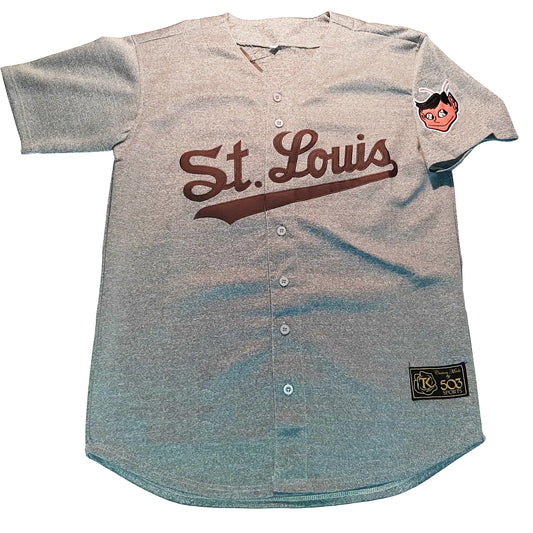
1950 St Louis Browns Jersey
Regular price Starting at $84.99 USDRegular priceUnit price per -
-
CUSTOM
Cleveland Spiders Jersey
Regular price Starting at $84.99 USDRegular priceUnit price per -
-
Houston Colt 45's Satin Jacket
Regular price From $219.99 USDRegular priceUnit price per$74.99 USDSale price From $219.99 USD -
-
CUSTOM
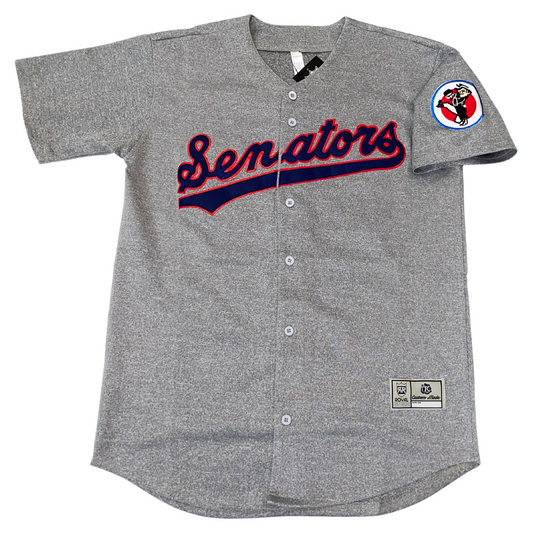
Senators Jersey
Regular price Starting at $84.99 USDRegular priceUnit price per -
-
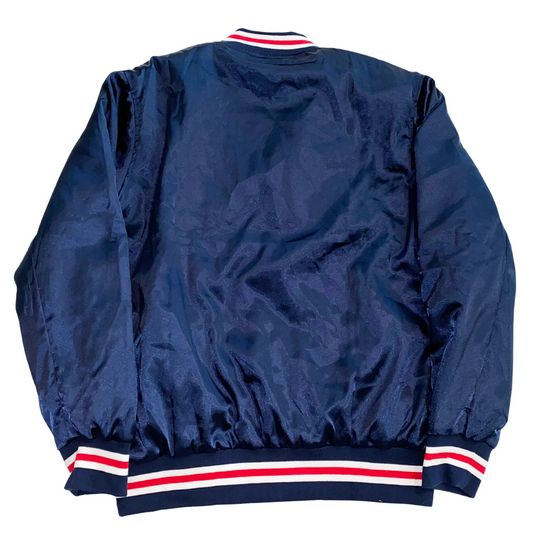
Senators Satin Jacket
Regular price From $199.99 USDRegular priceUnit price per$74.99 USDSale price From $199.99 USD -
-
CUSTOM
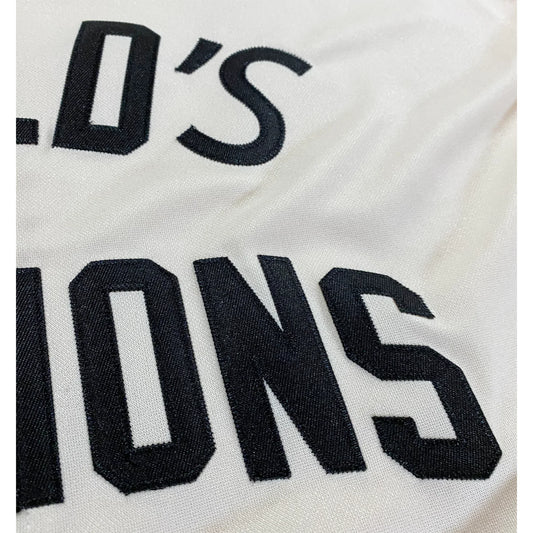
World's Champions Jersey
Regular price Starting at $84.99 USDRegular priceUnit price per -
CUSTOM
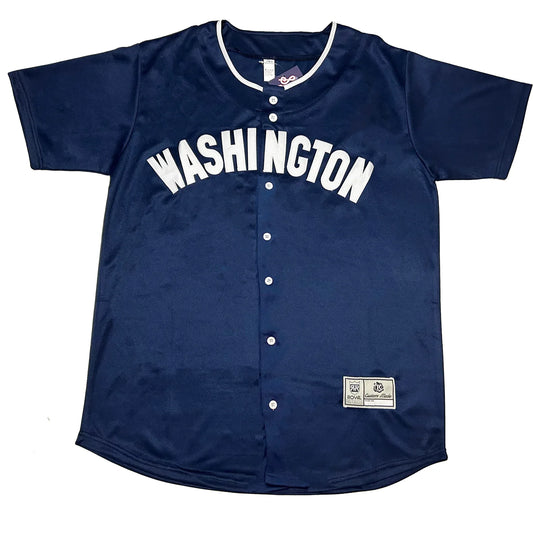
Washington Padres Jersey
Regular price Starting at $84.99 USDRegular priceUnit price per -
-
CUSTOM
Senators Script Jersey
Regular price Starting at $84.99 USDRegular priceUnit price per -
-
CUSTOM
1953 St Louis Browns Custom Jersey
Regular price Starting at $84.99 USDRegular priceUnit price per -












The Defunct Baseball Teams Collection — Royal Retros Vintage Baseball Fan Shop
Throwbacks From Franchises That Moved, Folded, or Changed Their Name. Custom Names & Numbers. Sizes S–5XL. Browns, Senators, Pilots, Colt .45s and More.
Royal Retros carries 78 in-stock throwbacks built around major league franchises that no longer exist under the name they wore — the St. Louis Browns, Washington Senators, Seattle Pilots, Houston Colt .45s, New York Highlanders, Boston Bees, Cleveland Spiders and more. Forty-seven jerseys, thirteen hats, eight tees and long sleeves, four hoodies, three pairs of twill shorts and three satin jackets. Custom jerseys $84.99, replicas $69.99, flannels $149.99, tees $29.99, hats $29.99–$42.99, hoodies $59.99, shorts $49.99, satin jackets $199.99–$249.99. Free custom name and number on most jerseys, sizes Small through 5XL, no big & tall upcharge. If the team you grew up on packed up, folded, or got renamed, this is the page where it still exists.
What You Can Shop in This Collection
Custom Throwback Jerseys — $84.99. The core of the collection: year-dated builds cut and lettered to the season they represent. The 1914, 1937, 1944, 1950 and 1953 St. Louis Browns; the 1938, 1945, 1953 and 1957 Washington Senators plus the script and standard builds; the Houston Colt .45s home and road jerseys; the 1969 Seattle Pilots and the Pilots spring training jersey. Free custom name and number on most styles.
Replica Jerseys — $69.99. Lighter, ready-to-wear builds for the two most-requested defunct clubs: the St. Louis Browns replica and the Houston Colt .45s replica. Same graphics, faster turnaround, lower entry price. Browse the full replica jersey range.
Flannel Jerseys — $149.99. Heavyweight wool-style flannel with felt and twill lettering, the way these uniforms were actually made: the 1953 St. Louis Browns, Senators, Pilots and Houston Colt .45s flannels. See every one we make in the flannel jersey collection.
Remix Jerseys — $84.99. Alternate colorways and updated layouts on a vintage foundation: the Browns, Senators and Colt .45s remixes. See the full remix collection.
City-Mark Jerseys — $84.99. Twelve designs built around a city, a letter or an emblem rather than a team name: Boston and Classic B, Brooklyn, Pittsburgh and Swashbuckler, Tiger, Elephant and Classic P, Milwaukee, and the New York trio — Plaid NY, World's Fair and World's Champions.
Hats — $29.99–$42.99. Thirteen caps across four builds. Unstructured dad hats at $29.99 (Browns, Browns brownie, Senators, Highlanders). Five-panel snapbacks at $34.99 (Browns, Senators, Pilots, Colt .45s, Highlanders cream). Flex-fit caps at $42.99 (Browns, Senators, Pilots, Colt .45s). Browse every cap in the hats collection.
T-Shirts & Long Sleeves — $29.99–$34.99. Pre-shrunk cotton short sleeves at $29.99: Browns script, Senators, Pilots, Colt .45s, Highlanders and Indianapolis Arrows. Long sleeves at $34.99: Pilots and Colt .45s. More in baseball tees and long sleeves.
Hoodies — $59.99. Heavyweight fleece pullovers for the four flagship franchises: Browns, Senators, Pilots and Colt .45s. Full range in the hoodies collection.
Twill Shorts — $49.99. Made-to-order twill shorts cut to match the jerseys: Browns, Pilots and Colt .45s. See all of them in shorts.
Satin Jackets — $199.99–$249.99. Made-to-order satin warm-up jackets, the top of the collection: the Senators satin jacket ($199.99–$224.99), the Pilots satin jacket ($199.99–$224.99) and the Houston Colt .45s satin jacket ($219.99–$249.99). More outerwear in jackets.
Customization & Sizing. Free custom name and number on most jerseys — put a franchise original on the back (George Sisler, Ken Williams, Walter Johnson, Tommy Harper, Rusty Staub) or your own. Custom items are made to order and final sale. Sizes run Small through 5XL on virtually every product, with hats one-size-fits-most or flex-fit. No big & tall upcharge, ever.
Shop the Marquee Franchises
St. Louis Browns — 15 products, the deepest run in the collection. Five year-dated jerseys spanning four decades (1914, 1937, 1944, 1950, 1953), a $149.99 flannel, a $69.99 replica, a remix, three caps plus the brownie-logo dad hat, a script tee, a hoodie and twill shorts. The 1944 build is the pennant year; the 1953 builds are the last season before the franchise left Missouri. Shop all St. Louis Browns gear.
Washington Senators — 14 products. Six distinct jerseys (1938, 1945, 1953, 1957, script and standard), the $149.99 flannel, the remix, three caps, a tee, a hoodie and the $199.99–$224.99 satin jacket. This is the Griffith Stadium club — the one Walter Johnson pitched for and the one that won the 1924 World Series. Shop all Washington Senators gear.
Houston Colt .45s — 12 products. A three-season franchise with a full apparel program: home and road custom jerseys, the $69.99 replica, the $149.99 flannel, the remix, two caps, a tee, a long sleeve, a hoodie, twill shorts and the most expensive item on this page — the $219.99–$249.99 satin jacket. Shop all Houston Colt .45s gear.
Seattle Pilots — 10 products. One season in existence, ten pieces here: the 1969 custom jersey, the spring training jersey, the $149.99 flannel, two caps, a tee, a long sleeve, a hoodie, twill shorts and a satin jacket. The gold-braid cap is the most recognizable one-year uniform in American baseball. Shop all Seattle Pilots gear.
New York Highlanders — 4 products. The Manhattan club that played at Hilltop Park before it was ever called anything else: a custom jersey, a tee, an unstructured cap and a cream snapback. Shop all New York Highlanders gear.
Boston Bees, Cleveland Spiders and Cleveland Bronchos — 4 jerseys. The 1936 and 1939 Bees builds cover the five-year window when Boston's National League club wore a different name. The Cleveland Spiders jersey comes from the 1890s National League club, the Cleveland Bronchos jersey from the single 1902 season the American League club carried that name. Cross-shop the wider Cleveland collection.
Nineteenth-century and Deadball Boston, Brooklyn and New York — 4 jerseys. The Boston Beaneaters, Boston Americans, Brooklyn Robins and New York Gothams jerseys — four franchises that all still exist today under names they did not start with.
Why Royal Retros Is the Home of Defunct Baseball Throwbacks
- 78 active products across 15 franchises and eras. Not one generic "vintage baseball" tee. Five separate St. Louis Browns years, six Washington Senators jerseys, a full Houston Colt .45s program and a ten-piece Seattle Pilots range for a team that existed for a single season.
- Franchises nobody else bothers with. Cleveland Bronchos. Boston Beaneaters. New York Gothams. Boston Bees. One-line footnotes at most retailers, full products here.
- Period-correct reproductions. Era-appropriate fonts, plackets, sleeve treatments, lettering methods and color, referenced against photographic source material for the stated year. A 1914 jersey is not a 1953 jersey in different colors.
- Flat, honest pricing. Custom jerseys $84.99. Replicas $69.99. Flannels $149.99. Tees $29.99. No "collector's edition" markup and no era surcharge.
- Free customization on most jerseys, sizes S–5XL. Add a name and number at no extra cost on eligible items, in true family sizing with no big & tall upcharge.
- Nine product categories, not three. Jerseys, replicas, flannels, remixes, hats, tees, long sleeves, hoodies, shorts and satin jackets.
- Heritage tribute apparel. These are tribute reproductions of historic uniforms, made by us. We are not affiliated with, endorsed by, or sponsored by any current league or club.
- The deepest historic-baseball catalog anywhere. Cross-shop this page with the Negro Leagues collection, historic minor leagues, West Coast minors and the Federal League.
Quick Buying Questions
What sizes do these jerseys come in?
Small through 5XL on every jersey style, and on tees and hoodies too. Hats are adjustable snapbacks, unstructured dad hats, or stretch flex-fit. We don't upcharge for big & tall sizes.
Can I add my name and number?
Yes — most jersey styles include free custom name and number. Look for the "Custom" option on the product page. Custom items are made to order and final sale.
What's the difference between the $69.99 replica, the $84.99 custom and the $149.99 flannel?
The replica is a fixed, ready-made build with the team graphics already applied — quicker to ship, cheaper to buy. The custom jersey is sewn to your order and is where free name and number personalization lives. The flannel is a heavyweight build in the construction these uniforms actually used before the pullover knit era: thicker fabric, felt and twill lettering, period plackets and sleeve trim. Four teams offer it — Browns, Senators, Pilots and Colt .45s.
Which team should I pick if I'm buying a gift?
Match the city, not the team. Someone from St. Louis with a long memory gets the Browns. A DC baseball fan over 60 gets the Senators. A Houston fan who wants the deep cut gets the Colt .45s. A Seattle fan who knows what happened before 1977 gets the Pilots. If you're not sure, the tees at $29.99 are the safest entry point.
How fast does it ship and what's the return policy?
Stock items ship within 3–5 business days. Custom jerseys are sewn to order and typically ship within 7–10 business days. Made-to-order items like the satin jackets and twill shorts take longer — check the product page. Custom items are final sale. Standard items follow our return policy at /pages/returns.
About This Collection — Baseball's Vanished Franchises
Every team on this page is gone in one of four ways. Some moved and changed their name, like the St. Louis Browns and the Seattle Pilots. Some moved and kept it, like the Washington Senators — twice. Some stayed put and renamed themselves, like the Houston Colt .45s and the New York Highlanders. And a few simply stopped existing, like the Cleveland Spiders and the entire Federal League.
What they share is that no current club sells their gear. Modern major league merchandise is organized around thirty active brands; a franchise that folded in 1899 or relocated in 1954 has no shelf space. For the fan who remembers Sportsman's Park, Griffith Stadium, Colt Stadium or Sick's Stadium, the throwback isn't a nostalgia item competing with a current jersey — it is the jersey.
These uniforms were also, on the whole, better looking than what replaced them — navy pinstripes with a revolver and orange smoke, a captain's cap with gold braid, brown and orange when nobody else in baseball would touch either color. The designs did not survive because the franchises did not, which is exactly what makes them worth reproducing.
The St. Louis Browns (1902–1953) — Fifty-Two Seasons, One Pennant
The franchise began in Milwaukee as a charter member of the American League in its first major league season of 1901. After a single year it moved to St. Louis for 1902, took the "Browns" name from the city's earlier nineteenth-century Brown Stockings, and settled into Sportsman's Park at Grand and Dodier — a ballpark it would eventually share with, and be overshadowed by, the National League club across town.
The early Browns were competitive without being good. The 1914 jersey comes from the Branch Rickey years, when the future architect of the farm system was running the club as manager. Rickey's most important St. Louis decision came the following year, when the Browns signed a University of Michigan pitcher named George Sisler and converted him into a first baseman.
Sisler became the greatest player the franchise ever had and one of the greatest hitters in the sport's history. He batted .407 in 1920 with 257 hits — a single-season hit record that stood for 84 years — and .420 in 1922, winning the American League MVP and eventually a place in the Hall of Fame. In 1922 the Browns finished one game behind New York in the closest pennant race the franchise ever ran, with Sisler at .420 and outfielder Ken Williams becoming the first player in major league history to hit 30 home runs and steal 30 bases in the same season — 39 and 37, in a year he also led the league in home runs.
Then came thirty years of losing. The 1937 jersey represents the bottom: a 46–108 season, dead last, more than fifty games out. The Browns were the definitional second team in a two-team town, and the town had already chosen.
The exception is the 1944 jersey, the single most collectible year in franchise history. With major league rosters stripped by wartime service, the Browns won 89 games and took the only American League pennant they would ever win, clinching on the final day of the season. The World Series that followed was played entirely at Sportsman's Park because both participants called it home, and the Browns lost in six games. It remains the only World Series contested by two clubs sharing one ballpark.
The postwar Browns are where the folklore lives. Pete Gray, an outfielder who had lost his right arm in a childhood accident, played 77 games for the 1945 club, catching the ball in his glove, tucking the glove under his stump and transferring the ball to his throwing hand in one motion. The 1950 jersey covers the last era before Bill Veeck bought the team in 1951 and turned its final seasons into the most inventive stretch of promotion in baseball history. Veeck signed Satchel Paige, then in his mid-forties and already a legend from a career in the Negro Leagues, and Paige made the American League All-Star team for the Browns in 1952 and 1953. On August 19, 1951, Veeck sent up Eddie Gaedel — three feet seven inches tall, wearing uniform number 1/8 — as a pinch hitter; Gaedel walked on four pitches and was banned from baseball the next day.
None of it saved the club. The 1953 jersey and the 1953 flannel are the last St. Louis uniforms the franchise ever wore. After a 54–100 season, Veeck was forced out by fellow owners and the club was sold and moved east for 1954, where it took a new name and, eventually, a great deal more success. Fifty-two seasons, one pennant, zero titles — and a fan club of former Browns supporters that met annually in St. Louis for decades after the team left.
Shop the full St. Louis Browns collection, or browse everything we carry from St. Louis and Missouri.
The Washington Senators (1901–1960 and 1961–1971) — Two Franchises, One Name
Washington has lost a major league franchise twice, and both of them were called the Senators. That is why this part of the collection runs deeper than most people expect.
The first Senators were an American League charter club in 1901 and played in Washington for sixty seasons, spending most of the first two decades as the punchline in the old line about the capital being "first in war, first in peace, and last in the American League." What redeemed them was one pitcher. Walter Johnson signed with Washington in 1907 out of the Idaho semipro circuit and never played for another team. Over twenty-one seasons he won 417 games — still second all-time — and threw 110 shutouts, which remains the record and is not close. He did all of it for a team that finished above .500 in barely half his seasons.
The payoff came in 1924. Under 27-year-old player-manager Bucky Harris, the Senators won the American League pennant and then the World Series in seven games, with a 36-year-old Johnson coming out of the bullpen in the twelfth inning of the deciding game to take the win. It is the only World Series title the city of Washington won in the twentieth century. The Senators repeated as league champions in 1925 and won a third pennant in 1933 under player-manager Joe Cronin, losing the Series both times.
The 1938 and 1945 jerseys come from the long, thin decades after. The 1945 club finished second, a game and a half back, in the last wartime season, with a knuckleball rotation and a lineup missing most of its regulars. The 1953 and 1957 jerseys, along with the script and standard builds, cover the Griffith Stadium endgame — the ballpark on Georgia Avenue with the outfield wall that jogged inward around a set of houses whose owners had refused to sell.
After the 1960 season the first Senators moved to Minnesota, and the American League, unwilling to leave the capital empty, granted Washington an expansion team for 1961 that took the same name. The second Senators lasted eleven seasons at what is now RFK Stadium and were mostly terrible, with two exceptions: Frank Howard, six foot seven, hit 44 and 48 home runs in consecutive seasons, and in 1969 Ted Williams took over as manager, was named Manager of the Year, and dragged the club to 86 wins.
The ending was extraordinary. On September 30, 1971, the Senators played their final home game before a relocation to Texas that had already been approved. With two outs in the ninth inning and Washington leading 7–5, thousands of fans came over the walls, tore up the bases and the turf, and the game was forfeited. Washington went without a team for thirty-three years. Shop the full Washington Senators collection, including the satin jacket and the flannel, or browse the wider Washington DC collection.
The Houston Colt .45s (1962–1964) — Three Seasons and the Best Logo in Baseball
Houston entered the National League in 1962 alongside New York's expansion club, ending a long campaign to bring major league baseball to Texas. The name came out of a fan contest: the Colt .45, "the gun that won the West." The uniform put a revolver across the chest with orange smoke trailing from the barrel, over navy pinstripes — still one of the most recognizable uniforms the sport has produced, and worn for exactly three seasons.
The first game, on April 10, 1962, was an 11–2 win over Chicago. The Colt .45s finished eighth in a ten-team league in each of their three seasons, which for an expansion club was respectable — the other 1962 expansion team lost 120 games.
The real story is Colt Stadium, the temporary open-air park built next door to the site of the future domed stadium. Temperatures on the field regularly ran past 100 degrees; the mosquitoes were bad enough that the club sprayed the grounds before games and sold insect repellent at the concession stands. Day games were so brutal that the Colt .45s scheduled Sunday doubleheaders at night — the first team in the National League to do it.
What the roster produced in those three years is remarkable in hindsight. Joe Morgan debuted for the Colt .45s in 1963 and went on to two MVP awards and the Hall of Fame. Jimmy Wynn, "the Toy Cannon," debuted the same season, and Rusty Staub arrived at nineteen and played twenty-three major league seasons. Turk Farrell, an All-Star in the club's first year, went 10–20 with a 3.02 earned run average in 1962 — a line that says everything about pitching for an expansion team. On September 27, 1963, Houston started a lineup in which every position player was a rookie, a stunt no major league team has repeated.
The name ended after 1964. The club was moving into the new domed stadium for 1965 and rebranded to match it. Reporting at the time and since has also pointed to friction with the firearms manufacturer over merchandise royalties as a factor in the timing. Either way, the revolver came off the chest and the franchise has never gone back to it in full.
That is precisely why the Colt .45s throwback moves the way it does: a three-season uniform, universally admired, that the current organization has largely retired. Royal Retros carries twelve pieces — home and road custom jerseys, a $69.99 replica, a $149.99 flannel, a remix, flex and snapback caps, a tee, a long sleeve, a hoodie, twill shorts and the satin jacket. Shop the full Houston Colt .45s collection, or browse Houston and Texas.
The Seattle Pilots (1969) — One Season, One Book, One Uniform
The Seattle Pilots are the shortest-lived franchise in modern major league history and, product for product, one of the most collected. They played one season, went 64–98, finished last in the American League West, and were sold in bankruptcy court and moved to Wisconsin roughly a week before Opening Day 1970.
The American League awarded Seattle an expansion team for 1969 alongside Kansas City. The plan was to play temporarily in the minor league ballpark on Rainier Avenue while a domed stadium got built. That ballpark was expanded from around 11,000 seats to roughly 25,000, and the work was not finished when the season started — fans arriving for the home opener found crews still installing seats in the outfield. Plumbing and water pressure were problems all year, and the dome never arrived in time for the Pilots.
The ownership was undercapitalized from the start and attendance came to about 678,000. By the winter the franchise was in bankruptcy court, and a group led by a Milwaukee car dealer bought it and moved it to Wisconsin in the last week of spring training — so late that the new club's first-year uniforms were Pilots uniforms with the lettering changed. Seattle sued the American League over the loss, and that suit is a direct cause of the expansion franchise the city received in 1977.
Two things made the Pilots immortal. The first is the uniform: a cap styled after a ship captain's hat, with gold scrambled-egg braid across the visor — the only cap of its kind in major league history — over blue and gold with a wheel-and-wing sleeve emblem. Nothing else in the sport looks like it, then or now.
The second is Ball Four. Jim Bouton, a knuckleballer trying to hang on, spent 1969 with the Pilots keeping a diary. The book he published in 1970 broke the unwritten rule that what happened in a clubhouse stayed there, and is routinely ranked among the most important sports books ever written — which is why the 1969 Pilots are better documented than most teams that lasted fifty years. Tommy Harper stole 73 bases that season to lead the American League.
Royal Retros carries ten Pilots pieces: the 1969 custom jersey, the spring training jersey, the $149.99 flannel, the flex and snapback caps, the tee, the long sleeve, the hoodie, twill shorts and the satin jacket — an unusually complete program for a franchise that existed for 162 games. Shop the full Seattle Pilots collection, or browse the wider Seattle collection.
The New York Highlanders (1903–1912) — Before the Pinstripes
The American League's New York franchise did not start in New York and did not start with the name it has now. It began in Baltimore in 1901, was taken over by the league after two seasons, and was moved to Manhattan for 1903 to give the young American League a presence in the country's biggest market.
The new club built a wooden ballpark in Washington Heights, at Broadway and 168th Street, on one of the highest points on the island. It was officially American League Park; everyone called it Hilltop Park, and the team became the Highlanders — a name that worked both for the elevation and as a nod to the Gordon Highlanders, the club president being named Joseph Gordon. Newspapers wanted something shorter for headlines, and when the club moved into the Polo Grounds in 1913, that shorter name became official.
The Highlanders came within one game of a pennant in their second season. Jack Chesbro, a spitball pitcher, won 41 games in 1904 — a total no pitcher has approached since and almost certainly never will — starting 51 games and completing 48. On the final day of the season, with the pennant on the line against Boston, Chesbro threw a wild pitch in the ninth inning that let the deciding run score. New York lost the pennant on that pitch, and Chesbro's 41 wins are remembered alongside it.
Wee Willie Keeler, whose advice to "hit 'em where they ain't" outlasted his career, played the second half of his Hall of Fame career for the Highlanders, and Clark Griffith — later the long-time owner of the Washington Senators — managed the club from 1903. The Highlanders' interlocking mark and Hilltop Park styling belong to a franchise that has been enormously successful under a different name for a hundred and ten years, which means almost nobody produces this era. Shop the New York Highlanders collection, or browse everything from New York.
The Boston Bees (1936–1940) — When Boston's National League Club Changed Its Name
In 1935, Boston's National League team finished 38–115 — one of the worst records in the history of the sport, in the season the club had brought in a 40-year-old Babe Ruth for a final, unhappy 28 games. Attendance collapsed and the franchise went into receivership.
New ownership under Bob Quinn decided the name itself had become a liability and ran a fan contest to replace it. The winning entry was "Bees." From 1936 through 1940 Boston's National League club was the Boston Bees, the ballpark on Commonwealth Avenue was rebranded the Bee Hive to match, and the uniforms carried a bee motif and a lighter, more graphic look than the club had worn before.
The Bees years were not a disaster. Jim Turner won 20 games as a rookie in 1937 with a league-leading earned run average, Wally Berger remained one of the National League's better power hitters, and Vince DiMaggio — the eldest of the three brothers — played center field. Casey Stengel managed the team from 1938, more than a decade before the run that made his name. The 1936 and 1939 seasons bracket the experiment neatly, which is why those are the two years we build.
The name never took, and in 1941 the club reverted. Five seasons, one nickname, and a uniform almost no reproduction house makes. Both the 1936 and 1939 Bees jerseys are $84.99 with free custom name and number.
Boston's National League franchise moved to Wisconsin after the 1952 season — the first major league relocation in half a century — won a World Series there in 1957, and moved again to Georgia in 1966. That Wisconsin decade is what our Milwaukee jersey is built around. See more from Massachusetts and Wisconsin.
The Boston Beaneaters and Boston Americans — Two More Names on the Same Two Franchises
Before the Bees, Boston's National League club spent more than two decades as the Beaneaters and was for a while the strongest team in baseball, winning pennants in 1891, 1892, 1893, 1897 and 1898 behind Kid Nichols — who won 30 or more games in seven different seasons — third baseman Jimmy Collins, and outfielders Hugh Duffy and Billy Hamilton. Duffy hit .440 in 1894, still the highest single-season batting average in major league history. All four are in the Hall of Fame. The Boston Beaneaters jersey is one of very few nineteenth-century reproductions on the open market.
Across town, Boston's American League club spent its first seven seasons as the Boston Americans. In 1903 they beat Pittsburgh five games to three in the first modern World Series, with Cy Young winning two games and Bill Dinneen three, at the Huntington Avenue Grounds in front of overflow crowds roped off in the outfield. Jimmy Collins — the same Jimmy Collins from the Beaneaters — was the player-manager, having jumped leagues. The club adopted its current name in 1908. The Boston Americans jersey is the uniform of the first World Series champion in baseball history.
The Cleveland Spiders (1887–1899) — The Worst Team Ever Assembled
The Cleveland Spiders spent thirteen seasons in the National League and were, for most of the 1890s, genuinely good. A young Cy Young pitched for them from 1890 to 1898, Jesse Burkett hit over .400 twice, and the 1895 club won the Temple Cup, the era's postseason championship.
Then came 1899, and one of the strangest episodes in American sports. The Spiders' owners, the Robison brothers, also purchased the National League club in St. Louis — syndicate ownership, one group controlling two teams in the same league, being legal at the time. The Robisons concluded St. Louis was the better market and, before the 1899 season, transferred essentially every good player on the Cleveland roster there.
What was left went 20–134, a winning percentage of .130 that remains the worst in major league history and has not been seriously challenged since. Attendance fell so far that other clubs refused to travel to Cleveland, and the Spiders played their last 36 games entirely on the road. The National League contracted from twelve teams to eight after the season, and Cleveland was one of the four eliminated. It is the reason syndicate ownership was banned.
The Cleveland Spiders jersey is a genuine curiosity piece and one of the deepest cuts in this collection. The Cleveland Bronchos jersey covers a different oddity: Cleveland's American League club was called the Bronchos for one season only, in 1902, between the Blues in 1901 and the name it took in 1903 in honor of the great second baseman who joined the club that year. A one-year major league team name is about as narrow a reproduction target as exists. Browse more from Cleveland and Ohio.
The Brooklyn Robins (1914–1931) and the New York Gothams (1883–1884)
Brooklyn's National League club has run through more names than almost any franchise in the sport — Atlantics, Grays, Grooms, Bridegrooms, Superbas — and from 1914 through 1931 it was the Robins, named for manager Wilbert Robinson, who ran the club for eighteen seasons at Ebbets Field and won pennants in 1916 and 1920. The 1920 World Series against Cleveland produced the first World Series grand slam, by Elmer Smith, and an unassisted triple play by second baseman Bill Wambsganss — both in Game 5, and the triple play has never been repeated.
The rest of the Robins era is comic legend. The 1920s clubs were nicknamed the Daffiness Boys, and the defining moment came in 1926 when Babe Herman doubled into a double play by ending up at third base at the same time as two teammates. Dazzy Vance, meanwhile, was quietly one of the best pitchers alive, leading the National League in strikeouts seven consecutive years and winning the 1924 MVP. When Robinson left after 1931, the Robins name went with him. The Brooklyn Robins jersey covers that eighteen-year window; the Brooklyn city jersey is the more general Brooklyn Baseball tribute.
New York's National League club started out as the Gothams in 1883 and 1884, playing at the original Polo Grounds at 110th Street with a roster that already included Buck Ewing, Mickey Welch, Roger Connor and John Montgomery Ward — four future Hall of Famers on a two-year-old team. The name changed in 1885, and the story has always been that manager Jim Mutrie came into the clubhouse after a big win and called his players "my big fellows, my giants." The New York Gothams jersey is the only reproduction of that first identity we know of anywhere.
City-Mark Jerseys — Twelve Designs, No Team Names
Twelve jerseys in this collection are built on a city, a letter, or an emblem instead of a team name. They are for fans who want the look and the geography without a wordmark, and several of them reference specific franchise history through symbols rather than names.
Philadelphia Baseball. The Elephant jersey references one of the sport's best origin stories. When Philadelphia's American League club was founded in 1901, the manager of the New York National League club dismissed the venture by saying the backers had a white elephant on their hands. Connie Mack — who managed the club for fifty consecutive seasons, won nine pennants and five World Series titles, and remains the winningest manager in baseball history — adopted the white elephant as the team's emblem in response. The Classic P jersey covers the city's National League side.
Pittsburgh Baseball. The Swashbuckler jersey and the Pittsburgh jersey both play on a nickname that started as an insult: in 1891, after Pittsburgh's club signed a second baseman whose old team had failed to properly reserve him, a league official called the move piratical. Pittsburgh put the word on the uniform and has kept it for more than 130 years. Browse the full Pittsburgh collection.
Detroit Baseball. The Tiger jersey is the old English-letter Detroit look, from the era of the corner ballpark at Michigan and Trumbull. See more from Michigan.
Boston and Milwaukee Baseball. The Boston jersey and Classic B jersey cover both sides of that city's baseball history without naming either club. The Milwaukee jersey is built on the 1953–1965 National League era at County Stadium, when Milwaukee outdrew every other team in the league for years, won the 1957 World Series, and lost the franchise to Georgia anyway.
New York and Brooklyn Baseball. Four designs: the Plaid NY jersey, the World's Fair jersey referencing the 1939 exposition in Queens, the World's Champions jersey, and the Brooklyn jersey for the borough that had a National League club from 1884 to 1957 and has never fully gotten over losing it.
Teams That Never Played a Game
Three products here belong to franchises that were proposed, planned or nearly moved, and never took the field under that identity.
The Indianapolis Arrows jersey and tee are built around a proposed major league identity for Indianapolis — a city with a long professional baseball history that has surfaced repeatedly in expansion and relocation conversations without ever landing a permanent major league club. See more from Indiana.
The stranger story belongs to Washington in 1974. San Diego's National League club had been sold to a Washington DC business group and the move to the capital was treated as done — Topps printed its 1974 baseball card set with the San Diego players' team listed as Washington, National League, and those error cards are collectibles in their own right. At the last moment a different buyer stepped in and kept the club in San Diego. We build the 1974 Washington relocation jersey for exactly that near-miss. The rest of our never-were designs live in the Proposed Teams collection.
The Federal League (1914–1915) — Baseball's Forgotten Third League
For two seasons there was a third major league. The Federal League declared itself major in 1914, put eight clubs in the field, refused to honor the reserve clause, and signed away established players with real money. The two-year war that followed reshaped the sport permanently. The best-known Federal League club is the Chicago entry, which played as the Chicago Federals in 1914 and the Chicago Whales in 1915 under player-manager Joe Tinker. Owner Charles Weeghman built them a steel-and-concrete ballpark on the North Side at Clark and Addison. The Whales won the 1915 Federal League pennant by less than a thousandth of a percentage point, the closest finish any major league has ever produced. When the league folded, part of the settlement let Weeghman buy Chicago's National League club and move it into his ballpark — which is why that stadium is still hosting major league baseball more than a century later.
The other consequence was legal. The Baltimore Federal League club refused to settle and sued organized baseball under federal antitrust law. The case reached the Supreme Court in 1922, and the resulting decision held that baseball was not interstate commerce and therefore not subject to the Sherman Act — creating the antitrust exemption that is still on the books and still unique among American professional sports.
Federal League gear lives in its own collections rather than this one. Shop Chicago Whales for the jersey and both tees, or browse the whole Federal League collection, which also covers the St. Louis and Kansas City clubs.
How to Spot a Real Throwback From a Costume
- Look for a year, not a decade. These franchises changed uniforms constantly. A jersey sold as generic "vintage St. Louis Browns" with no season attached is usually a modern remix. Our year-dated builds are each cut to their own season.
- Match the construction to the era. Pre-1960 major league uniforms were wool flannel with felt or twill lettering and a full button front. The pullover knit did not arrive until around 1970. A 1937 jersey rendered as a pullover is not a throwback.
- Watch the color and the mark. The Browns' brown and orange, the Colt .45s' navy and orange, the Pilots' blue and gold are all easy to get slightly wrong, and slightly wrong looks obviously wrong next to a reference photo. Cleveland's Spiders and Bronchos marks belong to different decades and different leagues, as do the Highlanders' Hilltop-era mark and everything after 1913.
- Be skeptical of "authentic vintage" listings. Genuine 1940s and 1950s major league flannels are museum-grade artifacts that sell at auction for thousands. Anything described as vintage at throwback prices is a reproduction, and it should say so.
- Royal Retros standard. Every product here is checked against period reference imagery for its stated year before it goes live. These are tribute reproductions of historic uniforms, made by us, not licensed league merchandise.
Frequently Asked Questions About Defunct Baseball Teams
Which major league teams no longer exist?
Under the names they wore, quite a few. The St. Louis Browns (1902–1953), both Washington Senators franchises (1901–1960 and 1961–1971), the Seattle Pilots (1969), the Houston Colt .45s (1962–1964), the New York Highlanders (1903–1912), the Boston Bees (1936–1940), the Boston Beaneaters, the Boston Americans, the Brooklyn Robins (1914–1931), the New York Gothams (1883–1884), the Cleveland Spiders (1887–1899) and the Cleveland Bronchos (1902) are all represented here. Most of those franchises still exist under different names; the Spiders and the Federal League clubs genuinely folded.
How long did the Seattle Pilots exist?
One season. They played in 1969, went 64–98, went into bankruptcy over the winter, and were bought and moved to Wisconsin about a week before Opening Day 1970. Seattle's lawsuit over the departure led to the expansion club the city received in 1977.
Why did the Houston Colt .45s change their name?
The club moved into a new domed stadium for the 1965 season and rebranded to match it. Reporting has also cited a dispute with the firearms manufacturer over merchandise royalties as a factor. The name lasted three seasons, 1962 through 1964.
Were there two Washington Senators teams?
Yes. The original American League club played in Washington from 1901 through 1960 and then moved to Minnesota. Washington was granted an expansion team for 1961 that used the same name; it played eleven seasons and moved to Texas after 1971. Its last home game, on September 30, 1971, was forfeited when fans came onto the field with two outs in the ninth and Washington leading 7–5. Both franchises are covered in this collection.
Who were the New York Highlanders?
The American League's New York club from 1903 through 1912, playing at Hilltop Park in Washington Heights. The franchise had moved from Baltimore in 1903 and adopted its current name in 1913 when it moved into the Polo Grounds.
Why did Boston's National League club become the Boston Bees?
After a 38–115 season in 1935 and a trip through receivership, new ownership ran a fan contest to rename the club. "Bees" won, and the name was used from 1936 through 1940 before the club reverted in 1941.
What was the worst team in baseball history?
The 1899 Cleveland Spiders, at 20–134. Their owners also owned the St. Louis club and moved nearly every good Cleveland player there before the season. The Spiders were contracted out of the National League that winter and syndicate ownership was banned.
Are these officially licensed major league products?
No. These are heritage tribute reproductions of historic uniforms, designed and produced by Royal Retros. We are not affiliated with, endorsed by, or sponsored by any league or club.
How many products are in this collection?
78 active products across 15 franchises and identities — 47 jerseys, 13 hats, 8 tees and long sleeves, 4 hoodies, 3 pairs of twill shorts and 3 satin jackets.
Do you make jerseys for teams that aren't listed here?
Often, yes. Between this page, the Negro Leagues collection, the historic minor leagues and the West Coast minors we carry several hundred baseball designs. Start with the full jersey catalog.
Shop by Team and Category
- All Baseball Jerseys — The full 272-product jersey catalog.
- Baseball T-Shirts — 93 tees at $29.99, S–5XL.
- Boston & Massachusetts — Bees, Beaneaters, Americans and more.
- Chicago Whales — The 1915 Federal League pennant winners.
- Cleveland — Spiders, Bronchos and the wider city range.
- Detroit & Michigan — The Tiger jersey plus every Michigan sport.
- Federal League — Baseball's third major league, 1914–1915.
- Flannel Jerseys — Every $149.99 heavyweight flannel we make.
- Hats — Snapbacks, dad hats, flex-fits and fitted caps.
- Historic Minor League Baseball — 151 products from the minors.
- Homestead Grays — Nine straight Negro National League pennants.
- Hoodies — Heavyweight fleece across every team we cover.
- Houston — Colt .45s and the rest of the Houston range.
- Houston Colt .45s — All 12 pieces from the 1962–1964 uniform.
- Indiana — Indianapolis Arrows and the wider Indiana range.
- Jackets — Satin warm-ups and outerwear, made to order.
- NLB Monarchs (Kansas City) — The most decorated Negro Leagues franchise.
- Long Sleeve T-Shirts — Every long sleeve we carry, $34.99.
- Los Angeles NLB — The Negro Leagues-era Los Angeles club, four pieces.
- Milwaukee & Wisconsin — The County Stadium era and beyond.
- Missouri — Browns, and everything else from the state.
- New York — Highlanders, Gothams, Robins and 143 products.
- New York Highlanders — Hilltop Park, 1903–1912, in four pieces.
- Negro Leagues Collection — 175 products across 45-plus franchises.
- Ohio — Cleveland baseball and every other Ohio sport.
- Pittsburgh — Swashbuckler, Pittsburgh jersey and the city range.
- Portland Beavers — Seven Pacific Coast League throwbacks, 1950–2009.
- Proposed Teams — 34 products from franchises that never played.
- Remix Jerseys — Modern reinterpretations of vintage designs.
- Replica Jerseys — The $69.99 ready-to-wear tier, 42 products.
- Seattle — Pilots and everything else from the city.
- Seattle Pilots — All 10 pieces from the one season that happened.
- Shorts — Made-to-order twill and fleece shorts.
- St. Louis — Browns and the rest of the city.
- St. Louis Browns — 18 products, the deepest Browns collection anywhere.
- Texas — Colt .45s and 172 products from across the state.
- Washington DC — Senators and everything else from the capital.
- Washington Senators — 16 products spanning both franchises.
- West Coast Minors — 99 products from the Pacific Coast League and beyond.
Defunct Baseball Throwbacks at Royal Retros — Browns, Senators, Pilots, Colt .45s and More. Custom Names & Numbers. Sizes S–5XL. The Teams That Left, Still Here.