



-
St Louis Browns Unstructured Hat
Regular price $29.99 USDRegular priceUnit price per -
-
CUSTOM
1944 St Louis Browns Jersey
Regular price Starting at $84.99 USDRegular priceUnit price per -
-
St Louis Browns Flex Hat
Regular price $42.99 USDRegular priceUnit price per -
-
St Louis Browns Snapback Hat
Regular price $34.99 USDRegular priceUnit price per -
-
St Louis Browns Script T-Shirt
Regular price $29.99 USDRegular priceUnit price per -
-
CUSTOM
1914 St Louis Browns Jersey
Regular price Starting at $84.99 USDRegular priceUnit price per -
-
St Louis Browns Replica Jersey
Regular price $69.99 USDRegular priceUnit price per -
CUSTOM
1953 St Louis Browns Flannel Jersey
Regular price Starting at $149.99 USDRegular priceUnit price per -
-
CUSTOM
1937 St Louis Browns Jersey
Regular price Starting at $84.99 USDRegular priceUnit price per -
-
Brownie The Elf Unstructured Hat
Regular price $29.99 USDRegular priceUnit price per -
-
-
-
CUSTOM
St Louis Browns Remix Jersey
Regular price Starting at $84.99 USDRegular priceUnit price per -
-
CUSTOM
1950 St Louis Browns Jersey
Regular price Starting at $84.99 USDRegular priceUnit price per -
-
CUSTOM
1953 St Louis Browns Custom Jersey
Regular price Starting at $84.99 USDRegular priceUnit price per -






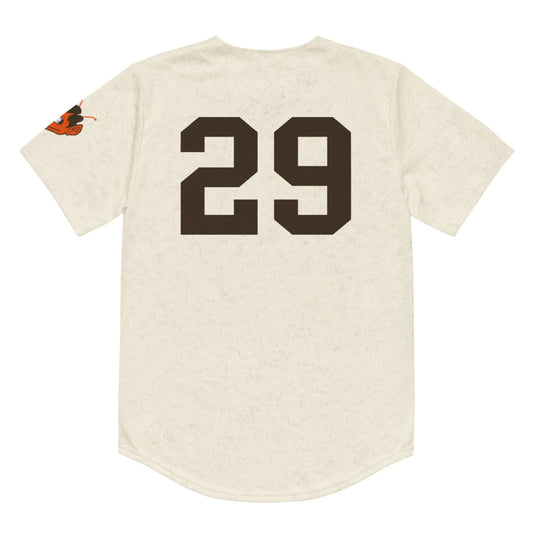


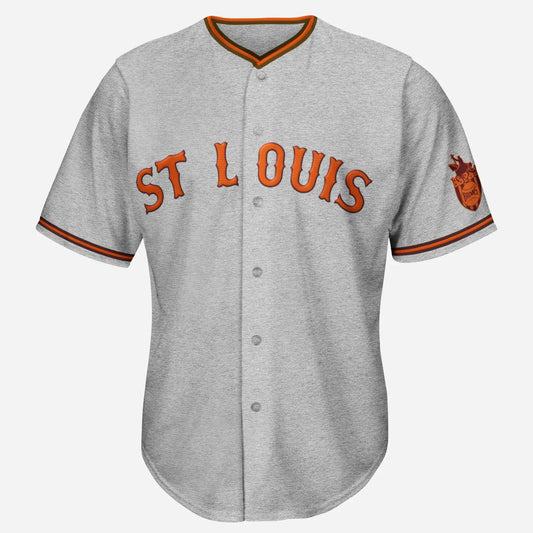


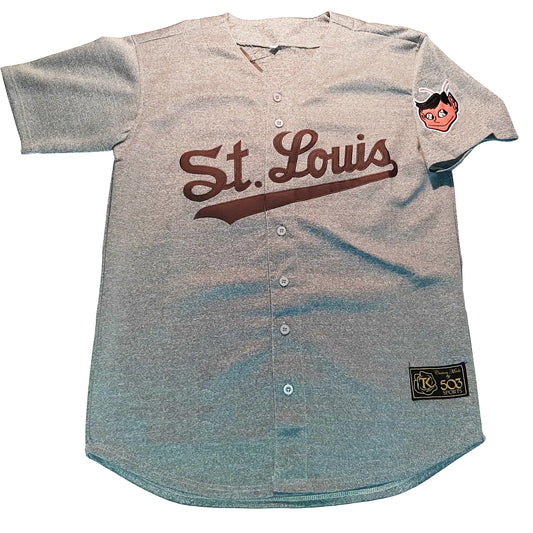


Recently Viewed
The St. Louis Browns Collection — Royal Retros Browns Fan Shop
Authentic St. Louis Browns Throwbacks. Custom Names & Numbers. Sizes S–5XL. The Defunct American League Franchise (1902–1953).
Royal Retros carries the deepest St. Louis Browns throwback collection on the open web — 18+ products covering authentic 1902–1953 American League jerseys, hats, T-shirts, hoodies, and St. Louis baseball history apparel honoring the franchise that moved to Baltimore in 1954 to become the Orioles. George Sisler, Bobby Wallace, Rogers Hornsby, Eddie Gaedel, the 1944 Streetcar Series, the Bill Veeck circus era. Custom name and number on most jerseys. Sizes Small through 5XL. Most Browns jerseys $64.99–$74.99, hats $24.99–$34.99, tees $29.99 — affordable across the entire collection.
What You Can Shop in the Browns Collection
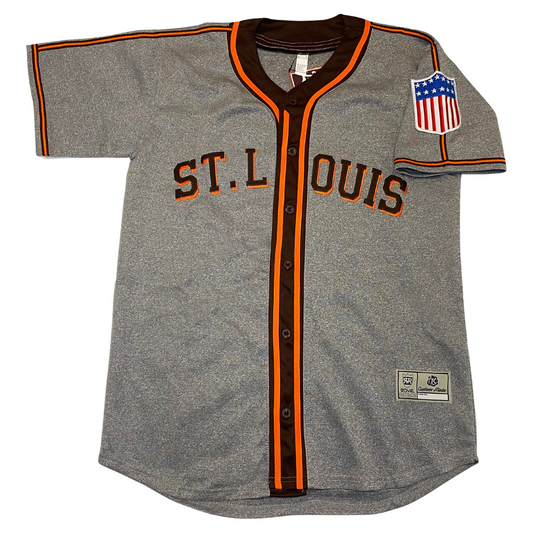
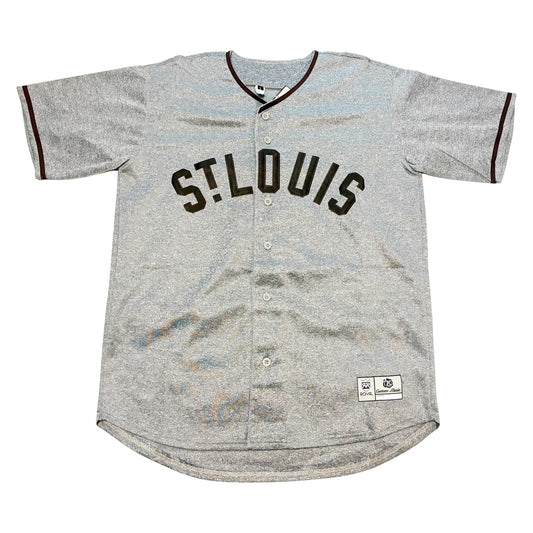
St. Louis Browns Jerseys — Throwback flannel-style baseball jerseys featuring the iconic Browns "StL" interlocking logo, the script "Browns" wordmark, and home/road styles spanning the franchise's 52-year St. Louis run. Choose twill-numbered replicas, lightweight builds, or full custom orders. Custom name and number available on most styles. Most jerseys $64.99–$74.99; premium flannels $149.99.
St. Louis Browns Hats — Snapbacks, fitted caps, classic wool caps, dad hats, and trucker styles featuring the Browns' brown-and-orange color palette and the "StL" cap logo. Mostly $24.99–$34.99.
St. Louis Browns T-Shirts — Soft-blend tees with vintage logos, Sportsman's Park nostalgia graphics, Eddie Gaedel tributes, 1944 World Series callouts, and old-time St. Louis baseball designs. Sizes S–5XL. $29.99.
St. Louis Browns Hoodies & Sweatshirts — Heavyweight pullovers and crewnecks for vintage baseball collectors and St. Louis sports historians. Year-round comfort.
St. Louis Browns Jackets and Outerwear — Where available, premium outerwear in the Browns' brown-and-orange color scheme.
Customization — Free custom name and number on most jerseys. Pick a Browns legend — George Sisler, Bobby Wallace, Rogers Hornsby, Vern Stephens, Ned Garver — or your own name. Custom orders are final sale and made to order, so allow 7–10 business days for production.
Sizes — Small through 5XL on virtually every product. No big & tall upcharge.
Shop the Browns by Era
The Founding Era (1902–1915) — The St. Louis Browns were chartered in 1902 as one of the American League's eight original franchises. Originally known as the Milwaukee Brewers in their 1901 inaugural AL season, the team relocated to St. Louis in 1902 and adopted the "Browns" name in tribute to a 19th-century St. Louis baseball team. Player-manager Jimmy McAleer led the early Browns; pitcher Jack Powell was the franchise's early star. The Browns shared Sportsman's Park with the National League's St. Louis Cardinals from 1920 onward.
The George Sisler Era (1915–1928) — The franchise's golden age. George Sisler — the Hall of Fame first baseman who hit .420 in 1922 — anchored the Browns lineup for over a decade and was the best player in St. Louis baseball history before Stan Musial. The 1922 Browns finished 93–61 and lost the AL pennant by a single game to the Yankees. It was the closest the franchise ever came to a regular-season pennant.
The Doldrums (1929–1943) — Fifteen years of mostly losing seasons. The Browns were the AL's perennial bottom-feeder through the 1930s, finishing last or second-to-last in the league standings nearly every year. The franchise's reputation as the AL's whipping boy was sealed during this era — the famous quip "First in shoes, first in booze, last in the American League" reflected real reality.
The 1944 Pennant and the Streetcar Series — World War II talent depletion changed everything. With most MLB stars in military service, the 1944 Browns won 89 games and the American League pennant — the only pennant in franchise history. They faced the National League's St. Louis Cardinals in the 1944 World Series, the only "Streetcar Series" ever played (both teams used Sportsman's Park as their home field; fans literally took the streetcar to Game 1, Game 4, etc.). The Cardinals won in six games, but the Browns' AL pennant remains one of the most surprising championships in baseball history.
The Bill Veeck Era and the Eddie Gaedel Stunt (1951–1953) — Bill Veeck — the legendary baseball promoter who later won a World Series with the 1948 Cleveland Indians and the 1959 Chicago White Sox — bought the Browns in 1951 and turned the franchise into a full-time promotional spectacle. On August 19, 1951, Veeck sent Eddie Gaedel, a 3'7" performer, to pinch-hit for the Browns wearing jersey number 1/8. Gaedel walked on four pitches before being pinch-run for and was banned by the AL the next day. The stunt remains one of the most famous moments in baseball history. Veeck also held "Grandstand Manager's Day" (where fans voted on game-day strategy from placards) and pioneered the kinds of fan-friendly promotions that defined his career. Veeck's Browns lost a lot of games but were the most fun losers in baseball.
The Move to Baltimore (1953–54) — In September 1953, with the Browns drawing fewer than 300,000 fans for the season, the AL approved the franchise's relocation to Baltimore. The St. Louis Browns played their final game on September 27, 1953. The franchise relocated and was renamed the Baltimore Orioles for the 1954 season. The Orioles eventually won three World Series (1966, 1970, 1983) — but the Browns name and identity stayed in St. Louis as a nostalgic memory.
Why Royal Retros Is the Home of St. Louis Browns Throwback Gear
- The deepest Browns-specific collection on the open web. 18+ products — more than any other vintage retailer carries. Most "vintage MLB" sites carry one or two Browns pieces; we carry the full range.
- Multi-era coverage. Founding-era 1900s designs, the George Sisler peak years, the 1944 pennant winners, the Bill Veeck era. Every chapter of Browns history is represented.
- Authentic period-correct design. The Browns' brown-and-orange color palette (a tone unique in MLB history), the "StL" interlocking cap logo, the script "Browns" wordmark, period-correct sleeve striping and crest detail.
- Affordable pricing. Most Browns jerseys $64.99–$74.99. Most hats $24.99–$34.99. All tees $29.99. Premium flannel jerseys $149.99 — significantly under what other vintage-MLB retailers charge for comparable items.
- Free customization on most jerseys. Add your name and number at no extra cost on eligible items.
- Sizes Small through 5XL. No big & tall upcharge.
- St. Louis sports cross-shopping. Pair a Browns piece with the Spirits of St. Louis (ABA), St. Louis Stallions (NFL Europe), and broader St. Louis sports streetwear collection.
Quick Buying Questions
What sizes do Browns jerseys come in?
Small through 5XL on virtually every jersey style. Hats are typically one-size-fits-most (snapback / flex) or fitted in standard cap sizes. We don't upcharge for big & tall sizes.
Can I add my name and number to a Browns jersey?
Yes — most styles offer free customization. Pick a Browns legend's number — George Sisler #2, Bobby Wallace #4, Vern Stephens #2, Ned Garver #21, or even Eddie Gaedel #1/8 — or your own name. Look for the "Custom" option on the product listing. Custom items are final sale and made to order, so allow 7–10 business days for production before shipping.
What materials are Browns jerseys made from?
Authentic flannel on select limited pieces, heavyweight twill on most replica jerseys, premium pre-shrunk cotton on T-shirts, and heavyweight cotton blends on hoodies. Period-correct construction wherever historical reference imagery exists.
How accurate is the design?
Color palette (the distinctive Browns brown-and-orange), lettering style, sleeve striping, and crest detail are reproduced to match historical 1902–1953 game-worn uniforms wherever reference imagery exists.
Are the St. Louis Browns the same franchise as the Baltimore Orioles?
Technically yes — the Browns franchise relocated to Baltimore in 1954 and was renamed the Orioles. But the cultural identity, the brown-and-orange color scheme, the Eddie Gaedel and 1944 Streetcar Series stories, all stayed in St. Louis. The Browns and Orioles are two distinct cultural identities with one shared franchise history.
How fast does it ship and what's the return policy?
Standard products ship within 3–5 business days. Custom items (those with personalized name/number) are made to order and ship within 7–10 business days. Custom items are final sale. Standard items follow our return policy at /pages/returns.
Gift Ideas for the St. Louis Browns Fan
The Browns fan is a specific kind of baseball fan — historically literate, often St. Louis-rooted, deeply invested in the chapter of MLB history that mainstream coverage has largely forgotten. A Browns throwback connects to one of baseball's most genuinely interesting defunct franchises.
- For the St. Louis sports fan: A Browns jersey is a deep-cut St. Louis sports purchase. The Cardinals get all the modern attention, but the Browns shared Sportsman's Park with the Cardinals for 33 years — and St. Louis was a two-MLB-team city until 1953. A Browns jersey signals real local sports knowledge.
- For the baseball historian: The 1944 Streetcar Series — the only MLB World Series played entirely in one ballpark, between two teams that shared a stadium — is one of the great oddities of baseball history. A 1944 Browns jersey honors the franchise's only pennant.
- For the Bill Veeck enthusiast: Veeck's three-year ownership of the Browns produced some of the most legendary moments in baseball promotional history — Eddie Gaedel's at-bat (the smallest player in MLB history), Grandstand Manager's Day, and dozens of other crowd-pleasing stunts. A Browns jersey from the 1951–53 Veeck era honors that tradition.
- For the George Sisler fan: Sisler's .420 batting average in 1922 stood as the modern AL single-season record for nearly 100 years. The Hall of Famer wore Browns brown-and-orange for over a decade. A Sisler-era Browns jersey is a specific historical tribute.
- For the Eddie Gaedel curiosity: Gaedel's #1/8 is the single most famous uniform number in baseball history that wasn't worn by a Hall of Famer. A custom Gaedel jersey is the ultimate baseball-history conversation piece.
- For Father's Day, holidays, anniversaries: The Browns carry a meaning that generic MLB gear doesn't — they're a specific, defunct, beloved-by-historians franchise. The right gift for a fan who wants to celebrate the full sweep of baseball history, not just the current standings.
- Year-round demand. Browns nostalgia is not seasonal. Birthdays, anniversaries, holidays, and milestone moments all see steady Browns orders.
About the St. Louis Browns
The St. Louis Browns were a Major League Baseball franchise that played in the American League from 1902 through 1953. Though originally chartered as the Milwaukee Brewers in 1901, the franchise relocated to St. Louis in 1902 and remained there for 52 seasons before relocating again to Baltimore for the 1954 season as the Orioles. The Browns shared Sportsman's Park with the National League's St. Louis Cardinals from 1920 through their final 1953 season — a unique two-MLB-teams-in-one-ballpark arrangement that defined St. Louis baseball for over three decades.
The Browns are best remembered for three chapters: the George Sisler era of the late 1910s and 1920s, when the Hall of Fame first baseman gave the franchise its only sustained run of competitiveness; the 1944 American League pennant — the franchise's only one, won during World War II talent depletion — and the subsequent "Streetcar Series" against the Cardinals, the only MLB World Series played entirely in one ballpark; and the Bill Veeck era of 1951–53, when the legendary promoter turned a moribund franchise into the most entertaining show in baseball through stunts including the 3'7" Eddie Gaedel pinch-hit appearance, Grandstand Manager's Day, and other crowd-pleasing innovations.
The Browns drew poorly throughout most of their history, finishing in the AL's bottom half 39 of their 52 St. Louis seasons. The franchise's relocation to Baltimore in 1954 closed the books on St. Louis as a two-MLB-team market — but the cultural identity of the Browns, the brown-and-orange uniforms, and the franchise's status as the AL's beloved-by-history underdog have only become more cherished with time.
George Sisler — The Browns' Greatest Player
George Sisler — Hall of Fame Class of 1939 — is the greatest player ever to wear a St. Louis Browns uniform. A first baseman who batted left-handed and threw left-handed, Sisler joined the Browns in 1915 and played 12 seasons in St. Louis through 1927.
His 1920 season was historic: .407 batting average, 257 hits (a single-season record that stood until 2004 when Ichiro Suzuki broke it with 262), 19 home runs, 122 RBI, 42 stolen bases. His 1922 season was even better: .420 batting average (the highest single-season AL batting average of the modern era at the time), 246 hits, 134 runs scored, 51 stolen bases. He won the AL MVP in 1922.
Sisler also doubled as one of the AL's better pitchers in his early career — he had a 5–6 record with a 2.83 ERA across his first three Browns seasons before transitioning to first base full-time. The combination of pitching and elite hitting made him a true two-way star a century before Shohei Ohtani made the format famous.
Sisler's career was cut short by a sinus infection in 1923 that left him with persistent vision problems for the rest of his playing career. He continued to be a productive hitter through 1930 (with the Boston Braves) but never matched his pre-injury peak. The Hall of Fame elected him in 1939 in just the third class of inductees — alongside Ty Cobb, Babe Ruth, Honus Wagner, and the original elite of MLB history.
A George Sisler-era Browns jersey honors the player who, for one extraordinary stretch in the early 1920s, was the best position player in the American League.
The 1944 Streetcar Series — The Browns' Only Pennant
World War II changed everything for the 1944 St. Louis Browns. With most established MLB stars in military service, the AL pennant race opened up to teams that, in normal years, would have been bottom-dwellers. The Browns — featuring outfielder Vern Stephens (who led the AL with 109 RBI), pitchers Jack Kramer and Nels Potter, and player-manager Luke Sewell — won 89 games and held off the Detroit Tigers by a single game to win the franchise's first and only American League pennant on October 1, 1944.
The 1944 World Series brought St. Louis its only true cross-town World Series matchup: the Browns vs. the National League's St. Louis Cardinals. Both teams used Sportsman's Park as their home field. The Series became known as the Streetcar Series because fans simply took the streetcar to Sportsman's Park for every game — there was no road trip in either direction.
The Cardinals won the Series in six games. Stan Musial hit .304. The Cardinals' superior pitching (Mort Cooper, Max Lanier, Harry Brecheen) overwhelmed a Browns lineup that, while pennant-winning, lacked the offensive firepower of the Cardinals roster. But the Browns' AL pennant remains one of the most surprising championship runs in baseball history — and the Streetcar Series remains the only World Series in MLB history played entirely in one ballpark.
A 1944 Browns jersey honors the only AL championship the franchise ever won. There is no other piece of Browns memorabilia that carries the same historical weight.
Bill Veeck and Eddie Gaedel — The Most Famous Stunt in Baseball History
Bill Veeck purchased the St. Louis Browns in July 1951 with the explicit intent of making losing fun. Veeck — who had won a 1948 World Series with the Cleveland Indians by signing Larry Doby and Satchel Paige — was a baseball promotional genius who believed entertainment was as important as winning. The Browns, with their decades of losing baseball and dwindling attendance, were the perfect canvas.
On August 19, 1951, in the second game of a doubleheader against the Detroit Tigers at Sportsman's Park, Veeck arranged what would become the most famous in-game stunt in baseball history. Browns manager Zack Taylor sent Eddie Gaedel — a 3'7", 65-pound performer wearing jersey number 1/8 — to pinch-hit for outfielder Frank Saucier in the bottom of the first inning.
Gaedel walked to the plate, took his stance, and Tigers pitcher Bob Cain — who could not find a strike zone in Gaedel's roughly 1.5-inch effective strike zone — walked him on four straight pitches. Gaedel jogged to first base, was pinch-run for by Jim Delsing, and was banned from professional baseball by AL President Will Harridge the following day.
Gaedel's at-bat is officially recorded in MLB statistics: 1 plate appearance, 0 at-bats, 1 walk, 1 on-base percentage of 1.000. He retired with the highest career on-base percentage in MLB history. The #1/8 jersey he wore is in the Baseball Hall of Fame.
Veeck's Browns also held Grandstand Manager's Day on August 24, 1951 — fans voted on game-day strategy from placards held up by Browns coaches in the press box. The Browns won that game 5–3.
The Browns lost 90+ games in each of Veeck's three seasons of ownership. But they were the most fun losers in baseball, and the Eddie Gaedel stunt remains the single most famous moment in St. Louis Browns history.
Sportsman's Park — The Browns' Home for 53 Years
The St. Louis Browns played their home games at Sportsman's Park from 1902 through their final 1953 season. Located at the corner of Grand Boulevard and Dodier Street in north St. Louis, Sportsman's Park was one of MLB's longest-tenured ballparks — the Browns called it home for 52 seasons, and the National League's Cardinals shared it as home from 1920 through 1966 (then moved to the new Busch Stadium I downtown).
The ballpark's unique two-MLB-teams arrangement made it a singular venue in baseball history. Both teams scheduled around each other — when the Browns were home, the Cardinals were on the road, and vice versa. The grounds crew rotated the field markings, signage, and dugouts between Browns and Cardinals games. Sportsman's Park was the only MLB venue ever to host a World Series in which both teams played their home games (the 1944 Streetcar Series).
Sportsman's Park was renamed Busch Stadium in 1953 when Anheuser-Busch (which had purchased the Cardinals in 1953) bought the ballpark and renovated it. The Browns played their final season there in 1953 before relocating to Baltimore. The stadium was demolished in 1966 when the Cardinals moved to the new Busch Stadium II downtown. The site of Sportsman's Park is today a Boys & Girls Club; a historical marker commemorates the location.
What Makes Ours Period-Correct
Construction and accuracy. Sewn-on tackle-twill numbers and lettering where the original build called for it, era-correct fonts and colors, and true-to-original construction — every St. Louis Browns design is checked against period references before it goes live.
More Frequently Asked Questions About the St. Louis Browns
Who were the St. Louis Browns?
The St. Louis Browns were a Major League Baseball franchise that played in the American League from 1902 through 1953 in St. Louis, Missouri. The franchise relocated to Baltimore in 1954 and was renamed the Baltimore Orioles. The Browns shared Sportsman's Park with the National League's St. Louis Cardinals from 1920 through 1953 — the only two-MLB-team-in-one-ballpark arrangement of that era.
Why did the St. Louis Browns move to Baltimore?
The Browns' attendance had collapsed by the early 1950s — they drew fewer than 300,000 fans for the 1953 season, fewer than half their already-modest historical average. The franchise was financially insolvent. AL owners voted in September 1953 to approve the move to Baltimore, where the team began play in 1954 as the Orioles.
Who was Eddie Gaedel?
Eddie Gaedel was a 3'7", 65-pound performer who, on August 19, 1951, pinch-hit for the St. Louis Browns wearing jersey #1/8 in a stunt arranged by Browns owner Bill Veeck. Gaedel walked on four pitches and was banned from professional baseball the next day. The at-bat is officially recorded in MLB's statistical archives, and Gaedel retired with the highest career on-base percentage in MLB history (1.000).
Who is the greatest player in St. Louis Browns history?
George Sisler — Hall of Famer, MVP in 1922 (when he hit .420), single-season hits record holder until Ichiro broke it in 2004. Sisler played for the Browns from 1915 through 1927 and is the only inner-circle Hall of Famer who spent the bulk of his career in St. Louis brown-and-orange.
What was the 1944 Streetcar Series?
The 1944 World Series, played entirely at Sportsman's Park between the AL's St. Louis Browns and the NL's St. Louis Cardinals — the only World Series in MLB history played in a single ballpark. Fans took the streetcar to every game; both teams used Sportsman's Park as their home field. The Cardinals won in six games.
How many Browns jerseys does Royal Retros carry?
18+ products across the St. Louis Browns collection — covering jerseys, hats, T-shirts, hoodies, and gear. The largest Browns-specific collection on the open web. The collection grows as we add new designs each season.
What other defunct St. Louis baseball teams does Royal Retros carry?
The Zephyrs Baseball collection (covering both the Denver Zephyrs of the American Association 1985–92 and New Orleans Zephyrs of the PCL 1993–2016 eras), the St. Louis Stars (NLB) Negro Leagues collection, and broader defunct major league coverage are all available.
Where can I find related Royal Retros baseball collections?
Beyond the Browns, Royal Retros covers defunct legacy baseball, the full defunct major league hub, the historic minor leagues, the Negro Leagues collection, and regional/city baseball.
Shop Related St. Louis and Defunct MLB Collections
- Defunct Major League Baseball — The full Royal Retros defunct-MLB hub including the Browns, Senators (1901–60 and 1961–71), Pilots, Colt .45's, Federal League, and others.
- Washington Senators — Fellow long-suffering AL franchise that relocated (twice). Browns and Senators were the AL's perennial bottom-dwellers for decades.
- Seattle Pilots — One-season MLB franchise (1969). Like the Browns, a beloved-by-history MLB curiosity.
- Houston Colt .45's — Houston's pre-Astros MLB origin (1962–64).
- Federal League — Defunct major league that competed with the AL and NL from 1914–1915.
- Zephyrs Baseball — Denver Zephyrs (American Association 1985–92) and New Orleans Zephyrs (PCL 1993–2016) — the modern minor-league franchise that took the Zephyrs name into Denver baseball history.
- St. Louis Stars (NLB) — Negro National League franchise.
- St. Louis Sports Streetwear — Multi-sport St. Louis apparel including the Browns, Cardinals classics, Spirits of St. Louis (ABA), Stallions (NFL Europe), and more.
- Spirits of St. Louis — The ABA franchise that bridged St. Louis basketball through 1976.
The St. Louis Browns at Royal Retros — Authentic 1902–1953 Throwbacks. Custom Names & Numbers. Sizes S–5XL. The Defunct American League Franchise.