



-
-
-
Los Angeles White Sox T-Shirt
Regular price $29.99 USDRegular priceUnit price per -
-
Indianapolis ABCs T-Shirt
Regular price $29.99 USDRegular priceUnit price per -
-
Portland Rosebuds NLB T-Shirt
Regular price $29.99 USDRegular priceUnit price per -
-
Fort Worth Black Panthers T-Shirt
Regular price $29.99 USDRegular priceUnit price per -
-
-
Philadelphia Stars NLB T-Shirt
Regular price $29.99 USDRegular priceUnit price per -
-
Birmingham Black Barons T-Shirt
Regular price $29.99 USDRegular priceUnit price per -
-
-
-
-
2000's Newark Bears T-Shirt
Regular price $29.99 USDRegular priceUnit price per -
-
-
-
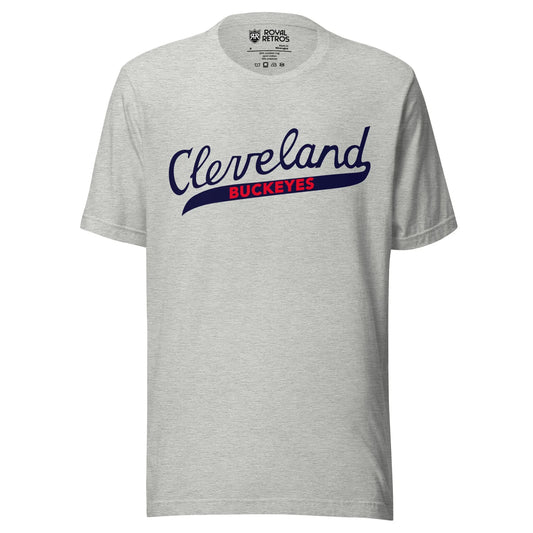
Cleveland Buckeyes T-Shirt
Regular price $29.99 USDRegular priceUnit price per -
-
New York Black Yankees T-Shirt
Regular price $29.99 USDRegular priceUnit price per -
-
Baltimore Black Sox T-Shirt
Regular price $29.99 USDRegular priceUnit price per -











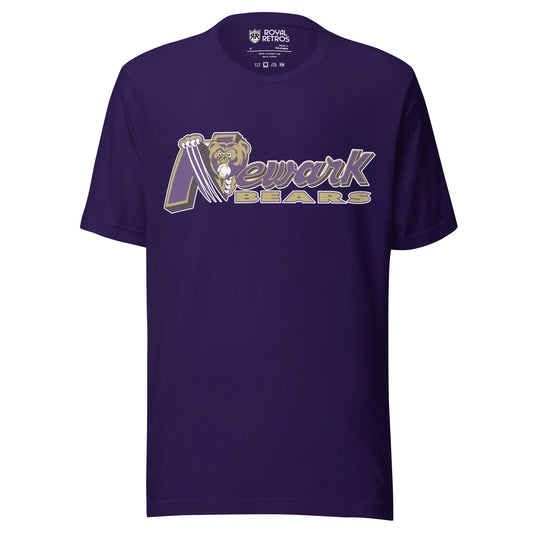






Baseball T-Shirts — Vintage & Throwback Tees from the Negro Leagues, the Pacific Coast League & Every Forgotten Franchise
93 Active Baseball T-Shirts. Negro Leagues, Pacific Coast League, Federal League, Senior Professional Baseball, International & Dead-Mark Franchises. Sizes S–5XL. $29.99–$34.99.
Royal Retros carries 93 active baseball T-shirts, and almost none of them are teams the big licensed retailers bother to print. Thirty-four are Negro Leagues designs spanning three generations of Black baseball, from the barnstorming clubs of the early 1900s through the Negro American League's final seasons well after the sport's biggest stars had already been pulled into the integrated big leagues. Seven are built around defunct-era franchises whose city and nickname no longer belong to a currently operating club — the Seattle Pilots, the Houston Colt .45's, the St. Louis Browns, the Washington Senators, the New York Highlanders. Two are Federal League originals from the self-declared "third major league" that lasted exactly two seasons. Seven come from the Senior Professional Baseball Association, the short-lived 1989–1990 experiment that put retired stars back on the field in Florida and Arizona retirement markets. Four are international designs pulled from Japan's professional circuit and the Caribbean winter-league scene. And close to forty are minor-league and independent-league tees, anchored by the Pacific Coast League's decades as the strongest baseball outside the majors. Standard tees run $29.99 in sizes S–5XL; a small run of long sleeve styles runs $34.99 in S–4XL. None of this is officially licensed apparel — it's heritage tribute merchandise, researched down to the team, the city and the season, and that distinction is covered in full further down this page.
Shop Baseball T-Shirts by League & Era
This catalog is organized the way baseball history actually happened — not one generic "vintage baseball" bucket, but seven distinct eras and leagues, each with its own look, its own colors and its own story. Every collection linked below is verified live with active product in it, no dead ends. Baseball's history is full of leagues and franchises that lasted a handful of seasons, folded into a bigger operation, or simply stopped fielding a team before anyone wrote the story down properly — this section exists because that history deserves a real shop, not a single afterthought product buried inside a generic "old-timey baseball" catalog.
Negro Leagues Baseball T-Shirts
The deepest single category in the shop. Royal Retros carries 34 Negro Leagues tee designs pulled from three overlapping eras: the barnstorming clubs of the 1900s and 1910s, the formal Negro National League and Eastern Colored League of the 1920s and 1930s, and the Negro American League's run into the early 1960s. Marquee teams include the Homestead Grays, the Kansas City Monarchs, the Pittsburgh Crawfords, the Birmingham Black Barons, the Newark Eagles, the Chicago American Giants, the Cleveland Buckeyes, the Baltimore Elite Giants and the Hilldale Club, alongside deeper cuts like the New York Black Yankees, the St. Louis Stars, the Indianapolis ABCs, the Brooklyn Royal Giants, the Chicago Union Giants and the Cuban X Giants. This is some of the hardest history in vintage sports apparel to get right, because so many of these clubs left behind incomplete records — team names changed city to city and year to year, and more than one franchise operated under two or three different names within the same decade.
Part of the difficulty is that Negro Leagues clubs were, for most of their existence, run as independent businesses rather than members of a stable, centrally governed league office. Box scores went unrecorded, local newspapers covered Black baseball unevenly depending on the market, and several franchises moved cities more than once chasing a bigger gate. The National Baseball Hall of Fame's ongoing statistical recognition project, which formally added Negro Leagues records to the sport's official statistics in 2020, is itself a sign of how much of this history had to be actively reconstructed rather than simply looked up. Royal Retros treats that reconstruction work seriously — every team name, city and era on this page is checked against available historical record rather than assumed.
Defunct-Franchise Baseball T-Shirts
Seven tees built around franchises whose city-and-nickname combination belongs to baseball history rather than a currently operating club. The Seattle Pilots played exactly one season, 1969, before relocating and becoming a different franchise entirely. The Houston Colt .45's were Houston's original National League identity before a 1965 name change. The St. Louis Browns spent more than five decades as one of the American League's least successful franchises before relocating out of St. Louis in 1954. The Washington Senators covers the capital's long, complicated run of major league baseball across two separate Senators franchises, both of which eventually left town. The New York Highlanders covers the earliest identity of a New York American League club, before a later name change gave it the identity it competes under today. Every one of these is a dead mark — the city-and-nickname pairing hasn't belonged to a current club for decades, which is exactly why this history is worth telling accurately instead of vaguely.
Federal League Baseball T-Shirts
Two designs from the shortest major-league experiment in the sport's history. The Federal League declared itself a third major league in 1914, fielded franchises including the Chicago Whales and the Chicago Feds, signed established players away from the American and National Leagues, and folded outright after the 1915 season. Federal League gear is some of the rarest, most obscure baseball merchandise a collector can find anywhere, licensed or not.
Senior Professional Baseball Association Tees
Seven tees from one of baseball's strangest experiments: a full professional league built entirely around retired players aged 35 and up, playing a winter schedule in Florida and Arizona retirement markets. The Senior Professional Baseball Association completed one full season in 1989–1990 and collapsed partway through its second before it could finish. Teams like the West Palm Beach Tropics, the St. Lucie Legends, the St. Petersburg Pelicans, the Bradenton Explorers, the Gold Coast Suns, the Sun City Rays and the Orlando Juice all get a tee here — a league that barely lasted a full season but left behind some of the most distinctive, almost resort-wear team names in professional baseball.
International Baseball T-Shirts
Four designs pulled from outside the continental United States. The Orix Blue Wave carries a Japanese Pacific League club identity. The Havana Sugar Kings represented Cuba in the International League — an American AAA-level minor league, not a separate Cuban circuit — until the club was relocated out of Havana in 1960. The Santurce Cangrejeros ("Crabbers") is one of Puerto Rico's most storied winter-league clubs, and a standalone Puerto Rico Baseball design rounds out the international corner. Shop the full International Baseball collection for the complete non-U.S. lineup across every sport, not just baseball.
Pacific Coast League & West Coast Minor League Tees
Roughly two dozen designs anchored by the Pacific Coast League, which spent the first half of the 20th century as close to a third major league as American baseball had outside the Federal League experiment — deep enough talent, and strong enough regional loyalty, that PCL clubs sometimes out-drew nearby big-league teams. Royal Retros carries three separate Portland-market identities alone — the Portland Beavers in both a classic and an 1980's design, plus the independent-league Portland Mavericks — along with the San Francisco Seals in two design treatments, the Sacramento Solons, the Hollywood Stars, the Oakland Oaks, the Los Angeles-market PCL Angels, and the Hawaii Islanders: a full run of the West Coast's dominant high-minors circuit for most of the 20th century.
Regional & Independent Minor League Tees
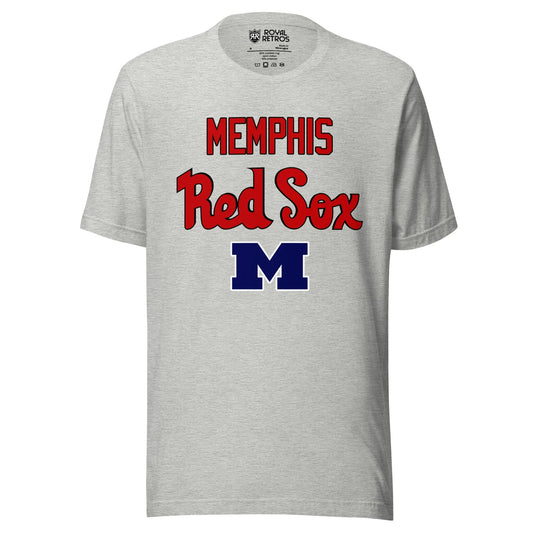
The rest of the minor-league catalog spreads across the rest of the country: the Memphis Chicks, the Minneapolis Millers, the New Orleans Pelicans and New Orleans Zephyrs, the Denver Bears and Denver Zephyrs, the Oklahoma City 89ers, the Louisville Colonels, the Houston Buffalos, the Huntsville Stars, the Traverse City Beach Bums, the Salt Lake Trappers, the El Paso Diablos, the Tacoma Tigers and Tacoma Tugs, the Bellingham Giants, the Southern Oregon Timberjacks, the Montreal Royals and the 2000's-era Newark Bears — regional AA and AAA clubs, plus a run of true independent-league teams that never had a major league affiliation at all, including the novelty-named North Pole Nicks out of Alaska. These are the franchises that built baseball's local, small-market fan culture long before every mid-size city had a major league option of its own. Several of the true independent-league names on this list — the Beach Bums, the Timberjacks, the Diablos — lean into an intentionally offbeat, tourism-market branding style that became common once independent baseball started competing directly with affiliated minor league ball for a limited pool of regional fans in the 1990s and 2000s. A memorable, slightly absurd team name was a real marketing strategy for a club with no major league parent organization to lend it instant credibility.
Shop Baseball T-Shirts by Team
Some franchises run deep enough to have their own dedicated collection with several tee treatments. Here are the deepest lineups in the catalog.
- Homestead Grays — one of the most successful and storied Negro Leagues franchises. Shop Homestead Grays.
- Kansas City Monarchs — the Negro Leagues' most consistently successful club, and the team a young Jackie Robinson played for before crossing into the integrated majors. Shop Kansas City Monarchs.
- Pittsburgh Crawfords — widely regarded as one of the greatest baseball rosters ever assembled, in any league. Shop Pittsburgh Crawfords.
- Birmingham Black Barons — a Negro American League mainstay and the club that gave a teenage Willie Mays his professional start. Shop Birmingham Black Barons.
- Portland Beavers — three separate Portland-market identities spanning the Pacific Coast League and independent-league eras. Shop Portland Beavers.
- Houston Colt .45's — Houston's original National League identity, before the 1965 rebrand. Shop Houston Colt .45's.
- St. Louis Browns — more than fifty years of American League baseball in St. Louis before the franchise relocated. Shop St. Louis Browns.
- Washington Senators — the capital's long, complicated major league history across two separate franchises. Shop Washington Senators.
- Chicago American Giants — one of the Negro Leagues' most successful and longest-running franchises, a Chicago mainstay across multiple league eras. Shop Chicago American Giants.
- Newark Eagles — a Negro National League club whose roster helped stock the earliest wave of integrated major league talent after 1947. Shop Newark Eagles.
Shop Baseball T-Shirts by Graphic Style
Beyond league and team, the designs break down into a handful of recurring graphic treatments that line up closely with the eras covered further down this page.
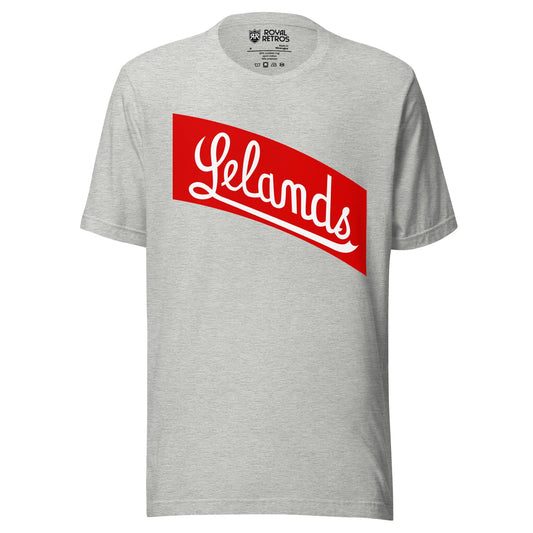
Wordmark & Script Tees — the team name rendered in period-correct cursive or block script, the way a lot of pre-1960s baseball merchandise actually looked before clubs standardized around a single vector logo. The St. Louis Browns Script tee and the San Francisco Seals Script tee are both good examples of the style.
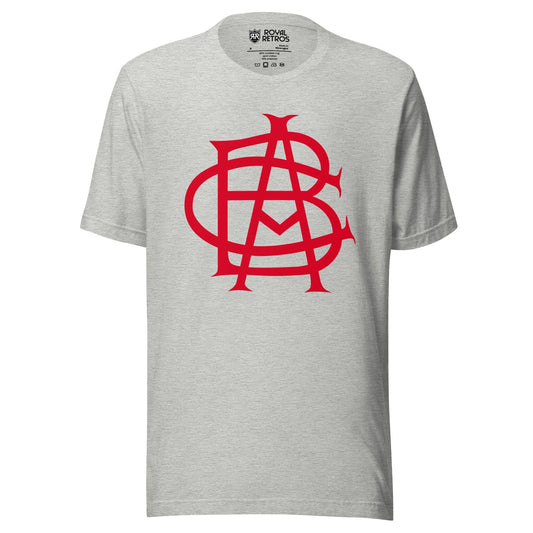
Team Name & Logo Tees — the most common treatment in the catalog: a team's primary mark or wordmark, centered and printed large, the way most fans actually wore their gear at the ballpark.
Batting & Action Graphic Tees — designs built around a player silhouette or an in-action graphic rather than a static crest, like the Oakland Oaks Batting tee.
NLB Heritage Tees — several Negro Leagues designs carry an explicit "NLB" mark alongside the team name, calling out the league affiliation directly on the shirt for clubs whose city or nickname alone might not immediately read as Negro Leagues history to a casual shopper.
Long Sleeve Tees — a small run of long sleeve options, including the Houston Colt .45's, the Seattle Pilots and the North Pole Nicks, at $34.99 in sizes S–4XL.
Materials, Fit & Sizes
Standard tees in this collection are printed on 100% cotton — a 52% cotton / 48% polyester blend on heather colorways — typically a 4.2 oz combed and ring-spun cotton body. That's pre-shrunk at the mill, side-seamed for shape retention, and cut in a unisex classic fit rather than a tight modern athletic cut. Long sleeve styles use the same general fabric family in a long sleeve build. Fabric weight and blend can vary by specific style, so check the "Product Info" section on each product page before you order.
Sizes. Standard tees run S–5XL. Long sleeve tees run S–4XL — one size class narrower than the standard tee, so double-check the chart before ordering a long sleeve style in a larger size. There is no big & tall upcharge on any size Royal Retros offers — a 5XL costs exactly the same as a small on every style that offers it.
Colors. Most designs offer three to five colorways, typically a mix of solid shades like black, navy or white alongside an athletic heather blend in the team's primary color. Color availability varies by team and by print run, so the exact lineup on any given product page is the accurate one to shop from.
Why Royal Retros
- 93 active designs across seven distinct leagues and eras. Most vintage baseball sellers carry a handful of Negro Leagues reprints and call it a catalog. This collection spans the Negro Leagues, the Pacific Coast League, the Federal League, the Senior Professional Baseball Association, international ball and dead-mark major league franchises in one place.
- Real team identity, not generic vintage clip art. Every design is built from an actual team, city and season — not a stock "old-timey baseball" graphic with the city name swapped in from product to product.
- Flat, honest pricing. $29.99 for a standard tee, $34.99 for long sleeve. No surcharge for larger sizes, ever.
- Sizes S–5XL on standard tees. True family sizing without a big & tall markup — the shirt costs the same whether it's a small or a 5XL.
- The clubs nobody else carries. The Federal League's Chicago Whales, the Senior Professional Baseball Association's Gold Coast Suns, a dozen Negro Leagues franchises most fans have never heard of — this is where obscure baseball history actually gets printed onto a shirt.
- Honest about licensing. Nothing on this page claims a league license it doesn't have. What you get instead is accurate history and careful design work.
Baseball T-Shirt Buying FAQ
What sizes are available?
Standard tees run S–5XL. Long sleeve styles run S–4XL, one size class narrower. Check the size chart on the specific product page before you order.
How much do the shirts cost?
$29.99 for a standard tee, $34.99 for long sleeve styles. Prices are the same across every size within a style — no big & tall upcharge.
What are the shirts made from?
100% cotton (52% cotton / 48% polyester on heather colorways), typically 4.2 oz combed and ring-spun cotton, pre-shrunk and side-seamed in a unisex classic fit. Check each product page for the exact spec on that item.
Are these officially licensed?
No. These are heritage tribute reproductions built from real team history — real years active, real colors, real city and league affiliations — not officially licensed merchandise. Royal Retros does not hold a license from the Negro Leagues, the Pacific Coast League, the Federal League, the Senior Professional Baseball Association, or any current or former major league organization for the designs on this page. That does not make the history behind them any less accurate; it means the claim of "officially licensed" simply doesn't apply here, and this page will never make that claim.
Will the shirt shrink?
The cotton is pre-shrunk at the mill, so shrinkage after a normal wash cycle should be minimal. Wash cold and tumble dry low, or hang dry, to protect the print and hold the fit longest.
How should I care for a printed tee?
Turn the shirt inside out before washing, use cold water, and skip the dryer's high heat setting — a printed graphic lasts noticeably longer with a low-heat or air-dry cycle. Avoid ironing directly on the print; if you need to press the shirt, iron the reverse side.
How fast does it ship?
Standard tees ship within 3–5 business days. Long sleeve styles generally follow the same timeline, but check the specific product page for any style-specific note before you check out.
What's the return policy?
Standard, non-customized items follow our return policy at /pages/returns. Any product listed as made-to-order or final sale will say so clearly on the product page before you complete checkout.
Can I get a custom name and number on a baseball tee?
Custom naming and numbering is available on select styles — check the individual product page for a personalization option before you add it to your cart. Not every design in this collection offers customization, so confirm on the specific tee rather than assuming it's available across the board.
Baseball T-Shirt Design, Era by Era
How did Negro Leagues team graphics differ from era to era?
Negro Leagues graphics changed with the money and the printing technology available to each club, and both varied enormously by decade and by team. Early-1900s and 1910s barnstorming clubs typically wore simple flannel uniforms with a city name or basic wordmark, since these were independent, often self-financed operations without a league office standardizing anything. Once the Negro National League organized in 1920 and the Eastern Colored League followed in 1923, team identities got more consistent — cursive script wordmarks, animal and figure mascots, and color schemes that mirrored (and sometimes deliberately echoed) the white major league clubs playing in the same cities. By the Negro American League's final seasons in the late 1950s and early 1960s, some clubs had moved to bolder, more modern block lettering, closer in spirit to the graphic language the integrated majors were adopting during the same years. A reproduction tee that gets this progression right — matching the graphic style to the specific season it claims to represent — is doing meaningfully more research than one that applies a single generic "old-timey" look across every Negro Leagues team regardless of era.
What makes Pacific Coast League graphic design distinct?
Pacific Coast League design leaned heavily on West Coast civic identity rather than pure baseball iconography — team names built around local industry, geography or folklore (Solons, Seals, Beavers, Oaks) rather than the more generic "Giants/Tigers/Stars" naming pattern common elsewhere in the minors. Because the PCL operated at something close to major league quality for decades without ever being one, its clubs often invested in sharper, more professional-grade uniform and merchandise design than a typical minor league team of the same era, closer to what a big league club would commission than what a lower-level farm club would settle for. That extra design investment is part of why PCL graphics still hold up as genuinely sharp, collectible looks today, rather than a lesser regional afterthought.
What do ballpark and pennant graphics represent on a baseball tee?
Ballpark silhouettes and pennant-shaped graphics tie a design to a specific building and a specific season rather than just a team mark. A pennant shape specifically echoes the physical league-championship pennants that were awarded and flown at ballparks for most of the 20th century — a visual shorthand for "this team won" or "this team competed for it" that reads as instantly period-correct to anyone who grew up watching the sport. Ballpark silhouette graphics do similar work for fans who remember a specific stadium more vividly than a specific era of the team that played in it — useful across this catalog given how many of these franchises played in ballparks that no longer exist in any form.
How did screen printing shape mid-century baseball merchandise?
Screen printing pushes ink through a mesh stencil onto fabric, one color and one pass at a time, and it was effectively the only commercially viable method for printed baseball apparel through most of the 20th century. Because each additional ink color meant another screen, another pass and more cost, mid-century baseball tees and jerseys tended toward one or two solid colors with minimal shading or gradient work — a look that reads as instantly "vintage" today largely because the printing technology of the era physically couldn't produce anything busier. Multi-color screen printing became commercially affordable later in the century, which is part of why a design's color complexity is itself a rough clue to when the original graphic dates from.
How can you date a baseball tee design by its typography?
Letterforms are one of the most reliable ways to place a baseball graphic in its decade. Rounded, hand-lettered cursive script with minimal ornamentation points to the pre-1950s era, when uniform lettering was often hand-painted or hand-cut rather than digitally rendered. Bold, condensed block letters — sometimes with a simple drop shadow — point to the 1950s through 1970s, as printing shifted toward cleaner, more standardized commercial lettering. Chunkier, more angular sans-serif lettering, often paired with a mascot or action graphic, points to the 1980s and the early wave of independent and Senior Professional Baseball Association-era merchandise. Clean, flat vector wordmarks with tight, uniform spacing are a 1990s-and-later signature, arriving once digital design software replaced hand-drawn lettering almost entirely. A well-built reproduction tee matches its typography to the actual season it represents rather than defaulting to whichever font looks generically "old-timey."
Why do so many defunct and Negro Leagues franchises share simple, bold graphics?
Budget, not aesthetics, drove most of it. Independent Negro Leagues clubs, short-lived leagues like the Federal League, and small-market minor league franchises were almost never operating with the promotional budgets of an established major league club, and simpler graphics were both cheaper to produce and easier to reproduce consistently across a full run of uniforms and merchandise. That constraint produced a look — bold, high-contrast, minimal fine detail — that reads today as clean and confident rather than cheap, which is a large part of why this era of design has aged so well as a T-shirt graphic decades later.
How has heritage baseball apparel changed since the 2010s?
The biggest shift in the last decade or so has been fabric and access, not print technique. Where mid-century and late-20th-century baseball tees leaned on heavier, stiffer cotton, the current era of reproduction apparel favors softer, lighter combed and ring-spun cotton — closer to a well-worn, years-old shirt right out of the package. Small-batch and print-on-demand production also made it commercially viable to produce shirts for franchises with a genuinely tiny surviving fan base — a single Negro Leagues club that folded in the 1930s, or a Senior Professional Baseball Association team that played one partial season — something that would never have justified a factory print run under the licensed-apparel model of the 1990s and 2000s.
What's the difference between a wordmark tee and a script tee?
A wordmark tee uses a team's standardized, block-letter name treatment — the version a club would put on a scoreboard or an official pennant. A script tee uses a cursive, hand-lettered-style treatment, closer to how a team name was often painted directly onto a jersey chest in the pre-1960s era, before printed merchandise standardized around a single logo lockup. Both are period-accurate depending on the team and the season; the difference is aesthetic and historical rather than one being more "correct" than the other.
What Makes Ours Period-Correct
Construction and accuracy. Sewn-on tackle-twill and embroidered numbers where the original called for it, era-correct fonts and colors, and true-to-original construction — every design is checked against period references before it goes live.
Extended Baseball FAQ
What happened to the Negro Leagues?
The Negro Leagues declined steadily after Jackie Robinson's 1947 major league debut, as integration drew the sport's best Black players — and eventually its fan base — into the previously all-white major and minor league systems. The Negro American League played on in a diminished form into the early 1960s before folding outright, by which point most of its remaining talent and audience had already shifted to the newly integrated affiliated leagues.
What was the Federal League?
The Federal League declared itself a third major league in 1914 and operated for exactly two seasons before folding after 1915 — one of the shortest-lived major-league experiments in the sport's history, and part of why Federal League gear is some of the rarest, most obscure baseball merchandise a collector can find.
Why did the Seattle Pilots only play one season?
The Seattle Pilots were undercapitalized from the start, played their entire 1969 season in a stadium that wasn't built to major league standards, and drew attendance too thin to sustain the franchise. Ownership sold the team into bankruptcy proceedings after just one season, and the club relocated and was rebranded before the following season began.
What is the Pacific Coast League's history?
The Pacific Coast League organized in 1903 and spent the first half of the 20th century as arguably the strongest baseball outside the recognized major leagues — deep enough talent and strong enough regional followings, especially in California, that some PCL clubs drew crowds and paid salaries competitive with the majors themselves. Major league expansion to the West Coast in 1958 permanently changed the league's position in the baseball hierarchy, and the PCL has operated as a conventional minor league ever since, though it remains active today.
What was the Senior Professional Baseball Association?
The Senior Professional Baseball Association was a professional league for retired players aged 35 and older, launched in the fall of 1989 with teams based mostly in Florida and Arizona retirement markets. The league completed one full winter season but collapsed partway through its second, in early 1990, after several franchises ran out of money.
Why do some historic team names use "[City] Baseball" instead of the full nickname?
Some historic team identities still overlap with a currently operating professional franchise's trademark. Where that's the case, Royal Retros uses the city-plus-sport form in retail listings and titles rather than leaning on a nickname a live franchise still actively owns, while the full historic name is used freely in narrative history, where the team identity itself is the subject.
What's the difference between the Federal League and the Negro Leagues?
They were entirely separate operations that happened to overlap in time. The Federal League was a short-lived, all-white major league challenger that operated in 1914 and 1915 and competed directly with the American and National Leagues for established players. The Negro Leagues were a separate, parallel professional structure built specifically because Black players were barred from the American and National Leagues at the time — a segregation-era system, not a competing "third major league" in the Federal League's sense, and one that lasted for decades rather than two seasons.
Is the Pacific Coast League still active today?
Yes, in name — the Pacific Coast League continues to operate as a minor league to this day. What changed permanently was its position in the sport's hierarchy: before major league expansion reached the West Coast in 1958, the PCL functioned as something close to an unofficial third major league for West Coast fans with no local big-league option. The historic teams featured on this page — the Hollywood Stars, the original Oakland Oaks, the Sacramento Solons — mostly stopped operating under those specific identities decades ago, even though the league itself carried on.
Can I match a tee to a jersey from the same team?
In most cases, yes. Search the team name directly, or start from the league collection linked above and check the custom jerseys catalog for a matching design. Not every team with a tee has a matching jersey design yet, so check availability on the specific team before assuming a full set exists.
What does "heritage" or "tribute" apparel mean?
It means the design is built from real team history — colors, marks, years active — rather than a generic graphic with the city name swapped in. It is honest, historically researched fan apparel first, and it is never presented on this page as officially licensed merchandise.
What if my team isn't listed above?
The breakdown above covers every collection verified live at the time this page was built, but the underlying catalog gets new designs regularly. If a specific team isn't linked here yet, search the team name directly from the site search bar — a design may already exist without a dedicated collection page built around it yet.
Shop Related Collections
- All Hats — throwback hats to pair with any tee on this page.
- Basketball T-Shirts — the ABA and BAA tee lineup.
- Custom Jerseys — build a matching throwback jersey for any team on this page.
- Federal League — the full Federal League catalog, jerseys and hats included.
- Football T-Shirts — the largest single-sport tee category in the shop.
- Hockey T-Shirts — WHA, IHL, Roller Hockey International and Columbus Chill.
- International Baseball — the full non-U.S. baseball catalog across every product type.
- Senior Professional Baseball Association — the full 1989–1990 senior-league catalog.
- Vintage Sports T-Shirts — the full cross-sport tee catalog this collection is part of.
Baseball T-Shirts — 93 Active Designs, Every Forgotten League, One Home at Royal Retros.