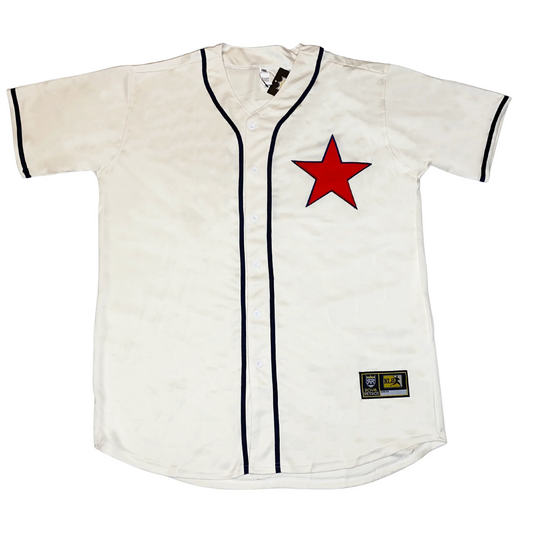
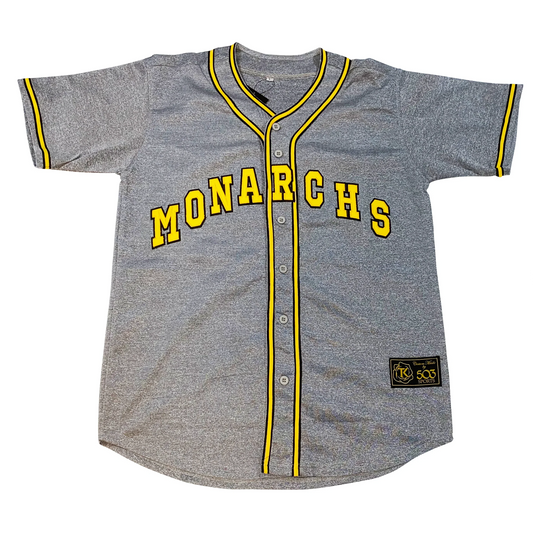
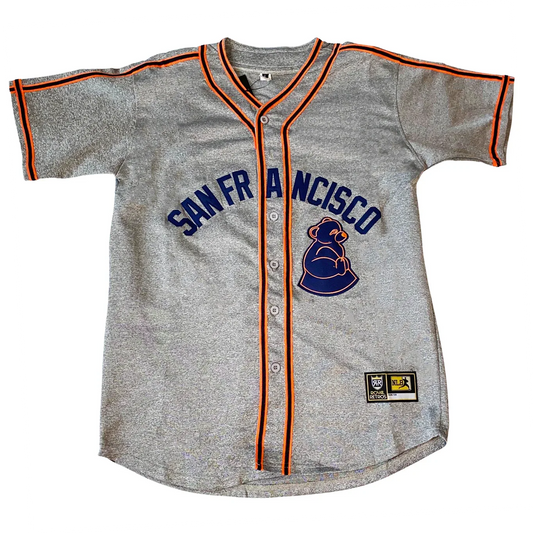
The Negro Leagues Baseball Collection — Royal Retros NLB Fan Shop
The Largest NLB Collection on the Web. 162+ Products. 45+ Teams. Custom Names & Numbers. Sizes S–5XL.
Royal Retros carries the most comprehensive Negro Leagues Baseball (NLB) apparel collection on the web — 162+ products, 45+ teams, every product type from authentic flannel jerseys to snapback hats, hoodies, T-shirts, jackets, and shorts. Whether you're looking for a Kansas City Monarchs jersey, a Homestead Grays hat, a Pittsburgh Crawfords T-shirt, or rare gear from teams like the Seattle Steelheads, San Francisco Sea Lions, or Denver White Elephants — you'll find more here than anywhere else online. Custom name and number on most jerseys. Sizes Small through 5XL. Affordable across the entire collection — most jerseys $64.99–$74.99, most hats $24.99–$34.99, all tees $29.99.
What You Can Shop in the NLB Collection
NLB Jerseys (74+ styles) — Royal Retros NLB jerseys including custom jerseys, flannel jerseys, replica jerseys, remix jerseys, throwback jerseys, and Vintage Icons jerseys for teams across the full spectrum of Negro Leagues history. Custom name and number on most styles. Most jerseys $64.99–$74.99; premium flannels $149.99.
NLB Hats (33+ styles) — Snapback hats, flex-fit hats, unstructured hats, and beanies for dozens of teams including the Monarchs, Grays, Crawfords, Steelheads, Eagles, and more. Mostly $24.99–$34.99.
NLB T-Shirts (32+ styles) — Soft, comfortable team tees representing historic NLB franchises in premium fabrics. $29.99.
NLB Hoodies and Sweatshirts — Pullover hoodies featuring NLB team branding for year-round wear.
NLB Jackets and Outerwear — Premium outerwear for the most dedicated NLB fans.
NLB Shorts — Team-branded athletic shorts.
Customization — Most NLB jerseys offer free name/number customization. Look for the "Custom" option on each product listing. Custom items are final sale and made to order, so allow 7–10 business days for production.
Sizes — Small through 5XL on virtually every product. No big & tall upcharge.
Shop by Marquee NLB Team
Kansas City Monarchs. The most successful franchise in Negro Leagues history — the New York Yankees of Black baseball. Founded by J.L. Wilkinson in 1920, charter member of the Negro National League, winners of 10 league pennants and 2 Negro World Series titles. Home to Satchel Paige, Buck O'Neil, Hilton Smith, and Bullet Joe Rogan — and the franchise that signed Jackie Robinson in 1945, paying him $400 a month before he integrated Major League Baseball. Shop the Kansas City Monarchs collection (14 products) →
Homestead Grays. The Josh Gibson and Buck Leonard dynasty. Originally a Pittsburgh-area sandlot team founded in 1912, the Grays became the dominant Negro League franchise of the late 1930s and 1940s — winning nine straight Negro National League pennants from 1937 through 1945. Home to Cool Papa Bell, Smokey Joe Williams, and Oscar Charleston in the 1930s; Gibson and Leonard in the 1940s. Played home games in both Pittsburgh and Washington, D.C. Shop the Homestead Grays collection (13 products) →
Pittsburgh Crawfords. The greatest team ever assembled in Black baseball — and arguably in any baseball, anywhere, in any era. Owner Gus Greenlee built the 1935 Crawfords roster around five future Hall of Famers: Josh Gibson, Cool Papa Bell, Oscar Charleston, Judy Johnson, and Satchel Paige. They played in Greenlee Field, the first Black-owned ballpark built specifically for a Negro League franchise. They won the 1935 Negro National League pennant. There has never been a baseball team like the 1935 Crawfords, before or since. Shop the Pittsburgh Crawfords collection (10 products) →
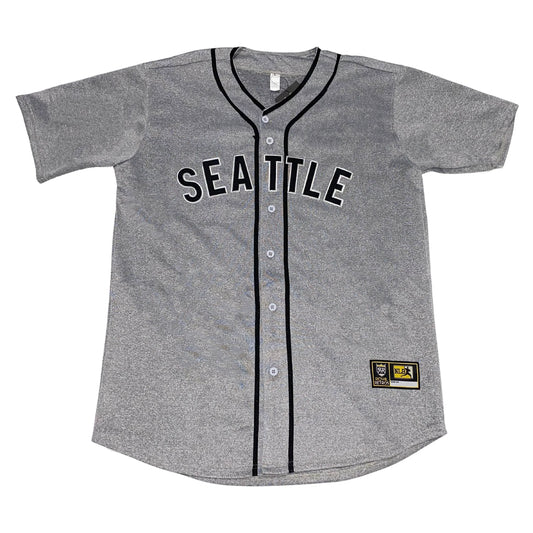
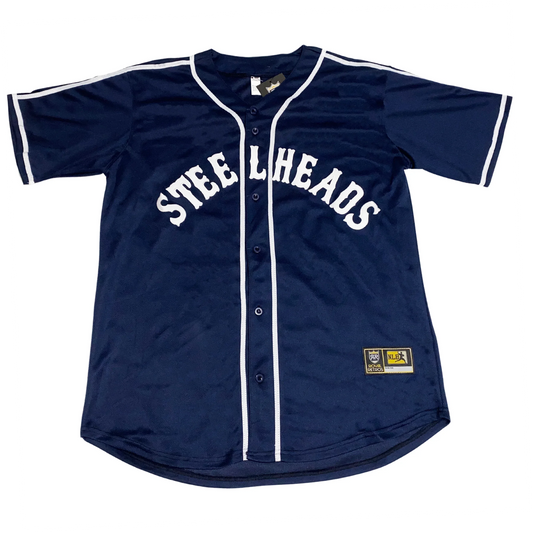
Seattle Steelheads. The collection's most fully represented franchise (13 products). The Steelheads were a 1946 West Coast Negro League team — short-lived as a franchise but enormously important as a Pacific Northwest piece of NLB history. Royal Retros' Steelheads collection includes custom jerseys, flannel jerseys, remix jerseys, replica jerseys, snapbacks, hoodies, and full apparel range. Shop the Seattle Steelheads collection (13 products) →
Birmingham Black Barons. The Negro American League franchise that signed 17-year-old Willie Mays in 1948. The 1948 Black Barons reached the Negro League World Series with Mays in center field — the last Negro League World Series ever played, against the Homestead Grays. Mays then went to the New York Giants in 1950, where he became the most complete player of his generation. Shop the Birmingham Black Barons collection (13 products) →
Newark Eagles. Effa Manley's franchise — and Effa Manley remains the only woman in the Baseball Hall of Fame. The Eagles were home to Monte Irvin, Larry Doby, Leon Day, Ray Dandridge, and Willie Wells in the late 1930s and 1940s. Won the 1946 Negro World Series. Larry Doby left the Eagles in July 1947 to integrate the American League with the Cleveland Indians — eleven weeks after Jackie Robinson did the same in the National League. Shop the Newark Eagles collection (6 products) →
Indianapolis Clowns. The longest-surviving Negro League franchise — barnstorming continuously from 1929 through the late 1980s. Signed 18-year-old Hank Aaron in spring 1952; he played 26 games for the Clowns before the Boston Braves bought his contract for $10,000. The Clowns were also the first integrated professional baseball team to roster women, signing Toni Stone, Mamie Johnson, and Connie Morgan in the 1953–54 seasons. Shop the Indianapolis Clowns collection (5 products) →
Plus 35+ more teams: Chicago American Giants, New York Black Yankees, New York Cubans, Philadelphia Stars (NLB), Baltimore Elite Giants, Baltimore Black Sox, Detroit Stars, Cleveland Buckeyes, Memphis Red Sox, San Francisco Sea Lions, Oakland Larks, Los Angeles White Sox, Denver White Elephants, Milwaukee Bears, Atlanta Black Crackers, Brooklyn Royal Giants, Hilldale Club, plus the early pioneers (Cuban X Giants, Cuban Stars, Lelands Giants, Chicago Union Giants).
Why Royal Retros Has the Best NLB Collection
-
Breadth. 162+ products across 45+ teams. Largest single NLB shop on the open web.
-
Depth per team. Marquee franchises like Seattle Steelheads (13 products), Homestead Grays (13), Birmingham Black Barons (13), Kansas City Monarchs (14), and Pittsburgh Crawfords (10) carry full product lines.
-
Rare teams. Denver White Elephants, Oakland Larks, Salt Lake Occidentals, Portland Rosebuds, Chattanooga Choo-Choos, Montgomery Gray Sox, Texas Black Spiders — deep cuts no one else carries.
-
Affordable pricing. Most NLB jerseys $64.99–$74.99. Most hats $24.99–$34.99. All tees $29.99. Premium flannel jerseys $149.99 — significantly under what other NLB-specialty retailers charge for comparable items.
-
Product variety. Jerseys, flannel jerseys, remix jerseys, Vintage Icons, custom jerseys, snapbacks, flex hats, unstructured hats, beanies, T-shirts, hoodies, jackets, shorts. Anything you'd want in NLB apparel.
-
Sizes Small through 5XL. No big & tall upcharge.
-
Free customization on most jerseys. Add your name and number at no extra cost.
Quick Buying Questions
What sizes do NLB jerseys come in?
Small through 5XL on virtually every jersey style. Hats are typically one-size-fits-most (snapback / flex) or fitted in standard cap sizes. We don't upcharge for big & tall sizes.
Can I add my name and number to an NLB jersey?
Yes — most styles offer free customization. Look for the "Custom" option on the product listing. Custom items are final sale and made to order, so allow 7–10 business days for production before shipping.
What materials are NLB jerseys made from?
Authentic flannel on select limited pieces, heavyweight twill on most replica jerseys, premium pre-shrunk cotton on T-shirts, and heavyweight cotton blends on hoodies. Period-correct construction wherever historical reference imagery exists for a specific team and era.
How accurate is the design?
Color palettes, lettering style, sleeve striping, and crest detail are reproduced to match historical NLB game-worn uniforms wherever reference imagery exists. The Negro Leagues' visual archive is incomplete — many teams have only a handful of surviving photographs — and we work from those photographs to reproduce designs as faithfully as possible.
How fast does it ship and what's the return policy?
Standard products ship within 3–5 business days. Custom items (those with personalized name/number) are made to order and ship within 7–10 business days. Custom items are final sale. Standard items follow our return policy at /pages/returns.
Gift Ideas for the NLB Fan in Your Life
The NLB fan is a specific kind of baseball fan — knowledgeable, historically literate, deeply invested in the game's full story. Generic MLB gifts miss the mark. NLB throwback gear connects to identity, history, and place.
-
For the Kansas City baseball fan: A Kansas City Monarchs jersey or hat. The Monarchs are the most decorated franchise in the entire history of Negro Leagues baseball, and Kansas City has owned that legacy for over a century. The Negro Leagues Baseball Museum sits in Kansas City for a reason.
-
For the Pittsburgh fan: Pittsburgh has two of the greatest NLB franchises ever assembled — the Homestead Grays (Josh Gibson and Buck Leonard) and the Pittsburgh Crawfords (Gibson, Bell, Charleston, Johnson, Paige). Either gift is a deep-cut Pittsburgh sports purchase.
-
For the Birmingham or Alabama baseball fan: A Birmingham Black Barons jersey carries the Willie Mays story — the 17-year-old kid who became the most complete player of his generation. Birmingham still hosts the Rickwood Field Classic each year as a tribute to the city's NLB legacy.
-
For the Newark or New Jersey fan: A Newark Eagles jersey carries the Effa Manley legacy — the only woman in the Baseball Hall of Fame, and the executive who developed Larry Doby into the player who broke the American League color barrier.
-
For the Pacific Northwest fan: A Seattle Steelheads jersey is the deepest cut available — a 1946 West Coast NLB franchise that almost nobody else carries.
-
For the historian: Any of the rare-team pieces — Denver White Elephants, Oakland Larks, Atlanta Black Crackers, Baltimore Black Sox. Conversation-starter pieces that signal real depth of knowledge.
-
For Father's Day, Black History Month, or Juneteenth: NLB apparel carries a meaning that generic team gear doesn't. The right jersey is a tribute as much as it is a piece of clothing.
-
Year-round demand. NLB gift demand is not seasonal — Negro Leagues nostalgia and history is a year-round purchase driver. Birthdays, anniversaries, holidays, graduations, and milestone moments all see steady NLB orders.
What Were the Negro Leagues?
The Negro Leagues were professional baseball organizations that operated in the United States from the 1880s through the 1960s, providing elite professional baseball for Black players during the era of racial segregation. Major League Baseball officially recognizes them as major leagues — a reclassification announced on December 16, 2020 — and their players' statistics are now included in MLB's official historical records. The Negro National League (NNL) was founded in 1920 by Rube Foster. The Eastern Colored League followed in 1923. The Negro American League (NAL) operated from 1937 through 1962. Together these leagues produced Hall of Famers including Josh Gibson, Satchel Paige, Cool Papa Bell, Oscar Charleston, Buck Leonard, Turkey Stearnes, Judy Johnson, Martin Dihigo, and Rube Foster himself — plus the generation of players who later integrated MLB: Jackie Robinson, Larry Doby, Willie Mays, Hank Aaron, Roy Campanella, Ernie Banks, Monte Irvin, and Minnie Miñoso.
The History of the Negro Leagues — A Complete Overview
The Pre-League Era (1880s–1919). Before organized leagues existed, dozens of independent Black baseball clubs barnstormed the country. The Cuban Giants (founded 1885), the Page Fence Giants (1894), the Chicago Union Giants, the Philadelphia Giants, and the Cuban X Giants traveled by train, played 150-plus games per season against any opponent who would book them, and produced Hall of Famers like John Henry "Pop" Lloyd, José Méndez, Pete Hill, and Frank Grant. Rube Foster — eventually the founder of the Negro National League — managed and pitched for the Chicago American Giants during this era and built the player pool and managerial infrastructure that would make organized leagues possible.
The Founding of the NNL (1920). On February 13, 1920, Andrew "Rube" Foster convened a meeting at the Paseo YMCA in Kansas City and chartered the Negro National League — the first stable, organized professional Black baseball league in American history. Eight charter franchises: Chicago American Giants, Kansas City Monarchs, Detroit Stars, Indianapolis ABCs, St. Louis Giants, Dayton Marcos, Cuban Stars (West), and Chicago Giants. Foster ran the league from his Chicago headquarters and personally absorbed losses to keep struggling franchises afloat — the league owed its survival to his sustained personal financial commitment through 1926.
The Eastern Colored League and the First Negro World Series (1923–1927). The Eastern Colored League was founded in 1923 to compete with — and complement — Foster's NNL. Charter franchises included the Hilldale Daisies, Baltimore Black Sox, Brooklyn Royal Giants, Cuban Stars (East), New York Lincoln Giants, and the Bacharach Giants. Beginning in 1924, the NNL and ECL champions met in the Colored World Series — the first Black baseball "World Series" in history. The Monarchs won 1924 over Hilldale; Hilldale won 1925 over the Monarchs; the Chicago American Giants won 1926 and 1927 over the Bacharach Giants. The ECL collapsed in 1928 amid financial mismanagement and the broader pressures of the late-1920s economy.
The First NNL Era Ends (1928–1932). Rube Foster suffered a mental collapse in 1926 and was committed to an asylum, where he died in 1930. Without his stewardship, the NNL began to struggle. The Great Depression devastated Black baseball — gate receipts fell, franchises folded, and the original NNL ceased operations in 1932. For one season, no organized Negro League existed.
The Second NNL and the Emergence of the Negro Leagues' Golden Age (1933–1937). Pittsburgh numbers-game operator Gus Greenlee revived the league in 1933 as the new Negro National League and built the Pittsburgh Crawfords into baseball's greatest collection of talent. The 1935 Crawfords rostered five future Hall of Famers — Josh Gibson, Cool Papa Bell, Oscar Charleston, Judy Johnson, and Satchel Paige — plus a half-dozen other elite players. Greenlee built Greenlee Field, the first Black-owned ballpark built specifically for a Negro League team. He launched the East-West All-Star Game in 1933, which became the largest annual Black sporting event in the country, regularly drawing 30,000+ to Comiskey Park in Chicago.
The Negro American League (1937–1948). The Negro American League was founded in 1937 as the Western counterpart to the (second) NNL. Charter franchises included the Kansas City Monarchs, the Chicago American Giants, the Memphis Red Sox, the Birmingham Black Barons, the Detroit Bears (later Stars), the Indianapolis Athletics (later Clowns), the St. Louis Stars, and the Atlanta Black Crackers/Black Crackers. Beginning in 1942, the NAL pennant winner met the NNL pennant winner in a renewed Negro World Series — the Monarchs winning 1942 over the Grays; the Grays winning 1943, 1944, and 1948; the Cleveland Buckeyes winning 1945; the Newark Eagles winning 1946; and the New York Cubans winning 1947.
Integration and Decline (1947–1960). Jackie Robinson's debut with the Brooklyn Dodgers in April 1947 began the integration of MLB — but it also began the slow death of the Negro Leagues as economically viable enterprises. As MLB teams signed Black stars away (Larry Doby, Roy Campanella, Don Newcombe, Monte Irvin, Willie Mays, Hank Aaron, Ernie Banks), Negro League gate receipts dropped sharply. The (second) NNL folded in 1948. The NAL continued operating with diminished resources through 1962, sustained primarily by the Indianapolis Clowns, Kansas City Monarchs, Birmingham Black Barons, and Memphis Red Sox. The 1948 Negro World Series — Black Barons vs. Grays — was the last formally contested Negro League championship. Hank Aaron's 1952 Indianapolis Clowns season, Toni Stone's 1953 Indianapolis Clowns barnstorming, Ernie Banks's 1953 Kansas City Monarchs season, and Henry Mason's 1958 Memphis Red Sox season all happened within an organized but rapidly shrinking NAL. The Indianapolis Clowns barnstormed continuously through the late 1980s — the longest-surviving NLB franchise in any form.
Year-by-Year Negro League Champions and Pennant Winners
Across more than 40 years of organized Negro Leagues play, twelve different franchises won league championships. Here are the most important seasons in NLB history:
The takeaway: The Negro Leagues were genuinely, demonstrably major-league baseball — competitive balance across a dozen franchises, multiple dynasties, multiple breakthrough teams. The 1937–45 Grays pennant streak alone is one of the most dominant runs in baseball history at any level.
Rube Foster — The Father of the Negro Leagues
No single figure matters more in Negro Leagues history than Andrew "Rube" Foster. Born in 1879 in Calvert, Texas, Foster was first one of the dominant pitchers in pre-league Black baseball — winning a reported 51 of 55 starts in 1903 for the Cuban X Giants. He took over the Chicago American Giants as player-manager in 1907, won the western Black baseball championship year after year, and built the Giants into the most respected and most stable Black baseball franchise in the country.
By 1919, Foster had accomplished what no one before him had managed: he had built a major-league-caliber Black baseball operation that ran like a business. Salaries were paid on time. Travel was organized. Equipment was professional. Schedules were reliable. He proved the model could work — and he set out to replicate it across the country.
On February 13, 1920, at the Paseo YMCA in Kansas City, Foster convened the meeting that founded the Negro National League. He drafted the league's constitution, set the franchise structure, and personally underwrote much of the league's operating expense for its first six seasons. When franchises folded mid-season, he covered payrolls. When teams couldn't make road-trip expenses, he wrote checks. When the East-West rivalry threatened the league's stability, he negotiated the truces. The NNL existed because Rube Foster willed it to exist and paid for it to keep going.
Foster's stewardship ended in 1926 when he suffered a mental collapse — likely the result of years of overwork, financial strain, and stress — and was committed to a state asylum in Kankakee, Illinois. He died there in 1930 at age 51. The first Negro National League collapsed within two years of his death.
The Hall of Fame elected Foster as a manager and pioneer in 1981. Wearing a Chicago American Giants jersey is, in a real sense, wearing the jersey of the man who built organized professional Black baseball into existence.
The 1935 Pittsburgh Crawfords — The Greatest Team Ever Assembled
There has never been a roster like the 1935 Pittsburgh Crawfords. Not in Negro Leagues baseball. Not in Major League Baseball. Not in any organized professional baseball league in any era.
Owner Gus Greenlee — a numbers-game operator who used his profits to fund Black baseball — assembled the roster around five players who would all eventually be elected to the Baseball Hall of Fame: Josh Gibson (catcher, often called "the Black Babe Ruth" but more accurately the most powerful right-handed hitter in the history of professional baseball), Cool Papa Bell (center fielder, perhaps the fastest player in baseball history — Satchel Paige said he could "turn out the light and be in bed before the room got dark"), Oscar Charleston (player-manager, considered by many contemporary observers the greatest all-around player in Black baseball history), Judy Johnson (third baseman, defensive cornerstone), and Satchel Paige (starting pitcher, the most famous Black baseball player of the 20th century).
That's five Hall of Famers on a single 18-man roster. By comparison: the 1927 New York Yankees — generally considered the greatest team in Major League Baseball history — had four future Hall of Famers (Ruth, Gehrig, Lazzeri, Combs).
The Crawfords played in Greenlee Field, which Gus Greenlee built specifically for the team — the first Black-owned ballpark built for a Negro League franchise. They won the second NNL pennant in 1935 and again in 1936. The roster broke up after 1936 when Greenlee, facing financial pressure, traded or sold most of his stars (Gibson and Bell to the Homestead Grays; Paige to a Dominican Republic team for higher pay; Charleston to the Toledo Crawfords).
The 1935 Crawfords lasted one season at full strength. But that one season was, on a per-player Hall of Fame density basis, the greatest baseball roster in the documented history of the sport. A Royal Retros Pittsburgh Crawfords jersey is the jersey of that roster. There is no equivalent piece of baseball apparel in any other team's history.
The Major League Reclassification — December 16, 2020
For most of the 20th century, the Negro Leagues' statistics were officially classified by Major League Baseball as "minor league" or "unofficial." This was wrong as a matter of competitive reality — the Negro Leagues' best teams routinely defeated MLB teams in barnstorming exhibitions, and Negro League players who later crossed into MLB after 1947 were immediately among the league's best players.
On December 16, 2020, after a multi-year review by a research committee that included historians from the Society for American Baseball Research (SABR) and the Negro Leagues Baseball Museum, MLB Commissioner Rob Manfred announced that the Negro Leagues — specifically the seven leagues operating between 1920 and 1948 — would be officially reclassified as major leagues. The 3,400+ documented Negro League players became major leaguers in the official MLB record book.
The reclassification was retroactive. Negro Leagues statistics were merged into MLB's official statistical record. In June 2024, MLB completed a comprehensive integration of Negro Leagues statistics, with sweeping changes to the all-time record book — most notably Josh Gibson, who under the integrated records became the all-time MLB leader in career batting average (.372), single-season batting average (.466 in 1943), career slugging percentage (.718), and career OPS (1.177).
This is not revisionism. It is correction. The Negro Leagues were major-league baseball. The data and competitive evidence supported this conclusion for decades. MLB's December 2020 announcement formalized what historians had documented for years.
What this means for the NLB throwback apparel market: every Negro League franchise of the 1920–1948 era is now, by MLB's own official designation, a former major-league franchise. A Kansas City Monarchs jersey is, formally, a major-league franchise jersey. So is a Homestead Grays jersey, a Pittsburgh Crawfords jersey, and a Newark Eagles jersey. Royal Retros' NLB collection is an MLB-equivalent franchise collection, and the historical record is finally caught up to that fact.
Integration and the End of the Negro Leagues
Jackie Robinson's debut with the Brooklyn Dodgers on April 15, 1947, is one of the defining moments in American sports history. It is also — though less often discussed — the moment that began the dismantling of the Negro Leagues as economically viable enterprises.
Robinson had played the 1945 season for the Kansas City Monarchs, where he was scouted by Branch Rickey and signed for the Dodgers' system. The Monarchs received no compensation for losing Robinson — the Negro League franchises had no formal contractual relationship with their players that MLB teams were obligated to honor. As MLB teams began signing Black stars away through 1947, 1948, and beyond, the Negro League franchises lost their gate-attraction stars without compensation.
Eleven weeks after Robinson's debut, on July 5, 1947, Larry Doby debuted with the Cleveland Indians — becoming the first Black player in the American League. Doby came from the Newark Eagles; the Eagles received $15,000 from Cleveland for his contract, the first formal Black baseball player sale to an MLB team. (Effa Manley, the Eagles' co-owner, fought hard for that compensation and would later argue that MLB's failure to compensate Black baseball clubs for their stars was itself a form of theft.)
Through 1948, 1949, and the early 1950s, MLB teams signed Roy Campanella (Brooklyn, from the Baltimore Elite Giants), Don Newcombe (Brooklyn, from the Eagles), Monte Irvin (New York Giants, from the Eagles), Willie Mays (New York Giants, from the Birmingham Black Barons), Hank Aaron (Boston Braves, from the Indianapolis Clowns), Ernie Banks (Chicago Cubs, from the Kansas City Monarchs), Minnie Miñoso (Cleveland, from the New York Cubans), Sam Jethroe (Boston Braves, from the Cleveland Buckeyes), and dozens of other future MLB stars. Each signing weakened the Negro League franchise that had developed the player.
The Negro National League folded in 1948. The Negro American League continued operating in increasingly diminished form through 1962. The Indianapolis Clowns barnstormed independently through the late 1980s. By the mid-1960s, the Negro Leagues as organized league play had ended.
The integration of MLB was a moral triumph. The collapse of the Negro Leagues was a structural cost — paid by Black-owned baseball businesses, by the players who never got an MLB chance, and by the cities and communities that had built decades of cultural identity around their Negro League franchises. Both things are true. Both deserve to be remembered.
The Last NLB Stars — Hank Aaron, Willie Mays, Ernie Banks, and the 1948–1960 Era
The post-integration Negro Leagues — 1948 through the early 1960s — are sometimes overlooked in NLB historical accounts, which tend to emphasize the prewar golden era of the 1930s and early 1940s. But the post-integration era produced the last great wave of Black baseball talent that would define MLB through the 1960s and 1970s.
Willie Mays. Signed with the Birmingham Black Barons in 1948 at age 17. Played center field for the Black Barons in the 1948 Negro World Series — the last formal Negro League World Series ever played. The New York Giants signed him in 1950. By 1954, he was the National League MVP. He retired in 1973 with 660 home runs, generally considered the most complete five-tool player in baseball history.
Hank Aaron. Signed with the Indianapolis Clowns in spring 1952 at age 18. Played 26 games for the Clowns at shortstop, hitting around .467 — before the Boston Braves bought his contract for $10,000 in June 1952. The Braves moved him to outfield in 1953 and he debuted in MLB in 1954. He retired in 1976 with 755 home runs, the all-time MLB record at the time and still — by the integrated MLB-NLB record book — second all-time behind Barry Bonds.
Ernie Banks. Signed with the Kansas City Monarchs in 1950 at age 19, after a one-year stop with the Amarillo Colts. Played shortstop for the Monarchs from 1950 through 1953, missing 1951 and 1952 to military service. The Chicago Cubs purchased his contract for $20,000 in September 1953. He debuted in MLB later that month, the Cubs' first Black player. He retired in 1971 with 512 home runs. "Mr. Cub."
Henry Mason, John Wesley Donaldson, and the late-NAL barnstormers. The 1950s NAL was sustained by a generation of players — many older, many barnstormers, some prospects who would never get an MLB chance — whose names have largely faded from popular memory but whose play kept the Negro Leagues alive through the integration era. They deserve recognition equal to the more famous names.
For the historically literate baseball fan, a 1948 Birmingham Black Barons jersey (Mays's first pro team), a 1952 Indianapolis Clowns jersey (Aaron's first pro team), or a 1950 Kansas City Monarchs jersey (Banks's first pro team) is a tribute to where three of the greatest MLB careers in history actually began.
Toni Stone, Mamie Johnson, and Connie Morgan — Women in the Negro Leagues
The Indianapolis Clowns made history again in 1953 when they signed Toni Stone — a 32-year-old second baseman from Saint Paul, Minnesota — making her the first woman to play in a recognized professional men's baseball league in American history. She replaced Hank Aaron in the Clowns' lineup after Aaron was sold to the Boston Braves.
Stone played 50 games for the Clowns in 1953, batting .243 against male professional opposition. She was traded to the Kansas City Monarchs for the 1954 season but received limited playing time and retired at season's end.
The Clowns followed Stone with two more women players in 1954: Mamie "Peanut" Johnson, a right-handed pitcher who went 33–8 over three seasons with the Clowns; and Connie Morgan, an infielder who played for the Clowns in 1954 and 1955. Johnson, in particular, established herself as a legitimate Negro American League pitcher — her career win total was higher than several male NAL pitchers of the same era.
The presence of three women players on a recognized professional men's baseball roster in the early 1950s — fifty years before women returned to professional baseball at any meaningful level — is one of the most overlooked stories in American sports history. The Indianapolis Clowns deserve permanent recognition for being the franchise that made it happen.
The Negro Leagues' Major League Legacy
When MLB officially reclassified the Negro Leagues as major leagues in December 2020, it formalized what every honest baseball historian had known for decades: the Negro Leagues produced a generation of players who, when finally allowed into Organized Baseball, immediately ranked among the greatest in MLB history. Five MLB MVPs in the first decade after integration came directly from Negro League franchises — Jackie Robinson (1949), Roy Campanella (1951, 1953, 1955), Willie Mays (1954), Don Newcombe (1956), and Hank Aaron (1957). Twelve of the first 25 Black MLB All-Stars came directly from Negro League rosters.
Beyond the players, the Negro Leagues left a structural legacy. They demonstrated that the Black baseball talent pool was deep, organized, and major-league-caliber. They built the cultural infrastructure — the East-West All-Star Game, the rivalries between the Grays and the Crawfords and the Monarchs, the touring barnstorming tradition — that connected baseball to Black community life across America. They produced executives like Effa Manley, who fought MLB ownership for fair compensation when integration began, and figures like Buck O'Neil, whose later advocacy work led directly to the founding of the Negro Leagues Baseball Museum in Kansas City and to the eventual MLB reclassification.
Wearing a Negro Leagues throwback jersey is an act of honor — for the players, for the franchises, for the communities, and for the entire institution that gave Black baseball a stage during the era when Organized Baseball refused to.
How to Identify Authentic NLB Throwback Apparel
Authentic NLB throwback gear is genuinely difficult to source — the Negro Leagues' visual archive is incomplete (many teams have only a handful of surviving photographs, some teams have none at all), and most "vintage baseball" retailers default to the famous MLB franchises. Royal Retros is one of a small number of specialty retailers carrying NLB gear at retail. Here's how to evaluate any NLB-era piece:
-
Check the team-specific design. The Kansas City Monarchs wore a "KC" wishbone monogram in the 1920s and "Monarchs" script with a "K" cap in the 1940s — different decades, different designs. The Homestead Grays wore "Grays" home jerseys and "Washington" road jerseys (the franchise played home games in both Pittsburgh and DC in the 1940s). Authentic throwback gear matches a specific historical era.
-
Verify period-correct lettering and crest construction. Pre-WWII Negro League teams used felt or twill letters and crests stitched onto wool flannel jerseys, not screen-printed on synthetic fabric. A jersey advertised as "authentic" but with screen-printed crest is a modern reproduction or remix piece — fine to buy, but not historically accurate construction.
-
Sleeve striping should match the era. Many Negro League teams wore distinctive sleeve and collar striping in colors specific to the franchise — the Crawfords wore red, the Eagles wore powder blue, the Black Barons wore gray. Off-color reproductions look "almost right" but aren't.
-
Check the team color palette carefully. Without surviving color photography, color reconstruction relies on contemporary newspaper accounts, surviving uniform fragments, and oral history. We work from the best available reconstruction of each team's actual color palette, not generic templates.
-
For customization: Period-correct numbering used a specific block-or-script font family. We use that family on our custom jerseys. Generic modern fonts on a "Negro Leagues throwback" with a custom name are a tell that the seller doesn't specialize in the era.
-
Royal Retros standard: Every product in this collection is reviewed for period accuracy before it goes live. If the design isn't right for a given team and era, we don't carry it.
More Frequently Asked Questions About the Negro Leagues
What were the Negro Leagues?
Professional baseball leagues that operated in the United States from the 1880s through the 1960s, providing elite professional baseball for Black players during the era of racial segregation. Now officially recognized by Major League Baseball as major leagues (reclassification announced December 16, 2020).
Who founded the Negro National League?
Andrew "Rube" Foster founded the Negro National League on February 13, 1920, at the Paseo YMCA in Kansas City. Eight charter franchises included the Chicago American Giants (Foster's franchise), Kansas City Monarchs, Detroit Stars, Indianapolis ABCs, St. Louis Giants, Dayton Marcos, Cuban Stars, and Chicago Giants.
Who won the most Negro League pennants?
The Homestead Grays won nine consecutive (second) Negro National League pennants from 1937 through 1945 — the longest single-team championship run in any major-league baseball in any era. The Kansas City Monarchs won 10 league pennants across the NNL and NAL eras combined.
When were the Negro Leagues officially recognized as major leagues?
December 16, 2020. MLB Commissioner Rob Manfred announced that the seven Negro Leagues operating between 1920 and 1948 would be officially reclassified as major leagues. Negro League player statistics are now part of MLB's official historical record. Josh Gibson is the all-time MLB leader in career batting average (.372).
Was Jackie Robinson really a member of the Kansas City Monarchs?
Yes. Jackie Robinson played for the Kansas City Monarchs in 1945 — the season before he signed with the Brooklyn Dodgers organization. He was scouted by Brooklyn's Branch Rickey while playing for the Monarchs.
Who was Effa Manley?
Co-owner of the Newark Eagles from 1936 through 1948 and the only woman elected to the Baseball Hall of Fame. Manley fought MLB teams for compensation when they signed Black stars from her franchise — she was instrumental in establishing that Negro League franchises had legitimate property rights in their players.
Did the Negro Leagues have All-Star Games?
Yes — the East-West Negro Leagues All-Star Game, started in 1933 by Gus Greenlee, was held annually at Comiskey Park in Chicago. It regularly drew 30,000+ fans and was the largest annual Black sporting event in the United States. The game continued through 1962.
Were there ever women in the Negro Leagues?
Yes. In 1953, the Indianapolis Clowns signed Toni Stone — the first woman to play in a recognized professional men's baseball league. The Clowns subsequently signed Mamie "Peanut" Johnson and Connie Morgan in 1954.
What happened to the Negro Leagues after Jackie Robinson integrated MLB?
The Negro National League folded in 1948 as MLB teams signed Black stars away. The Negro American League continued in increasingly diminished form through 1962. The Indianapolis Clowns barnstormed independently through the late 1980s.
How many NLB jerseys does Royal Retros carry?
162+ products across the NLB collection, covering 45+ teams from across the full Negro Leagues era. The collection grows as we add new designs each season.
Where can I find related Royal Retros baseball collections?
Beyond the NLB, Royal Retros covers defunct legacy baseball franchises, defunct major league franchises, historic minor leagues, and regional/city baseball across our broader baseball collection.
Shop by Team — The Complete NLB Collection
Browse every Negro Leagues franchise represented at Royal Retros:
The Negro Leagues at Royal Retros — Authentic NLB Throwbacks. Custom Names & Numbers. Sizes S–5XL. Major-League Recognized. The Largest Collection on the Web.