



-
Baltimore Bandits T-Shirt
Regular price $29.99 USDRegular priceUnit price per -
-
Baltimore Blades T-Shirt
Regular price $29.99 USDRegular priceUnit price per -
-
Baltimore Skipjacks T-Shirt
Regular price $29.99 USDRegular priceUnit price per -
-
Baltimore Black Sox T-Shirt
Regular price $29.99 USDRegular priceUnit price per -
-
Baltimore Black Sox Unstructured Hat
Regular price $29.99 USDRegular priceUnit price per -
-
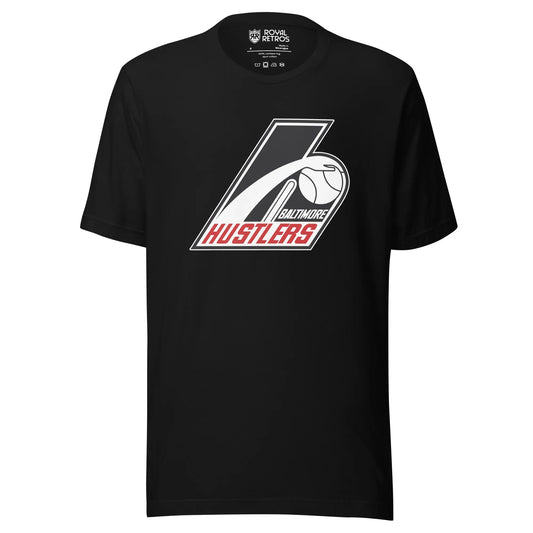
Baltimore Hustlers T-Shirt
Regular price $29.99 USDRegular priceUnit price per -
-
Washington Federals Hoodie
Regular price $59.99 USDRegular priceUnit price per -
-
Philadelphia Stars Hoodie
Regular price $59.99 USDRegular priceUnit price per -
-
CUSTOM
Atlantic Cats Roller Derby Jersey
Regular price Starting at $84.99 USDRegular priceUnit price per -
-
Baltimore Stallions T-Shirt
Regular price $29.99 USDRegular priceUnit price per -
-
Washington Federals T-Shirt
Regular price $29.99 USDRegular priceUnit price per -
-
Baltimore Stallions Hoodie
Regular price $59.99 USDRegular priceUnit price per -
-
Baltimore Stallions Unstructured Hat
Regular price $29.99 USDRegular priceUnit price per -
-
CUSTOM
Baltimore Hockey Clippers Jersey
Regular price Starting at From $89.99 USDRegular priceUnit price per -
-
Washington Federals Unstructured Hat
Regular price $29.99 USDRegular priceUnit price per -
-
Philadelphia Stars Unstructured Hat
Regular price $29.99 USDRegular priceUnit price per -
-
CUSTOM
Baltimore Black Sox NLB Remix Jersey
Regular price Starting at $84.99 USDRegular priceUnit price per -
-
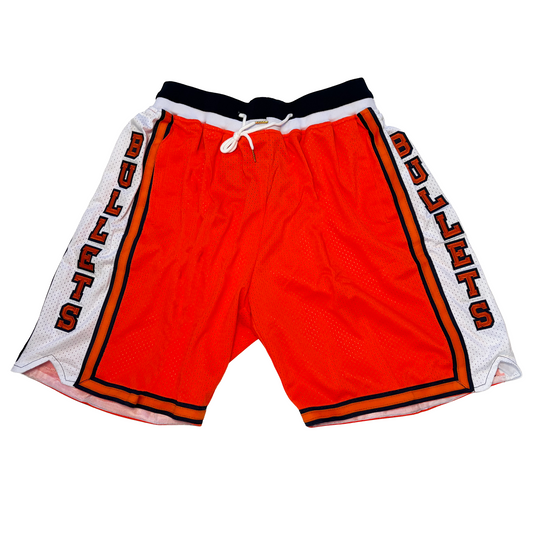
Bullets Basketball Shorts
Regular price $49.99 USDRegular priceUnit price per -











Recently Viewed
Baltimore — Royal Retros Maryland Streetwear & Fan Shop
The Only U.S. Team to Win the Grey Cup. Silver Stripe Streetwear. Twelve Forgotten Local Teams. 41 Active Styles, $29.99–$119.99. Sizes S–5XL.
Baltimore's sports wardrobe runs deeper than any one team, and this collection is built to wear that way. Royal Retros carries 41 active jerseys, hats, t-shirts and hoodies in Maryland colorways — priced $29.99 for a tee up to $119.99 for a fully custom tackle-twill jersey, most with free name-and-number customization in sizes S–5XL. Wear it as a game-day piece or a Tuesday tee; the silver-and-navy Silver Stripe look, the Black Sox's black-and-orange and the Stallions' navy-and-true-royal all hold up as everyday streetwear on their own. Most pieces ship stock within a few business days, and custom jerseys are built to order with your own name and number rather than a player's, so this is as much a wardrobe staple as it is a piece of history. And once you're shopping the city, you'll run into teams most Baltimore fans have never heard of — a CFL club that won Canada's championship, an ABA team that folded before it played a single game, a WHA club that lasted four months. Twelve local teams are discoverable below, each with its own quick story and a direct link to shop.
Shop by Design and Aesthetic
Silver Stripe. The Silver Stripe Football Jersey pulls the silver-and-blue-striped shoulder design from Baltimore's 1953–83 NFL era without naming the current trademark — a clean, wearable piece that reads as Maryland streetwear first and throwback jersey second.
Navy & True Royal — the Stallions. The only U.S. CFL champion wears navy, true royal, silver and white across its jersey, hoodie and tees. It's a colorway that stands apart from every other Baltimore team on this page.
Black & Orange — the Black Sox. The Negro Leagues' "Million Dollar Infield" era shows up in black, orange, athletic heather and natural on the Black Sox tee, plus a matching unstructured hat in black.
Red & Gold — the Stars. The USFL club that won a championship playing under Baltimore's name wears red, gold and white across its jerseys, tees and the Stars hoodie in red — a warmer colorway than anything else in this collection.
Three Decades of Hockey Colorways. Baltimore's AHL era never repeats a palette: the Clippers in orange, the Skipjacks in black, red, true royal and gold, and the Bandits in team purple. Three eras, three genuinely different looks, all shoppable in one place.
Hats. Two colorway-matched hats round out the design lineup — the Black Sox unstructured hat in black, and the Stallions unstructured hat in navy. Both are one-size adjustable and built to pair with their matching jersey or tee, or to wear on their own as a lighter everyday Baltimore piece.
Shop Baltimore & the Region
This collection is built around the city core — Silver Stripe football, the Negro Leagues clubs that played out of Bugle Field and Westport Stadium, and three decades of minor-league hockey downtown. It also reaches slightly outside the city limits: the Harrisburg Capitols, tagged in because that Pennsylvania club served as a farm team for Baltimore's NFL franchise from 1966 through 1969 — real Baltimore-adjacent history, not a Baltimore team of its own. And it reaches north across the border in the other direction, in a sense: the Stallions' 1995 championship roster relocated to Montreal the following year, so the same colors and the same players show up in two very different chapters depending on which side of that move you're shopping. Shop the whole region from one page, or jump straight to a team's story below.
Discover Baltimore's Local Teams
Twelve distinct teams and tribute lines make up this collection, spanning five sports and eight decades of Baltimore sports history. One gets real depth below because it's the best trivia hook in the entire catalog; the rest get a quick story and a link — the full history for each lives on its own team page where one exists.
Baltimore Stallions — the Only U.S. Team to Win the Grey Cup
The Stallions joined the CFL for the 1994 season as part of the league's push into U.S. markets, and by 1995 they'd built a genuinely dominant roster, beating the Calgary Stampeders 37–20 in the 83rd Grey Cup in front of over 52,000 fans in Regina. No other American-based CFL franchise has ever won it, and the league's U.S. expansion folded within a couple of years afterward. The franchise almost never played under its own name: ownership originally wanted Baltimore's old NFL nickname, and the NFL club now playing under that name sued and won an injunction hours before the team's first game, forcing an emergency rebrand — the club opened its debut week simply as the "Baltimore Football Club" before a fan vote settled on Stallions. The irony didn't last. Once a new NFL franchise was approved to relocate to Baltimore for 1996, the Stallions themselves relocated to Montreal, taking their championship roster north to become the reborn Alouettes. Shop the full Stallions collection for the complete story and every product.
Baltimore Elite Giants — Negro Leagues royalty: a 1939 Negro National League title and a 1949 Negro American League pennant, with a young Roy Campanella behind the plate for both eras. Shop the Elite Giants.
Baltimore Black Sox — 1929 American Negro League champions, built around the legendary "Million Dollar Infield," a nickname sportswriters coined for what the roster would have commanded in an integrated major league. Shop the Black Sox.
Baltimore Hustlers/Claws — the shortest-lived franchise in ABA history: relocated from Memphis in 1975, renamed twice, and expelled by the league before it ever played a regular-season game. Shop the Hustlers/Claws.
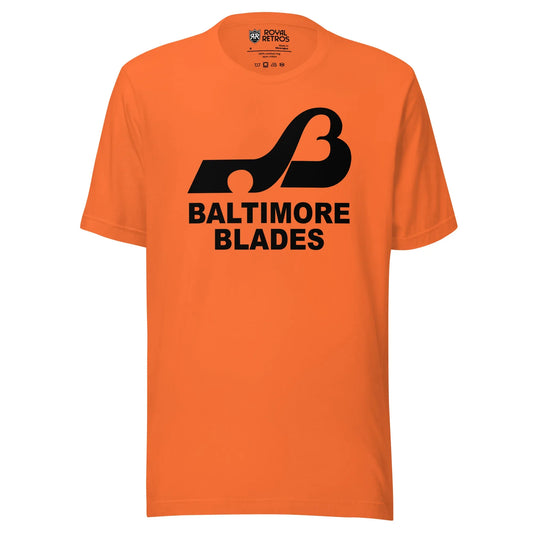
Baltimore Blades — a WHA club that existed for barely four months in 1975 after the league itself seized a bankrupt Detroit franchise and relocated it to Baltimore mid-season. Shop the Blades.
Baltimore AAFC — Baltimore's first pro football club began life as the Miami Seahawks in the AAFC's inaugural 1946 season, relocated to Baltimore for 1947, and joined the NFL in the 1950 merger, only for the league to dissolve the franchise outright the following January. Public pressure led the NFL to award Baltimore a brand-new expansion franchise in 1953. Shop the tee or the jersey.
Baltimore's NFL era — the silver-and-blue-striped design from Baltimore's second NFL club, which played from 1953 until its sudden overnight relocation in March 1984. Shop the jersey.
Baltimore Bombers — the name a relocated Cleveland franchise actually planned to play under in 1996, printed on uniforms and merchandise before a last-minute change of plans scrapped it weeks before kickoff. It's a name that was designed for Baltimore but never actually worn in a real game. Shop the jersey or the tee.
Philadelphia/Baltimore Stars — the USFL club that relocated from Philadelphia to Baltimore for its final season and won the 1985 championship playing as the Baltimore Stars, going 14–4, the league's best record that year. Shop the Stars.
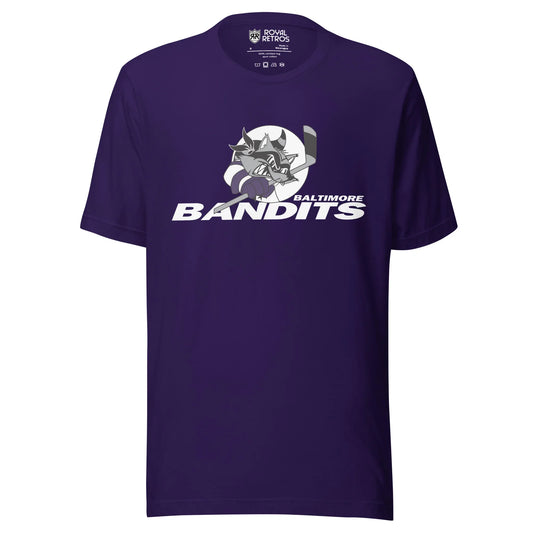
Baltimore's AHL era — three separate minor-league hockey clubs across three decades, none directly following the one before it: the original Clippers (1962–75, thirteen straight seasons, the longest unbroken run of any Baltimore hockey club before or since), the Skipjacks (1981–93, an AHL affiliate that developed NHL-bound talent) and the Bandits (1995–97, a short two-season run before the club relocated elsewhere). Shop the Clippers tee, the Skipjacks jersey, the Skipjacks tee, the Clippers jersey or the Bandits tee.
Baltimore Bullets — two different franchises a generation apart: the 1944–54 Bullets won the 1948 BAA title, the only defunct NBA franchise ever to win one before folding; the 1963–73 Bullets reached the 1971 NBA Finals before relocating to the DC area. Shop the Bullets.
Baltimore Baseball — a generic tribute jersey for fans who want the city's colors without a specific era or trademarked name, built for buyers who care more about representing the city than about any one franchise's exact roster year. Shop the jersey.
Atlantic Cats — a Baltimore-area roller derby club, the one non-major-league sport represented in this collection and a reminder that the region's amateur and semi-pro scene runs alongside its pro history. Shop the jersey.
Everyday Wear — Off Game Day
Most of this collection wears just as well away from a stadium. The Silver Stripe jersey pairs with jeans or joggers the way any streetwear jersey does — the design reads as a clean stripe pattern rather than a specific team's mark, so it doesn't scream "game day" the way a full team logo would. The Black Sox and Elite Giants tees run in soft cotton blends (Athletic Heather, Natural, White and more) built for daily rotation. The Stars hoodie in red and the Stallions hoodie in Classic Navy or Grey Heather both read as plain streetwear pullovers with the team story as a bonus rather than the headline. Custom jerseys make a strong gift or personal piece with your own name and number rather than a player's, and because sizing runs consistently S–5XL across most of the catalog, building a matching jersey-and-tee set in one colorway is straightforward.
A few pairing notes: the cream-and-gray Negro Leagues flannels (Black Sox, Elite Giants) sit closer to a workwear palette than a sports palette, so they layer well under a denim or canvas jacket. The Stallions' navy and true royal skews toward a classic collegiate-adjacent look — pair it with plain white or navy rather than another bright color. The AHL-era hockey pieces run the widest color range in the collection, so if you're building an outfit around one specific colorway, check the product page for the exact shade before ordering rather than assuming from the team name alone. The Silver Stripe jersey is the closest thing in this collection to a true neutral — it pairs with almost anything in a rotation and doesn't compete with brighter pieces the way the Stars' red and gold or the Bullets' orange and navy do.
Sizes and Customization
Sizing is consistent across most of this collection, but not universal — a few product lines run their own ranges, and colorways within the same product sometimes carry different size ceilings, which is a real supplier limitation rather than a typo. Check the specific product page before you order, especially at the top of the size range.
- Custom jerseys — most run S–5XL, including the Stallions, Bombers, Elite Giants, AAFC, Silver Stripe, Atlantic Cats, USFL Championship, Baltimore Baseball, and Blades/Hockey Clippers jerseys (the latter two also offer a goalie-cut option). A few top out shorter: the Skipjacks Jersey, the Black Sox NLB Jersey and both Bullets jerseys run S–4XL, and the Harrisburg Capitols Jersey runs S–2XL only.
- T-shirts — most run S–4XL; a few colorways top out at 3XL. Check the size chart on the product page before you order.
- Hoodies — the Stallions Hoodie runs S–3XL in Classic Navy and S–5XL in Grey Heather.
- Hats — one-size adjustable across the unstructured hats.
- Customization — free name and number on most jerseys; custom orders are made to order and final sale.
Construction varies by product line: the tackle-twill football and custom baseball jerseys use applied lettering and numbering rather than screen print, and the hockey jerseys offer a dedicated goalie cut in addition to standard sizing. If you're buying for a group — a father-son Elite Giants and Black Sox pairing, or a full run of AHL-era hockey tees — order early on anything custom, since name-and-number production adds lead time on top of standard shipping.
Why Royal Retros for Baltimore
- The widest Baltimore-market selection anywhere — 41 active styles across five sports and twelve distinct franchises, not just the teams still playing today.
- Free name and number customization on most jerseys, sizes S–5XL (check individual product pages for exceptions).
- A straightforward, heritage-first approach: this collection spans nine leagues and eight decades, and we tell you plainly what's tribute apparel versus what carries its own license.
- Stock items ship within a few business days; custom jerseys take longer since every one is built to order.
- One page, every era — instead of hunting down a 1929 Black Sox tee from one seller and a 1985 Stars jersey from another, it's all in one Baltimore catalog.
- Deep product access for teams most other sellers don't carry at all — the Claws, the Blades and the Bombers are not exactly stocked at the mall.
- Real research behind every product. Baltimore's pro sports history includes a Grey Cup, multiple Negro Leagues titles, a USFL championship and a Supreme Court case, and the copy on this page treats it that way instead of slapping a generic "Baltimore" logo on a blank shirt.
Quick Buying Questions
What sizes are available?
Most custom jerseys run S–5XL, though the Skipjacks Jersey, Black Sox NLB Jersey and both Bullets jerseys top out at 4XL and the Harrisburg Capitols Jersey tops out at 2XL. T-shirts mostly run S–4XL with a few colorways topping out at 3XL. Hats are one-size.
Is customization free?
Free name and number on most jerseys. Choose your name, number and size at checkout.
How fast does it ship?
Stock items ship within a few business days. Custom jerseys take longer — they're built to order, not pulled off a shelf.
Are these officially licensed?
It depends on the product, and this collection spans a lot of ground. Most of what's here is heritage tribute apparel. A couple of specific product lines carry their own license; check that team's own collection page for the specifics rather than assuming either way from this page.
Why Does Baltimore Have So Many Short-Lived Pro Teams?
Because Baltimore has repeatedly drawn brand-new leagues chasing an East Coast market, and brand-new leagues thin their weakest franchises constantly. The Claws folded before playing a game. The Blades lasted four months. The Stallions won a championship, then relocated within two years once a new NFL franchise arrived in the city. Even the teams that stuck around a while — three separate AHL hockey clubs across three decades, none directly following the one before it — never quite built the multi-decade continuity that a single flagship franchise gives a city. Some of these bets paid off spectacularly: the Elite Giants developed a Hall of Fame catcher, and the Stallions won the only Grey Cup any American team has ever lifted. Others lasted a single summer and never came back. Both kinds of team are shoppable on this page. That instability is exactly why this page is organized by colorway and by discovery instead of by one team's unbroken timeline: Baltimore's sports identity has always been made up of pieces, not a single thread.
Naming carries real weight in this history, too. The Stallions almost couldn't use their own city's old NFL nickname because a live trademark holder sued over it. The AAFC-era club and the 1953–83 NFL club are both described by era rather than name on this page for the same reason — a currently active franchise holds the name today, and Royal Retros doesn't claim or imply a license it doesn't have. "Silver Stripe," "Baltimore AAFC" and "Baltimore's NFL era" are deliberate choices, not gaps in the research.
That instability is also why Baltimore's sports fans wear colors more than logos. A city that has hosted three separate AHL hockey clubs, two unrelated NBA franchises named Bullets, and a CFL champion that lasted two seasons before relocating doesn't organize its sports identity around a single unbroken timeline the way a one-franchise city can. Silver Stripe, navy-and-true-royal, black-and-orange — these read as regional identity first, specific-franchise loyalty second, which is exactly why this collection is built around design and discovery rather than one team's history.
Extended FAQ
Why does this collection include a Harrisburg, Pennsylvania team?
The Harrisburg Capitols Jersey is tagged into this collection because that club served as a farm team for Baltimore's NFL franchise from 1966 through 1969. Harrisburg itself isn't a Baltimore team, which is why it's called out separately rather than folded into the main team list above.
Is the Baltimore AAFC club the same team as Baltimore's later NFL club?
No. Baltimore's AAFC club (1947–1950) folded for good in January 1951. The city's second, unrelated NFL franchise wasn't awarded until 1953, two years later, built from a different failed franchise's remnants.
Were there really two different Baltimore Bullets teams?
Yes. The 1944–54 Bullets played in three different leagues and won the 1948 BAA title before folding outright in 1954. A separate, unrelated 1963–73 Bullets franchise took the same name as a tribute and later relocated to the D.C. area.
Why does the Philadelphia Stars line cover a Baltimore team?
The Stars relocated their home games from Philadelphia to Baltimore for the 1985 USFL season and won that year's championship playing as the Baltimore Stars. The club's official name never formally changed, which is why the product line is still called Philadelphia Stars even where it commemorates the Baltimore season specifically.
Can I mix teams or sports in one order?
Yes. Every product on this page ships from the same Royal Retros catalog regardless of team, sport or league.
Are there any currently active Baltimore teams featured in this collection?
No. Every team above is a defunct or historically distinct franchise. Where a product touches on the city's still-active football history, it's sold under a generic, non-trademarked name rather than the current team's actual name.
Is the Baltimore Stallions gear the same as CFL Alouettes gear?
No. This collection covers only the Baltimore era, 1994–1995, before the franchise relocated to Montreal and was reborn under a different name.
Shop Related Collections
- AAFC
- Baltimore Black Sox
- Baltimore Blades
- Baltimore Elite Giants
- Baltimore Hustlers/Claws
- Baltimore Stallions
- Bullets
- Custom Jerseys
- Hats
- Hoodies
- Legacy Baseball
- NLB
- Other Football
- Philadelphia Stars
- Roller Derby
- USFL
- Washington DC
- WHA
Baltimore Streetwear at Royal Retros — Silver Stripe, the Grey Cup, and Twelve Forgotten Local Teams. Sizes S–5XL.