



-
NEW
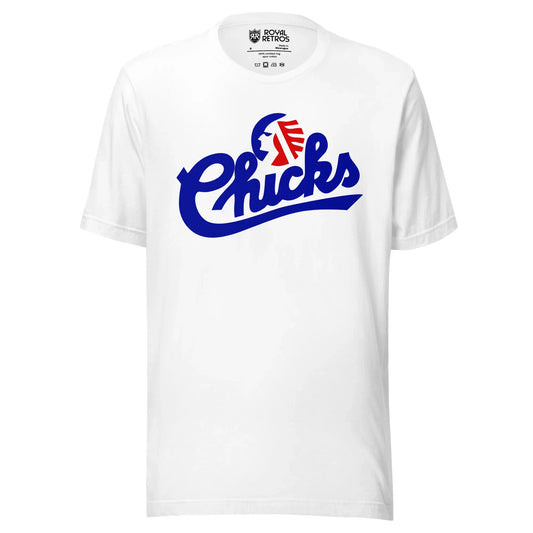
Memphis Chicks Long Sleeve T-Shirt
Regular price $34.99 USDRegular priceUnit price per -
-
-
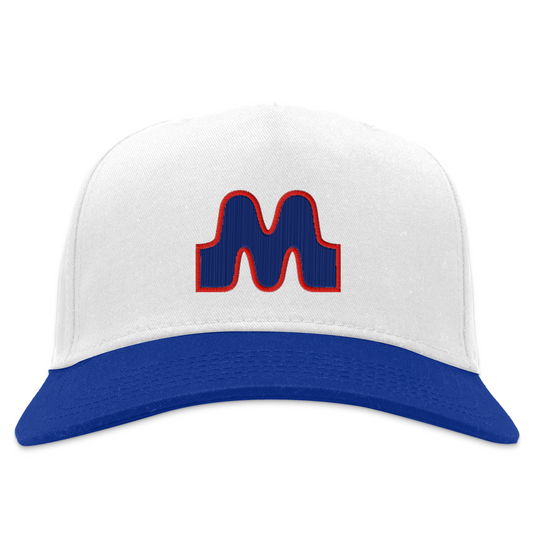
Memphis Chicks Snapback Hat
Regular price $34.99 USDRegular priceUnit price per -
-
CUSTOM
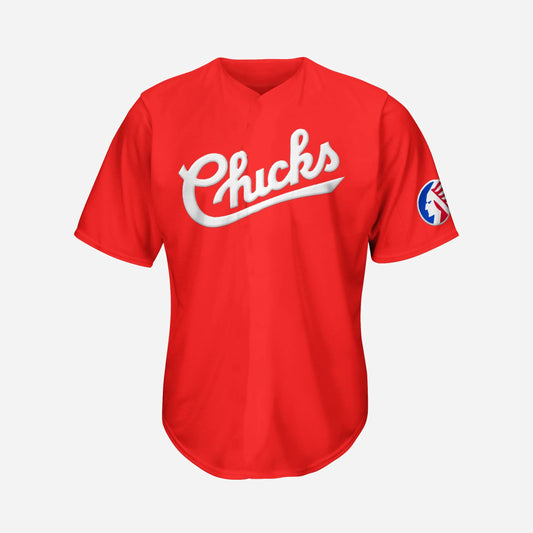
Memphis Chicks Jersey
Regular price Starting at $84.99 USDRegular priceUnit price per -








The Memphis Chicks Collection — Royal Retros Memphis Chicks Fan Shop
Authentic Memphis Chicks Throwbacks. Custom Names & Numbers. Sizes S–5XL.
Royal Retros carries the Memphis Chicks throwback jersey, tee and snapback that no big-box retailer bothers to stock — three products built around one of the deepest, strangest and most overlooked minor league histories in the South. The jersey is $84.99 in White or Red, sizes Small through 5XL, with free custom name and number. The tee is $29.99 in four colorways, and the snapback runs $34.99. There is no current Memphis Chicks team to buy from — the Chicks left town in 1997 — which makes this small collection one of the only places left to wear the name.
What You Can Shop in the Memphis Chicks Collection
Memphis Chicks Jersey — A twill-lettered throwback in White or Red, sized Small through 5XL, with free custom name and number on request. Put a Chicks great on the back — Pete Gray, Jeff Conine, Derrek Lee — or your own. $84.99. Shop the jersey.
Memphis Chicks T-Shirt — Soft, pre-shrunk cotton in four colorways: Red and Athletic Heather run Small through 5XL, White runs Small through 5XL, and True Royal runs Small through 4XL. $29.99. Shop the tee.
Memphis Chicks Snapback Hat — A structured five-panel snapback in Royal or Royal/White, one-size-fits-most adjustable back. $34.99. Shop the hat.
Customization — Free custom name and number on the jersey. Custom items are made to order and final sale.
Sizes — Small through 5XL on the jersey and most tee colorways (True Royal runs through 4XL). Hats are one-size-fits-most.
Why Royal Retros Is the Home of Memphis Chicks Throwback Gear
- A name most retailers have forgotten. The Chicks haven't played in Memphis since 1997. This collection exists because Royal Retros still remembers the name.
- Flat, honest pricing. Jersey $84.99, tee $29.99, snapback $34.99. No "collector's" markup for a defunct-team throwback.
- Free customization on the jersey. Add a name and number at no extra cost.
- Sizes S–5XL on nearly everything. True family sizing, no big & tall upcharge.
- Deep Southern baseball coverage. Cross-shop the Chicks alongside the rest of our historic minor league baseball catalog and the broader Tennessee collection.
Quick Buying Questions
What sizes does the Memphis Chicks jersey come in?
Small through 5XL, in White or Red. The tee runs Small through 5XL in three colorways and Small through 4XL in True Royal. The snapback is one-size-fits-most.
Can I add my name and number to a Chicks jersey?
Yes — free custom name and number on request. Choose a Memphis Chicks original or your own name. Custom items are made to order and final sale.
How fast does it ship and what's the return policy?
Stock items ship within 3–5 business days. Custom jerseys are sewn to order and typically ship within 7–10 business days. Custom items are final sale. Standard items follow our return policy at /pages/returns.
Gift Ideas for the Memphis Chicks Fan
- For the lifelong Memphian: A jersey from a team that predates and outlasted most of the city's other pro sports experiments.
- For the one-armed-outfielder trivia fan: Pete Gray's 1944 MVP season with the Chicks is one of the great underdog stories in American sports — a jersey with a genuine story behind it.
- For the Royals or Bo Jackson collector: Bo Jackson wore a Chicks uniform in 1986, on his way to Kansas City.
- For the minor league completist: Two eras, four major league affiliations, one championship — the Chicks are a franchise history in miniature.
- Year-round demand. Chicks nostalgia isn't seasonal — birthdays, Father's Day and Opening Day itch all work.
Who Were the Memphis Chicks?
The Memphis Chicks were Memphis, Tennessee's longest-running professional baseball franchise, playing across two distinct eras and 79 combined seasons: first in the Southern Association from 1901 to 1960, under the Chickasaws name from 1912 onward and nicknamed the Chicks almost from the start, and then again in the Double-A Southern League from 1978 to 1997, after a 17-year gap that included a short-lived Texas League club called the Memphis Blues. Both eras played, at different points, in the same building — a converted fairgrounds stadium that outlived every other piece of Chicks infrastructure and ended up wearing the name of the team's most famous alumnus.
Across their history the Chicks won nine minor league championships of one kind or another, developed future big leaguers including a Rookie of the Year winner and multiple All-Stars, briefly employed the only one-armed player in major league history, and — for one wild season in 1993 — counted a network broadcaster, a film director, a talk-show host and a sitting member of Congress among their owners.
Why Was Memphis Baseball Called the "Chicks"?
Memphis fielded professional teams under a rotating cast of names dating back to 1877 — Reds, Grays, Browns, Giants, even one 1893 club called the Fever Germs. The identity that stuck arrived with the Southern Association in 1901: the Egyptians, renamed the Turtles in 1909, and finally renamed again in 1912 to the Chickasaws, honoring the Native American nation whose historical territory included the Memphis area. "Chickasaws" was quickly shortened by fans and headline writers to "Chicks," and the nickname outlived the formal name by decades — when a brand-new expansion franchise arrived in 1978, seventeen years after the original club folded, it took the shortened nickname as its official name rather than reviving "Chickasaws" in full.
The Southern Association Era (1901–1960) — Eight Pennants and a Dixie Series Title
Memphis was a charter member of the Southern Association in 1901 and stayed in the league for 60 years, playing all of it at Russwood Park. The Chickasaws won eight Southern Association pennants — 1903, 1904, 1921, 1924, 1930, 1933, 1953 and 1955 — and captured the 1952 playoff championship, which sent them to the Dixie Series, an annual postseason matchup between the Southern Association champion and the Texas League champion. Memphis had lost three previous Dixie Series appearances (1921, 1924 and 1930, all to the Fort Worth Panthers) before finally winning the title in 1952, beating the Shreveport Sports four games to two. The 1921 and 1924 Chickasaws were later named among the 100 greatest minor league teams of all time by Minor League Baseball's own historical panel.
Memphis' major league affiliations in this era ran through some of the biggest organizations in the sport: the Brooklyn Dodgers in 1939, the Chicago White Sox from 1948 to 1956, the Chicago Cubs in 1957, the Boston Red Sox in 1958, and the St. Louis Cardinals in 1960, the franchise's final season. Three Chickasaws won the Southern Association Most Valuable Player Award outright — Coaker Triplett in 1937, Pete Gray in 1944, and Ed White in 1955.
Pete Gray — The One-Armed Outfielder Who Won a Chicks MVP
Pete Gray lost his right arm above the elbow in a childhood accident and taught himself to catch, transfer the ball and throw in a single fluid motion — catch the ball in his glove, flip it into the air, tuck the empty glove under the stump of his right arm, catch the ball bare-handed, and fire it back to the infield, all fast enough to play center field at a professional level. He played for the Memphis Chickasaws in 1943 and 1944, and his 1944 season is the one the record books remember: a .333 batting average, 68 stolen bases and 35 extra-base hits in 129 games, good enough to lead all Southern Association outfielders in fielding percentage and to win the league's Most Valuable Player award outright.
The St. Louis Browns purchased Gray's contract after that season, and on April 17, 1945, he made his major league debut — the only one-armed position player in the history of the major leagues. His path to that debut ran directly through a Memphis Chickasaws uniform, and it remains the single most remarkable individual story in the franchise's history.
Why Did Russwood Park Burn Down?
Russwood Park, the Chickasaws' home since 1901, was destroyed by fire on Easter Sunday, April 17, 1960 — fifteen years to the day after Pete Gray's major league debut — following an exhibition game between the Chicago White Sox and Cleveland Indians. The wooden ballpark went up fast and completely. Memphis played out the rest of the 1960 season in temporary facilities, including a local high school football stadium, and drew only a fraction of a normal season's attendance. Memphis mayor Henry Loeb tried to keep the team by proposing a new 7,500-seat ballpark, but the roughly $326,000 price tag proved too much for the city to commit to on short notice. On November 11, 1960, the franchise was forfeited back to the league, and Memphis went without a Southern Association team for the circuit's final season in 1961 before the league itself folded.
The Gap Years — the Memphis Blues (1968–1976)
Memphis went without affiliated professional baseball for seven years after Russwood Park burned. The Memphis Blues, a Double-A Texas League club, arrived in 1968 and played at a converted American Legion field at the old Mid-South Fairgrounds — a stadium that would later be renamed for a Memphis-born catcher and take on a much longer life. The Blues moved up to Triple-A in the International League in 1974, but financial trouble forced the league to revoke the franchise after the 1976 season, leaving Memphis without professional baseball again for a second time in less than two decades.
1978 — A New Chicks Franchise, and a Stadium Named for a Memphis Native
The Southern League placed a new expansion franchise in Memphis for the 1978 season, affiliated with the Montreal Expos, who moved their Double-A affiliation south from Quebec City for a better playing climate. The new club took the field at the same fairgrounds stadium the Blues had used, now renamed Tim McCarver Stadium in honor of Tim McCarver — a Memphis native, a former Chickasaw himself, and by then a well-known major league catcher still active in the big leagues. It is a rare thing for a stadium to be named for a still-playing athlete, and rarer still for that athlete to later become part-owner of the team playing in the building that carries his name, which is exactly what happened fifteen years later.
The new Chicks opened their first season with a 4–2 win over the expansion Nashville Sounds on April 15, 1978, and went on to post seven half-season division titles, two full division titles and one league championship across a 20-year run, compiling a composite record of 1,419–1,439 over 2,858 regular-season games.
Four Organizations in Twenty Years — the Expos, Royals, Padres and Mariners Affiliations
The 1978–1997 Chicks cycled through four major league organizations, each leaving a distinct roster on the record. The Montreal Expos affiliation (1978–1983) produced Memphis' best early seasons, including back-to-back-to-back first-half division titles from 1979 to 1981; the Kansas City Royals affiliation (1984–1994), the longest in franchise history at eleven years, produced the franchise's only Southern League championship in 1990 and briefly ran a young Bo Jackson through the Memphis outfield in 1986 on his way to Kansas City. The San Diego Padres affiliation (1995–1996) produced back-to-back first-half division titles and the franchise's best two-year stretch by winning percentage. The final year, 1997, under the Seattle Mariners, closed the book on the Chicks' Memphis tenure with two no-hitters from pitcher Ryan Franklin in a single April.
1990 — The Only Southern League Championship in Chicks History
The 1990 Chicks, a Kansas City Royals affiliate, won the first half of the season, then beat the Birmingham Barons three games to one to take the Western Division title, and finally beat the Orlando Sun Rays three games to two to win the Southern League championship — the only league title the Memphis Chicks ever won in either era of the franchise's history. First baseman Jeff Conine, who went on to a 17-year major league career and a World Series ring with the 1997 Florida Marlins, was named the Southern League's Most Valuable Player that season. Six years later, in 1996, first baseman Derrek Lee — who would go on to win a Gold Glove and a batting title in the majors — was named MVP of a Chicks team that finished 81–58, the best regular-season record in franchise history, though that club fell short in the postseason.
The 1993 Ownership Group — a Broadcaster, a Director, a Talk-Show Host and a Congressman
By 1993, the Chicks' ownership group, Professional Sports Entertainment of Tennessee, had assembled one of the more unusual investor lists in minor league baseball: NBC broadcaster Bob Costas, film director Ron Howard, television talk-show host Maury Povich, former big-league catcher and broadcaster Tim McCarver — the same player the home stadium was named for — and U.S. Representative Steve Cohen, who would go on to represent Memphis in Congress for decades. That was also the year Memphis hosted the Double-A All-Star Game, drawing 6,335 fans to Tim McCarver Stadium.
Why Did the Memphis Chicks Leave?
The Chicks didn't fold — they were displaced. In 1998, the Triple-A Pacific Coast League placed a new expansion franchise in Memphis, the Memphis Redbirds, built around a brand-new downtown ballpark and a St. Louis Cardinals affiliation. With Triple-A baseball arriving in the same city, the Double-A Southern League Chicks franchise relocated roughly 80 miles east to Jackson, Tennessee, and became the West Tenn Diamond Jaxx. The Chicks name and uniform never left Memphis for lack of interest — they left because a bigger league moved in and took the market.
The Redbirds have periodically honored that history directly: from 2021 to 2024, the club designated certain home games as "Retro Nights," playing in 1970s-style Chicks pullover jerseys and celebrating former Chicks players — an acknowledgment, decades later, that the Chicks era is the deeper root of professional baseball in Memphis.
Where the Chicks Rank Among Southern Minor League Franchises
The Southern Association and its successor, the Southern League, produced some of the most storied franchises in American minor league baseball — the Atlanta Crackers, the Nashville Vols, the Birmingham Barons, the New Orleans Pelicans. Memphis holds its own in that company: eight Southern Association pennants and a Dixie Series title in the first era, a Southern League championship and two more division titles in the second, and 79 combined seasons of professional baseball under one shortened nickname. Few Southern cities can claim a run that long under a single, consistent identity, spanning two world wars, a ballpark fire, a 17-year interruption and four different major league parent organizations.
What sets the Chicks apart from most of their Southern Association contemporaries is the sheer variety of story packed into a modest win total. A one-armed Most Valuable Player. A stadium named for an active major leaguer who later became a part-owner. A Hall of Fame-track slugger and a future Gold Glove first baseman both winning MVP awards a few seasons apart. An ownership group that briefly looked more like a Hollywood production credits list than a minor league front office. Most franchises get one signature story; Memphis collected several.
What Makes Ours Period-Correct
Construction and accuracy. Sewn-on tackle-twill numbers and lettering where the original build called for it, era-correct fonts and colors, and true-to-original construction — every Memphis Chicks design is checked against period references before it goes live.
More Frequently Asked Questions About the Memphis Chicks
Who were the Memphis Chicks?
Memphis, Tennessee's professional baseball franchise across two eras: the Southern Association Chickasaws from 1901 to 1960 (Chicks for short from 1912 onward), and the Double-A Southern League Chicks from 1978 to 1997.
Why were they called the Chickasaws?
The name honored the Chickasaw Nation, whose historical territory included the Memphis area. Fans and headline writers shortened it to "Chicks" almost immediately, and the nickname eventually became the team's full name in the franchise's second era.
Did a one-armed player really play for Memphis?
Yes. Pete Gray played for the Memphis Chickasaws in 1943 and 1944, won the 1944 Southern Association MVP award batting .333 with 68 stolen bases, and was sold to the St. Louis Browns after the season — becoming the only one-armed position player ever to appear in a major league game.
Why did Russwood Park burn down?
A fire broke out on Easter Sunday, April 17, 1960, after an exhibition game between the Chicago White Sox and Cleveland Indians, and destroyed the wooden ballpark completely. The cost of a replacement stadium proved too high, and the franchise was forfeited to the league that November.
Did Bo Jackson play for the Memphis Chicks?
Yes. Bo Jackson played for the Chicks in 1986 as a Kansas City Royals farmhand, one stop on his way to the major leagues.
Did the Memphis Chicks ever win a championship?
Yes — one Southern League title, in 1990, as a Kansas City Royals affiliate. First baseman Jeff Conine was named the league's Most Valuable Player that season.
Why is the stadium named Tim McCarver Stadium?
Tim McCarver was a Memphis native and former Memphis Chickasaw who went on to a long major league catching career. The former Blues Stadium was renamed in his honor when the new Chicks franchise arrived in 1978 — while McCarver was still an active major league player.
Why did the Memphis Chicks leave town?
They didn't lose their fan base — they were displaced. The Triple-A Memphis Redbirds arrived in 1998 with a new downtown ballpark, and the Double-A Chicks relocated to Jackson, Tennessee, becoming the West Tenn Diamond Jaxx.
How many Memphis Chicks products does Royal Retros carry?
Three — a jersey, a T-shirt in four colorways, and a snapback hat. It's a small collection built around a name most retailers have forgotten entirely.
Shop Related Southern Baseball Collections
- Custom Baseball Jerseys — The full baseball jersey catalog, S–5XL, free name and number on most.
- Custom Jerseys — Every custom jersey Royal Retros carries, across every sport.
- Hats — The full hat catalog, snapbacks and unstructured styles alike.
- Historic Minor League Baseball — Every minor league franchise Royal Retros carries.
- Legacy Baseball — More defunct and historic baseball franchises across the country.
- Snapback Hats — The full snapback catalog.
- Tennessee — Memphis and Tennessee sports apparel across every sport and era.
The Memphis Chicks at Royal Retros — Authentic Throwbacks. Custom Names & Numbers. Sizes S–5XL.