



-
Cleveland Crusaders Hoodie
Regular price $59.99 USDRegular priceUnit price per -
-
-
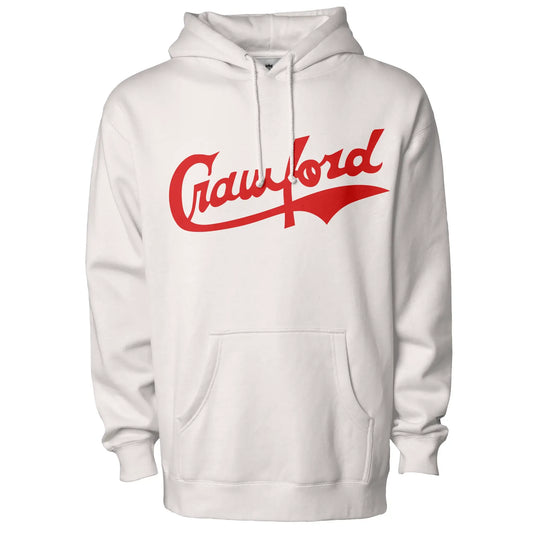
Pittsburgh Crawfords Hoodie
Regular price $59.99 USDRegular priceUnit price per -
-
-
-
-
Houston Colt 45's Hoodie
Regular price $59.99 USDRegular priceUnit price per -
-
-
Barcelona Dragons Hoodie
Regular price $59.99 USDRegular priceUnit price per -
-
-
-
Montreal Concordes Hoodie
Regular price $59.99 USDRegular priceUnit price per -
-
California Golden Seals Hoodie
Regular price $59.99 USDRegular priceUnit price per -
-
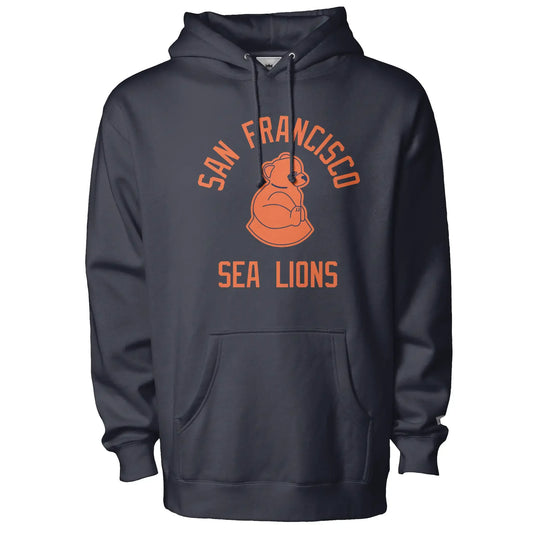
San Francisco Sea Lions Hoodie
Regular price $59.99 USDRegular priceUnit price per -






Sweatshirts — Vintage Crewneck & Quarter-Zip Pullovers
82 active throwback designs. Crewnecks, quarter-zips, and hooded sweatshirts, from $54.99. Sizes vary by style — see below.
Royal Retros' Sweatshirts collection is where our fleece lives — everything from a plain no-hood crewneck to a heavyweight quarter-zip pullover to the hooded styles we also stock here. Eighty-two active designs cover defunct and long-forgotten teams across football, baseball, hockey, and basketball: spring-football franchises, arena football, Negro Leagues clubs, teams the majors left behind, World Hockey Association rosters, and more. Crewneck pullovers start at $54.99, quarter-zips at $59.99, and hooded styles typically run $59.99 to $79.99. If you already know you want a hood, jump straight to our Hoodies collection — it carries the full, deeper hooded lineup. If you want the no-hood alternative, you're in the right place.
What You Can Shop
This collection is honestly two things stitched into one page, and we'd rather tell you that up front than make you guess. Crewneck & quarter-zip pullovers are this collection's own specialty — eight active designs, four plain crewnecks and four AF1-branded quarter-zips, none of them available anywhere else on the site under a different name. Hooded sweatshirts also live here — 74 active styles — but that same inventory is the backbone of our dedicated Hoodies collection, which carries 98 hooded designs total and is built specifically around hood details, drawstring and kangaroo-pocket options, and hood-specific size charts that run as high as 5XL on select styles. Think of it this way: come here for the no-hood pullover and the fleece education below; go to Hoodies when the hood itself is the point.
Crewneck pullovers — four active designs, no hood, no zipper, ribbed collar and cuffs, the cleanest and most classic sweatshirt silhouette we sell. Hockey and baseball themes dominate this small lineup right now.
Quarter-zip pullovers — four active designs, all from our exclusive AF1 line. A short zip at the collar for a half-step between a crewneck and a full-zip hoodie — popular as a lighter layering piece on game days.
Hooded sweatshirts — 74 active designs spanning nearly every league in our catalog. This is the same inventory pool as our Hoodies collection; shop it here if you're browsing sweatshirts generally, or shop it there if hood fit and options are what you're after.
We also carry a small "coming soon" bench — six draft designs not yet live for purchase — and 22 retired designs that have been discontinued. Only the 82 active designs above are available to buy today; if a product page shows as sold out or unavailable, that design has likely been retired rather than temporarily out of stock.
Shop by Sport
Football is the largest category in this collection by a wide margin: 48 of the 82 active designs. Twenty-two of those are from AF1, our exclusive arena football line — quarter-zips, hoodies, and "On Field" hoodies across teams like the Albany Firebirds, Nashville Kats, Washington Wolfpack, Michigan Arsenal, Kentucky Barrels, Oceanside Bombers, and Minnesota Monsters. Eighteen more come from the spring-football era — teams that have played under the USFL, XFL, and UFL banners over the decades, from the Michigan Panthers and Philadelphia Stars of the original 1980s USFL to the St. Louis Battlehawks and San Antonio Brahmas of the modern era. The rest of the football lineup is smaller but deep: two Canadian Football League designs, two from the short-lived World League of American Football (WLAF) era in Europe, and four regional or other-football pieces that don't fit neatly into any single league bucket. Arena football is the single deepest well in that football total: AF1 sells both a standard hoodie and an "On Field" premium hoodie for several of its teams, plus the four AF1 quarter-zip pullovers that anchor this page's non-hooded lineup — a merchandising pattern that echoes how the WHA and the original USFL sold sweatshirts as a lower-cost alternative to a full jersey while both leagues were still fighting for attention against more established competition.
Baseball accounts for 16 active designs, split between Negro Leagues clubs — Homestead Grays, Pittsburgh Crawfords, Newark Eagles, Indianapolis Clowns, Seattle Steelheads, and San Francisco's Sea Lions among them — and teams the majors left behind, like the Houston Colt .45's, the St. Louis Browns, and the Seattle Pilots.
Hockey holds another 16 active designs. Most come from the World Hockey Association's short, chaotic run in the 1970s — the Cleveland Crusaders, Toronto Toros, Vancouver Millionaires, and Quebec Nordiques among them — with the rest split between the International Hockey League and a handful of NHL clubs that no longer exist under those names or in those cities.
Basketball is the smallest category at two active designs, both drawing on defunct or relocated pro basketball history rather than any team currently playing under its original name.
Shop by League & Team
AF1 — our exclusive arena football line, with 22 active sweatshirt-family designs here alone. The full AF1 catalog, including jerseys and hats, lives in the dedicated AF1 collection; league-branded gear specifically (not tied to one team) is in AF1 League Gear.
USFL, XFL & UFL — 18 active designs across the spring-football era, from the original 1980s USFL clubs through the XFL relaunches to today's merged UFL. Browse the full run in USFL, XFL, and UFL.
World Hockey Association — the WHA's 1970s teams make up most of our active hockey sweatshirts. The full WHA lineup, well beyond sweatshirts, is in World Hockey Association.
International Hockey League — a handful of active designs here, with the complete IHL catalog in International Hockey League (IHL).
Negro Leagues baseball — Homestead Grays, Pittsburgh Crawfords, Newark Eagles, Indianapolis Clowns, Seattle Steelheads, and more, all part of the much larger NLB collection.
Teams the majors left behind — the Houston Colt .45's, St. Louis Browns, and Seattle Pilots are part of our broader collection covering ballclubs that moved, folded, or were renamed out of existence; that full lineup — jerseys, hats, tees, and sweatshirts alike — lives in our defunct-team baseball collection.
WLAF / World League of American Football — the Barcelona Dragons and Rhein Fire represent the brief 1990s European pro football experiment; more of that catalog is in WLAF.
Canadian Football League — the Montreal Concordes and Baltimore Stallions CFL designs are here; other CFL-adjacent and regional-football pieces sit in Other Football. That regional bucket also covers a handful of designs tied to specific stadiums and eras rather than a single league — pieces built around a home venue's history rather than one franchise's full timeline. If a design doesn't cleanly belong to a league collection above, it's most likely filed there.
American Basketball Association — the cult-favorite Spirits of St. Louis anchors our one ABA sweatshirt design; the full ABA catalog is in ABA.
Hartford WHA — the Whalers' 1970s-80s hockey era, sold under the city-plus-league name to keep clear of any live trademark.
The NHL's Colorado Rockies — the Denver franchise that played from 1976 to 1982 before relocating — gets the league tag in its title specifically so it isn't confused with the current-day major league club of the same name.
Fabric Weights & Fits
The eight non-hooded designs in this collection are built the same way: heavyweight cotton/poly fleece, a ribbed crewneck collar or a short zip at the throat on the quarter-zips, and ribbed cuffs and waistband to hold their shape wash after wash. They run true to size with a slightly relaxed, unisex fit — not boxy, not fitted, the way a sweatshirt is supposed to sit. The 74 hooded designs stocked here vary more by style: some are lighter mid-weight pullovers, others are heavier fleece with a fuller kangaroo pocket, and a few run true-to-size while others fit closer to true-to-size-plus-one. If hood fit and weight variance matter to your decision, the product notes on each style in the Hoodies collection go into more depth on that specific garment.
Sizes
We don't make a blanket size claim on this page, because it isn't accurate across every style. Every crewneck and quarter-zip pullover we checked — all eight active non-hooded designs — runs S through XXXL (3XL). The hooded styles vary more: several run up to 4XL or 5XL, and at least one AF1 "On Field" hoodie tops out at 2XL. Always check the size chart on the individual product page before you order, especially if you're shopping a hooded design.
Why Royal Retros
- Depth no one else carries. Eighty-two active sweatshirt-family designs across four sports and a dozen-plus leagues, most of them teams that folded, moved, or were renamed decades ago.
- Honest scope. We tell you plainly which designs are exclusive to this collection (the eight crewneck and quarter-zip pullovers) and which are shared with our deeper Hoodies collection, so you land on the right page the first time.
- Heavyweight construction. Cotton/poly fleece built for daily wear, not a one-season novelty print.
- Real history behind every design. Every team on this page actually existed — no invented mascots, no placeholder logos.
Buying FAQ
What's the difference between the Sweatshirts collection and the Hoodies collection? This collection includes both non-hooded pullovers (its own exclusive inventory) and hooded styles (shared with the Hoodies collection). If you specifically want a hood, the Hoodies collection is deeper — 98 designs versus the 74 hooded styles that show up here — and its size charts and product notes are written with hood fit in mind.
Do the crewneck and quarter-zip pullovers run true to size? Yes, true to size with a slightly relaxed unisex fit. All eight active non-hooded designs run S through XXXL.
What sizes do the hooded designs run? It varies by style — most run up to XXXL or 4XL, some go to 5XL, and at least one tops out at 2XL. Check the size chart on the specific product page.
What's the price range? Crewneck pullovers are $54.99, quarter-zip pullovers are $59.99, and hooded styles typically run $59.99 to $79.99 depending on the design.
Are these officially licensed? It depends entirely on the team and league, and this collection spans many of both. We don't make a blanket claim either way here — every design is a vintage-inspired tribute reproduction unless the specific product page states otherwise.
Do sweatshirts shrink? Some, especially higher-cotton blends. Wash cold and skip the high-heat dryer setting — see the care section below for the fabric-science reason why.
Can I get a hood added to a crewneck-only design? Not as a customization option — each design is produced in the silhouette shown. If a team has both a crewneck and a hooded version, we link between them where that's the case; otherwise check Hoodies to see whether that team has a hooded design instead.
What's your shipping and return policy? Standard US shipping, with returns handled through our returns process — see the returns page linked in the site footer for current timeframes.
Why Every Sweatshirt Once Started as a Football Uniform
The crewneck sweatshirt was invented for athletes, not fans. In the 1920s, a University of Alabama football player reportedly complained to his mother — who happened to work at Alabama-based Russell Manufacturing — that the wool jerseys players wore under their pads were unbearably itchy and didn't breathe. The company's response was a heavier cotton jersey-knit garment that could absorb sweat without the irritation of wool, and the name stuck for an obvious reason: it was a shirt built to be sweated in. Russell Athletic (later Russell Manufacturing) is widely credited as the first company to mass-produce what we'd now recognize as a sweatshirt, and it marketed the garment first to football teams and then to the broader athletic-wear market through the 1920s and 1930s.
What made the design stick wasn't just comfort — it was practicality. A sweatshirt could be pulled on and off quickly between drills, layered under or over shoulder pads, and it held up to the abuse of daily practice far better than the knit sweaters and wool jerseys that preceded it. Athletic departments and gym programs adopted it fast, and by the 1930s it had become standard practice-wear far beyond football: track, gym class, rowing, and general conditioning all leaned on the same heavy cotton fleece.
Why did the sweatshirt become the default team garment of the mid-century?
Because it solved three problems at once for the people who ran athletic departments and, later, ran fan merchandise: it was warm, it was durable, and it was cheap to print on. Once screen printing on fabric became commercially practical in the 1930s and matured through the 1940s and '50s, a plain cotton fleece pullover became the easiest garment in a program's closet to stamp with a school or team name. Wool sweaters could be embroidered, but embroidery was slow and expensive at volume. A sweatshirt could be screen-printed by the hundreds in an afternoon.
That combination — cheap fabric, cheap printing, real durability — is exactly why sweatshirts became the default "team spirit" garment from the 1940s onward, well before the modern licensed-sports-merchandise industry existed in anything like its current form. Booster clubs, athletic departments, and eventually pro franchises all reached for the same solution: a heavy cotton pullover with a name and a mark on the chest, sold or given to students, alumni, and fans. By the time the leagues in this collection were playing — the WHA in the 1970s, the original USFL in the 1980s, the Negro Leagues clubs decades earlier — the sweatshirt-as-fan-gear playbook was already fifty years old.
By the time the leagues represented in this collection were selling merchandise at their own arenas and ballparks, the sweatshirt had already made the full trip from equipment closet to gift shop. A garment designed to keep a football player warm and un-chafed between drills in the 1920s had become, fifty years later, the thing a hockey fan bought at a WHA rink to wear on the drive home, or a spring-football fan picked up at a USFL stadium in 1983 because it cost less than a jersey and held up to being worn every weekend for a season. The garment never really changed. What changed was who was allowed to wear it and why.
What Loopback Fleece Is, and Why It Feels Different From a Modern Hoodie
Loopback fleece is a knit construction where the inside face of the fabric keeps its uncut yarn loops instead of having them sheared and brushed smooth. Run your hand across the inside of an older or higher-end crewneck and you can feel individual loops rather than a soft, fuzzy nap — that's loopback. It's more breathable than brushed fleece because the loop structure leaves more open space for air to move, and it tends to hold its shape better over repeated washes because there's less surface fiber to compress or mat down over time. It's also the construction most associated with the "vintage" sweatshirt feel, because it's closer to how mid-century athletic sweatshirts were actually knit, before brushed and fleece-lined interiors became the mass-market standard.
Why is it called a "crewneck" in the first place?
The name comes from rowing, not football. Collegiate rowing squads — "crews" — wore a simple, round, ribbed neckline on their practice pullovers well before the term crossed over into general athletic wear, and by the time cotton fleece sweatshirts were being mass-produced in the 1920s and 1930s, "crew neck" had already become the generic term for that plain round collar, whether or not a rowing team was anywhere involved. It stuck as the name for the silhouette itself: no hood, no zipper, just a ribbed round collar sitting at the base of the throat. Every non-hooded design in this collection uses that same collar construction.
Is loopback or brushed fleece warmer?
Brushed fleece is generally warmer for a given fabric weight, because the brushing process pulls the loop fibers up and mechanically fluffs them into a soft nap that traps more air against the skin — the same principle that makes a fleece blanket warm despite being thin. Loopback fleece trades some of that insulation for breathability and durability, which is why it's more common in year-round crewnecks and quarter-zips meant for everyday wear rather than deep-winter outerwear. Neither is objectively better; they're suited to different jobs. A brushed-interior hoodie is the better choice for standing on a cold sideline. A loopback crewneck is the better choice for layering indoors or in mild weather without overheating.
What does GSM mean for a sweatshirt?
GSM stands for grams per square meter, and it's the standard way the apparel industry measures how heavy or dense a knit fabric is — higher GSM means a thicker, heavier fabric. Lightweight sweatshirt fleece generally falls in the 180-240 GSM range, midweight runs roughly 240-320 GSM, and heavyweight vintage-style fleece — the kind most associated with a substantial, built-to-last crewneck — typically runs 320 GSM and up, sometimes well past 400 GSM on premium heavyweight styles. A higher GSM fabric resists pilling better, holds a screen print more evenly because there's more surface for the ink to key into, and drapes with more structure instead of clinging or sagging. The tradeoff is warmth and weight: a 400 GSM crewneck is a genuinely heavy garment, closer to outerwear than a t-shirt, while a 200 GSM sweatshirt is closer to a heavy long-sleeve tee.
Why do cotton sweatshirts shrink, and how does the poly blend change that?
Cotton fibers shrink because the spinning and knitting process stretches the yarn slightly during manufacturing, and hot water plus dryer heat lets the fibers relax back toward their natural, unstretched length — that relaxation is what you feel as shrinkage. It's most dramatic on the first hot wash and tapers off after that, which is why a 100% cotton sweatshirt that fits perfectly out of the bag can come out noticeably smaller after one trip through a hot dryer. Blending in polyester changes the math directly, because polyester fiber doesn't relax the same way cotton does — it holds its shape through heat and washing far more consistently. A common midweight blend runs somewhere around 50/50 to 80/20 cotton-to-poly; the higher the poly percentage, the less a garment will shrink over its lifetime, but also the less it will have that soft, broken-in cotton hand-feel that makes an all-cotton or high-cotton sweatshirt feel "vintage" in the first place. That's the actual tradeoff a cotton/poly ratio is making: shrink resistance and durability against softness and drape. Cold water and a low-heat or air-dry cycle minimize shrinkage on any blend, but they matter most on higher-cotton garments.
How Vintage Team Graphics Actually Get Applied to Fleece
Screen printing is the standard method for putting a team graphic on a sweatshirt, and it's been the standard for most of the garment's history for a simple reason: fleece has a textured, slightly uneven surface, and screen printing's thick plastisol ink sits on top of that texture and fills it in, producing a bold, opaque graphic that reads clearly even on a napped or looped surface. Other decoration methods struggle with fleece for the same reason screen printing succeeds. Direct-to-garment printing, which sprays ink directly into the fibers the way an inkjet printer works on paper, needs a relatively flat, tight-knit surface to render fine detail — fleece's texture causes DTG ink to sit unevenly and produce a duller, less defined result, which is part of why you see DTG far more often on t-shirts than on sweatshirts. Embroidery works well on fleece and is common for smaller, high-value logos — the fabric is thick enough to support stitching without puckering — but it's slower and more expensive at volume, so it's typically reserved for a chest mark rather than a full graphic.
That's also why classic vintage sweatshirt graphics tend to be bold, high-contrast, and relatively simple — a team name in block lettering, a single-color or two-color mark — rather than the fine gradient detail you sometimes see on modern printed apparel. It's not a stylistic accident. It's a direct consequence of what screen printing on textured fleece can reproduce cleanly. When you see a heritage sweatshirt graphic with thick, solid lines and minimal fine detail, that's the print method dictating the design language, the same way it did on the original garments from the leagues represented in this collection.
How do you keep a screen-printed sweatshirt graphic from cracking?
Wash the garment inside out in cold water, skip the high-heat dryer cycle, and avoid direct ironing over the print. Plastisol ink — the standard screen-print ink for fleece — stays flexible when it's cared for gently, but repeated exposure to high heat gradually stiffens and eventually cracks it, especially at the edges where the ink layer is thinnest. Turning the garment inside out before washing also reduces the abrasion between the print and other fabric in the wash, which is the other major cause of surface cracking over time. Air-drying or a low tumble cycle will add years to a printed graphic's life compared to routine high-heat drying.
Why Vintage-Style Sweatshirts Keep Coming Back Into Style
Vintage-style sweatshirts keep resurfacing in mainstream fashion because the resale and collector market for genuinely old sportswear has made scarcity itself desirable, and heritage reproductions are the only practical way to get that look in a size and condition you can actually wear. An original 1970s WHA or 1980s USFL sweatshirt in good condition is rare, often oversized or undersized by modern fit standards, and increasingly expensive on the resale market when one does turn up. A well-made heritage reproduction solves all three problems at once: correct-era graphics, a size chart built for how people actually dress today, and a price closer to a new garment than a collector's item. That's the specific gap this collection is built to fill — not selling a used relic, but reproducing the look of one in a piece you can wear on a normal weekly rotation without worrying about it falling apart.
Care: Getting the Most Life Out of a Heavyweight Fleece Sweatshirt
Wash cold, inside out, with like colors. Skip the dryer's high-heat setting — air dry flat when possible, or use a low tumble setting if you need it dry quickly. Both of those habits do double duty: they minimize shrinkage on cotton-heavy blends and they protect a screen-printed graphic from the heat that eventually cracks plastisol ink. Avoid ironing directly over a printed graphic; if you need to press a fleece garment, iron from the inside or use a pressing cloth over the print. A heavyweight, higher-GSM fleece sweatshirt cared for this way will outlast a lighter garment washed carelessly by years, which is part of why the original mid-century athletic sweatshirts this collection takes its cues from still turn up in wearable condition decades later.
A few more habits extend a heavyweight sweatshirt's life further. Spot-treat stains as soon as you notice them rather than letting them set through a full wash cycle, and skip chlorine bleach entirely on printed or colored fleece — it breaks down plastisol ink and can dull or discolor the fabric around a graphic. When you store a sweatshirt long-term, fold it rather than hanging it; a heavy, wet-from-humidity fleece garment left on a hanger for months can stretch out of shape at the shoulders. And keep printed designs out of direct sunlight in storage or on display — UV exposure fades screen-printed ink over time the same way it fades a poster or a flag.
What Makes Ours Period-Correct
Built to hold up. Heavyweight fleece with real substance, a soft brushed hood lining, and graphics applied to last through repeated washes — reviewed for quality before anything goes live.
Extended FAQ
When did fans start buying the same sweatshirts players trained in?
Roughly from the 1940s onward, once cheap screen printing made it practical to put a team name or mark on a plain athletic sweatshirt at volume. Before that, the sweatshirt was purely functional practice gear; the shift to selling a version of it to fans and students tracked closely with the rise of affordable printing rather than any single marketing decision by one team or league.
Why do some vintage sweatshirt designs look simpler than modern team merchandise?
Because the print method available at the time — screen printing on a textured fleece surface — rewarded bold, simple, high-contrast graphics and punished fine detail. A block-letter team name or a single-color mark reproduces cleanly on fleece; a detailed illustration with gradients often doesn't. That constraint shaped the visual style of the era, and heritage reproductions that copy those original graphics inherit the same bold, simple look.
Is a heavier sweatshirt always better?
Not universally — it depends on the job. A heavier, higher-GSM fleece resists pilling, holds its shape longer, and takes a print more evenly, which is why it's the standard for a garment meant to last years of regular wear. But it's also warmer and bulkier, which can be a downside for layering in mild weather or for anyone who wants a lighter everyday piece. "Better" here means better-suited to how you'll actually wear it, not simply heavier in every case.
Do the quarter-zip pullovers in this collection have a hood?
No. The four quarter-zip pullovers here are AF1-branded and have a short zip at the collar but no hood — they sit between a plain crewneck and a full hoodie. If you want a zip-up with a hood, that's a different garment covered in our Hoodies collection.
Why does this collection include so many hooded designs if it's called "Sweatshirts"?
Because a hoodie is technically a type of sweatshirt — a hooded sweatshirt, specifically — so our internal tagging includes hooded styles under the broader "sweatshirts" umbrella alongside crewnecks and quarter-zips. We think that's worth explaining rather than hiding: if you want the complete, dedicated hooded catalog with hood-specific fit notes, go to Hoodies. If you want a no-hood alternative or you're just browsing fleece broadly, this page has what you need.
Will more crewneck and quarter-zip designs be added?
We can't promise a timeline, but the crewneck and quarter-zip lineup does grow over time as new designs are produced. Check back, or check the smaller dedicated Crewneck Sweatshirts collection for the current no-zip-no-hood lineup specifically.
What if the team I want only has a hoodie, not a crewneck?
That's common — most of the teams in this collection are only produced as hooded designs right now. Check the Hoodies collection for that team; if it isn't there either, it isn't currently in production in any sweatshirt silhouette.
What's the difference between a crewneck and a quarter-zip for warmth?
A quarter-zip is slightly warmer at the collar because the zip closes off the neck opening, while a crewneck's fixed round collar always stays open. In practice the difference is small — both silhouettes in this collection use the same heavyweight fleece body, so the bigger warmth factor is the fabric weight and construction, not the collar style. The zip mainly matters for quick temperature adjustment: you can crack a quarter-zip open on a warm afternoon in a way you can't with a fixed crewneck collar.
Why does a quarter-zip cost more than a crewneck?
Mostly hardware and assembly time. A quarter-zip requires a metal or plastic zipper, a reinforced zipper placket sewn into the collar, and an extra assembly step compared with a crewneck's single continuous ribbed collar. None of that changes the body fabric — both silhouettes in this collection use the same heavyweight fleece — but the added hardware and labor is reflected in the five-dollar difference between the two.
Can a heavyweight fleece sweatshirt be worn in summer?
It depends on the climate and the setting more than the season on a calendar. A 320-plus GSM heavyweight crewneck is genuinely warm and works best as a cool-morning, evening, or air-conditioned-indoor layer during summer months rather than an all-day piece in direct heat. For year-round wear in a warmer climate, a lighter mid-weight hooded style from our Hoodies collection is usually the more comfortable choice.
Why do some crewnecks have a small triangular panel or gusset at the neckline?
That's called a set-in or V-notch gusset, and it's a construction detail meant to reduce stretching and puckering around the collar seam over repeated wear and washing — it's a small reinforcement piece rather than a design flourish. It shows up more often on heavier, more structured fleece because the collar seam on a dense knit takes more stress than it would on a lighter fabric.
Do the AF1 quarter-zip pullovers run the same size scale as the crewnecks?
Yes. Every active crewneck and every active AF1 quarter-zip pullover in this collection runs S through XXXL, based on the size chart on each of the eight product pages. That consistency doesn't extend to the hooded styles, which vary design to design — see the Sizes section above.
Gift Ideas
- For the fan who already has every jersey. A crewneck or quarter-zip in a team they collect is the practical, everyday-wearable gift a jersey isn't.
- For a hockey fan who remembers the WHA. The Cleveland Crusaders, Toronto Toros, and Quebec Nordiques hoodies lean into an era that's genuinely hard to find merchandise for anywhere else.
- For a Negro Leagues history buff. Homestead Grays, Pittsburgh Crawfords, and Newark Eagles designs carry real baseball history on a garment people will actually wear, not just display.
- For the arena football die-hard. The AF1 quarter-zip and "On Field" hoodie lines cover current AF1 teams in a heavier, colder-weather-ready fabric than a t-shirt.
Shop Related Collections
- AF1 — our exclusive arena football line, jerseys and hats included.
- AF1 League Gear — league-branded AF1 apparel not tied to one team.
- ABA — the American Basketball Association's full catalog.
- Crewneck Sweatshirts — the smaller, no-zip-no-hood-only lineup.
- Hoodies — the complete, dedicated hooded-sweatshirt catalog, 98 designs deep.
- International Hockey League (IHL) — the full IHL apparel catalog.
- NLB — Negro Leagues baseball, our deepest single-category catalog.
- Other Football — regional and lesser-known football history.
- UFL — today's merged spring-football league.
- USFL — the original 1980s spring-football league.
- World Hockey Association — the WHA's full 1970s-era catalog.
- WLAF — the 1990s European pro football experiment.
- XFL — the modern-era relaunch, pre-merger designs.
Shop Sweatshirts at Royal Retros — the crewneck and quarter-zip pullovers you can't find anywhere else, plus every hooded style we carry, all in one place.