




International Hockey League (IHL) Fan Shop
-
-
CUSTOM
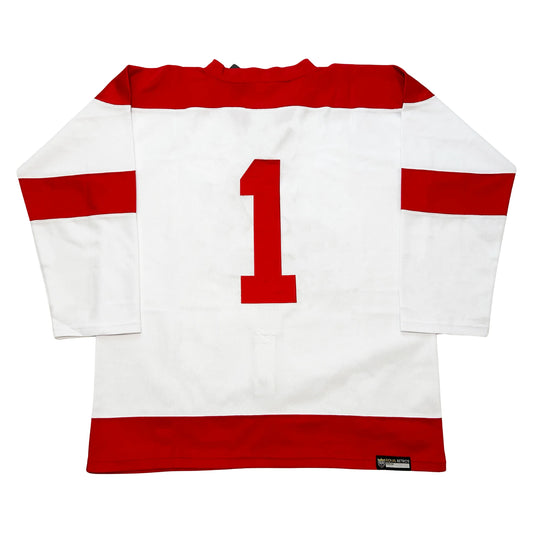
1950's Johnstown Jets Jersey
Regular price Starting at $89.99 USDRegular priceUnit price per -
-
CUSTOM
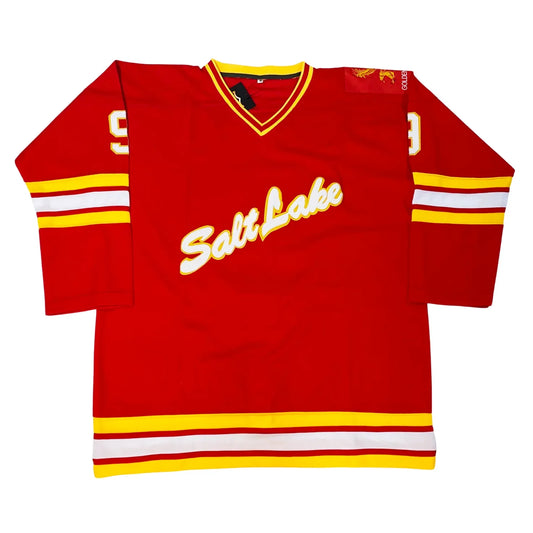
Salt Lake Golden Eagles 1990's Jersey
Regular price Starting at $89.99 USDRegular priceUnit price per -
-
CUSTOM
Kansas City Blades Jersey
Regular price Starting at $89.99 USDRegular priceUnit price per -
-
CUSTOM
Minnesota Moose Jersey
Regular price Starting at $89.99 USDRegular priceUnit price per -
-
CUSTOM
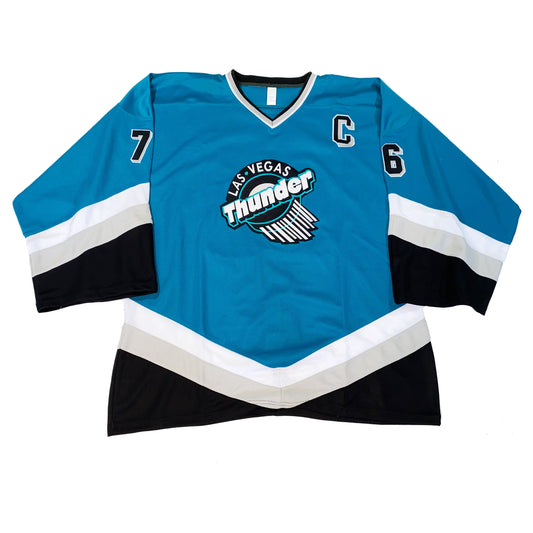
Las Vegas Thunder Jersey
Regular price Starting at $89.99 USDRegular priceUnit price per








The International Hockey League Collection — Royal Retros IHL Fan Shop
Authentic IHL Throwbacks. Custom Names & Numbers. Sizes S–5XL. Every Era, Every Team.
Royal Retros carries the most comprehensive International Hockey League (IHL) throwback collection on the web — heritage jerseys, hats, T-shirts, hoodies, and apparel for every IHL franchise. From Detroit Vipers Turner Cup champions to Chicago Wolves classics, from Las Vegas Thunder desert hockey to Orlando Solar Bears Florida ice — every team is represented. Custom name and number on most jerseys. Period-correct construction in sizes Small through 5XL.
What You Can Shop in the IHL Collection
IHL Jerseys — Throwback International Hockey League replica and custom jerseys for every franchise. Period-correct color palettes and crest detail. Custom name and number on most styles.
IHL Hats — Snapback, fitted, flex, and unstructured hat styles featuring IHL team logos.
IHL T-Shirts — Premium cotton tees representing every IHL team.
IHL Hoodies & Sweatshirts — Year-round team apparel.
Customization — Most IHL jerseys offer free name/number customization. Custom items are final sale.
Sizes — Small through 5XL on virtually every product.
Shop by Marquee IHL Team
Detroit Vipers — One of the IHL's most successful and most-loved franchises. Won the 1997 Turner Cup. The Vipers gave Gordie Howe his last professional appearance at age 69 in 1997. Authentic Detroit Vipers IHL throwback jerseys, hats, and apparel.
Chicago Wolves — Two-time Turner Cup champion (1998, 2000) before transitioning to the AHL. One of the IHL's most popular Eastern franchises. Authentic Chicago Wolves IHL gear.
Houston Aeros (IHL) — Two-time Turner Cup champion (1999, 2003), distinct from the WHA-era Houston Aeros. Authentic IHL-era Aeros throwback gear.
Las Vegas Thunder — Desert hockey before the NHL came to Vegas. One of the most stylish IHL identities. Authentic Las Vegas Thunder jerseys, hats, and apparel.
Orlando Solar Bears (IHL) — Florida hockey before the Lightning had Orlando in their backyard. Won the 2001 Turner Cup. Authentic Solar Bears throwback gear.
Plus rare-team coverage: Cleveland Lumberjacks, Indianapolis Ice, Manitoba Moose, Milwaukee Admirals, Phoenix Roadrunners (IHL era), San Antonio Iguanas, Cincinnati Cyclones, Long Beach Ice Dogs, Utah Grizzlies, Kansas City Blades, Fort Wayne Komets, Quad City Mallards. If a team played in the IHL, we carry their gear.
Why Royal Retros Is the Home of IHL Throwback Gear
- Multi-era IHL coverage. The original IHL operated 1945–2001 across multiple eras and structures.
- Period-correct construction. Authentic IHL-era colors, lettering, and crest detail.
- Free customization on most jerseys.
- Sizes Small through 5XL.
- Rare-team coverage. Many IHL teams folded as the league transitioned and contracted — we carry gear for all of them.
Quick Buying Questions
What sizes do IHL jerseys come in?
Small through 5XL on virtually every jersey style.
Can I customize an IHL jersey?
Yes — most styles offer free customization. Custom items are final sale.
Are these official IHL jerseys?
These are heritage-inspired throwback jerseys — tribute designs that honor the teams and eras of the International Hockey League, made for fans and collectors who want to celebrate the league's history.
Shipping & returns?
Standard products ship within 3–5 business days. Custom items ship within 7–10 business days. Custom items are final sale.
What Was the International Hockey League?
The original International Hockey League (IHL) was a major North American minor professional ice hockey league that operated from 1945 through 2001. Founded as a regional Midwest league, the IHL grew through the 1980s and 1990s into a coast-to-coast professional hockey circuit that, at its peak, was considered the closest competitor to the AHL for the title of "top minor league" in North American hockey. The IHL's championship trophy, the Turner Cup, was awarded annually from 1946 through 2001. The league suspended operations in 2001, with several of its franchises moving to the AHL or ECHL.
The History of the IHL
The IHL began in 1945 as a four-team Midwest league based primarily in Michigan and Indiana. It grew steadily through the postwar decades, expanding across the Midwest, into Texas and the Sunbelt, and eventually to the West Coast. By the 1990s the IHL was operating as a major minor league with NHL affiliates, large arenas, and stable franchises in cities including Detroit, Chicago, Houston, Las Vegas, Orlando, Manitoba, and Salt Lake City.
The IHL faced increasing competition from the expanding NHL through the 1990s — as the NHL placed franchises in markets like Tampa, Phoenix, Colorado, Miami, and Nashville, the IHL lost some of its market exclusivity. Combined with rising operational costs, the league suspended operations after the 2000–01 season. Six IHL franchises (Chicago, Grand Rapids, Houston, Manitoba, Milwaukee, Utah) joined the AHL for 2001–02.
Turner Cup Champions (Selected Recent Years)
- 2001: Orlando Solar Bears
- 2000: Chicago Wolves
- 1999: Houston Aeros
- 1998: Chicago Wolves
- 1997: Detroit Vipers
- 1996: Utah Grizzlies
- 1995: Denver Grizzlies
Shop by Team — The Complete IHL Collection
- Chicago Wolves
- Cincinnati Cyclones (IHL)
- Cleveland Lumberjacks
- Detroit Vipers
- Fort Wayne Komets
- Grand Rapids Griffins (IHL era)
- Houston Aeros (IHL)
- Indianapolis Ice
- Kansas City Blades
- Las Vegas Thunder
- Long Beach Ice Dogs
- Manitoba Moose (IHL era)
- Milwaukee Admirals (IHL era)
- Orlando Solar Bears (IHL)
- Phoenix Roadrunners (IHL)
- Quad City Mallards
- San Antonio Iguanas
- Utah Grizzlies (IHL era)
The International Hockey League at Royal Retros — Authentic IHL Throwbacks. Custom Names & Numbers. Sizes S–5XL. Every Era, Every Team.